Hear from Our Customers
Most Ronkonkoma homeowners who call us have already tried something else. A national chain that rotated through three different technicians in one season. A bag of granular fertilizer from the hardware store that either burned the lawn or did nothing. Maybe both. The frustration is real, and it usually comes from the same place: the wrong product, applied at the wrong time, by someone who doesn’t actually know your property.
Here’s what changes when you get the program right. Your lawn fills in. The thin patches that have been there for two or three seasons start to close. The color deepens and holds through summer instead of fading out by July. You stop spending weekends troubleshooting and start just enjoying the yard.
Ronkonkoma’s soil is predominantly Haven Loam a sandy-based profile that drains quickly and leaches nutrients faster than most homeowners realize. A generic fertilizer applied at a standard rate doesn’t stick around long enough to do its job here. That’s why the product and the timing both matter so much in this specific area. And with Lake Ronkonkoma sitting directly above the local water table just down the road, using a licensed professional who follows Suffolk County’s fertilizer regulations isn’t just smart it’s the responsible call.
We’ve been operating in Suffolk County since 1987. That’s not a number we throw around to sound impressive it’s just the reality of what consistent results look like over time. The lawn care industry has a high turnover rate. Companies come and go. The ones that stick around for nearly four decades do so because we actually deliver.
We serve Ronkonkoma and the surrounding areas of central Suffolk County, including neighborhoods throughout the Sachem school district and properties near the Lake Ronkonkoma shoreline. Our team consists of licensed pesticide professionals not seasonal labor and every job gets the same level of attention regardless of lot size or location.
Our fertilizer is custom-blended specifically for Lawn Master. No other company serving Ronkonkoma uses it. We developed it with Long Island’s soil chemistry in mind, and it’s one of the clearest examples of the investment we’ve made in doing this work at a level most operators simply aren’t willing to match.
It starts with understanding what you’re actually working with. Ronkonkoma lawns vary more than people expect a shaded lot in an older neighborhood near the lake behaves completely differently than a sun-exposed property closer to the Veterans Highway corridor. Before anything gets applied, we assess the lawn’s current condition: grass type, density, weed pressure, drainage, and any visible problem areas.
From there, we build a program around what your lawn actually needs. In Suffolk County, fertilization is legally prohibited between November 1 and April 1 so timing is built into the process from the start. Spring applications are timed to soil temperature, not the calendar. Summer heat means we protect cool-season grasses rather than push them. Fall is the most critical window for Long Island lawns, and we prioritize it accordingly that’s when core aeration, overseeding, and the most important fertilization of the year all happen.
Every application is performed by a licensed pesticide professional using our custom-blended fertilizer and commercial-grade hydraulic equipment. When the job is done, you’ll see the yellow DEC-required marker on your lawn confirmation that a compliant, professional application was made. No surprises, no guessing, and no chasing down a technician to find out what was done.
Ready to get started?
The cool-season grasses that grow in Ronkonkoma’s residential neighborhoods Kentucky bluegrass, tall fescue, perennial ryegrass each have different fertilization needs and different thresholds for heat, drought, and disease. A program that treats all three the same way will underperform on all three. We build programs around the specific grass types and conditions on your property, not a generic schedule applied across every account.
Beyond standard fertilization, we offer core aeration using hydraulic aerators that pull deeper plugs than the tow-behind units most competitors bring. That depth matters in Ronkonkoma’s compacted Haven Loam, where decades of foot traffic and freeze-thaw cycles have closed off the pathways that water, air, and nutrients need to reach the root zone. Pair that with hydraulic overseeding and our custom-blended fertilizer, and a struggling lawn can look dramatically different within a single growing season. For properties that need a complete reset bare patches, grub damage, or years of neglect we also install new lawns from seed.
Suffolk County’s phosphorus restrictions and the November 1 application cutoff are built into every program we run. If you’ve worked with a company that didn’t mention either of those things, that’s worth knowing. Compliance isn’t optional here, and we don’t treat it like it is.
Yes, and it’s one of the stricter rules in the state. Suffolk County law prohibits fertilizer applications to lawns between November 1 and April 1. Violations carry a $1,000 fine. The law also restricts phosphorus content in fertilizers you can’t apply a product with more than 0.67% phosphorus unless you’re establishing a new lawn or a soil test confirms a deficiency. Ironite fertilizer is banned outright within the county.
These rules exist largely because of how Long Island’s groundwater system works. Unlike areas with surface drainage, Suffolk County relies entirely on its sole-source aquifer and in Ronkonkoma specifically, that connection is unusually visible. Lake Ronkonkoma is a groundwater lake, meaning its water level rises and falls directly with the local water table. What goes into the ground around it ends up in it. Every program we run is built around full compliance with these regulations, not just as a legal requirement, but because it’s the right way to work in this community.
For a typical Ronkonkoma residential lawn with cool-season grasses, a well-structured program usually includes three to five applications per year, timed around the growing season. Spring applications support green-up and early density. A summer application, if warranted, is applied carefully to avoid heat stress on cool-season varieties. Fall is the most important window Suffolk County’s Healthy Lawns Clean Water guidance recommends early September as the ideal timing for fall fertilization, and we take that seriously.
The exact number of applications depends on your lawn’s current condition, soil test results, and what the program is trying to accomplish. A lawn that’s been neglected or damaged may need more intensive attention in the first season before shifting to a maintenance schedule. A lawn that’s already in decent shape may do well with fewer, more targeted applications. There’s no universal answer, which is exactly why we assess each Ronkonkoma property individually rather than selling everyone the same five-step package.
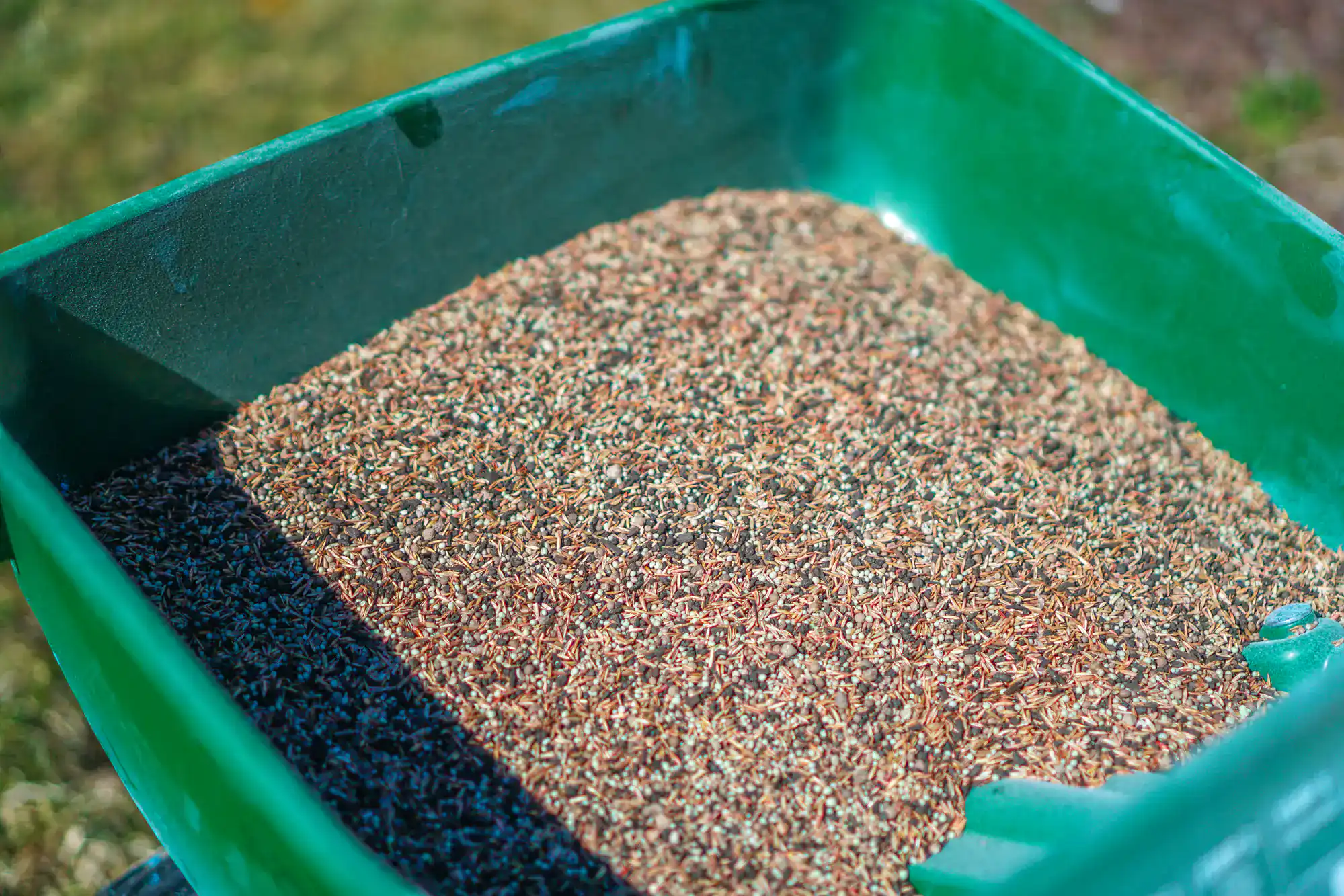
We use a custom-blended fertilizer developed specifically for our programs not an off-the-shelf product from a commercial distributor. That distinction matters more in Ronkonkoma than it might in other areas because of the soil profile here. Ronkonkoma’s residential lots sit on Haven Loam, a deep, well-drained soil with a significant sandy component. Sandy soils leach nutrients downward faster than grass roots can absorb them, which means a standard granular product applied at a generic rate can wash through the soil before it does much good.
Our custom blend is formulated with Long Island’s soil chemistry in mind the right nitrogen release rate, the right potassium levels for disease resistance, and the right balance of micronutrients for the cool-season grasses common in this area. No other lawn care company serving Ronkonkoma uses this product. It’s one of the clearest ways we can point to a real, tangible difference between what we do and what most competitors bring to the job.
The best window for core aeration and overseeding on Long Island is mid-August through late September. This timing works because soil temperatures are still warm enough for seed germination, but the brutal heat of summer has started to ease which means newly seeded grass has a real chance to establish before the first frost. Trying to overseed in spring sounds logical, but cool-season grasses seeded in spring have to fight through summer heat before they can root properly, and most of them don’t make it.
In Ronkonkoma specifically, core aeration is especially valuable because of how established the residential neighborhoods are. Decades of foot traffic, mowing, and the area’s natural freeze-thaw cycles compact the Haven Loam soil over time, closing off the channels that water and nutrients need to reach the root zone. We use hydraulic aerators that pull deeper plugs than the equipment most operators bring, which means better results from both the aeration itself and whatever overseeding or fertilization follows it.
This is one of the most common questions we hear from homeowners in central Suffolk County, and the answer almost always comes down to grass type and heat stress. Ronkonkoma’s residential lawns are predominantly cool-season varieties Kentucky bluegrass, tall fescue, and perennial ryegrass. These grasses thrive in the 60–75°F range and naturally slow down or go semi-dormant when temperatures push into the 80s and 90s. Ronkonkoma averages more than eight days per year at or above 90°F, which is enough to put real stress on a cool-season lawn that isn’t properly supported going into summer.
The fix isn’t more fertilizer in July that’s actually one of the worst things you can do to a stressed cool-season lawn. The fix is a well-timed spring program that builds root depth and density before the heat arrives, combined with a strong fall program that allows the lawn to recover and thicken up once temperatures drop. Grub activity from Japanese beetle larvae is also a documented and recurring issue on Long Island, and grub damage often gets mistaken for heat stress. A licensed professional can tell the difference and treat accordingly.
In New York State, any company applying pesticides for hire is required to be registered with the NYSDEC and must employ at least one certified commercial pesticide applicator. Certification requires passing both a Core exam and a category-specific exam for lawn care, that’s typically Category 3A (Ornamental and Turf) or 3B (Lawn) and recertification requires 24 continuing education hours every three years. This isn’t a light requirement, and not every company operating in Ronkonkoma meets it.
You can ask any lawn care company directly for their NYSDEC registration number and the name of their certified applicator. A legitimate, licensed operation will give you that information without hesitation. Beyond the legal side, licensing matters practically in Suffolk County because of the neighbor notification requirement for certain spray applications, applicators must provide 48-hour written notice to neighbors within 150 feet of the treatment area. A company that doesn’t know that rule is a company that’s either cutting corners or hasn’t been doing this long enough to know the regulations that govern the work. Our professionals are licensed, compliant, and familiar with every requirement that applies to lawn care in Suffolk County.
Useful Links
Other Services we provide in Ronkonkoma