If your lawn keeps disappointing you despite regular fertilizing, compacted Suffolk County soil is likely the reason — and aeration is the fix most homeowners overlook.

You’ve fertilized. You’ve watered. Maybe you’ve reseeded a bare patch or two. And every summer, the lawn still looks tired, thin, or just plain brown in spots. If that sounds familiar, you’re not doing anything wrong — your soil probably is. Suffolk County’s soils, from the clay-heavy inland lots to the fast-draining sandy loam near the coast, compact over time in ways that quietly strangle a lawn from the roots up. Aeration is what fixes that. Here’s what’s actually happening beneath your grass, and what it takes to turn things around.
Core aeration is the process of pulling small plugs of soil out of the ground — typically two to four inches deep — to open up the root zone. Those channels let air, water, and fertilizer reach the grass roots instead of sitting on the surface or running off. It sounds simple, but the impact is significant. Aerated lawns absorb water up to three times better than compacted ones, and root mass can increase by as much as 70 percent within a single growing season after aeration.
The plugs pulled out during the process get left on the surface. They look a little rough for a week or two, but they break down on their own and return organic matter back into the soil. That’s the process working.
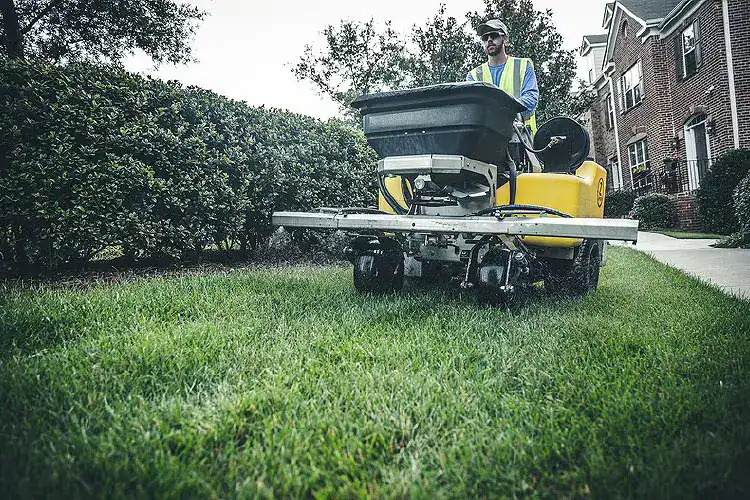
What most homeowners don’t realize is that not all aeration equipment does the same job. Standard mechanical aerators, including most rental units, use fixed tines that struggle in hard or clay-heavy soil. We use hydraulic aerators, which drive tines deeper and more consistently — especially in the compacted inland soils common across central and north Suffolk County. That depth difference is the difference between reaching the root zone and just poking the surface.
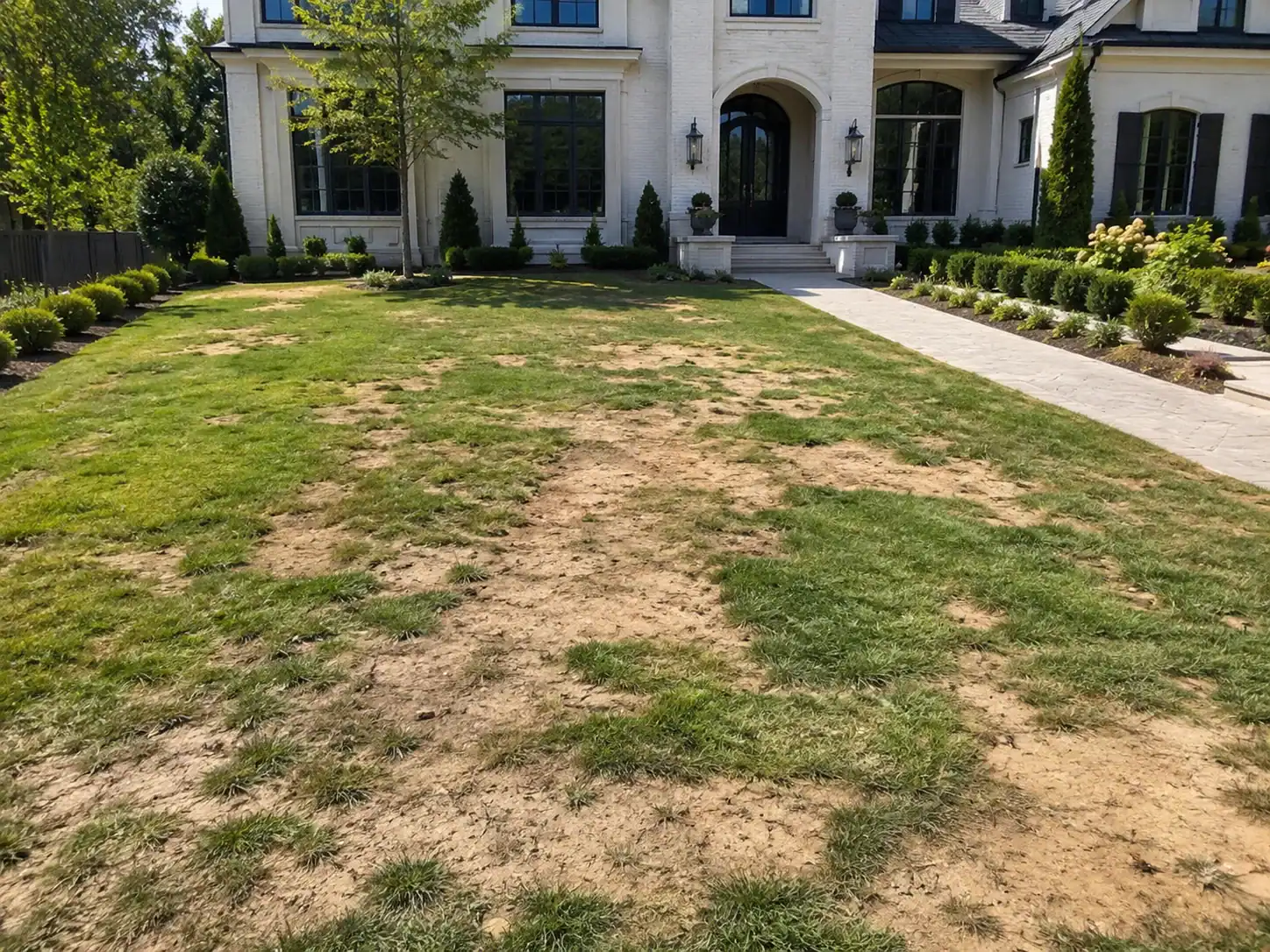
When grass dies in patches, most people assume it’s a watering problem, a fertilizer problem, or some kind of disease. Sometimes it is. But compaction is one of the most common underlying causes — and it rarely gets diagnosed correctly because you can’t see it just by looking at the lawn.
Here’s what actually happens. Over time, foot traffic, mowing equipment, and Long Island’s freeze-thaw winter cycles compress the soil particles tighter and tighter. Water stops absorbing and starts pooling or running off. Lawn fertilizer sits on the surface instead of reaching roots. Grass roots can’t push down deep enough to access moisture during dry spells. The result looks like drought stress or disease, but watering more or applying more fertilizer doesn’t fix it — because the soil itself is blocking everything you’re putting in.
A simple test: push a screwdriver into your lawn. If it goes in easily to four or five inches, your soil is in decent shape. If you’re pushing hard and barely getting two inches, compaction is a real problem. You can also look for water pooling after rain, grass that feels spongy or bouncy underfoot, and thinning in high-traffic areas like paths to the back door or spots where kids play regularly.
Suffolk County’s inland soils — particularly the heavier, clay-influenced areas across Smithtown, Centereach, Lake Ronkonkoma, and Coram — compact more severely than the sandier coastal properties. But even the well-drained sandy loam soils near Patchogue or Bay Shore benefit from aeration, because those soils leach nutrients so fast that opening the root zone is the only way to slow the loss and give grass a fighting chance. Long Island’s glacial outwash geology creates real variation across the county, and what works on one property won’t necessarily be right for a neighbor two miles away.
It’s one of the most frustrating experiences in lawn care — you increase irrigation, and the brown spots either stay the same or get worse. That’s because dry dead spots in a lawn aren’t always a moisture shortage. Often, they’re a delivery problem.
When soil compacts to the point where water can’t penetrate more than an inch or so, the grass above it is essentially sitting on a dry shelf. You can run the sprinklers every day and still have roots that never see that water, because it’s running off the surface or evaporating before it gets down to where the roots live. Aeration punches through that compacted layer and restores the pathway.
There’s another scenario worth knowing. In Suffolk County’s humid summers — when night temperatures stay above 65°F and the air stays damp — brown patch fungus becomes a real issue. It’s caused by a fungus called Rhizoctonia Solani, and it thrives in exactly the conditions Long Island sees in July and August. Compacted soil makes it worse because poor drainage keeps moisture sitting at the surface longer, creating the wet, warm environment the fungus needs. Aeration improves drainage and reduces the conditions that favor disease. It’s not a fungicide replacement, but it removes one of the main factors feeding the problem.
Grub damage is another cause of dry dead spots that gets misdiagnosed as drought. If a section of your lawn lifts up like a loose carpet, grubs have likely been feeding on the roots underneath. Compacted soil with shallow roots is far more vulnerable to grub damage than a healthy, deep-rooted lawn — another reason why aeration is part of the long-term defense, not just an annual cosmetic treatment.
Want live answers?
Connect with a Lawn Master of Suffolk expert for fast, friendly support.
Aeration on its own is valuable. Aeration followed immediately by overseeding is where you start to see real transformation. The holes left by core aeration give grass seed direct contact with soil — which is the single most important factor in germination success. Seed scattered on a compacted, thatch-covered lawn has almost nowhere to take root. Seed dropped into freshly aerated holes has everything it needs.
For Suffolk County lawns, tall fescue is the most reliable choice for overseeding. It handles the county’s variable soil conditions well, holds up through summer heat better than Kentucky bluegrass, and establishes reasonably quickly in the fall window. Perennial ryegrass is sometimes blended in for faster germination and visible results within a few weeks.
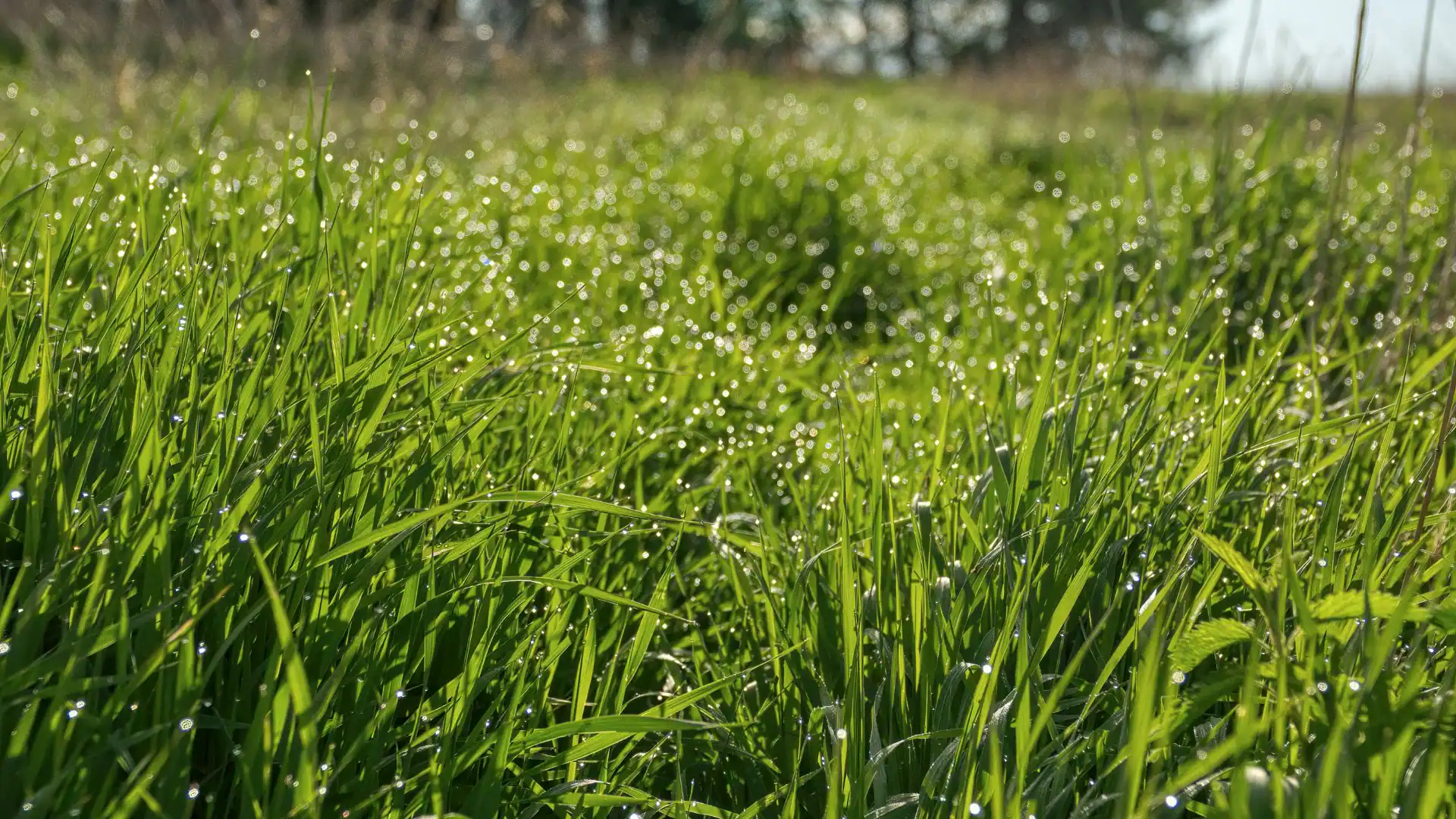
The optimal window for aeration and overseeding on Long Island is early September through mid-October. That’s when soil temperatures are still warm enough for germination — typically above 55°F — but air temperatures have cooled enough that new seedlings aren’t immediately stressed by summer heat. Cool-season grasses are in their most active growth phase during this window, which means faster establishment and stronger root development before winter.
This timing also matters because of Suffolk County Local Law 41-2007, which prohibits fertilizer application between November 1 and April 1. That’s a hard blackout with a $1,000 fine for violations — not a guideline. If you’re aerating, overseeding, and fertilizing as a combined fall program, everything needs to be sequenced and completed before November 1. That window is shorter than it feels, and it fills up fast.
We typically see September slots fully booked by mid-August. If you’re thinking about fall aeration and overseeding, the time to schedule is before you feel the urgency, not after.
Spring aeration is possible for severely compacted lawns that can’t wait, but it comes with trade-offs. Disturbing dormant weed seeds in spring can mean a bigger weed problem by summer, and spring aeration timing conflicts with pre-emergent herbicide applications. Fall is the better option for almost every Suffolk County lawn.
Overseeding without aerating first is one of the most common reasons new grass fails. The seed lands on compacted soil or thick thatch, never makes real contact with the earth beneath, and either washes away or germinates weakly and dies within a few weeks. It’s discouraging, and it’s expensive when you keep repeating it.
The other common cause is timing. Overseeding in late October or early November on Long Island doesn’t leave enough growing time before winter dormancy. New seedlings need four to six weeks of active growth to develop the root system they need to survive a Long Island winter. Seed put down too late often germinates, looks promising for a week or two, and then dies when temperatures drop. The September window exists for a reason.
Watering protocol matters too. Freshly seeded areas need consistent light moisture — not heavy irrigation that washes seed away, and not neglect that lets the surface dry out before germination. New seedlings are shallow-rooted and vulnerable until they’re established, which usually takes three to four weeks depending on conditions and grass variety.
If you’ve overseeded and watched new grass die in patches more than once, the issue almost certainly isn’t the seed. It’s either the soil preparation, the timing, or the watering. Aeration solves the soil preparation problem. A properly timed fall program solves the timing problem. And working with someone who actually assesses your specific lawn — rather than applying a standard package — solves the rest.
Not every lawn care company operating in Suffolk County is the same. In New York State, commercial pesticide application requires a valid NYS DEC Pesticide Applicator’s License. Every technician we send is a licensed professional — not a seasonal hire following a checklist. That distinction matters both legally and practically, because diagnosing what’s actually wrong with your lawn requires training, not just a spray tank.
We’ve been servicing Suffolk County since 1987. That’s nearly four decades of working specifically in this county, with its Haven Loam soils, its fertilizer blackout regulations, its humid summers and compacting winters. We use hydraulic aerators because they penetrate deeper than standard equipment — which matters on Long Island’s heavier soils. Our fertilizer is custom-blended specifically for our programs, not pulled off a shelf, because Long Island’s sandy soils leach nutrients faster than generic formulations account for. And every program is built around your specific lawn, not a one-size package applied to every property on the route.
If your lawn has been frustrating you despite regular treatment, the answer usually isn’t more of the same. It’s fixing the soil first. Reach out to us — a real conversation about what’s happening in your yard is a good place to start.
Summary:
Article details:
Share: