
Hear from Our Customers
If your lawn has been fertilized regularly and still looks thin, patchy, or just off compaction is almost always the reason. Fertilizer sitting on top of locked-down soil can’t reach the root zone. Water runs off instead of soaking in. The grass gets stressed, and no amount of product on the surface fixes a problem that’s happening underground. Core aeration pulls small plugs from the soil and opens up channels that let air, water, and nutrients actually get where they need to go.
Rocky Point sits on Long Island’s North Shore glacial moraine a mix of rocky substrate, sandy loam, and clay-influenced soil that compacts more aggressively than the sandier soils you’d find on the South Shore. Add in the freeze-thaw cycles that come with every North Shore winter, and you’ve got soil that tightens up season after season unless someone’s actively breaking that cycle. A lot of the homes built during Rocky Point’s growth surge since 2000 were constructed on heavily disturbed ground that was never properly remediated meaning those lawns have been fighting compaction since day one.
After a proper aeration, you’ll notice water staying in the lawn instead of sheeting off. Grass fills in thicker. Color improves. The lawn starts responding to fertilizer the way it should have been all along. It’s not a dramatic overnight transformation it’s the foundation that makes everything else you do for your lawn actually work.
We’ve been serving Suffolk County since 1987, operating out of Port Jefferson Station about seven miles west of Rocky Point on Route 25A. That’s the same road Rocky Point residents drive every day. We’re not a franchise dispatching crews from a call center, and we’re not a new operation that launched last spring. We’re a local company that has been working in this specific soil, in this specific climate, long enough to know what North Shore lawns actually need.
Every job is handled by a licensed pesticide professional not seasonal labor, not a crew supervised from afar by one person with a certificate on the wall. New York State’s NYSDEC requires commercial applicators to pass written exams, maintain active certification, and report pesticide usage annually. That’s the standard we hold every person we send to your property to. When someone from Lawn Master is on your lawn in Rocky Point, they can tell you exactly what they’re doing and why.
We run a fleet of five fully wrapped trucks, offer online account management with credit card invoice payment, and use a custom-blended fertilizer formulated specifically for Long Island soil not something pulled off a warehouse shelf.
Before anything touches your lawn, we assess it. Grass type, thatch depth, compaction level, drainage patterns, sun and shade all of it gets looked at. Rocky Point properties vary more than people expect. A lawn closer to the Sound sits in sandier, salt-air-influenced soil. A property further south toward Ridge Road might have heavier clay composition and different drainage behavior. A house built in one of the newer developments off Rocky Point Yaphank Road may be sitting on construction-compacted fill that’s never been properly opened up. The assessment tells us what we’re actually working with before we start.
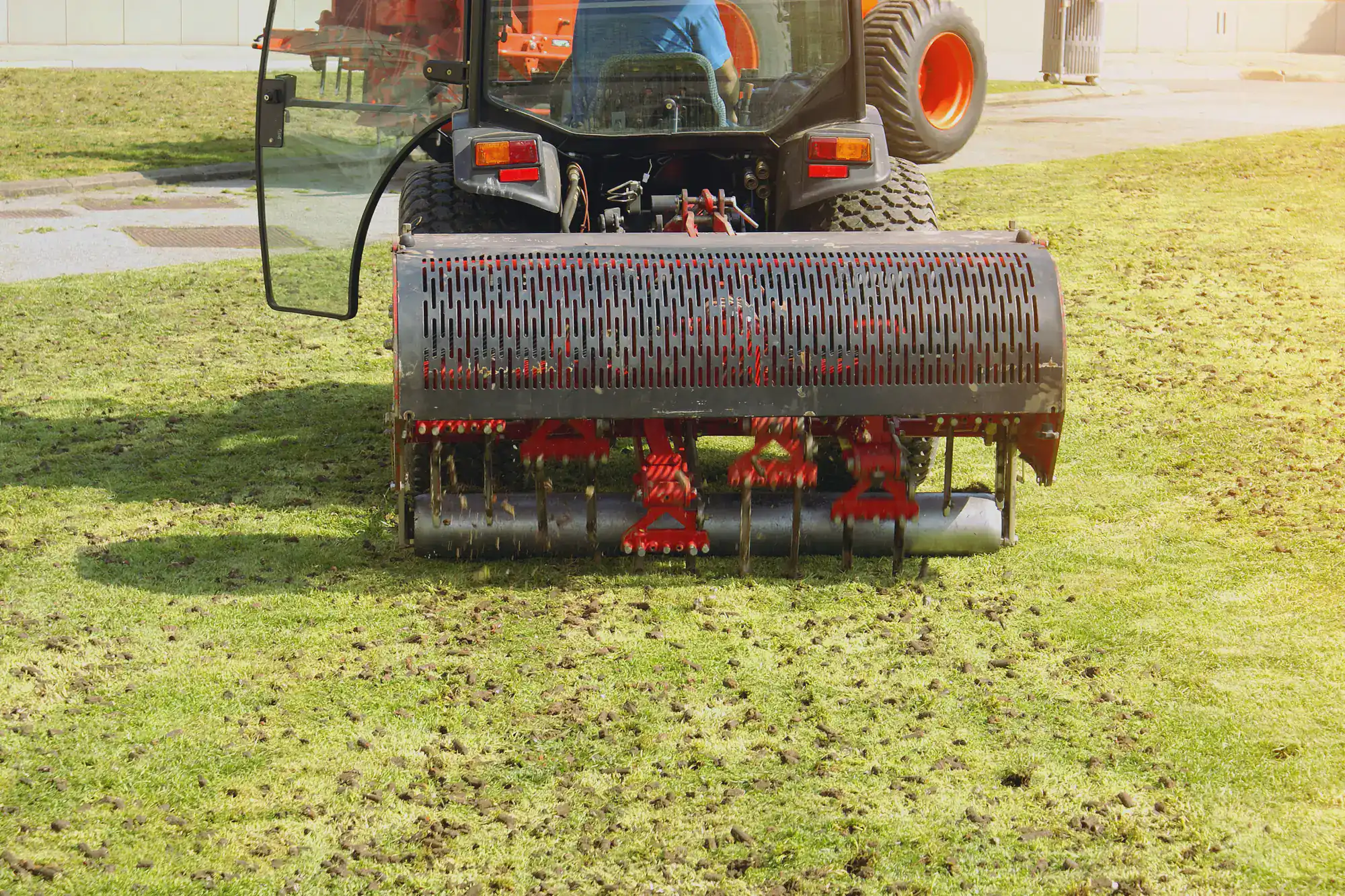
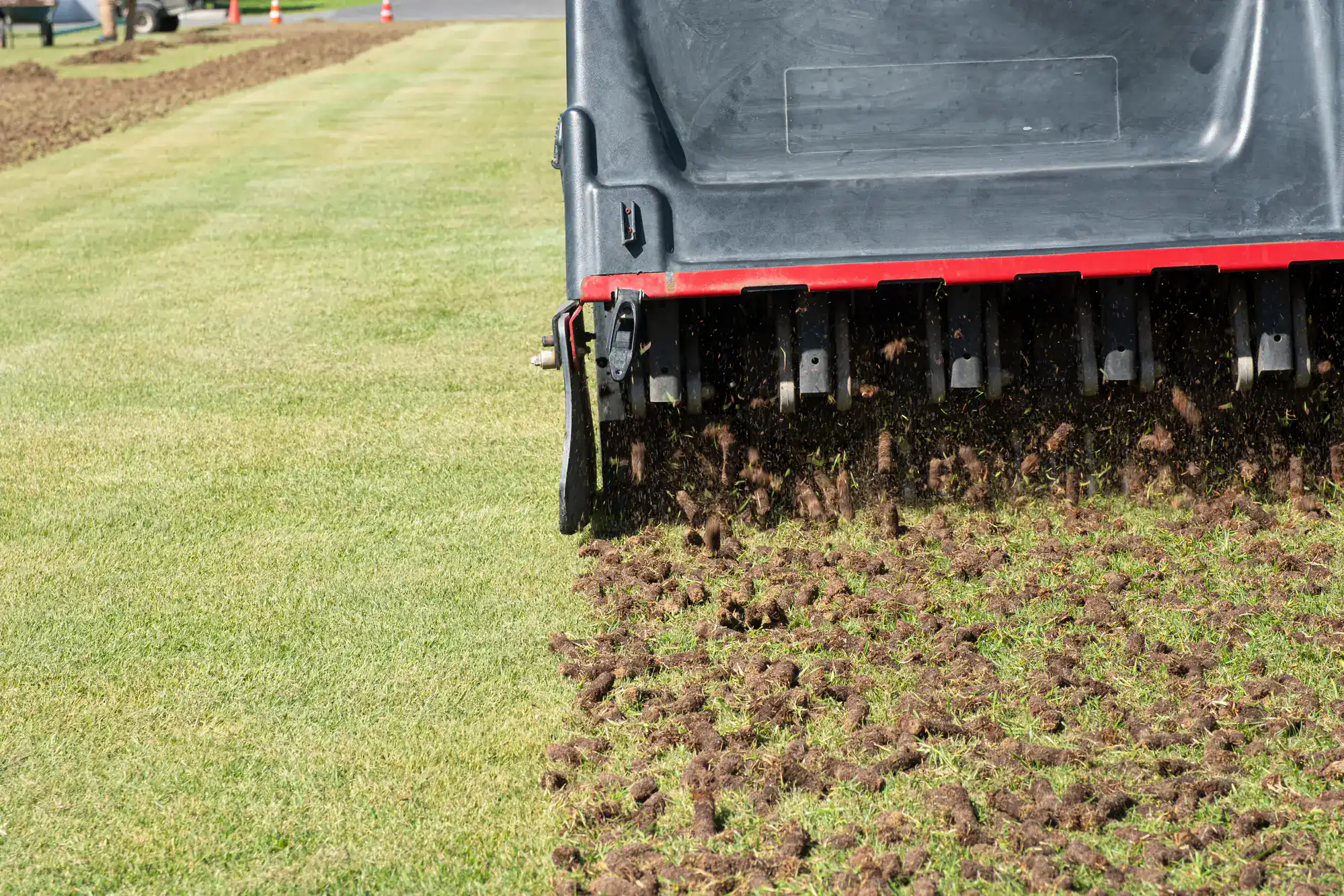
From there, we bring in hydraulic core aerators professional-grade equipment that pulls clean plugs at consistent depth even in the compacted, rocky-influenced soil that’s common across the North Shore. This isn’t the same machine you’d rent from a home improvement store. Those units are built for light-duty use on relatively loose soil. Ours are built for the real thing.
After aeration, the cores stay on the surface and break down naturally, returning organic matter to the soil. If overseeding is part of your program, we use hydraulic seeders that get seed into direct contact with the soil not just scattered on top. Then your custom fertilizer application goes in through the channels we just opened, where it can actually reach the root zone. One important timing note: Suffolk County’s fertilizer application ban kicks in on November 1, so the fall window for aeration and post-treatment in Rocky Point runs roughly mid-August through October. That window fills up. Planning ahead makes a real difference.
Ready to get started?
Lawn aeration cost in Rocky Point typically ranges from $75 to $300 for a residential property, depending on lawn size, condition, and what else is included in your program. That range matters because not every lawn needs the same thing. Some properties need aeration alone. Others need aeration paired with overseeding to fill in thinning areas. Some haven’t been touched in years and need a more comprehensive renovation approach before a maintenance program makes sense. We build the program around what your lawn actually requires not around a fixed-price menu that may or may not fit your situation.
What’s consistent across every job is the standard: licensed professionals, hydraulic equipment, and a custom-blended fertilizer formulated specifically for Long Island soil chemistry. That fertilizer isn’t something you can pick up at a garden center it’s made for our programs and tuned to the nutrient demands of properties in Suffolk County. When we aerate and then apply that product through the channels we’ve just opened, the efficiency of that application is meaningfully higher than what you’d get from a generic product on an untreated lawn.
If your lawn needs more than aeration bare patches, persistent thin areas, or a lawn that’s been declining for years we also handle full lawn renovations and new lawn installs from seed using the same hydraulic seeders and licensed professionals. The goal is a lawn that actually looks the way it should, not one that just gets treated on a schedule.
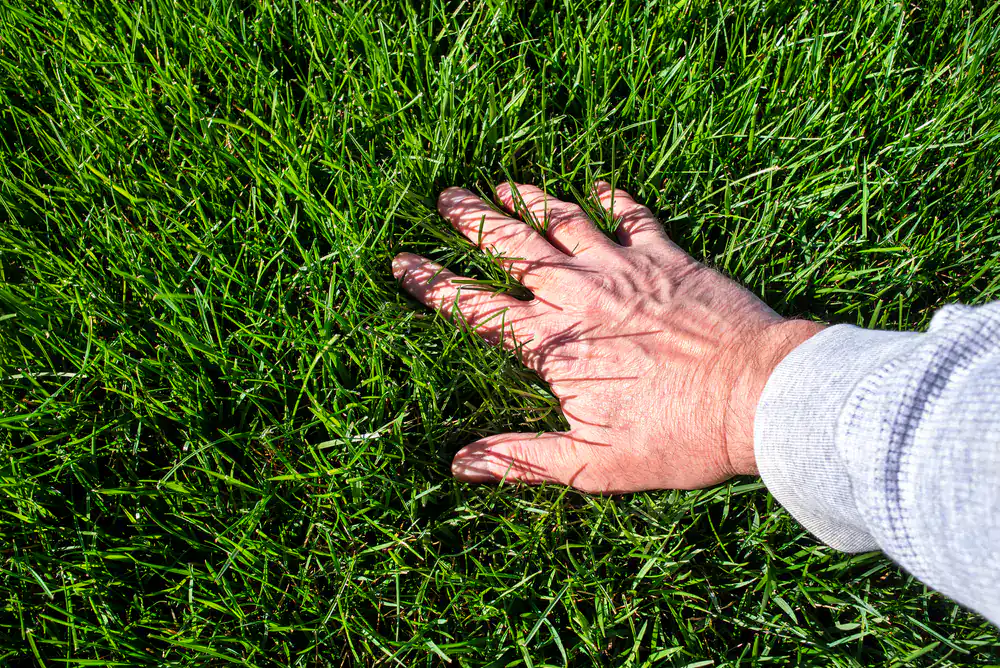
For the cool-season grasses that cover most Rocky Point lawns tall fescue, Kentucky bluegrass, perennial ryegrass fall is the right window. Specifically, mid-August through October gives you soil that’s still warm enough to support fast grass recovery, with air temperatures that have dropped enough to reduce heat stress on the freshly opened turf. That combination accelerates how quickly your lawn bounces back and fills in after the aeration.
There’s also a practical deadline that Rocky Point homeowners need to know about: Suffolk County’s fertilizer application ban begins November 1 and runs through April 1. Any fertilization done as part of your post-aeration program has to happen before that cutoff. That makes the fall window finite not open-ended. We plan Rocky Point schedules in advance, and the most desirable slots fill up as the season moves into October. If you’re thinking about fall aeration, earlier in the season is better than waiting.
Spring aeration is possible but comes with a trade-off. Pre-emergent crabgrass control which most Long Island homeowners apply in spring works by creating a chemical barrier at the soil surface. Aerating after that application breaks the barrier and undermines your weed control. Doing it before means your lawn gets aerated before the soil has fully warmed. Fall sidesteps that conflict entirely, which is why it’s the preferred timing for most North Shore properties.
The most telling sign is a lawn that gets fertilized and watered but doesn’t seem to respond the way it should. If your grass looks thin, struggles to green up in spring, or shows dry patches even after rain, compaction is often the underlying cause. Water and nutrients are sitting on top of locked soil instead of reaching the root zone where the grass actually needs them.
A simple test you can do yourself: push a standard screwdriver into your lawn. If you can’t get it in more than two inches without real effort, the soil is compacted. You can also look at how water behaves after a rain if it sheets off or puddles on the surface instead of soaking in, that’s another indicator. Thatch buildup thicker than about half an inch is a related sign that the soil’s biological activity has slowed down.
Rocky Point’s North Shore geology makes compaction more common here than in sandier South Shore communities. The glacial moraine soil a mix of rocky substrate, sandy loam, and in some areas clay-influenced deposits tightens under foot traffic, mowing equipment, and the freeze-thaw cycles that come with every Long Island winter. If your Rocky Point home was built during the community’s growth period over the last two decades, there’s a reasonable chance the soil was severely compacted during construction and has never been properly addressed since.
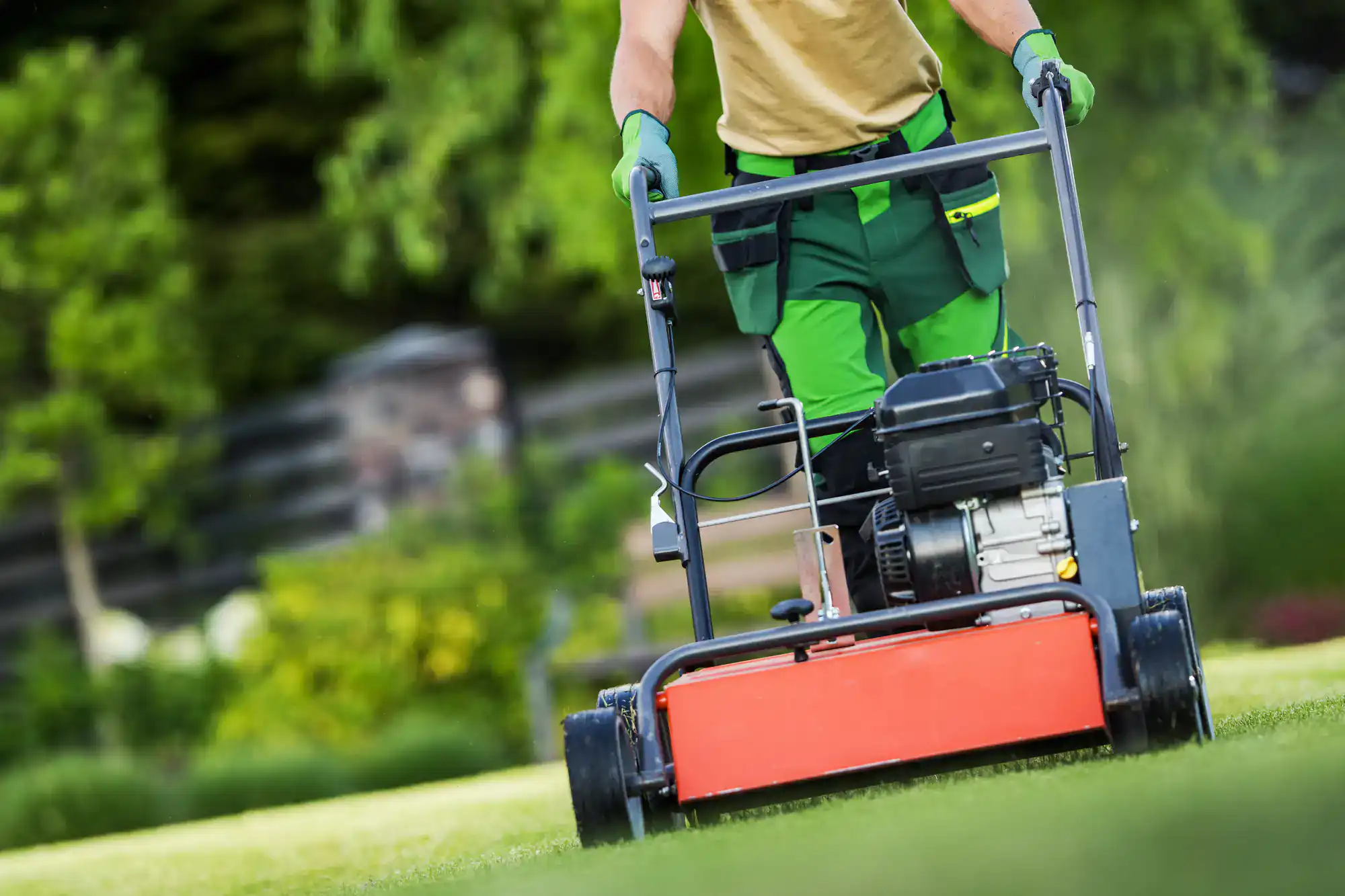
Core aeration removes small plugs of soil from your lawn typically about half an inch wide and two to three inches deep. Those plugs come out, get left on the surface to break down, and the holes they leave behind become open channels for air, water, and nutrients to reach the root zone. It’s a process that actually relieves compaction by removing material from the soil.
Spike aeration uses solid tines to punch holes into the ground without removing anything. The problem is that pushing a spike into compacted soil doesn’t relieve the compaction it just displaces it. The soil around the hole gets compressed further, which can actually make the problem slightly worse over time. Spike aeration has its place in very limited applications, but for a Rocky Point lawn dealing with the compacted, glacially-influenced North Shore soil, core aeration is the appropriate tool. It’s not a preference it’s a meaningful difference in results.
We use hydraulic core aerators, not the lighter walk-behind units available at equipment rental counters. In soil with the density and variability typical of North Shore properties especially in older established neighborhoods or homes built on construction fill that equipment difference matters for how deep the tines penetrate and how cleanly the cores are pulled.
Aeration can absolutely stand alone if your lawn has good grass coverage and you’re aerating primarily to relieve compaction and improve how your soil absorbs water and nutrients. In that case, aeration followed by a fertilizer application is a complete and effective treatment on its own.
Where overseeding becomes important is when your lawn has thin areas, bare patches, or grass that’s been thinning out over multiple seasons. Aeration creates ideal conditions for seed germination the cores leave small holes in the soil surface that give new seed direct contact with the ground and access to moisture. If you overseed without aerating first, a lot of that seed lands on thatch or compacted surface soil and never establishes properly. Doing both together in fall gives the seed the best possible environment to germinate and root before winter.
For Rocky Point lawns that have been struggling for a few years particularly in homes where the soil was compacted during construction the combination of aeration and overseeding is often the right starting point. It addresses the structural soil problem and begins rebuilding turf density at the same time. We assess each property individually and recommend overseeding when the lawn’s condition calls for it, not as a default add-on.
For a typical residential property in Rocky Point, lawn aeration runs roughly $75 to $300. The main factors that move that number are lawn size, the current condition of the soil, and whether overseeding or fertilization is being added as part of the same visit. A smaller, well-maintained lawn on the lower end of that range is a straightforward job. A larger property with significant compaction, heavy thatch, or areas that need overseeding will land higher.
It’s worth putting that number in context. Rocky Point homeowners are paying around $10,000 a year in property taxes on homes valued around $500,000. A $150 to $200 aeration treatment is a small investment relative to the property it’s protecting and relative to the cost of continuing to fertilize a lawn that can’t absorb what you’re putting on it. When compaction is the problem, more fertilizer isn’t the answer. Fixing the compaction is.
What you’re paying for with us isn’t just the mechanical process of running a machine across your lawn. It’s licensed professionals, hydraulic equipment that actually penetrates North Shore soil effectively, and a custom fertilizer formulated for Long Island properties. If you’ve paid for aeration before and didn’t see results, the equipment and the follow-up treatment are usually where the difference shows up.
You can rent an aerator and do it yourself that’s a real option, and for a lawn with mild compaction and relatively uniform soil, it can work reasonably well. The honest answer is that the results depend heavily on the equipment and the soil you’re working with, and Rocky Point’s North Shore soil is not forgiving of light-duty equipment.
Consumer aerator rentals are built for moderate conditions. In the compacted, rocky-influenced glacial soil common across Rocky Point especially in older neighborhoods or homes built on construction fill those machines often don’t penetrate deeply enough to make a meaningful difference. You end up with shallow holes that don’t reach the compaction layer, which means you’ve done the work without solving the problem. Our hydraulic aerators are a different class of equipment, designed to pull clean cores at consistent depth in exactly the kind of dense, variable soil that characterizes this part of Suffolk County.
Beyond the equipment, there’s the timing and follow-up to consider. Aeration without a proper fertilizer application through the open channels leaves results on the table. And if overseeding is part of the plan, getting seed into direct soil contact with hydraulic seeders versus hand broadcasting makes a measurable difference in germination rates. For a lawn you’re investing in on a property in Rocky Point where home values are real and curb appeal matters professional aeration typically pays for itself in the quality of the outcome.
Useful Links
Other Services we provide in Rocky Point