
Hear from Our Customers
When your lawn treatment program is actually working, you stop thinking about your lawn. No more patchy spots you keep meaning to fix. No more watching your neighbor’s yard look better than yours every summer. You just walk outside and it looks good thick, green, and consistent from edge to edge.
That matters more in Selden than people give it credit for. With nearly 90% of homes here being single-family detached properties and median values pushing past $600,000, your lawn is one of the first things anyone sees. If you’re working from home and a lot of Selden residents are you’re looking at it every day. A lawn that’s struggling isn’t just an eyesore. It’s a slow drain on a property you’ve put serious money into.
The soil under most Selden yards is sandy outwash it drains fast and leaches nutrients faster than most homeowners realize. That’s why a generic fertilizer schedule from a big-box store or a national chain rarely delivers. The timing, the product, and the application rate all have to be calibrated to what’s actually happening in your yard. When they are, the difference is visible within a season.
We’ve been servicing Suffolk County since 1987, with deep roots in Selden and the surrounding communities like Centereach and Coram. That’s not a tagline it’s just the truth. We’ve been treating lawns through every season, every regulatory change, and every shift in what Long Island homeowners actually need.
Every technician we send to your Selden property is a licensed NYS DEC pesticide applicator. Not a seasonal hire. Not a labor-only crew. Someone who passed the state exam, knows the Suffolk County fertilizer blackout rules, and understands the difference between nutsedge and crabgrass and how to treat each one. We run a fleet of five fully wrapped trucks, use a custom-blended fertilizer made specifically for Lawn Master, and bring hydraulic aerators and seeders to every job that calls for them.
We’re not the biggest lawn care company on Long Island. We’re the one that’s still here, still doing the work the right way, and still accountable when something needs attention.
It starts with a look at your actual lawn the grass type, the soil condition, the shade coverage, any problem areas like bare patches, weeds, or drainage variation. Selden properties can vary more than people expect. A yard on a sandy slope near the Selden Hills drains completely differently than a flat backyard in a tighter residential block. We account for that before we apply anything.
From there, we build a treatment program around what your lawn needs not a package designed for the average yard. Fertilization timing follows Suffolk County’s blackout period, which runs November 1 through April 1. That’s not optional, and it matters for your lawn’s health as much as it does for the aquifer that supplies your drinking water. Cool-season grasses like tall fescue and Kentucky bluegrass the most common types in Selden need applications timed to their spring and fall growth windows to actually perform.
If your lawn needs more than maintenance grub damage, nutsedge taking over, bare areas that won’t fill in we handle that too. Core aeration with our hydraulic equipment, overseeding, lawn restoration, and new lawn installs from seed are all part of what we do. You get a clear picture of what’s happening, what we’re doing about it, and what to expect. No guesswork, no surprises.
Ready to get started?
The fertilizer we use isn’t pulled off a commercial shelf. It’s a custom blend made specifically for Lawn Master, formulated for Long Island’s sandy outwash soil profile the kind that drains quickly and needs a calibrated nutrient delivery to actually hold. Most national chains apply the same product across entire regions. That’s not how we work, and it’s part of why so many Selden homeowners end up switching providers after a season or two of underwhelming results.
Beyond fertilization, our programs cover weed control, grub prevention, core aeration, overseeding, and targeted treatments for persistent problems like nutsedge and bentgrass two of the most stubborn issues in Suffolk County lawns that generic programs routinely miss or mishandle. If your lawn has been damaged by grub activity, drought stress, or years of the wrong treatment, we also offer full lawn restoration and new lawn installs from seed. We don’t just maintain what’s there we can rebuild it from the ground up when that’s what it actually takes.
Every service is delivered by a licensed NYS DEC pesticide applicator, tracked through your online account, and payable through our customer portal. Whether you’re on Middle Country Road or a side street off Nicolls Road, the process is the same: licensed, accountable, and built around your specific property.
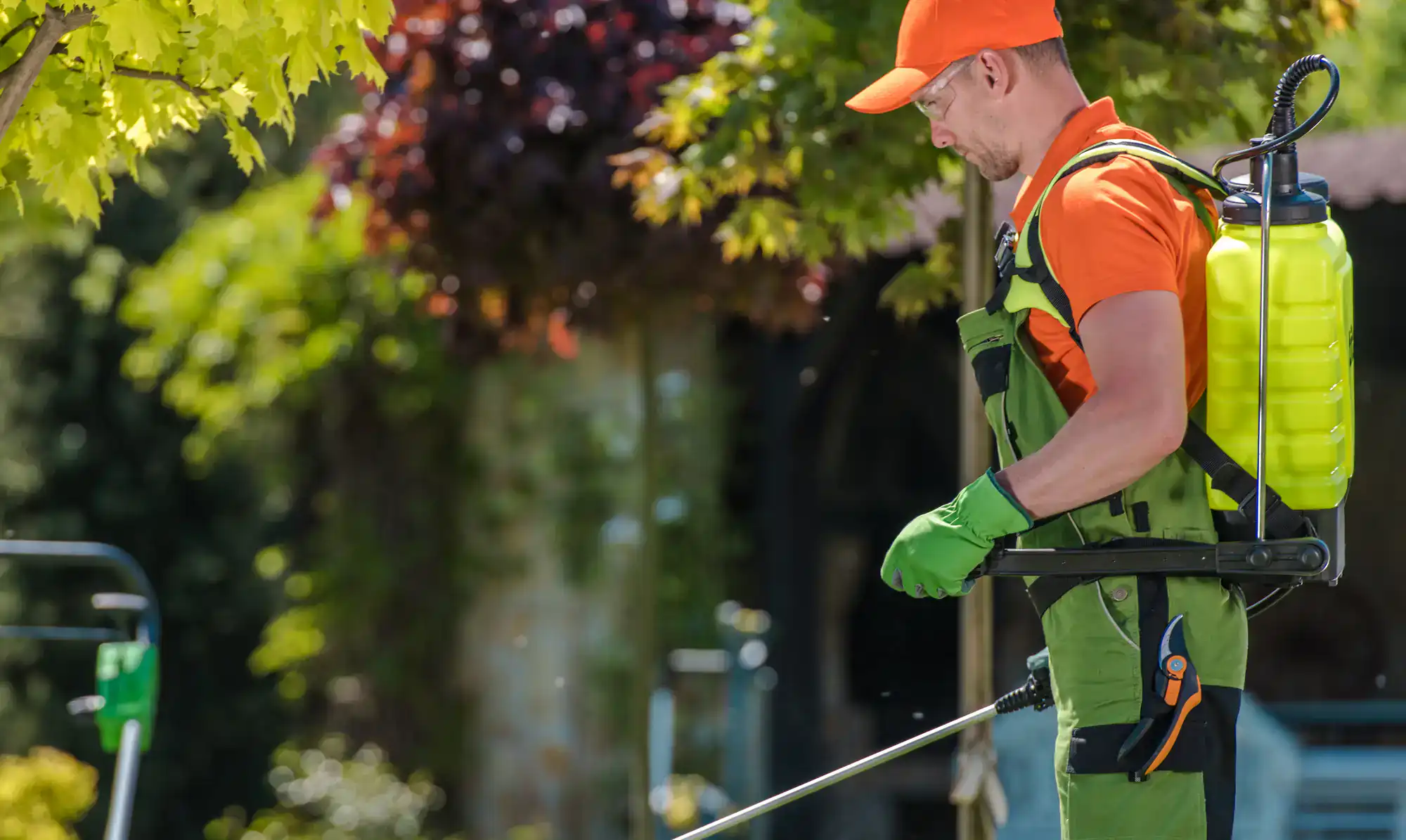
Selden sits in the cool-season grass belt of Long Island, which means tall fescue, Kentucky bluegrass, and perennial ryegrass are the dominant turf types you’ll find in most yards. These grasses thrive in the moderate temperatures of spring and fall roughly 60 to 75 degrees and go semi-dormant under summer heat. That growth pattern directly affects when and how we fertilize, aerate, and overseed.
The sandy soil common throughout central Suffolk County adds another layer. It drains fast, which is good for avoiding waterlogged roots, but it also means nutrients move through the soil quickly. A fertilizer program that works in clay-heavy soil upstate will underperform here. Timing your applications around active growth windows and using a product calibrated to Long Island’s soil chemistry makes a measurable difference in how your lawn responds season to season. That’s not a minor detail. It’s the difference between a lawn that looks good and one that just looks okay.
For cool-season lawns in Selden, the two most important windows are early spring once soil temperatures hit around 55°F, typically mid-April in central Suffolk County and fall, from late August through October. Fall is actually the more critical of the two. It’s when cool-season grasses are building root depth and storing energy for winter, and a well-timed fall fertilization sets the foundation for how your lawn comes back the following spring.
One hard stop to keep in mind: Suffolk County’s fertilizer blackout period runs from November 1 through April 1. During those months, fertilizer applications are prohibited by county law, with fines up to $1,000 for violations. The regulation exists because Long Island sits over a sole-source aquifer all local drinking water comes from groundwater, and nitrogen runoff from dormant grass is a real contamination risk. Any lawn care company operating in Selden needs to be working within those dates, and we always do.
Japanese beetle grubs are a consistent pest pressure throughout Suffolk County, including Selden. The adults lay eggs in the soil during summer, and by late August into September, the larvae are feeding on grass roots just below the surface. The first sign is usually brown, spongy patches that feel soft underfoot and if you can pull the turf back like a piece of loose carpet, grubs are almost certainly the cause.
The timing of treatment matters a lot here. Preventive grub control applied in early summer before the eggs hatch is significantly more effective than trying to treat an active infestation in the fall. If you’re already seeing damage, a curative application can help, but recovery takes time and often requires overseeding the affected areas once the grub population is under control. If your lawn has had recurring brown patches in late summer that don’t respond to watering, grubs are worth investigating before you assume it’s drought stress or a fertilizer issue.
The most consistent complaint about national lawn care chains and it shows up in reviews for the Long Island East territory specifically is inconsistency. Different technicians on every visit, no continuity between applications, and a customer service structure that makes it hard to get a real answer when something goes wrong. When you’re dealing with a lawn that has a specific problem nutsedge, grub damage, a persistent bare patch that kind of turnover costs you time and money.
We’re a local company with decades of experience in Suffolk County. We’re not routing your call to a regional manager. The people treating your lawn know Selden’s soil, know the blackout rules, know what grows here and what doesn’t, and are accountable in a way that a national franchise with high seasonal labor turnover simply isn’t. That accountability shows up in the work in whether your applications happen on schedule, whether your specific problems get addressed, and whether the same level of care shows up every single visit.
Core aeration is the process of pulling small plugs of soil out of your lawn typically an inch or two deep to relieve compaction, improve drainage, and open up channels for air, water, and nutrients to reach the root zone. It’s one of the most effective treatments a Suffolk County lawn can receive, and most Selden yards benefit from it at least once a year.
The reason it matters here specifically comes back to soil. Sandy outwash soil doesn’t compact the same way clay does, but high-traffic areas around swing sets, along fence lines, near driveways still develop compaction over time. And in areas with heavier clay content or thatch buildup, compaction can become a real barrier to root development. Fall is the best window for aeration in Selden, right before overseeding, because the cooler temperatures and active root growth help the lawn recover and fill in quickly. We use hydraulic core aerators not the consumer-grade tow-behind units which pull deeper, more consistent cores and produce noticeably better results.
Yes but the honest answer is that it depends on how far gone it is and what caused the damage. A lawn that’s been thinned out by grub activity, drought stress, or years of the wrong fertilizer program can almost always be brought back with the right combination of aeration, overseeding, and a properly timed treatment plan. Selden’s cool-season grasses are resilient when given the right conditions to recover.
Where it gets more complicated is when the underlying problem hasn’t been fixed. If nutsedge has taken over a section of the yard, overseeding on top of it won’t hold. If grubs are still active, new seed won’t establish. Restoration that actually lasts starts with diagnosing what went wrong, addressing it directly, and then rebuilding from there. In cases where the lawn is too far gone to recover through treatment alone, a new lawn install from seed is a legitimate option and one we offer. It’s not the first step, but when it’s the right call, it produces a clean, properly established lawn that a maintenance program can actually build on.
Useful Links
Other Services we provide in Selden