Hear from Our Customers
There’s a version of your Brookhaven lawn that’s thick, green, and holding up through summer heat and coastal humidity and it’s not out of reach. It just requires a program designed for your specific conditions, not a one-size-fits-all schedule built for a national average that doesn’t exist on the South Shore.
Brookhaven’s proximity to the Great South Bay means your lawn deals with higher ambient moisture than most of Suffolk County. That coastal humidity accelerates fungal disease dollar spot, brown patch, red thread faster than inland communities ever see it. A program that doesn’t account for that will treat the symptoms after the damage is done, instead of staying ahead of it.
The soils here are also sandy and well-drained, which sounds like a good thing until you realize nutrients move through them fast. Generic fertilizer programs lose a significant portion of their effectiveness before your turf can even use it. When your program is built around how your soil actually behaves and uses a fertilizer formulated for it the results are different. Visibly, measurably different.
We’ve been treating lawns in Brookhaven and throughout Suffolk County since 1987. That’s not a marketing line it’s a specific, verifiable date that means we were working this area before most of our current competitors existed, before the internet, and before Suffolk County enacted the fertilizer regulations that now govern the whole industry.
We know what grub pressure looks like after a bad beetle year in Brookhaven. We know how the soils between Bellport and South Haven respond to a dry August. We’ve built programs around the buffer zone requirements near the Carman’s River and the Great South Bay not because a compliance manual told us to, but because we’ve been doing this here long enough to know exactly what matters and why.
Every technician who comes to your property holds a valid NYS DEC Commercial Pesticide Applicator Certificate. That’s a state-issued credential, not a company training badge. It means the person treating your lawn is licensed, accountable, and qualified not handed a spreader and sent down a route.
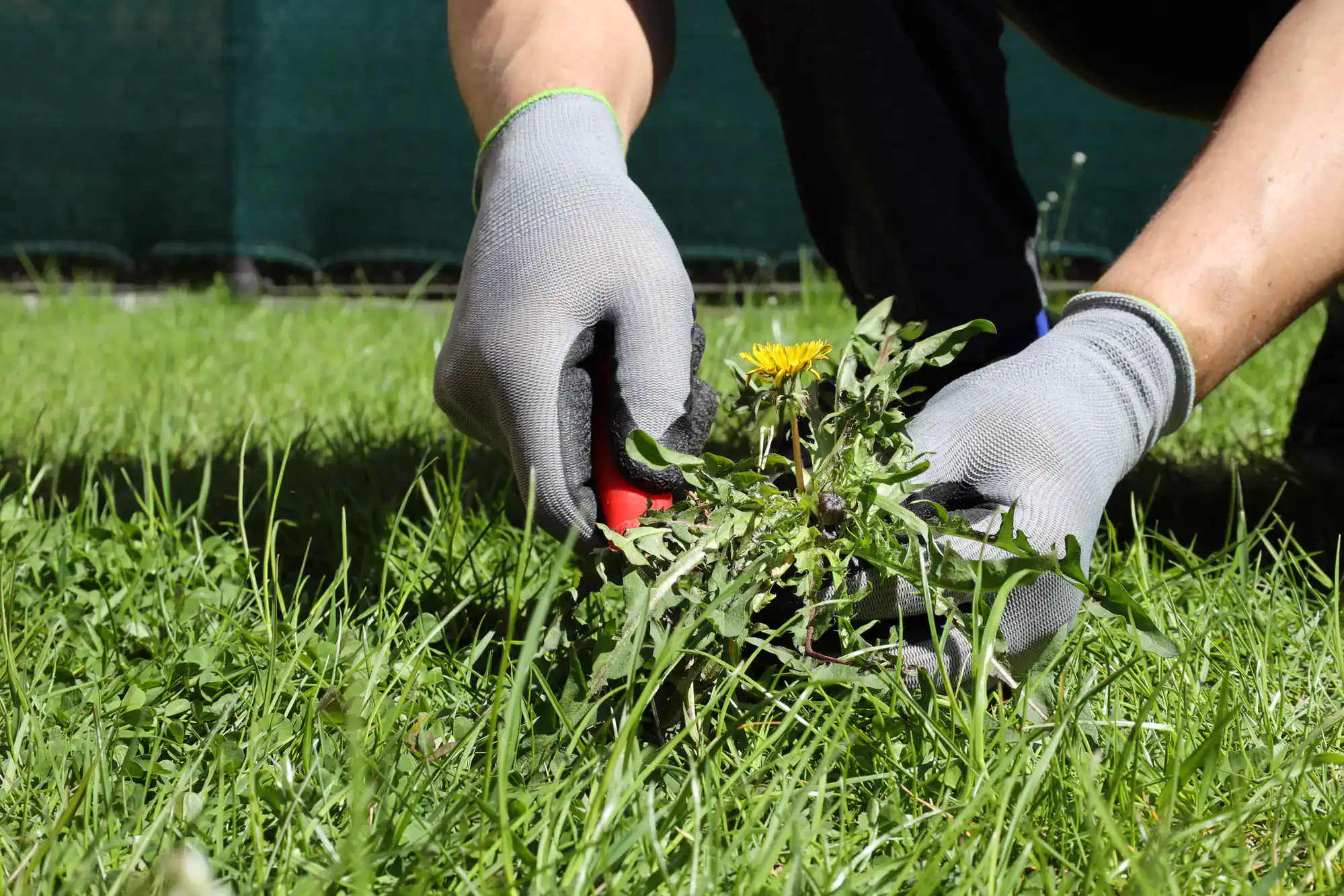
It starts with an assessment of your actual lawn not a clipboard walkthrough, but a real look at what’s going on. Soil conditions, compaction, turf density, shaded areas, problem zones near the water, any signs of disease or grub activity. On a one-acre Brookhaven property with mature trees, areas near the bay, and decades of turf history, that assessment matters. A program designed without it is just guessing.
From there, we build your treatment plan around what your lawn specifically needs and what Suffolk County law allows. The November 1 through April 1 fertilizer blackout period is built into every schedule automatically. If your property has sections near the Great South Bay or the wetlands bordering the Wertheim National Wildlife Refuge, the buffer zone requirements are factored in before a single application is made not discovered after the fact.
Treatments go out on a consistent schedule throughout the season, performed by the same licensed professionals who assessed your lawn in the first place. If something changes a disease outbreak, a grub problem showing up mid-summer, drought stress the program adjusts. You’re not locked into a rigid calendar while your lawn tells a different story.
Ready to get started?
A complete program covers the full season pre-emergent crabgrass control in early spring, fertilization timed to your soil’s actual uptake behavior, grub preventive treatment in early summer, and a fall aeration and overseeding pass before the November blackout hits. The fall winterizer application, timed right before that November 1 cutoff, is the single most important fertilizer treatment of the year for root development and spring recovery.
The fertilizer itself is custom-blended specifically for our programs not a generic product pulled from a distributor’s shelf. It was formulated for the way nutrients behave in Long Island’s sandy, fast-draining soils, which means more of it actually reaches your turf instead of leaching through the profile before the grass can use it. No other lawn care company in the Brookhaven area offers this.
Aeration is done with hydraulic aerators professional-grade equipment that penetrates deep into compacted soil. If you’ve had aeration done before on an older Brookhaven property and wondered why it didn’t seem to make a difference, the equipment almost certainly was the problem. Overseeding follows aeration directly, so seed makes real contact with broken-up soil instead of sitting on a hard surface. For properties where the turf is too far gone for a maintenance program to fix, we also offer full lawn restoration and new lawn installs from seed built for the older, more complex properties that are common throughout this hamlet.
Yes, but there are real restrictions that apply specifically to properties near the water in Brookhaven, and they’re worth understanding before anyone puts a spreader on your lawn. Suffolk County’s fertilizer law prohibits nitrogen and phosphorus applications from November 1 through April 1, with fines of up to $1,000 per application for violations. Beyond the blackout period, properties near the Great South Bay, the Carman’s River, and the wetlands bordering the Wertheim National Wildlife Refuge are subject to buffer zone requirements that restrict where fertilizer can be applied.
Phosphorus applications also require a soil test confirming a deficiency blanket phosphorus treatments are prohibited countywide. Application rates are capped at 0.7 pounds of nitrogen per 1,000 square feet per application. We build all of this into your program automatically. An unlicensed operator who doesn’t know these rules puts you at legal risk and puts the bay at environmental risk. If your Brookhaven property is on the southern end of the hamlet near the water, these regulations aren’t abstract they directly affect how and where your lawn gets treated.
The most common reason is that the program was designed for a generic lawn, not for yours. The sandy, fast-draining soils along Brookhaven’s South Shore move nutrients through the profile faster than heavier soils elsewhere. If the fertilizer being applied wasn’t formulated for that behavior, a significant portion of it leaches out before your turf can use it and you end up with a lawn that looks like it was never treated, even after a full season of applications.
The other factor is timing. Sandy South Shore soils warm faster in spring than inland areas, which means the pre-emergent crabgrass control window opens earlier here than a calendar-based national program accounts for. Miss that window by even a week or two and crabgrass gets established before the treatment has any effect. Combine a mismatched fertilizer product with off-timing and you get exactly what you’re describing thin turf, persistent weeds, and a lawn that never seems to improve no matter what you spend on it. The fix is a program designed around your actual soil conditions, not a template.
Early fall typically mid-September through mid-October is the optimal window for aeration and overseeding in Brookhaven. Soil temperatures are still warm enough to support germination, air temperatures are cooling down, and there’s typically enough moisture to get new seed established before the season ends. This timing also puts the new turf in position to develop a strong root system before winter, which directly affects how well your lawn comes back in spring.
The reason fall outperforms spring for overseeding is competition. In spring, you’re seeding into a period when crabgrass and other annual weeds are also germinating and they’re faster than your new grass. In fall, that competition drops off significantly. On a Brookhaven property with compacted soil from decades of foot traffic and mature tree root systems, hydraulic aeration in fall creates the deep penetration that makes overseeding actually work. Seed drops into broken-up soil, makes real contact, and germinates into something that lasts instead of sitting on a hard surface and washing away with the first rain.
Yes. In New York State, anyone applying pesticides commercially is required to hold a valid NYS DEC Commercial Pesticide Applicator Certificate. This isn’t a company-issued training certificate it’s a state credential that requires 30 hours of approved training, a passing score on a state examination, and two years of supervised experience before it’s issued. It also requires ongoing continuing education to maintain.
In practice, a lot of operators working in Suffolk County don’t meet this standard. They’re unlicensed labor crews who have been handed a spreader and a route sheet. On a property in Brookhaven hamlet where your lawn may border the Great South Bay, sit near the Carman’s River, or fall within the buffer zone of the Wertheim National Wildlife Refuge the consequences of improper application go beyond a bad-looking lawn. They reach the water. Before you hire anyone to treat your lawn, ask directly whether the technician coming to your property holds a valid NYS DEC Commercial Pesticide Applicator Certificate. It’s a public credential it can be verified.
Standard lawn care programs in Suffolk County typically run between $400 and $800 per year for a 5,000 to 10,000 square foot lawn. Most residential lots in Brookhaven hamlet are at least an acre that’s 43,560 square feet which puts a full-season program well above that baseline range. A complete program with fertilization, weed control, grub treatment, aeration, and overseeding on a one-acre property will generally fall in the range of $1,000 to $1,500 or more annually, depending on the condition of the turf and what the lawn specifically needs.
That number sounds different when you consider what you’re protecting. Median property values in Brookhaven hamlet are approaching $750,000. A well-maintained lawn on a large South Shore property is a visible, immediate signal of property quality that affects curb appeal and resale value. The homeowners who try to save money by hiring the cheapest available service and then watch their lawn deteriorate over a season almost always spend more correcting the damage than they would have spent on a proper program from the start.
TruGreen operates out of Yaphank and does serve the Brookhaven area, so they’re a real option but the feedback from Long Island customers is consistent enough to be worth paying attention to. Reviews from Suffolk County homeowners cite applications that weren’t completed, lawns that looked worse after a full season of treatment, and a customer service experience routed through a national call center with no knowledge of what was happening on a specific property. One Long Island customer noted that TruGreen’s sales rep specifically claimed their product was formulated for Long Island soils then watched their lawn develop more disease and weed pressure than before the program started.
The core issue is that a national franchise operates on a standardized program built for a national average. The South Shore of Long Island with its sandy Haven Loam soils, coastal humidity, bay-adjacent buffer zones, and Suffolk County’s specific fertilizer regulations is not average. A program that doesn’t account for how quickly nutrients move through your soil, how fast coastal moisture accelerates fungal disease, or where you can and can’t apply near the water will underperform here regardless of the brand name on the truck. That’s why we’ve built our approach specifically around what works in Brookhaven.
Useful Links
Other Services we provide in Brookhaven