

Hear from Our Customers

Most Rocky Point homeowners who call us have already tried someone else. The lawn got treated, sure but it never really improved. The crabgrass came back every summer. The thin patches stayed thin. And whoever showed up couldn’t tell you why. That’s not a lawn care problem. That’s a program problem.
Rocky Point’s soils are not like the flat sandy ground you’ll find on the South Shore. The North Shore’s glacially deposited terrain rocky in some spots, sandy loam in others means nutrient availability and drainage can vary dramatically from one side of your property to the other. A single fertilizer rate applied across the whole lawn will overfeed some areas and starve others. When you add the salt air influence from Long Island Sound and the humidity that drives fungal disease pressure through the summer, you start to understand why a cookie-cutter program never quite delivers here.
What changes when you’re on a program that actually accounts for your lawn’s specific conditions is that you stop fighting the same problems every year. Crabgrass gets controlled before it germinates. Grubs get treated before they cause visible damage. Thin areas get rebuilt in fall when cool-season grass establishes best. Your lawn stops being the one on the block that almost looks good and starts being the one the neighbors ask about.
We’ve been treating residential lawns in Rocky Point and across Suffolk County since 1987. That’s not a tagline it’s a fact. It means we were working North Shore lawns before most of our current competitors were in business, and we’ve stayed because we produce results that keep customers coming back year after year.
Every technician who comes to your Rocky Point property holds a NYS DEC Commercial Pesticide Applicator Certificate. That’s a state-issued credential that requires 30 hours of approved training, a written exam, and two years of supervised field experience. It’s not a business registration. It’s a real qualification and it’s verifiable. Many operators in this area don’t require it of the people actually doing the work. We do, without exception.
The fleet of five fully wrapped trucks you’ve probably already seen running through Rocky Point, Shoreham, and Miller Place isn’t just a branding choice. It’s a signal that this is a company that takes what it does seriously and one that’s accountable enough to put its name on every vehicle.
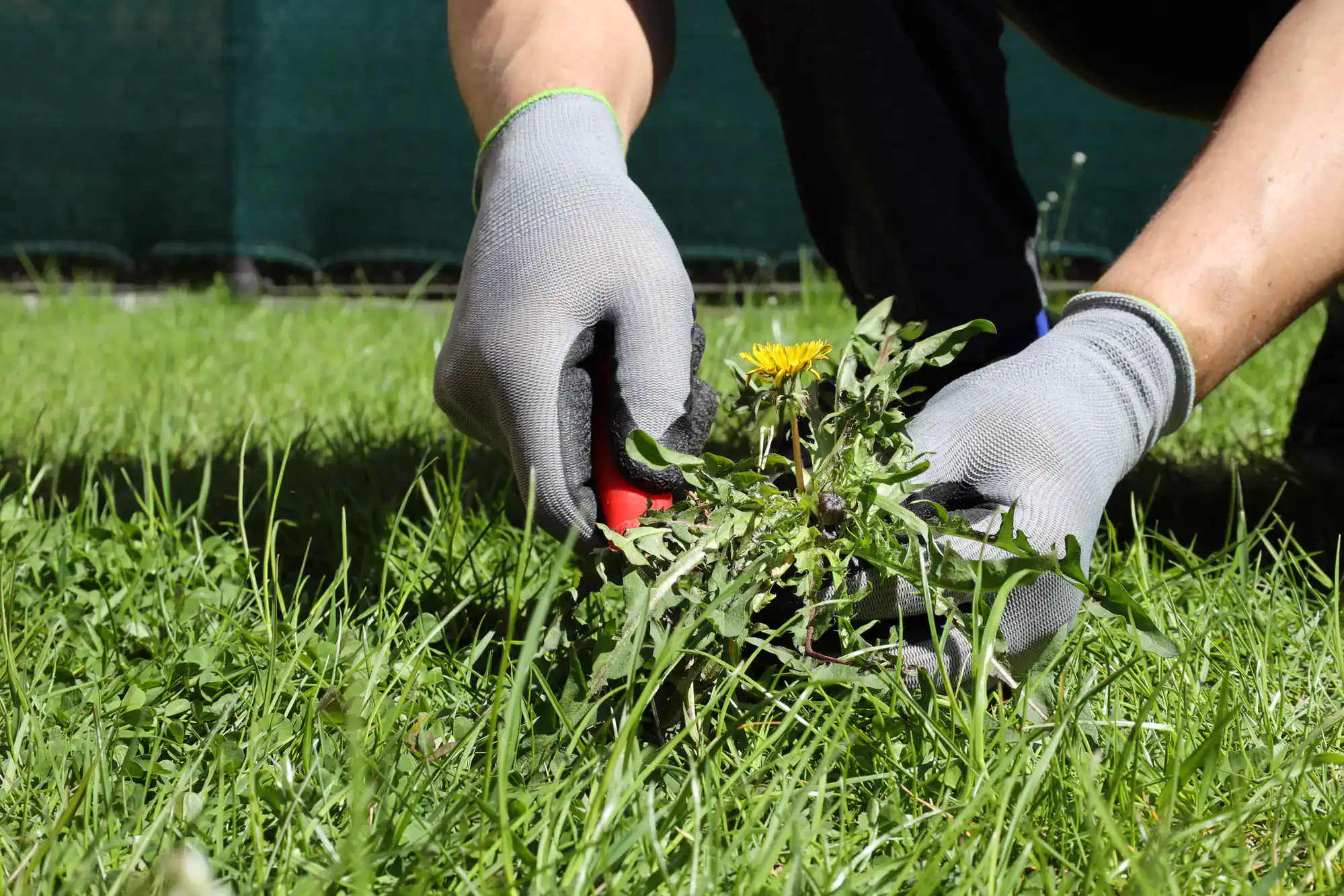
It starts with an assessment of your specific lawn not a glance from the truck, but an actual look at what’s going on. Soil type, sun and shade patterns, turf species, compaction, pH, existing weed pressure, and any problem areas that need targeted attention. Rocky Point properties vary more than most homeowners realize. A shaded back yard near the tree line behaves completely differently from the sun-exposed front lawn facing the street, and your program should reflect that.
From there, we build a custom treatment schedule around your lawn’s actual needs and Suffolk County’s fertilizer regulations including the November 1 through April 1 blackout period that prohibits nitrogen and phosphorus applications on turf. Every treatment is timed to what’s actually happening agronomically, not just what’s on a calendar. Pre-emergent crabgrass control goes down when soil temperatures are right, not just because it’s a certain week in April. Grub prevention is applied within the window that matches the Japanese beetle’s egg-laying cycle in this part of Long Island.
If your lawn needs aeration, we use hydraulic aerators professional equipment that actually penetrates compacted North Shore soil, not the lightweight drum aerators that barely scratch the surface. If it needs to be rebuilt from seed, we do that too. The goal at the end of every season is a lawn that’s measurably better than it was at the start not one that’s been maintained at the same mediocre baseline.
Ready to get started?
Our fertilizer isn’t pulled off a distributor’s pallet. It’s custom-blended specifically for our programs and for Long Island’s soil conditions formulated to account for the nutrient leaching that happens in sandy loam soils, the pH tendencies of North Shore terrain, and the demands of the cool-season turf species that Rocky Point lawns are built from. No other lawn care company in this area makes that claim, because none of them can.
The full program scope includes fertilization, pre-emergent and post-emergent weed control, grub prevention, disease management, lime applications for pH correction, core aeration with hydraulic equipment, overseeding, and complete lawn restoration for properties that need to be rebuilt rather than just maintained. Suffolk County’s proximity to Long Island Sound means the county’s fertilizer regulations carry real environmental weight here and every program we design is built around full compliance, including phosphorus restrictions, buffer zone requirements near waterways, and slow-release nitrogen requirements. You never have to wonder whether your lawn care provider is following the rules.
For Rocky Point homeowners whose lawns have been written off by other companies thin, grub-damaged, weed-dominated, or just stuck at a level that never seems to improve our restoration capability means there’s a realistic path forward. New lawn installs from seed are also available for properties that need a full reset. Online credit card payment is available, so managing your account is as straightforward as everything else about the service.
The most common reason is that the fertilizer program isn’t matched to your soil’s actual conditions. Rocky Point sits on North Shore glacial terrain a mix of rocky subsoil and sandy loam that varies across a single property. Sandy loam drains quickly and leaches nutrients faster than the average soil, which means a standard fertilizer rate can move through the root zone before the grass has a chance to use it. If your soil pH is also off which is common on Long Island, where soils tend toward acidity your lawn can’t absorb nutrients efficiently even when they’re present.
The fix isn’t applying more fertilizer. It’s applying the right formulation at the right rate, with a lime program that brings pH into the 6.0 to 7.0 range where cool-season turf actually performs. A soil assessment before designing the program is the step most companies skip and it’s usually the reason the results never come.
Grub damage typically shows up in late summer or early fall as irregular brown patches that feel spongy underfoot and peel back from the soil like loose carpet. If you’re seeing skunks, raccoons, or birds digging up sections of your Rocky Point lawn, that’s often a secondary sign they’re going after the grubs. Japanese beetle grubs are the most common culprit in Suffolk County, and Rocky Point is no exception.
The critical thing to understand is that grub treatment is most effective as a preventive measure, not a rescue. Preventive products need to be applied in late spring to early summer typically June through early July before the eggs hatch and the young grubs begin feeding on roots. By the time visible damage appears in late summer, the grubs are larger, more established, and much harder to control. If you’ve had grub damage in prior years, a preventive application the following spring is almost always the right call.
Suffolk County prohibits the application of nitrogen and phosphorus fertilizers to turf from November 1 through April 1. The regulation exists to protect Long Island’s waterways including Long Island Sound, which Rocky Point borders to the north from nutrient runoff that contributes to algae growth and water quality degradation. Violations carry fines of up to $1,000 per application, and the rules also include phosphorus restrictions year-round unless a soil test confirms deficiency, plus buffer zone requirements near water bodies and storm drains.
For your lawn, this means the fall fertilization window closes at the end of October which is actually fine agronomically, because the most important fall treatments (aeration, overseeding, and winterizer fertilization) should be completed by late October anyway. A properly timed program works within these regulations naturally. The problem arises when companies either ignore the blackout and apply anyway, or don’t plan around it and miss the fall window entirely. Both outcomes hurt your lawn and, in the first case, expose you to regulatory liability.
The equipment difference is significant, and it shows up directly in your results. Rental-grade drum aerators are relatively lightweight machines that rely on the weight of the drum to pull cores from the soil. On compacted North Shore soil where Rocky Point’s glacially deposited substructure can sit close to the surface they often don’t penetrate deeply enough to make a meaningful difference. You end up with shallow, inconsistent cores that don’t do much to relieve compaction or improve root development.
We use hydraulic aerators, which use hydraulic pressure to drive the tines into the soil with significantly more force and consistency. The cores are deeper, more uniform, and more effective at opening up compaction, improving water infiltration, and creating the conditions that allow overseeding to establish. If you’ve aerated before and wondered why it didn’t seem to help, the equipment used is often the answer. Aeration that doesn’t penetrate your specific soil type isn’t really aeration it’s just going through the motions.
For a lot of homeowners, the honest answer depends on what you’re trying to achieve. If your goal is basic maintenance on a lawn that’s already in decent shape, a DIY approach with quality products is manageable though you’ll need to stay current on Suffolk County’s fertilizer regulations, including the blackout period and phosphorus restrictions, or you risk fines. The bigger challenge is that store-bought products are formulated for average soil conditions, not for Rocky Point’s specific North Shore terrain. You’re also applying without a soil test, without calibrated equipment, and without the ability to identify and treat secondary problems like early-stage fungal disease or grub pressure before they become visible damage.
Where professional programs consistently outperform DIY is in the compounding effect over multiple seasons. A properly designed program improves the lawn’s underlying health year over year soil pH, organic matter, root depth, turf density in ways that reactive, season-by-season DIY treatment rarely achieves. Most homeowners who’ve tried both and then switched to a professional program say the same thing: they wish they’d done it sooner.
For most Rocky Point lawns, you’ll see meaningful improvement within the first full season but the timeline depends heavily on where the lawn is starting from. A lawn that’s thin, weed-heavy, or grub-damaged coming into the program needs more runway than one that’s basically healthy but undertreated. The first season is largely about correcting underlying problems: adjusting pH, controlling existing weeds, treating for grubs if needed, and getting the right nutrients into the soil at the right time.
The most dramatic improvements typically happen after a fall aeration and overseeding cycle, which is the single most effective treatment window for cool-season turf in this area. Grass seeded in September and October on a properly aerated, fertilized North Shore lawn establishes before winter and fills in noticeably the following spring. By the second full season on a well-designed program, most homeowners see a lawn that looks and performs substantially different from where it started thicker, more uniform, and significantly less weed pressure. That’s the compounding effect of a program that’s actually working.
Useful Links
Other Services we provide in Rocky Point