
Hear from Our Customers
Compacted soil is quiet. It doesn’t crack or puddle the way clay does it just slowly starves your grass from below while everything looks fine on the surface. On Brookhaven’s glacial outwash plain south of the Ronkonkoma Moraine, that’s exactly what happens. The sandy loam soils here drain fast under ideal conditions, but years of mowing traffic and foot pressure compact them just the same. The difference is you can’t always see it until the lawn starts thinning out.
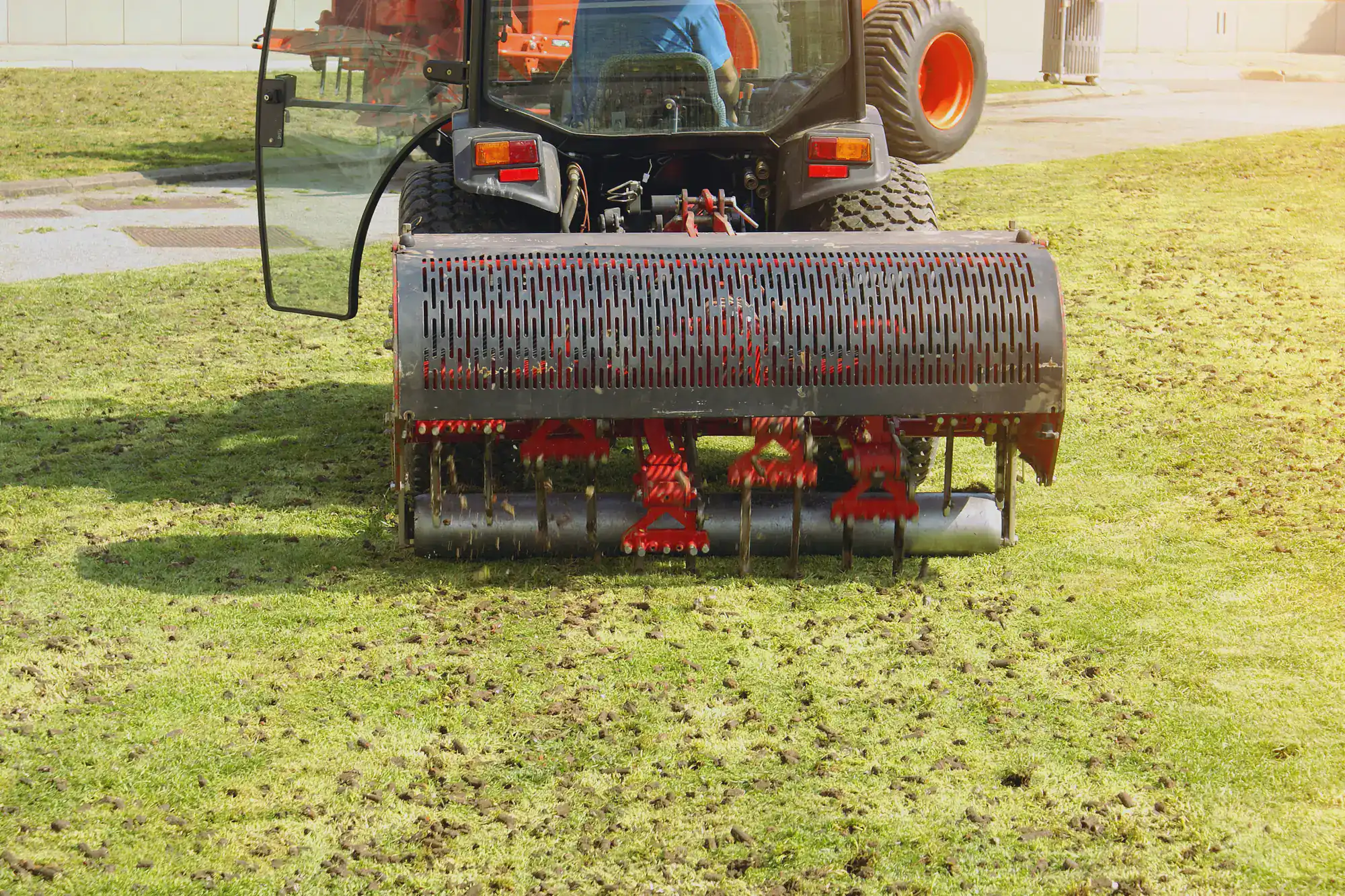
When a hydraulic core aerator pulls plugs from your lawn, it opens channels that let water, oxygen, and fertilizer reach the root zone before they drain past it. That’s the real issue on Brookhaven’s south shore soils nutrients don’t sit and wait. If the soil is compacted, they leach right through without doing anything. Aeration changes that equation. Your fertilizer starts working the way it’s supposed to, your grass thickens up, and the root system gets deep enough to handle summer heat and dry stretches without burning out.
For properties near the Carmans River corridor or along the Bellport Bay side of the hamlet, there’s another layer to this. Higher ambient humidity from the bay accelerates thatch buildup and creates conditions where fungal disease can take hold at the soil level. Core aeration improves air circulation right where it matters most, reducing the anaerobic conditions that feed those problems. It’s not a dramatic fix it’s a foundational one, and it makes everything else you do for your lawn work better.
We’ve been working in Suffolk County since 1987. That’s not a tagline it’s just the truth, and it means something in a market where companies come and go every season. The south shore conditions, the fertilizer ban timing, the sandy outwash soils that run through the southern hamlets of Brookhaven Town none of that is new to us. We’ve been diagnosing and treating lawns in this area for decades.
Every job comes with a licensed pesticide professional not a seasonal crew member reading from a service sheet. In a community like Brookhaven hamlet, where properties back up to the Wertheim National Wildlife Refuge and the Carmans River, that matters. You’re not just hiring someone to run a machine across your yard. You’re hiring someone who’s accountable for what they apply and how they apply it.
We run a fleet of five fully wrapped trucks, use hydraulic aerators that outperform anything available at a rental counter, and blend our own fertilizer formulated specifically for Long Island conditions. It’s a real operation built for this county not a franchise playing catch-up.
It starts with a real assessment of your property not a price quote over the phone based on square footage. Brookhaven hamlet lots vary significantly. Some are an acre or more with mature trees, established root competition, and decades of mowing patterns layered into the soil. Others have areas near the water with higher moisture retention and different compaction dynamics. Before anything gets scheduled, we look at what you’re actually working with.
From there, we schedule your aeration within the optimal window for Long Island cool-season grasses typically September through mid-October. That timing matters. It’s when your grass is entering its strongest growth phase, when soil temperatures are right, and when the cores that get pulled can break down and integrate before the ground freezes. It’s also well ahead of Suffolk County’s fertilizer application ban, which kicks in November 1. Miss that window and you’ve lost the season.
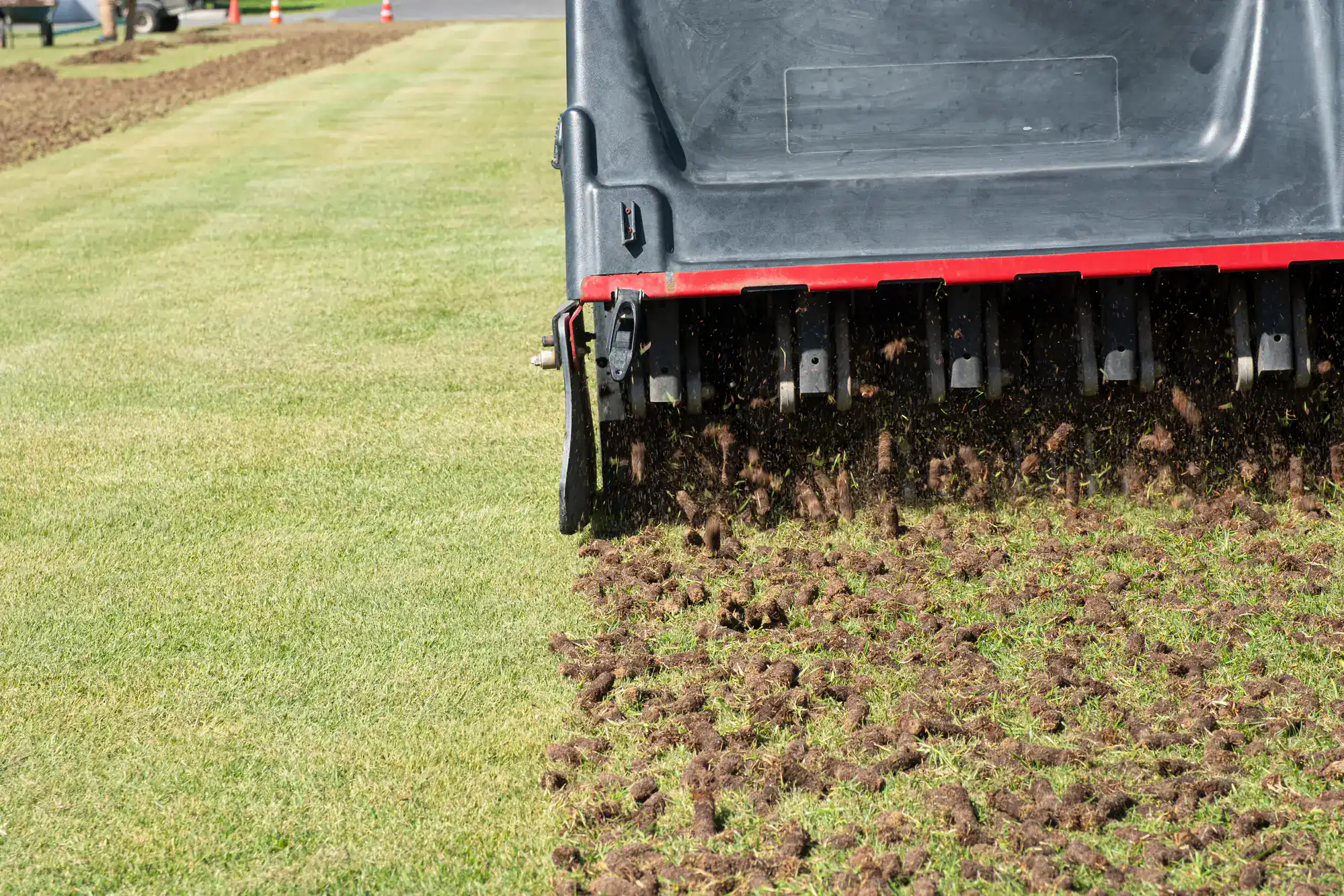
On the day of service, our hydraulic core aerator pulls plugs across your entire lawn typically two to three inches deep, spaced consistently to maximize coverage. The cores get left on the surface. They look rough for a week or two, then break down and return organic matter back into the soil. If you’re adding overseeding to the program, that happens right after aeration, while the holes are open and seed-to-soil contact is at its best. You’ll see the difference within a few weeks, and the full benefit builds through the following growing season.
Ready to get started?
Professional core aeration for a residential property in the Brookhaven area typically runs between $100 and $350, depending on lot size and conditions. Brookhaven hamlet properties skew toward larger lots many at or above an acre so it’s worth getting an accurate estimate rather than assuming a standard price applies to your property. What you’re paying for isn’t just the machine time. It’s the assessment, the licensed professional running the job, the hydraulic equipment that actually penetrates compacted south shore soils, and the knowledge behind the timing and depth decisions that determine whether the service produces results.
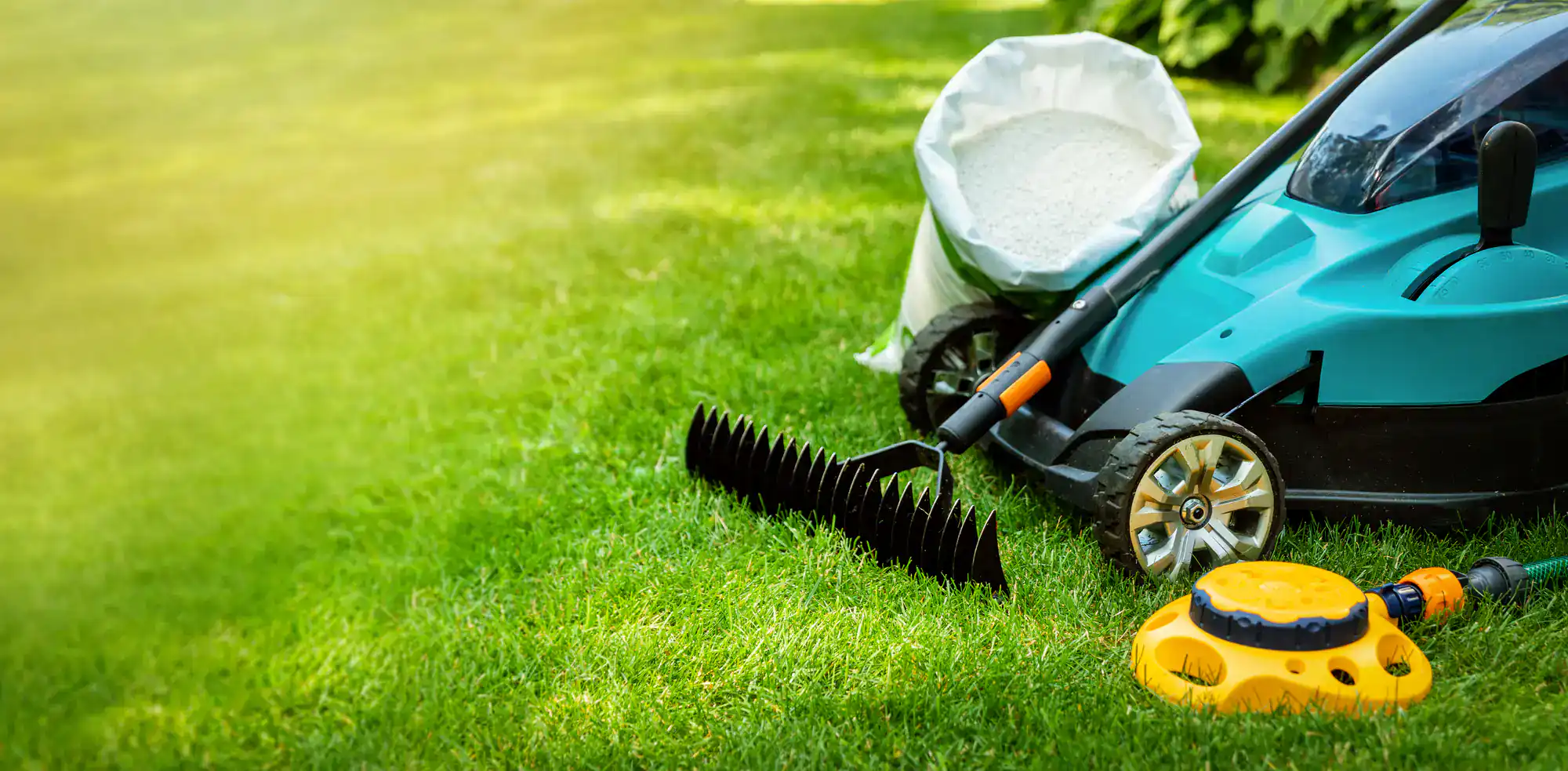
Aeration is most effective when it’s part of a coordinated program. For most Brookhaven lawns, that means pairing it with overseeding and a fertilization application using our custom-blended formula made specifically for Long Island soil chemistry, not pulled from a generic distributor catalog. The open channels left by aeration give seed the direct soil contact it needs to germinate, and they let fertilizer reach roots before it drains through the sandy outwash below.
If your lawn has specific trouble areas deep shade under mature trees, thinning near high-traffic zones, or patches that have never recovered from a dry summer those get addressed as part of your custom program, not ignored in favor of a one-size treatment. That’s the difference between a program built for your lawn and a package built for someone else’s.
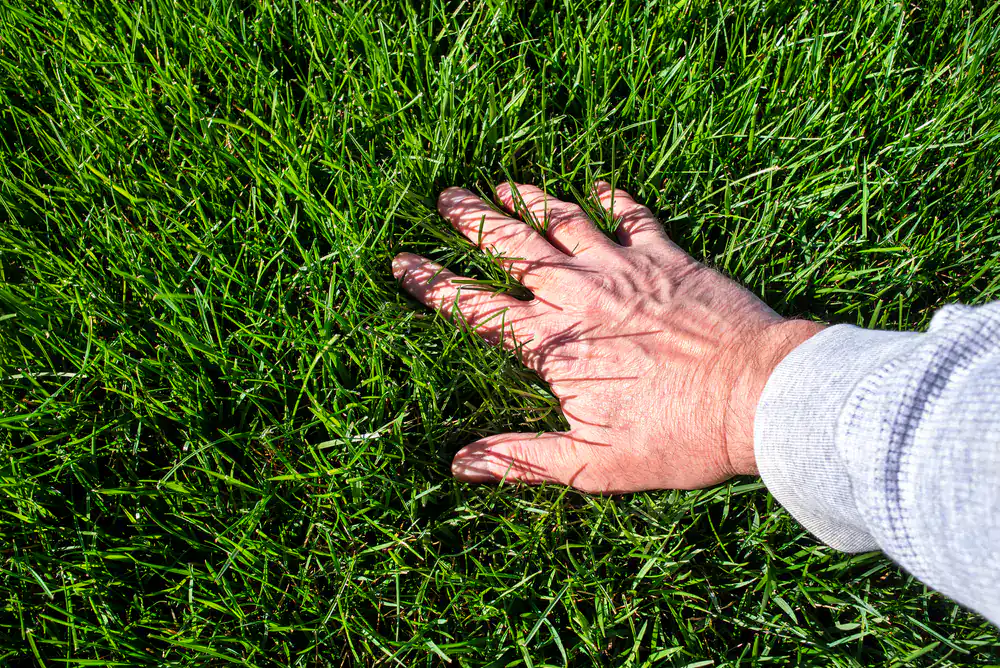
For the cool-season grasses that cover most Brookhaven hamlet lawns Kentucky bluegrass, tall fescue, perennial ryegrass the fall window is the right call. Specifically, late August through mid-October gives you the combination of soil temperature, grass growth activity, and recovery time before winter that produces the best results. Aerate too late and the ground is too cold for the cores to break down properly. Aerate in spring and you’re likely to conflict with pre-emergent weed control timing, which means choosing between weed prevention and lawn improvement.
There’s also a hard deadline that Brookhaven homeowners need to keep in mind: Suffolk County’s fertilizer application ban takes effect every November 1. Any fertilization that’s part of your fall program and ideally, you’re fertilizing right after aeration while those channels are open has to happen before that date. A $1,000 fine for violations isn’t a technicality; it’s enforced. That’s why scheduling your aeration in September rather than waiting until October gives you the room to do everything properly before the window closes.
The most reliable test is simple: push a screwdriver into your lawn with normal hand pressure. If it goes in easily to about six inches, your soil is in decent shape. If you’re pushing hard and it stops at two or three inches, you’ve got compaction. You can also look at how your lawn handles rain if water pools on the surface or runs off rather than soaking in, that’s a compaction problem, not a drainage problem.
On Brookhaven’s sandy outwash soils, compaction doesn’t always show the obvious signs that clay soils do. You won’t see the deep cracks or the heavy surface puddling that you’d get further north near the moraine. What you’ll see instead is a lawn that looks okay but never quite thickens up, fertilizer that doesn’t seem to do much, and grass that struggles through dry stretches even when you’re watering. Those are the signs that the soil is blocking what your lawn needs rather than delivering it. If your property has mature trees, high-traffic areas, or hasn’t been aerated in two or more years, there’s a strong chance it needs it.
Spike aeration pokes holes in the ground using solid tines. It doesn’t remove anything it just pushes soil aside. The problem is that compacted soil pushed sideways creates even denser walls around the hole, which can actually make compaction worse in the areas surrounding each spike. It’s a common approach for consumer-grade aerator attachments and some lower-end service providers, and it produces noticeably inferior results.
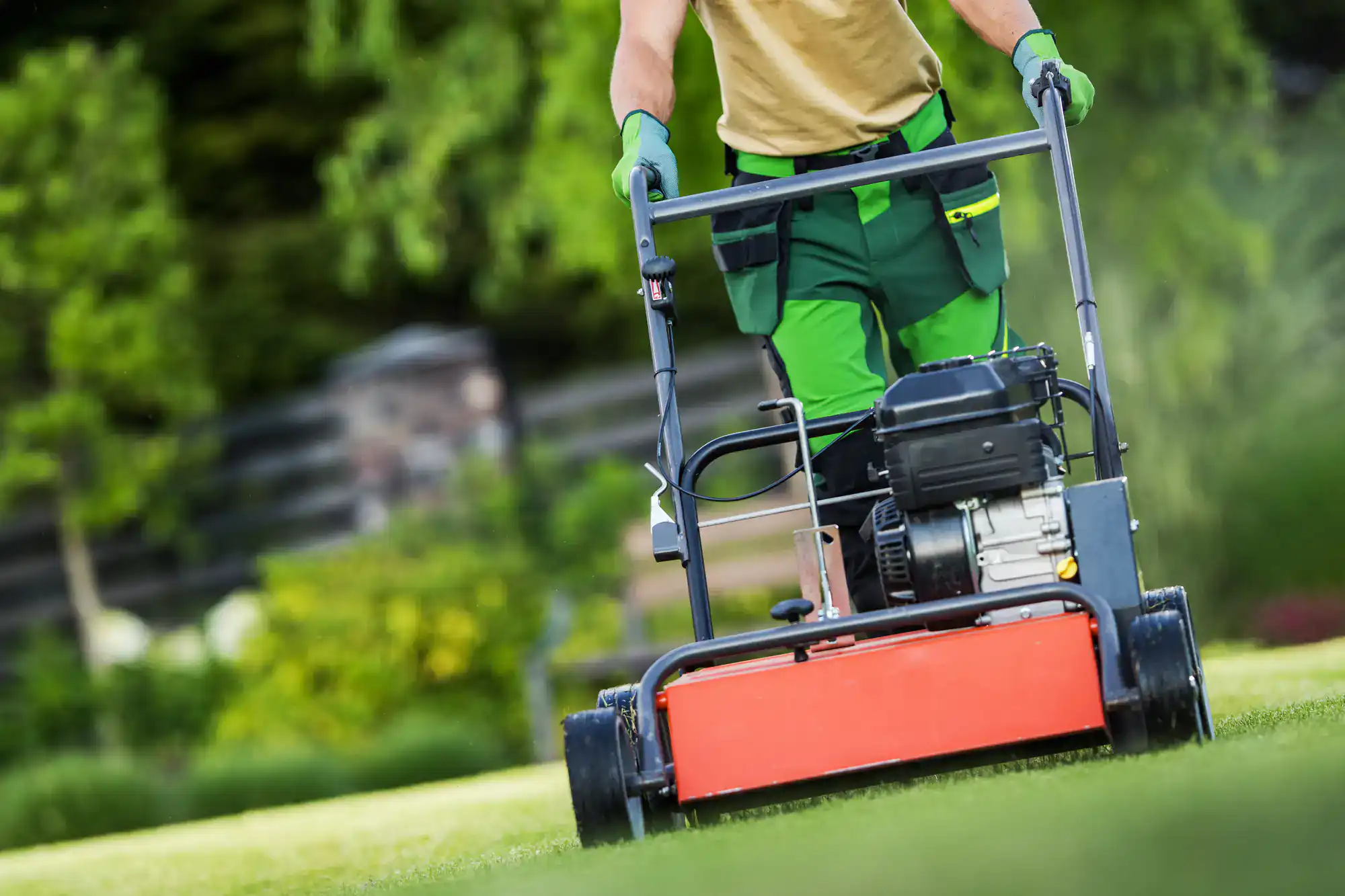
Core aeration removes actual plugs of soil typically two to three inches deep and about three-quarters of an inch in diameter. Those plugs get pulled out and left on the surface, where they break down over a couple of weeks and return organic matter to the lawn. The holes left behind create real channels for air, water, and nutrients to reach the root zone. For Brookhaven’s established properties with older, denser soil profiles and root competition from mature trees, core aeration is the only method that produces meaningful, lasting results. We use hydraulic core aerators not the walk-behind consumer machines available at rental centers which deliver consistent tine depth and clean core removal across the full property.
You can rent a walk-behind aerator for roughly $75 to $107 a day, and for a small, flat, straightforward lawn it might get the job done. But for most Brookhaven hamlet properties, the math changes quickly. Lots here tend to be larger often an acre or more and the soil conditions are more varied. Areas near mature trees have dense root competition that consumer-grade machines struggle to penetrate consistently. High-moisture areas near the Carmans River corridor have different soil behavior than the drier upland sections of the same property. A rental machine runs at a fixed depth and doesn’t adapt.
Beyond the equipment difference, there’s the timing and sequencing knowledge that determines whether aeration actually produces results. Aerating at the wrong time of year, missing the overseeding window, or applying fertilizer after the November 1 ban takes effect are all mistakes that cost more than the rental saves. When a licensed professional from our team assesses your property, we’re making decisions about depth, timing, seed selection, and fertilizer application that are specific to your lawn’s actual condition not a best guess based on a YouTube tutorial. For a property you’ve invested in, that expertise is usually worth more than the day-rental savings.
It’s a fair question, and it’s one that comes up specifically for south shore Long Island properties. Sandy soils do drain better than clay under normal conditions, which leads some homeowners to assume compaction isn’t a real concern. But sandy outwash soils the type that runs through Brookhaven hamlet and the southern tier of Brookhaven Town compact under mowing equipment and foot traffic just like any other soil. The difference is that the problem is less visible. You won’t see the surface cracking or pooling that signals compaction on heavier soils.
The more important issue with compacted sandy soil is nutrient loss. When the soil is compacted and drainage channels are blocked, water and fertilizer don’t pool at the surface they find a path and drain straight down past the root zone before the grass can absorb them. That’s wasted money and wasted effort on every fertilizer application you make. Core aeration on sandy outwash soils opens those channels and keeps nutrients in the root zone long enough for your grass to use them. It’s actually one of the most cost-effective things you can do for a south shore lawn, because it makes every other part of your lawn care program more effective.
The most honest answer is that the lawn care market in this area has a reliability problem. The most common complaint you’ll find in reviews across Suffolk County from Brookhaven to Patchogue to Smithtown is companies that sign homeowners up and then don’t follow through. Different crews every visit, no one who can explain what they’re doing or why, generic programs applied without any real assessment of the property. That’s not a knock on any specific competitor. It’s just a documented pattern in this market.
We’ve been operating continuously in Suffolk County since 1987. Every job is handled by a licensed pesticide professional someone who has passed state-administered exams and is legally accountable for what they apply. In a community like Brookhaven hamlet, where properties sit adjacent to the Wertheim National Wildlife Refuge and the Carmans River, that accountability isn’t a minor detail. The hydraulic aerators we use, the custom-blended fertilizer formulated for Long Island soils, and our fleet of five professional trucks are all investments that reflect how seriously we take the work. You’re not hiring a seasonal crew. You’re hiring a company that has built a 37-year track record in this county and intends to keep it.
Useful Links
Other Services we provide in Brookhaven