
Hear from Our Customers
When your soil is compacted, nothing works the way it should. Water pools instead of absorbing. Fertilizer sits on the surface instead of reaching the roots. Grass thins out, patches form, and no amount of watering or feeding seems to fix it. That’s not a fertilizer problem it’s a soil problem. And in Lake Ronkonkoma, it’s more common than you’d think.
The soil here isn’t uniform. The Ronkonkoma Moraine the glacial formation this area is literally named for left behind a mix of sandy loam, clay-silt deposits, and everything in between, sometimes varying from one property to the next. Clay-heavy soil compacts aggressively under mowing equipment, foot traffic, and Long Island’s freeze-thaw winters. Sandy areas drain fast but can develop a hardpan layer beneath the surface that roots simply can’t push through. Either way, the result is the same: a lawn that looks stressed no matter what you throw at it.
Core aeration changes that. It pulls plugs from the soil, opening up channels for water, air, and nutrients to actually reach the root zone. After professional aeration, every dollar you spend on fertilizer works harder. Grass fills in thicker. Color improves. And heading into summer with Long Island’s heat seasons getting longer and more intense a lawn with deep, healthy roots holds up in ways a compacted one never will.
We’ve been operating in Suffolk County since 1987 which means we were treating Lake Ronkonkoma lawns before most of today’s competitors had a truck. That kind of tenure isn’t just a number. It means we’ve worked through drought cycles, aging housing stock, evolving county regulations, and the specific quirks of moraine-influenced soil that make mid-Suffolk properties different from anything you’d find on the south shore or the east end.
Every job involves licensed pesticide professionals not seasonal labor running equipment. That distinction matters in a community like Lake Ronkonkoma, where properties sit within the watershed of the largest freshwater lake on Long Island. Proper application rates, correct timing, and genuine accountability aren’t optional here. They’re the baseline.
The fleet of five fully wrapped trucks you might have spotted on Veterans Memorial Highway or along Lakeland Avenue isn’t a branding exercise it’s what a real, established operation looks like. Five trucks means capacity, consistency, and a company that isn’t going anywhere.
It starts with an assessment of your specific property not a glance from the truck, but an actual look at what your lawn is dealing with. Soil type, compaction level, grass condition, thatch buildup, and any problem areas all factor into what we recommend. In Lake Ronkonkoma, where soil can shift from sandy to clay-heavy within the same block, this step isn’t a formality. It’s what separates a program that works from one that just looks like activity.
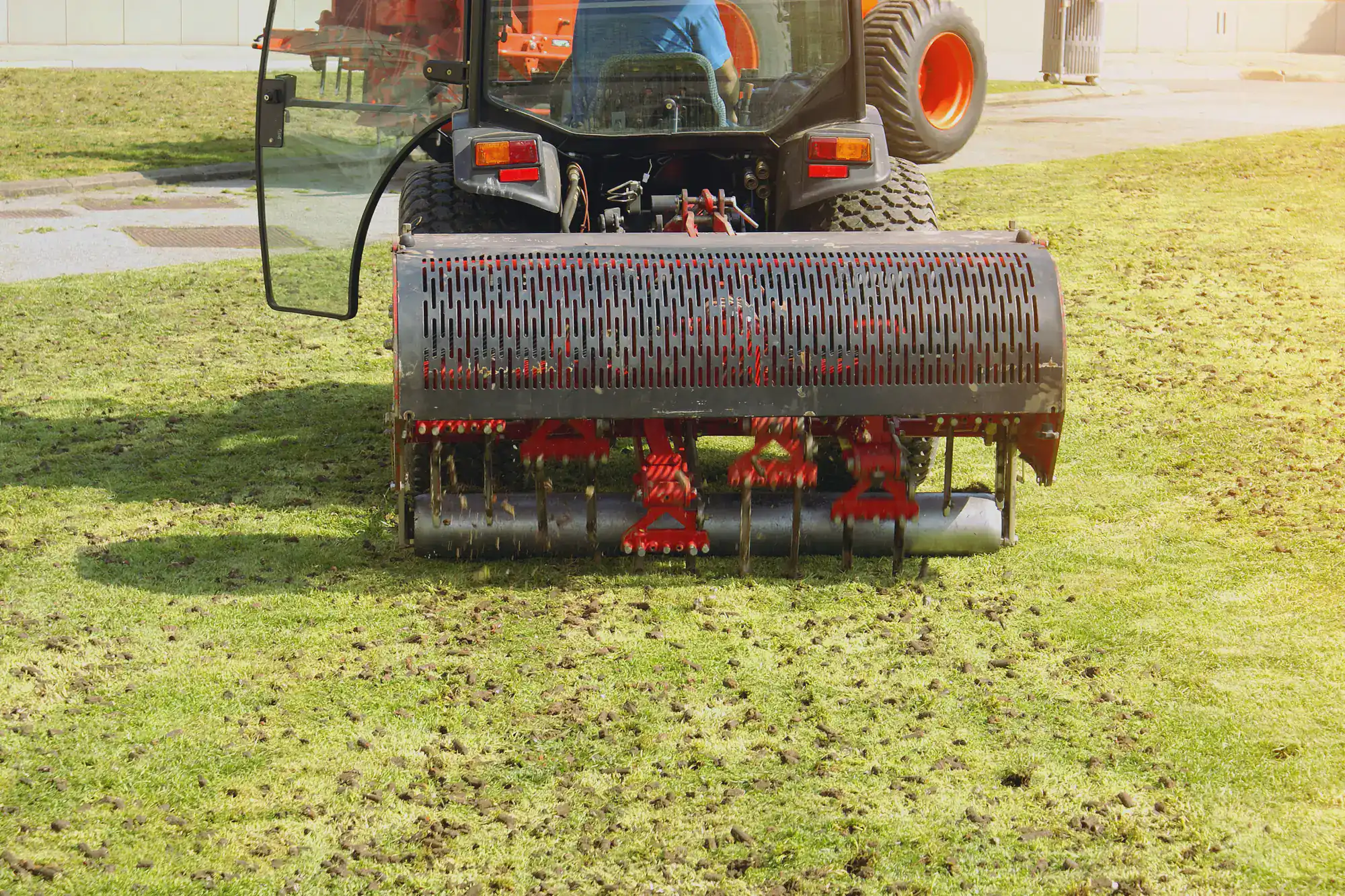
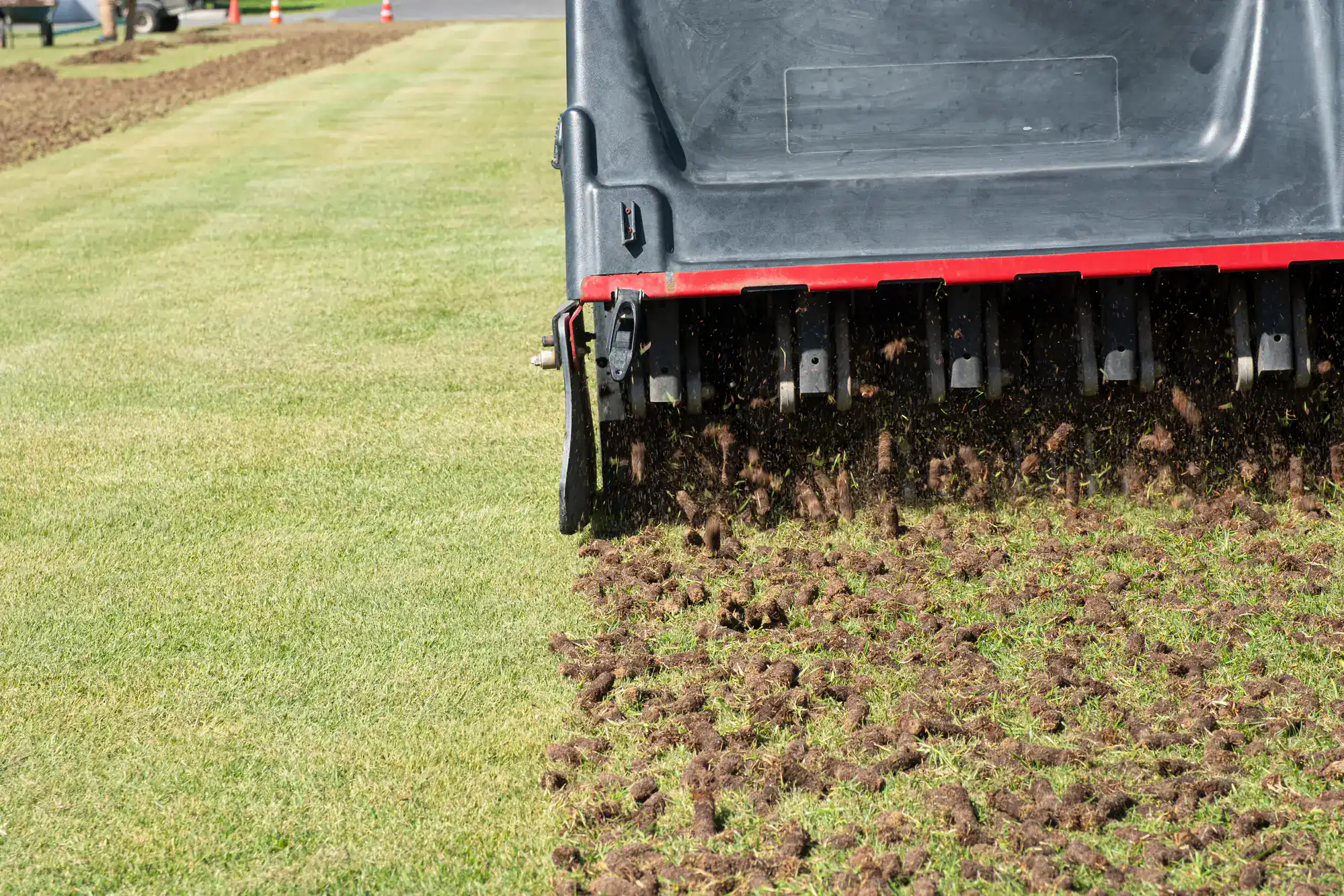
From there, we use hydraulic core aerators professional-grade machines that pull clean plugs from the soil at consistent depth, even in the heavier clay-silt deposits found throughout this area. Consumer rental aerators aren’t built for this. They don’t penetrate deeply enough in compacted soil, and they don’t extract cores cleanly. The equipment difference is real, and it shows in the results.
After aeration, the cores are left on the surface to break down naturally returning organic matter back into the soil. If overseeding is part of your program, seed goes down immediately after, taking advantage of the open channels to establish direct soil contact. The whole process is timed deliberately around Suffolk County’s fertilizer application window, which closes November 1. Miss that window and you’re waiting another year. We plan around it so you don’t have to.
Ready to get started?
What you get from us isn’t a package pulled off a shelf. Every program starts with your property its soil profile, its history, its specific problem areas and gets built from there. The fertilizer we use isn’t a generic commercial blend either. It’s custom-formulated specifically for us and calibrated for Long Island’s soil chemistry. On the variable, moraine-influenced soil found throughout Lake Ronkonkoma, that difference in formulation is measurable in how the lawn responds.
Core aeration is available as a standalone service or as part of a broader seasonal program that includes overseeding, fertilization, and ongoing lawn care. For properties near the lake’s shoreline where older soil profiles, mature tree canopy, and proximity to the watershed all factor in we adjust the approach accordingly. Fertilizer applications near the lake require careful attention to Suffolk County’s regulations, and our licensed professionals understand exactly where those lines are.
Lawn aeration cost for a standard residential lot in this area typically runs in the range of $100 to $300, depending on property size and condition. If your lawn needs more than aeration thinning, bare patches, compaction damage from years of neglect we also handle full lawn restoration and new installs from seed. One company, the full range of what your lawn might actually need.
For Lake Ronkonkoma homeowners, fall is the window specifically late August through October. The cool-season grasses that dominate lawns here, primarily tall fescue, Kentucky bluegrass, and perennial ryegrass, have their strongest growth period in fall. Aerating during that surge gives the grass the best chance to recover quickly, fill in thin spots after overseeding, and push deeper roots before winter sets in.
There’s also a hard regulatory deadline to keep in mind. Suffolk County prohibits fertilizer applications containing nitrogen or phosphorus between November 1 and April 1. That means aeration, overseeding, and fall fertilization all need to be completed before that cutoff. If you’re waiting until late October to book, slots fill fast and you risk missing the window entirely. Getting on the schedule in August or early September gives you the best outcome and the most flexibility.
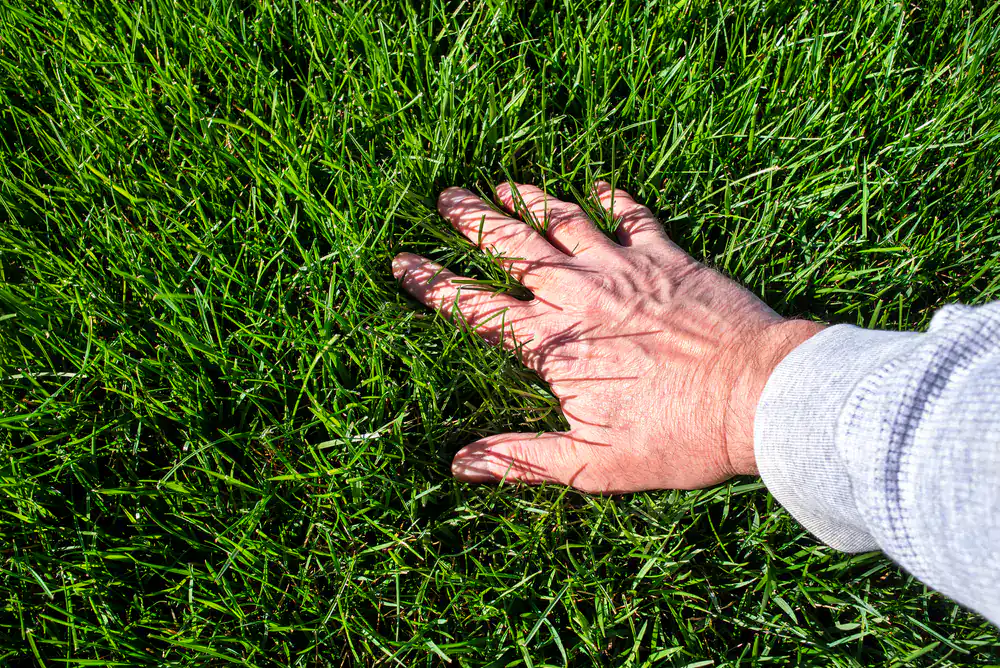
The easiest field test is a screwdriver. Push a standard screwdriver into your lawn if it doesn’t slide in easily to about six inches, your soil is compacted and aeration will make a meaningful difference. Other signs include water pooling after rain instead of absorbing, grass that looks thin or stressed despite regular watering and feeding, and bare patches that don’t seem to respond to overseeding.
In Lake Ronkonkoma specifically, compaction is a common issue for a few reasons. The clay-silt deposits left by glacial activity compact readily under mowing equipment and foot traffic. Properties that have older soil profiles particularly those near the lake’s shoreline, where many homes started as resort-era cottages often have decades of compaction built up beneath the surface. If your lawn has gone more than two or three years without professional aeration, there’s a good chance compaction is quietly undermining everything else you’re doing.
Core aeration physically removes plugs of soil from the ground, creating open channels for water, air, and nutrients to reach the root zone. Spike aeration just pokes holes it doesn’t remove anything. On softer, sandy soil that might work adequately, but on the heavier clay-silt deposits found in parts of Lake Ronkonkoma, spike aeration can actually make compaction worse by pressing soil particles tighter together around the holes.
Professional core aeration with hydraulic equipment is the standard for a reason. The plugs that get pulled out are left on the surface and break down over a few weeks, returning organic matter to the soil. That process improves soil structure over time in a way that spike aeration simply doesn’t. If someone is offering you spike aeration as a comparable alternative, it isn’t especially not on the variable, moraine-influenced soil that characterizes much of mid-Suffolk County.
Generally, yes and it’s worth understanding why before you get a quote. Lawn aeration cost is typically calculated based on the square footage of the area being treated. For a standard residential lot in Lake Ronkonkoma, you’re usually looking at somewhere in the $100 to $300 range for core aeration alone. Properties with significant compaction damage, heavily thatched areas, or irregular terrain may require additional passes or a more involved program, which affects the final number.
The more important framing is what compaction is already costing you. If your soil is too dense for fertilizer to reach the root zone, every application you’ve been paying for has been working at a fraction of its potential. Aeration isn’t an added expense it’s what makes the rest of your lawn care investment actually perform. For homeowners in Lake Ronkonkoma who’ve been spending on fertilizer and treatments without seeing results, aeration is often the missing piece.
Right after is the right answer. Immediately following core aeration, the soil has open channels and direct contact points that give seed the best possible environment to germinate and establish. Waiting even a week or two allows those channels to start closing and reduces the seed-to-soil contact that drives germination rates. The combination of aeration and overseeding done together consistently outperforms either service done separately or in sequence with a gap between them.
For Lake Ronkonkoma lawns, timing this correctly relative to the November 1 fertilizer ban is critical. You want aeration and overseeding completed with enough time for a post-seeding fertilization before the cutoff ideally finishing the full program by mid-to-late October at the latest. New seed needs that initial feeding to establish through the fall and survive the winter in good shape. We build programs around this window deliberately, so nothing gets rushed or skipped at the end of the season.
Rental aerators are built for light, occasional use on average suburban lawns. On the variable soil profiles found throughout Lake Ronkonkoma where you might have sandy loam on one side of the property and clay-silt deposits on the other a consumer-grade machine often doesn’t penetrate deeply enough or pull clean cores from heavier soil. You can spend a full Saturday on the job and still not get the depth or coverage that a professional hydraulic aerator delivers in a fraction of the time.
Beyond the equipment, there’s the licensing piece. In New York State, commercial pesticide application requires NYSDEC certification and in a community where properties sit within the Lake Ronkonkoma watershed, that credential carries real weight. A licensed professional understands proper application rates, timing, and buffer considerations that protect both your lawn and the lake. Renting a machine handles the mechanical part of aeration, but it doesn’t replace the assessment, the program design, or the accountability that comes with a professional who’s been working these specific properties since 1987.
Useful Links
Other Services we provide in Lake Ronkonkoma