
Hear from Our Customers
Compacted soil is one of the most documented problems in North Great River. Decades of mowing, foot traffic, and Long Island’s freeze-thaw winters press the soil tighter every year until water, air, and nutrients can’t reach the root zone at all. You might notice thin patches, pooling water after rain, or grass that just never seems to recover no matter what you put on it. That’s compaction and fertilizer alone won’t fix it.
Core aeration pulls plugs of compacted soil out of the ground and opens channels straight to the root zone. Done right, in the fall window that cool-season grasses actually respond to, it changes how your lawn functions at a fundamental level. Roots grow deeper, the turf thickens up, and every treatment you apply afterward fertilizer, seed, lime actually reaches the place it needs to go.
For properties in North Great River backing up to Connetquot River State Park, there’s an added layer worth thinking about. Root competition from the park’s tree line, deer pressure from the preserve, and edge stress from the bridle paths all take a toll on turf that most homeowners don’t account for. A properly aerated lawn handles that kind of stress significantly better than one that’s been running on compacted soil for years.
We’ve been operating throughout Suffolk County since 1987. That’s not a tagline it’s the reason we understand the difference between the sandy soils along the Connetquot River corridor and the heavier, more compaction-prone soil in North Great River’s developed residential blocks. We’ve worked these properties through every variation of Long Island weather, every regulatory change, and every season that determines whether a lawn thrives or just survives.
Every job is handled by a licensed pesticide professional not a rotating seasonal crew. We run five fully wrapped trucks throughout the Islip Town area and the broader South Shore corridor, which means we’re not squeezing your property in as a distant outlier. We’re already here.
Our fertilizer is custom-blended specifically for Long Island lawns, not pulled off a shelf. Our aerators are hydraulic, professional-grade machines that outperform anything available at a rental counter. When you call Lawn Master, you’re getting the equipment, the credentials, and the experience that actually moves the needle.
It starts with a real look at your lawn not a glance from the truck. Soil type, compaction level, thatch depth, grass variety, shade patterns, and any stress factors specific to your property all factor into what we recommend. A half-acre lot in North Great River that backs up to the park has different needs than a property on a more developed block closer to Sunrise Highway. We don’t skip that step.
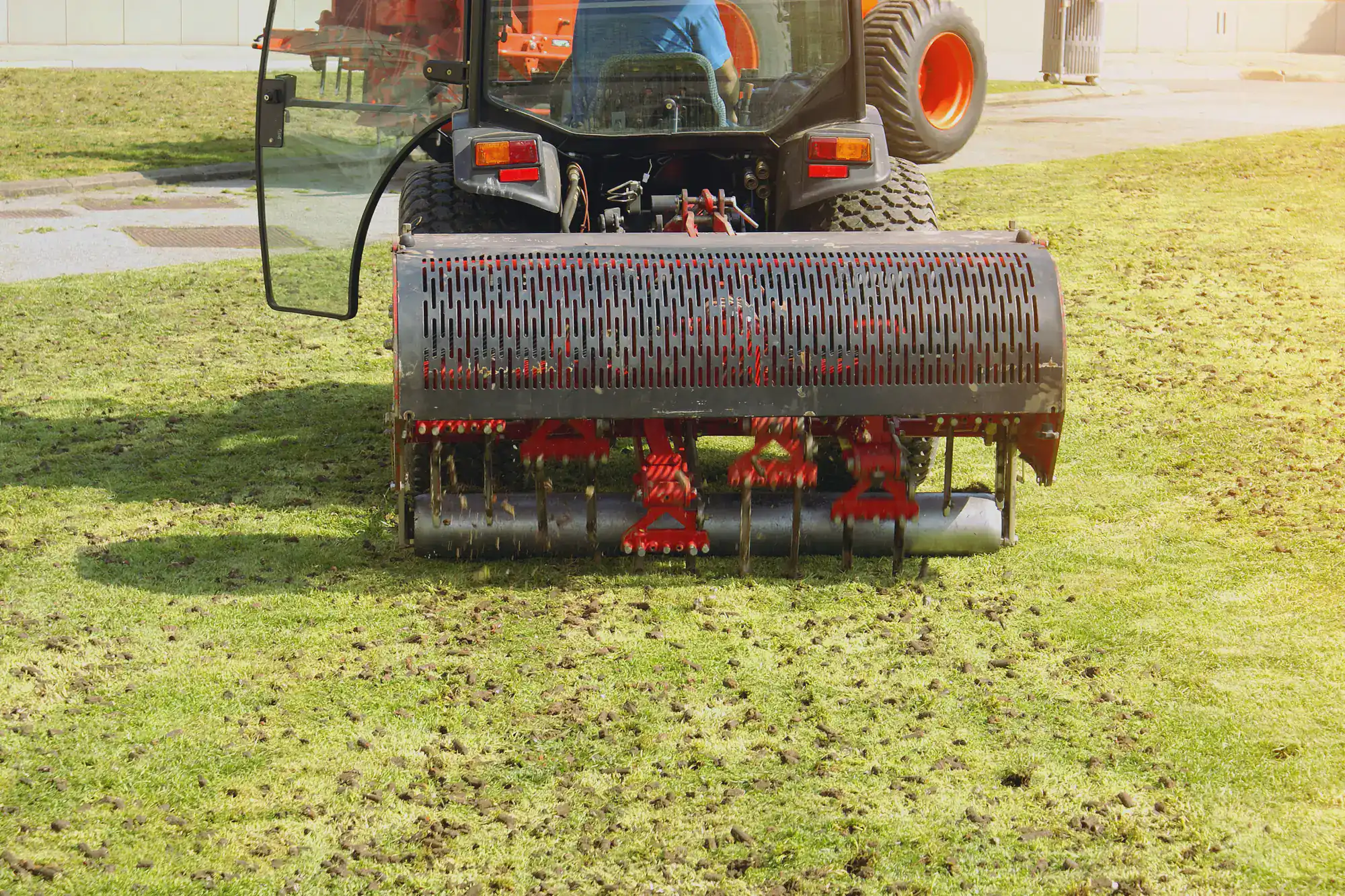
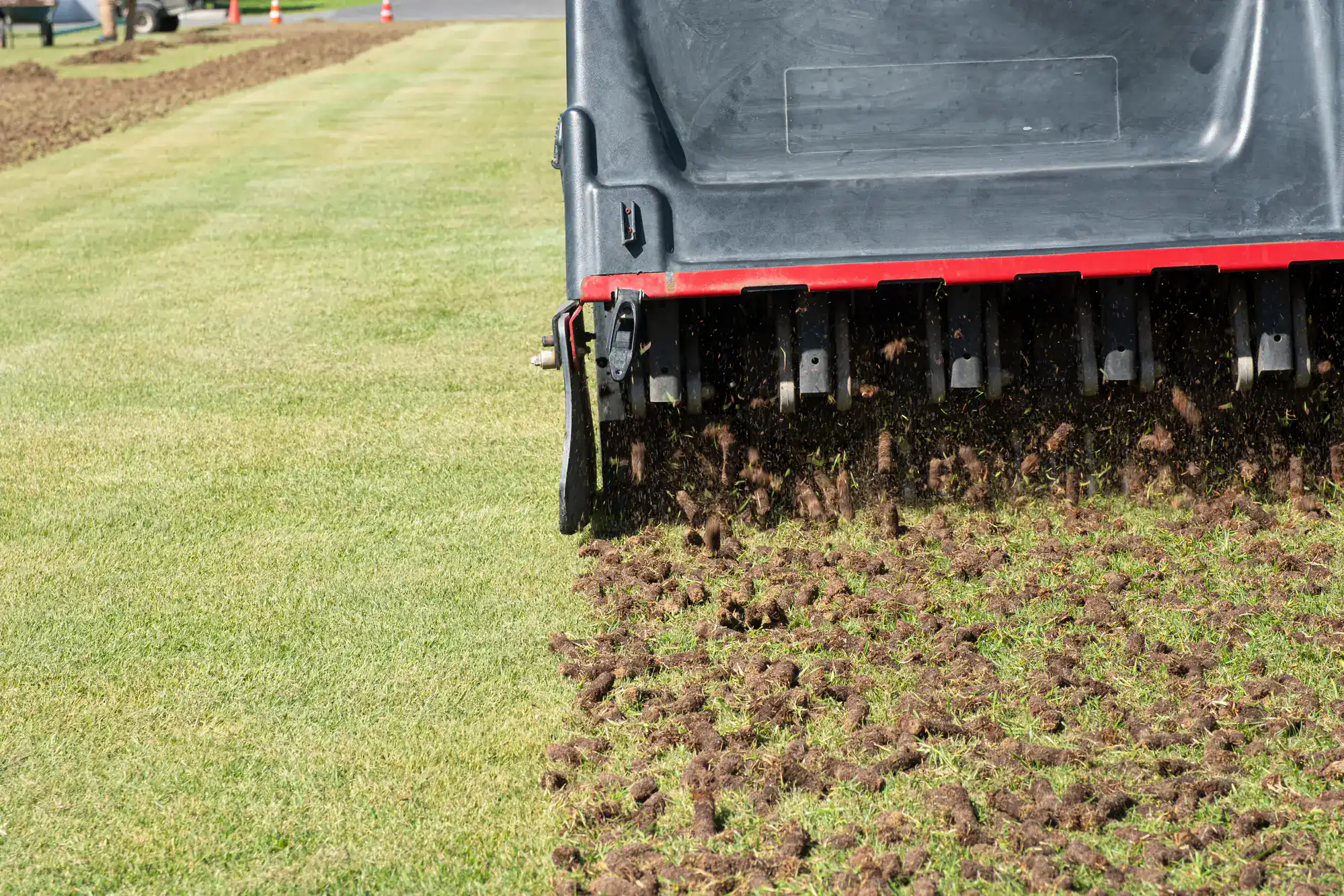
Once we’ve assessed the property, we run our hydraulic core aerator across the lawn. These machines pull clean plugs of soil out of the ground typically two to three inches deep and deposit them on the surface. Those plugs break down naturally over the following weeks, returning organic matter to the soil. The channels left behind are where the real work happens: water infiltrates more efficiently, roots push deeper, and anything you apply to the lawn afterward reaches the root zone instead of sitting on the surface.
Timing matters here. Suffolk County’s fertilizer ban takes effect November 1, and the cool-season grasses that dominate North Great River lawns tall fescue, Kentucky bluegrass, perennial ryegrass respond best to aeration in the late summer through early fall window. That window is real and it closes. Booking early in the season means your lawn has the full fall growing period to recover and strengthen before winter dormancy sets in.
Ready to get started?
Lawn aeration cost for a residential property in North Great River typically runs between $75 and $300 depending on lot size, soil conditions, and what additional treatments are recommended alongside aeration. For a half-acre lot which is the norm in this community you’re looking at a professional service that pays for itself by making every other lawn treatment you invest in more effective. Compacted soil wastes fertilizer. Aerated soil doesn’t.
Every Lawn Master aeration program includes a property assessment before the machine ever touches your lawn. We look at what your soil is actually doing whether it’s the sandier composition near the Connetquot River corridor or the denser, more compaction-prone soil in the more developed sections of North Great River and we build the program around what we find. If overseeding is warranted, we use hydraulic seeders that deliver seed directly into the aeration channels, where germination rates are significantly higher than surface broadcasting.
Suffolk County’s regulations matter here too. Chapter 459 restricts fertilizer applications after November 1, and Chapter 647 requires licensed applicators for any commercial pesticide work. We employ NYSDEC-certified professionals on every job which isn’t just a credential in a community that borders a protected river watershed. It’s the standard you should expect from anyone treating your property.
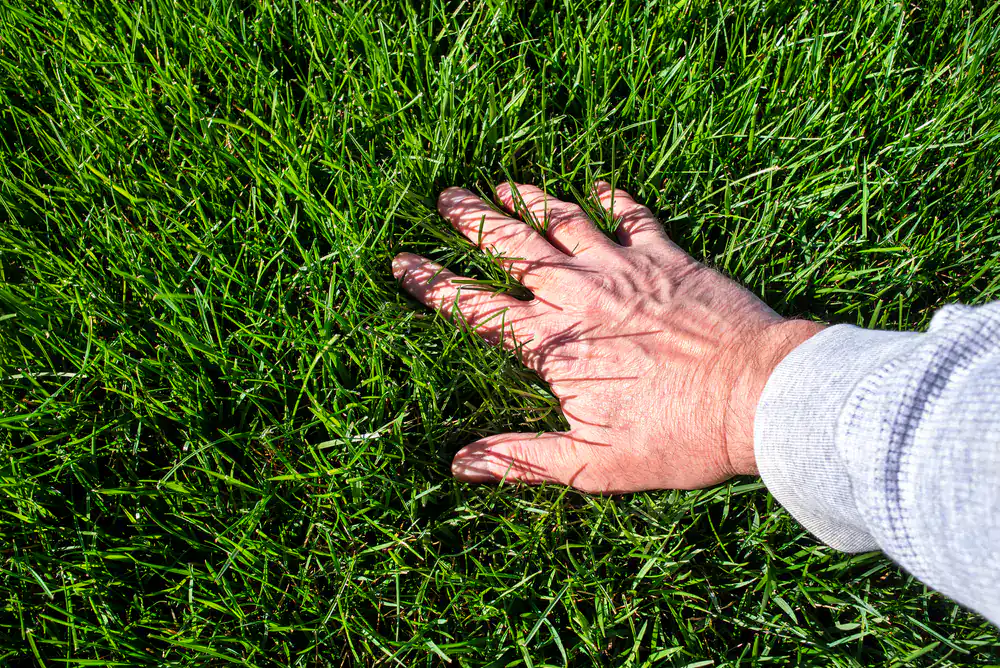
The best window for lawn aeration in North Great River is late summer through early fall roughly August through October. The cool-season grasses that dominate Long Island’s South Shore, including tall fescue, Kentucky bluegrass, and perennial ryegrass, are actively growing during this period and respond aggressively to aeration by pushing roots deeper before winter dormancy sets in.
There’s also a regulatory deadline that makes timing non-negotiable. Suffolk County’s fertilizer ban takes effect November 1 under Chapter 459, which means any fall fertilization paired with your aeration program has to be completed before that window closes. Homeowners in North Great River who wait until late October often find that the best scheduling slots are gone and the optimal treatment window has passed. Booking in August or early September gives your lawn the full fall season to recover and build the root depth that carries it through winter and into a stronger spring.
The simplest test is a screwdriver. Push a standard screwdriver into your lawn after a normal rain. If it goes in easily to about six inches, your soil has decent structure. If you’re forcing it and it stops at two or three inches, you’ve got compaction and no amount of fertilizer will fix that on its own.
Other signs are less obvious but just as telling. Water that pools on the surface instead of absorbing, grass that stays thin in high-traffic areas no matter what you do, or a lawn that just never seems to respond to fertilizer the way it should these are all compaction symptoms. What’s happening is that the soil has compressed to the point where nutrients, water, and air can’t reach the root zone efficiently. Fertilizer sits on top or runs off rather than getting to where it actually matters. Aeration opens the channels that make fertilization work. In most cases, the two go together rather than being an either-or decision.
Core aeration removes actual plugs of soil from the ground typically two to three inches deep and deposits them on the surface where they break down naturally. This physically opens the soil structure and creates channels for water, air, and nutrients to reach the root zone. Spike aeration, by contrast, just punches holes in the ground without removing anything. In compacted soil, spike aeration can actually make things worse by pushing the surrounding soil tighter around each hole.
For North Great River properties where decades of mowing, freeze-thaw cycling, and foot traffic have built up real compaction in the soil core aeration is the meaningful treatment. It’s not just a preference. Spike aeration on a half-acre lot that’s been under residential use since the 1950s or 1960s is the equivalent of putting a bandage on a structural problem. Core aeration addresses what’s actually happening in the soil. It’s also why the equipment matters: our hydraulic core aerators pull clean, consistent plugs across varied soil conditions, including the mix of sandy and denser soils found across different parts of North Great River.
It does, and it’s worth understanding why. Properties that border or back up to Connetquot River State Park Preserve face a specific combination of stressors that most lawn care programs aren’t designed around. Deer pressure from the preserve is significant deer browsing stresses turf, creates bare patches, and makes it harder for grass to recover without overseeding paired with aeration. Root competition from the park’s mature tree line can extend well into your property, competing with turf for water and nutrients in ways that aren’t obvious from the surface.
There’s also an environmental responsibility angle that matters in this specific location. The Connetquot River corridor is a protected watershed, and what gets applied to your lawn and how has a real relationship with the water quality in that system. Hiring a company that employs NYSDEC-licensed pesticide professionals isn’t just about credentials. It’s about making sure the person treating your property understands the regulatory requirements and environmental context of working adjacent to a protected river system. Suffolk County’s Chapter 647 pest control regulations require licensed applicators for commercial work, and that requirement exists for good reason in communities like North Great River.
For a residential property in North Great River, professional core aeration typically runs between $75 and $300. Where your property lands in that range depends on the actual size of the turf area, the current condition of the soil, and what additional treatments overseeding, fertilization, lime application make sense alongside the aeration itself.
For a half-acre lot, which is the standard in North Great River, the more useful way to think about the cost is in terms of what it protects. You’re paying roughly $10,000 per year in property taxes on a home worth $500,000 or more. The lawn is part of that asset. Aeration isn’t an add-on it’s the treatment that makes every other dollar you spend on lawn care more effective. Fertilizer applied to compacted soil is largely wasted. Fertilizer applied after aeration reaches the root zone and actually does its job. Most homeowners who aerate consistently spend less on corrective treatments over time because the lawn is functioning the way it’s supposed to.
You can rent an aerator, and some homeowners do. But there’s a meaningful gap between what a consumer rental machine delivers and what a professional hydraulic core aerator does on a property like yours. Rental units are built for light residential use they don’t penetrate as deeply, they don’t pull as clean a core, and they struggle with the kind of compaction that builds up over decades in a 1950s or 1960s-era lot that’s been under regular use since it was built. Many North Great River homes fall squarely into that category.
Beyond the equipment, there’s the question of what happens before and after the machine runs. A professional assessment identifies whether your soil needs aeration alone or whether overseeding, lime application, or a custom fertilizer program should be paired with it to get real results. Our custom-blended fertilizer is formulated specifically for Long Island soil chemistry not a generic product that approximates what your lawn needs. And because our team includes NYSDEC-licensed professionals, every application meets the regulatory requirements that apply to properties in Suffolk County, including those near the Connetquot River watershed. Renting a machine gets holes in the ground. A professional program gets a healthier lawn.
Useful Links
Other Services we provide in North Great River