
Hear from Our Customers
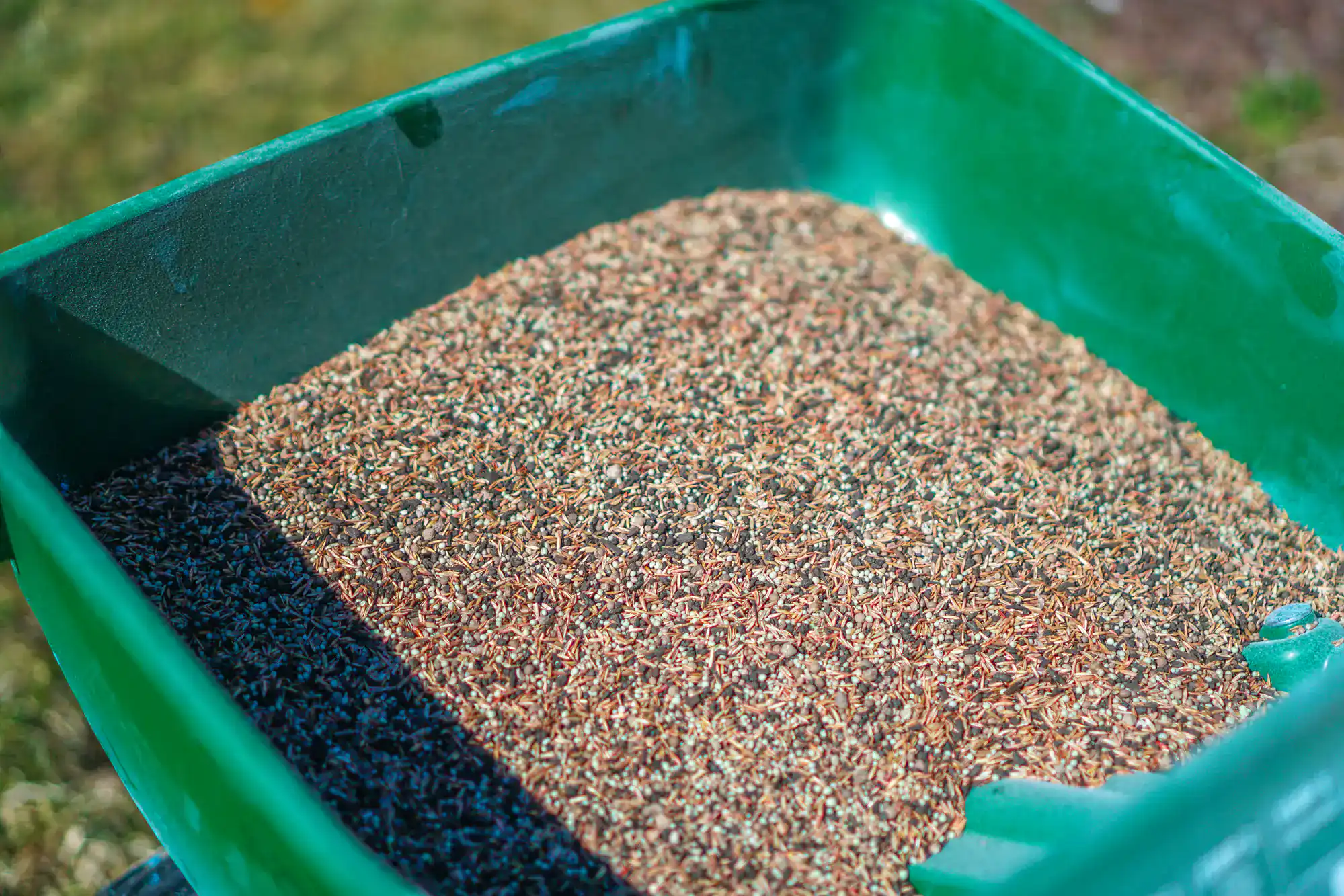
When your lawn is on a program that’s actually built for where you live, the difference shows fast. Thicker turf, fewer bare patches, less weed pressure, and a yard that looks like it belongs in front of a home worth what yours is worth. That’s what a properly executed fertilization program delivers not just greener grass, but a lawn that’s genuinely healthier from the root up.
Here in North Great River, your lawn is dealing with conditions that an off-the-shelf program simply isn’t designed for. The sandy south shore soil drains quickly, which means nutrients wash out before your grass can fully use them. If the timing and formula aren’t dialed in for that, you’re wasting product and wondering why nothing’s changing. Add salt air coming off Nicoll’s Bay and you’ve got a lawn environment that needs someone who actually knows this area not a rotating technician running a national chain’s one-size-fits-all route.
For homeowners near the Connetquot River State Park Preserve, there’s also the watershed piece. What you put on your lawn eventually moves through the soil toward the river and the bay. A licensed professional who applies the right product at the right rate at the right time isn’t just good for your lawn it’s the responsible choice for the community around you.
We’ve been working in North Great River and the surrounding Town of Islip communities since 1987. That’s nearly four decades of south shore lawns the compacted Hi-Ranch lots built in the ’50s and ’60s, the larger properties with direct access to the Connetquot River trail system, the yards that have cycled through three or four lawn companies and still aren’t where they should be. We’ve seen all of it.
Every job gets owner-level attention. That means the person making decisions about your lawn actually knows what they’re looking at not a seasonal hire reading off a service sheet. Our professionals are NYSDEC-licensed pesticide applicators, which isn’t a marketing point, it’s a legal requirement that a surprising number of operators quietly sidestep. You deserve to know who’s applying what to your property.
We use a custom-blended fertilizer made specifically for our programs not a product you can buy at a hardware store, and not whatever a distributor had in stock. It’s formulated for Long Island’s soil chemistry and the specific demands of cool-season turf on the south shore. That’s the difference between a program that works and one that just looks like it should.
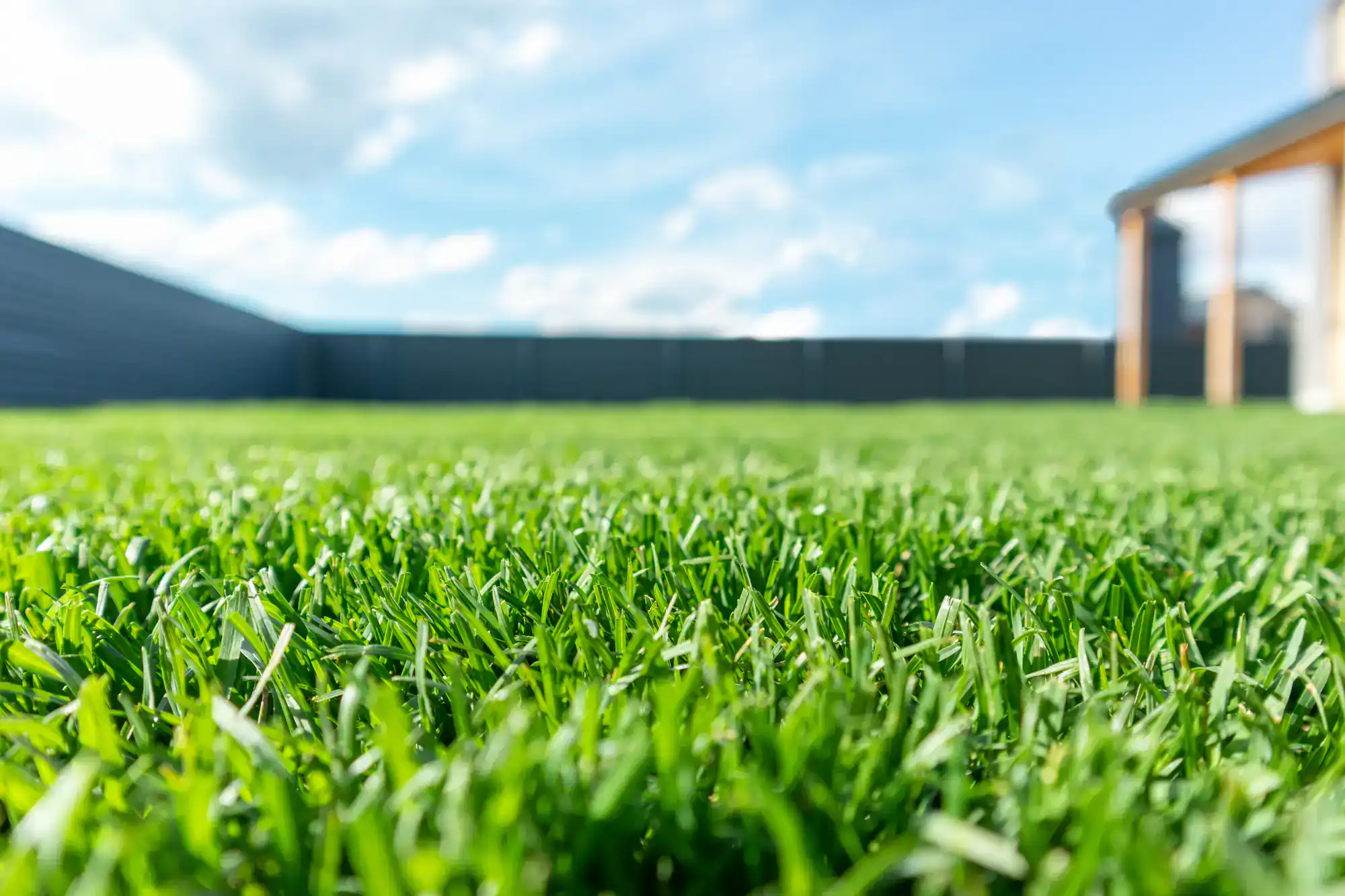
It starts with understanding your lawn not assuming it’s the same as every other property on the route. Soil type, sun exposure, current grass condition, weed pressure, and any history of past treatments all factor into what your program looks like. For North Great River properties, we’re paying particular attention to soil drainage and any signs of salt stress or compaction that are common in this area’s older housing stock.
From there, applications are timed to the Long Island seasonal calendar not a generic national schedule. In Suffolk County, fertilizing between November 1st and April 1st is actually illegal, so any legitimate provider needs to be working within those windows. Spring applications start when the grass is actively growing, typically mid-April. The most important window of the year is early September, when a well-timed fall application builds root reserves that carry your lawn through winter and set it up for a strong spring. That timing matters more than most homeowners realize.
If your lawn needs more than fertilization compaction relief, overseeding, or a full renovation we handle that too. Our hydraulic aerators pull deeper plugs than the equipment most operators use, and the best window for aeration and overseeding on Long Island is mid-August through late September. If your lawn is past the point where a fertilization program alone will fix it, we can take it from bare ground to finished turf from seed. One company, start to finish.

Ready to get started?
Every property in North Great River is different. A shaded lot off Lowell Avenue with compacted soil from sixty years of foot traffic needs a completely different approach than a larger property near the Connetquot River preserve with open exposure and sandier drainage. That’s why we build every program around your specific lawn grass type, soil conditions, weed history, and seasonal timing all shape what goes on your turf and when.
The fertilizer itself is custom-blended specifically for our programs. It’s not something you’ll find in a store, and it’s not what a national chain is applying. It’s formulated for Long Island’s soil chemistry and calibrated for cool-season grasses Kentucky bluegrass, perennial ryegrass, fescue that make up the majority of lawns in this area. Beyond fertilization, the program addresses weed control, crabgrass prevention, grub management, and where needed, specialized treatments for persistent problems like nutsedge that most generalist providers struggle to handle effectively.
For lawns that need structural help, we offer core aeration and overseeding using hydraulic equipment that outperforms the tow-behind units common among smaller operators. And for properties that need a full reset, we install new lawns from seed something the tree service companies and franchise operators showing up in local search results simply can’t offer. Suffolk County’s phosphorus application restrictions and watershed regulations are followed on every job, because doing it right isn’t optional when you’re working near the Connetquot River drainage system.
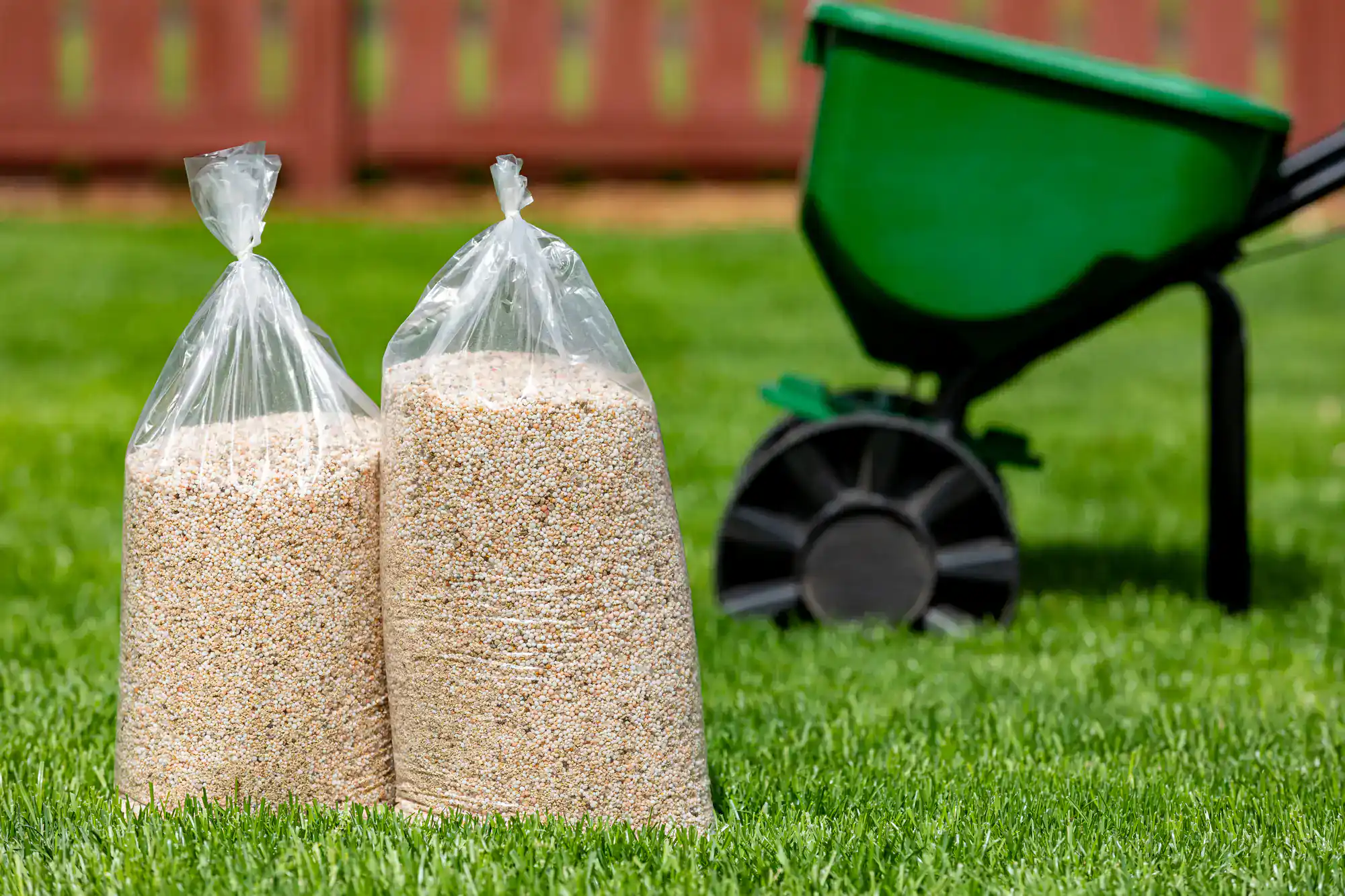
The short answer is: spring and fall, with fall being the more important of the two. For North Great River lawns which are predominantly cool-season grasses like Kentucky bluegrass, perennial ryegrass, and fescue the grass does its most productive growing in those shoulder seasons. Spring applications typically begin in mid-April, once the turf is actively growing and soil temperatures have climbed enough to support uptake.
The fall window is where most homeowners leave real results on the table. An application in early September gives your grass time to absorb nutrients before it goes dormant, building root reserves that fuel a much stronger spring green-up. It’s the single most impactful treatment of the year, and it’s one most people either skip or time wrong.
One thing worth knowing: Suffolk County prohibits fertilizing lawns between November 1st and April 1st, with a $1,000 fine for violations. Any legitimate lawn care provider operating in North Great River should already know this but it’s worth asking if you’re evaluating someone new.
Sandy south shore soil is the most common culprit that doesn’t get talked about enough. North Great River sits on the south shore of Long Island, where the soil skews sandy and drains quickly. That’s fine for preventing waterlogging, but it means nutrients move through the root zone fast sometimes before the grass can fully absorb them. If the fertilizer formula isn’t calibrated for that drainage rate, or the application timing is off, you’re essentially feeding the soil more than the grass.
Compaction is the other factor that catches a lot of homeowners off guard. Many of the homes in North Great River were built in the 1950s and ’60s on lots that have been walked on, driven on, and settled for over six decades. Compacted soil restricts the movement of air, water, and nutrients to the root zone, so even a well-timed fertilization program can’t fully do its job on a lawn that hasn’t been aerated. Core aeration especially with hydraulic equipment that pulls deeper plugs is often the missing piece for lawns in this area that have been fertilized repeatedly without meaningful improvement.
The fertilizer we use is a custom blend formulated specifically for our programs not an off-the-shelf product from a regional distributor. It’s designed for the nutrient demands of cool-season turf growing in Long Island’s coastal soil conditions, with the release rates and ratios calibrated to deliver results without overloading the soil.
The environmental piece is a real concern for North Great River homeowners, and it should be. The Connetquot River watershed drains toward the Great South Bay, and nitrogen runoff from lawn fertilizer has been documented as a contributing factor to water quality issues in the bay. Suffolk County has phosphorus application restrictions in place specifically because of this fertilizer containing more than 0.67% phosphorus can only be applied if you’re establishing a new lawn or a soil test confirms it’s needed. Every application we make is done by a NYSDEC-licensed pesticide professional who knows these regulations and follows them on every job. That’s not a given with every provider working in this area.
For most lawns in North Great River, a well-structured program runs four to six applications per year, timed to the growth cycles of cool-season turf. The exact number depends on your lawn’s current condition, the grass varieties present, and how aggressively you want to push results. More applications aren’t automatically better overapplication, especially with nitrogen, can stress grass during summer heat and create runoff issues near the watershed.
The key is spacing and timing, not volume. A crabgrass pre-emergent in early spring, a balanced fertilizer application as growth picks up, a lighter summer treatment if conditions warrant it, and a strong fall application in early September that’s the framework. From there, the program adapts based on what your lawn actually needs, not a preset schedule that treats every property the same. If your lawn has specific weed pressure, grub history, or soil issues, those get addressed within the program rather than as expensive add-ons after the fact.
Yes and it happens more often than you’d think. Lawns that have been burned by a previous provider’s misapplication, taken over by weeds, damaged by grubs, or simply worn out from years of neglect can be brought back. The approach depends on how far gone the lawn is. In many cases, a combination of core aeration, overseeding with quality seed, and a well-timed fertilization program is enough to turn things around within a single growing season.
For lawns that are past the point where overseeding will work where the turf coverage is too thin or the soil condition too compromised a full renovation from seed is the right call. We install new lawns from bare ground, which means you don’t have to find a separate contractor for the renovation work and then another company for ongoing maintenance. The best window for seeding cool-season grasses in North Great River is mid-August through late September, when soil temperatures are still warm enough to support germination but the heat stress of summer is easing off. Timing that window correctly makes a significant difference in how well a new lawn establishes.
It’s a fair question, and more homeowners should be asking it. In New York State, any business that applies pesticides including herbicides and fertilizers that contain pesticide components for hire must be registered with the NYSDEC and employ at least one certified commercial pesticide applicator. That certification requires passing both a Core exam and a category-specific exam, with recertification every three years through continuing education. It’s not a rubber stamp it requires real knowledge of product safety, application rates, environmental regulations, and legal compliance.
The practical way to check is to ask directly: are your applicators NYSDEC-certified commercial pesticide applicators? A legitimate provider will answer that clearly and without hesitation. In a watershed-sensitive community like North Great River where your lawn drains toward the Connetquot River system and ultimately the Great South Bay unlicensed pesticide application isn’t just a quality risk, it’s an environmental and legal one. Suffolk County’s neighbor notification requirements, phosphorus restrictions, and seasonal fertilizer ban all apply regardless of whether the person applying the product knows about them. Licensed professionals know the rules because their certification depends on it.
Useful Links
Other Services we provide in North Great River