Hear from Our Customers
Most Sound Beach lawns are fighting conditions that a standard fertilization program simply wasn’t designed for. The salt spray that rolls in off Long Island Sound draws moisture out of grass blades and disrupts how roots absorb nutrients. The sandy, acidic soil that runs through this part of the North Shore drains fast which means a generic fertilizer applied without the right formulation and timing can wash out before your grass ever benefits from it. When those two factors combine on an older bungalow lot that’s been compacted over decades, you end up with a lawn that looks thin, yellow, and tired no matter what you put on it.
The right fertilization program changes that picture entirely. You get grass that holds its color through the summer heat, fills in the thin spots that have frustrated you for years, and actually holds up after a winter storm off the Sound instead of coming out of dormancy looking worse than when it went in. That’s what happens when the program is built around your soil, your shade, your exposure, and your specific conditions rather than pulled off a shelf.
Sound Beach properties near the water or along the bluff face more salt stress than almost anywhere else in our service area. Addressing that starts with understanding it knowing when to apply, what to apply, and how to prepare the soil so it can hold onto what you’re putting in. That’s the difference between a lawn that recovers and one that just keeps struggling.
We’ve been serving Suffolk County since 1987 which means we’ve been managing North Shore lawns through decades of nor’easters, salt spray events, drought summers, and everything in between. We know what the sandy, pine barrens-influenced soil in this corridor does to a fertilization program. We know why the shaded corner under a mature oak on a Sound Beach cottage lot never fills in with the same treatment that works on a sunny ranch in Smithtown. That kind of knowledge doesn’t come from a manual.
Every job is handled by a licensed pesticide professional not a seasonal laborer, not a supervised technician. The fertilizer we use is custom-blended specifically for Lawn Master, calibrated for Long Island’s soil chemistry rather than formulated for some national average. Our fleet of five fully wrapped trucks is a familiar sight across the Sound Beach and Rocky Point corridor, and that visibility reflects the same accountability that goes into every application. We show up, we do the work correctly, and we come back.
It starts with understanding what you’re working with. Sound Beach properties vary more than most people realize a compact 1940s cottage lot on Echo Avenue with heavy tree canopy and compacted soil is a completely different job than a newer home on a larger parcel closer to Route 25A, or a bluff-top property at Scotts Beach with full sun exposure and persistent salt stress. Before any product goes down, we build the program around your specific conditions: soil type, shade patterns, grass variety, history of prior treatments, and the time of year.
From there, applications are timed to what your lawn actually needs seasonally. On the North Shore, that means accounting for the fact that soil temperatures near the Sound warm more slowly in spring than inland towns so the timing that works in Holbrook or Ronkonkoma isn’t automatically right for Sound Beach. Pre-emergent crabgrass control, early-season fertilization, summer applications calibrated to avoid heat stress, and fall treatments timed to the best window for cool-season grass recovery all follow a schedule that reflects where you actually live.
It’s also worth knowing that Suffolk County prohibits lawn fertilization between November 1st and April 1st a $1,000 fine applies to violations. Any company working in Sound Beach that doesn’t follow that rule is cutting corners in ways that should concern you. Our licensed professionals know the regulations and follow them, every time.
Ready to get started?
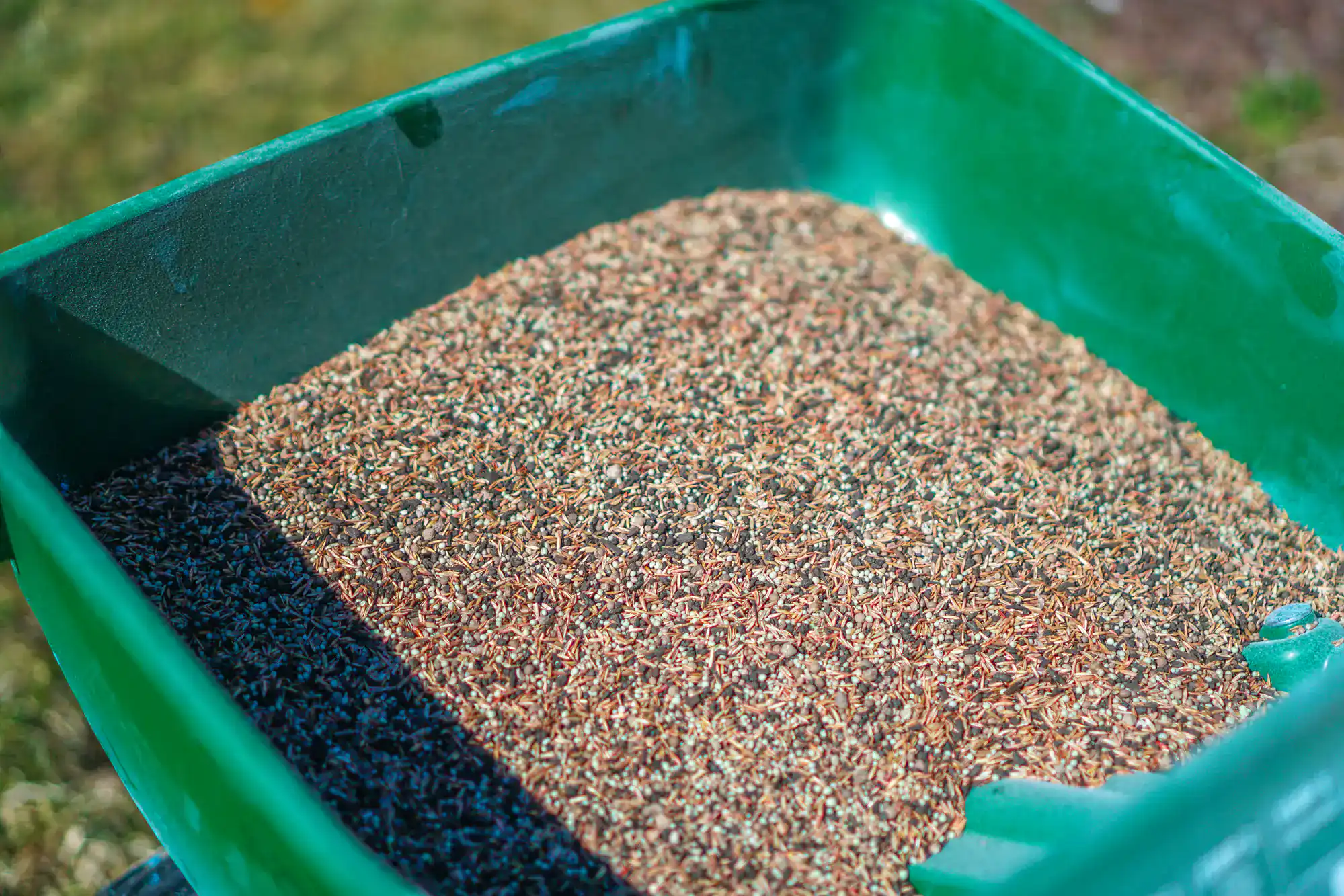
Our fertilization programs are custom-tailored which means what goes on your lawn is determined by what your lawn actually needs, not by a packaged tier that every customer gets regardless of their conditions. The fertilizer itself is proprietary, blended specifically for Lawn Master and calibrated for Long Island’s coastal soil chemistry. That’s not a detail most homeowners think to ask about, but it matters more in Sound Beach than almost anywhere else in Suffolk County. Sandy soil that drains quickly toward the water table needs a formula with the right nutrient ratios and release timing not a generic commercial product that performs fine in heavier inland soils.
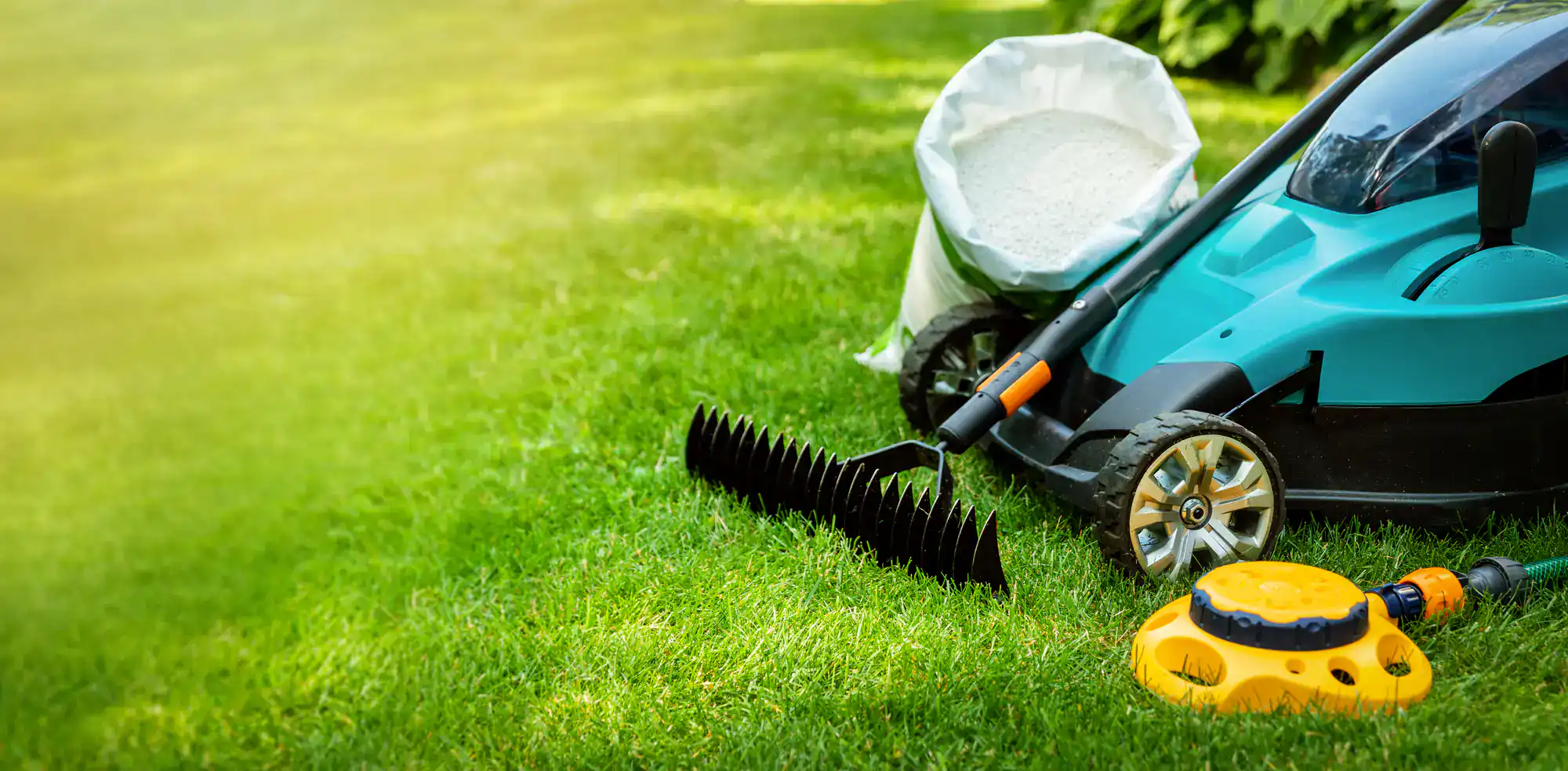
Beyond fertilization, we bring hydraulic aerators and commercial-grade seeders to jobs that need more than a routine application. Many of Sound Beach’s older properties the converted summer cottages, the lots that have been compacted over decades of use need core aeration before fertilization can do its real work. Pulling plugs from compacted, sandy coastal soil creates the channels that let water, air, and nutrients actually reach the root zone instead of running off or washing through. For lawns that are past the point of routine maintenance, we can also install a new lawn from seed taking a property from bare dirt to finished turf using the right variety for North Shore conditions.
Suffolk County’s groundwater sits close to the surface here, and the sandy soils in this area drain fast. That’s exactly why licensed, calibrated application matters not just for your lawn’s results, but for what ends up below it.
Winter on the North Shore is harder on lawns than most homeowners expect. When storms come off Long Island Sound, they carry salt spray inland and that salt deposits on grass blades and accumulates in the soil over the course of the season. Salt draws moisture out of the plant and disrupts how roots absorb nutrients, which is why Sound Beach lawns near the water often come out of dormancy looking thin, yellowed, and patchy even when they went into winter in decent shape.
The fix isn’t just fertilizing earlier in spring. It starts with understanding that the soil needs to recover from salt accumulation before it can respond well to fertilization. A proper spring program for a coastal property like yours accounts for soil pH, salt stress, and the slower warming of North Shore soils before any product goes down. If your lawn has been struggling through this cycle for a few seasons, aeration and overseeding in fall before the next winter hits is often the most effective way to break it.
For cool-season grass which is what most Long Island lawns are seeded with the general target is around four to five applications per year, delivering roughly two to three pounds of nitrogen per thousand square feet annually. But the timing matters as much as the frequency. On the North Shore, the spring window opens later than most people assume because soil temperatures near Long Island Sound warm more slowly than inland areas. Applying too early means the fertilizer sits without being absorbed, which wastes product and can contribute to runoff.
The most important applications for a Sound Beach lawn are typically the late spring treatment, a carefully timed summer application that avoids the heat stress window, and the fall program which is genuinely the most critical window of the year for cool-season turf recovery. Suffolk County also prohibits fertilization between November 1st and April 1st, so the schedule has a hard legal boundary on both ends. A program built around those realities will outperform one built around a generic calendar every time.
A standard program the kind most national chains and many local operators use applies the same product at the same rate to every lawn on the route. It’s efficient for the company and adequate for lawns that fall close to average conditions. Sound Beach lawns often don’t. The sandy, acidic coastal soil in this part of Suffolk County drains nutrients faster than heavier inland soils, which means a standard slow-release formula can underperform here even when it’s applied correctly. The salt influence from Long Island Sound adds another variable that a generic program doesn’t account for.
A custom program starts with what your specific lawn is dealing with soil pH, shade coverage, grass variety, prior treatment history, and the unique pressures of your location. The fertilizer we use is blended specifically for our programs and calibrated for Long Island’s coastal soil chemistry, not formulated for a national average. That distinction shows up in the results, particularly on older North Shore properties where the soil has a more complicated history than a newer suburban lot.
For a lot of Sound Beach properties, aeration isn’t optional it’s what makes fertilization actually work. Many of the older cottage lots in this hamlet have soil that’s been compacted over decades of foot traffic, inconsistent maintenance, and the kind of organic matter buildup that happens when a summer bungalow becomes a year-round home without a proper lawn renovation along the way. When soil is compacted, fertilizer applied to the surface has a much harder time reaching the root zone. It either sits, runs off, or washes through the sandy substrate before the grass can absorb it.
Core aeration pulls plugs from the soil and opens channels for water, air, and nutrients to penetrate where they need to go. The best window for aeration and overseeding on Long Island is mid-August through late September which also happens to be the most effective time to overseed for fall recovery. If your lawn has chronic thin spots, poor color despite regular fertilization, or soil that feels hard underfoot, aeration is almost certainly part of the answer. We use hydraulic aerators, not tow-behind units, which pull deeper plugs and produce better results in the compacted coastal soils common to this area.
In New York State, any business applying pesticides for hire which includes most weed control and fertilization programs must register with the New York State Department of Environmental Conservation and employ at least one certified commercial pesticide applicator. That applicator has to pass both a Core exam and a category-specific exam, and recertify every three years. It’s a real credential with real requirements, not a business license you get by filling out a form.
The reason this matters more in Sound Beach than in many other places comes down to the soil. Sandy coastal soils drain quickly toward the water table, and Suffolk County sits above a sole-source aquifer system that supplies drinking water to the region. An unlicensed or undertrained applicator who misapplies a product wrong rate, wrong timing, wrong formulation isn’t just risking your lawn. They’re risking what ends up below it. Asking a company directly whether they employ licensed pesticide professionals, and whether the person showing up to your property specifically holds that license, is a completely reasonable question. Any reputable company will answer it without hesitation.
Yes but the approach depends on how far things have gone. A lawn that’s been thinning for a season or two due to salt stress, compaction, or inconsistent fertilization is usually a good candidate for aeration, overseeding, and a corrective fertilization program. The fall window mid-August through late September on Long Island is the best time to do that work, because cool-season grass establishes most effectively when soil temperatures are dropping and competition from summer weeds is fading. With the right seed mix for North Shore conditions and a properly timed program, most neglected lawns can recover meaningfully within one season.
For properties that are further gone lawns that have been salt-damaged over multiple winters, lots that were never properly established when the original cottage was converted to year-round use, or areas where the soil has been so depleted that overseeding alone won’t produce results a new lawn installation from seed may be the more practical path. We can handle that entire process, from soil preparation through seeding and establishment, using varieties suited to the shade, salt, and sandy soil conditions that define this part of the North Shore. It’s not the first option, but it’s worth knowing it’s available when routine maintenance isn’t enough.
Useful Links
Other Services we provide in Sound Beach