
Hear from Our Customers
Most Rocky Point homeowners don’t have a lazy lawn they have a misunderstood one. The soil on the south side of Route 25A, close to the Rocky Point Pine Barrens State Forest, is sandy, acidic, and drains nutrients faster than most grasses can absorb them. When a generic fertilizer program gets applied at standard rates, it doesn’t feed your lawn it feeds the groundwater. You end up with thin turf, bare patches, and a company that shrugs and reschedules.
When the treatment is actually calibrated for what’s in the ground here, the difference shows up fast. Grass fills in where it’s been struggling. Color holds through summer instead of fading in the July heat. The patchy areas near the tree line start recovering instead of expanding. That’s not a miracle it’s what happens when the program fits the property.
For homeowners near the bluffs on the north side of Rocky Point, coastal wind and salt air add a different layer of stress. Turf along those properties desiccates faster, browns out earlier in summer, and needs a technician who knows the difference between wind damage and disease. Getting that wrong means treating the wrong problem and watching the lawn get worse while paying for a program that’s solving something that isn’t there.
We’ve been operating in Suffolk County since 1987. That means Rocky Point, Sound Beach, Miller Place, and Shoreham have been part of our service area for nearly four decades. Not recently added to a coverage map. Actually here, season after season, on properties that range from aging Cape Cods near the pine barrens to bluff-top homes overlooking the Long Island Sound.
Every technician on our team is a licensed NYS DEC pesticide applicator. That’s a state-regulated credential requiring a 30-hour training course and a passing exam and it’s not something every company in this market can say. The fertilizer we use isn’t pulled off a shelf it’s a custom blend formulated specifically for Long Island’s soil chemistry, which matters a lot when your yard in Rocky Point is sitting on Plymouth loamy sand that leaches nutrients before the grass can use them.
Five fully wrapped trucks run this service area. You know who’s on your property. You can see the truck from the window. That kind of accountability is harder to find than it should be.
It starts with understanding what you’re working with. Rocky Point properties don’t all have the same soil profile a yard backing up to the pine barrens has different pH and drainage characteristics than one closer to North Country Road or up near the Sound. Before any treatment goes down, we assess the condition of the lawn, the soil, and the specific problem areas. That assessment drives the program, not the other way around.
From there, the seasonal calendar takes over. Fall is the most important window for cool-season lawns on the North Shore September through early October, when soil temperatures are still in the growth range and grasses like tall fescue and Kentucky bluegrass are actively storing energy for winter. That’s when we handle core aeration and overseeding. Our hydraulic aerators pull deep, consistent cores that actually break up the compaction common in Rocky Point’s older housing stock homes built in the 1940s and 1960s where the soil has had decades to compress. Overseeding follows immediately while the cores are open and seed-to-soil contact is at its best.
Spring treatments focus on pre-emergent weed control and early fertilization once soil temps hit 55°F typically mid-April in Suffolk County. Summer shifts to protection: grub control, disease monitoring, and keeping the lawn stable through the heat. And per Suffolk County Local Law 41-2007, no fertilizer goes down between November 1 and April 1. That’s not just the law it’s the right call for a community sitting over Long Island’s sole-source aquifer.
Ready to get started?
Our core program covers fertilization, weed control, and seasonal treatments timed to Suffolk County’s actual soil temperature calendar not a national schedule built for a different climate. The custom-blended fertilizer we use is formulated with the right slow-release nitrogen profile for sandy Long Island soils, so nutrients stay in the root zone instead of draining out before the grass can absorb them.
Core aeration and overseeding are available as standalone services or as part of a full program, and we handle them with hydraulic equipment not the lightweight machines that barely scratch the surface. For Rocky Point homeowners dealing with grub damage from Japanese beetles (a real and recurring issue in properties near the pine barrens preserve), we include targeted grub control as part of the seasonal rotation. Nutgrass and bentgrass control are also available for the persistent weed problems that generic programs consistently fail to fix.
Lawn restoration and new lawn installation from seed round out our offering for properties that are past the point of simple maintenance. If previous mismanagement, drought stress, or years of compaction have left your lawn in rough shape, there’s a path back and it doesn’t involve sod or a landscaper who mows but doesn’t treat. We handle online credit card invoice payment, and every visit is handled by a licensed professional, not a labor-only crew.
The most common reason is soil chemistry. Properties near the Rocky Point Pine Barrens State Forest tend to sit on Plymouth loamy sand highly sandy, acidic, and fast-draining. When you apply a standard fertilizer from a hardware store, a significant portion of the nitrogen leaches through the soil before the grass roots can absorb it. You’re essentially fertilizing the groundwater. You end up with a lawn that looks marginally better for a week and then goes right back to thin and patchy.
The fix isn’t more fertilizer it’s the right fertilizer, applied at the right time, in a formulation that accounts for how quickly your specific Rocky Point soil drains. A slow-release nitrogen blend calibrated for Long Island’s sandy soils holds nutrients in the root zone long enough for the grass to actually use them. Pair that with a fall aeration program to break up compaction and improve water penetration, and most lawns that have been chronically underperforming start to respond within one full treatment season.
Early September through mid-October is the window. Soil temperatures on the North Shore are still warm enough for cool-season grasses to germinate and establish typically in the 55–65°F range and the cooler air temperatures reduce the heat stress that would slow down new seedlings. This timing also gives your Rocky Point lawn a full fall growing period to build root depth before going dormant in winter.
Aeration should happen first, pulling deep cores to break up the compaction that’s common in Rocky Point’s older housing stock. Many homes here were built in the 1940s and 1960s, and decades of foot traffic and freeze-thaw cycles have packed the soil down significantly. Overseeding immediately after aeration takes advantage of the open cores for direct seed-to-soil contact, which is what actually drives germination rates. Waiting until late October cuts into the establishment window and increases the risk of seed going dormant before it roots. Spring overseeding is possible but far less effective fall is when it counts.
Yes, it applies. Suffolk County Local Law 41-2007 prohibits lawn fertilizer applications from November 1 through April 1. The fine for a violation is up to $1,000. The regulation exists because grass goes dormant when soil temperatures drop below 55°F, and fertilizer applied to dormant turf doesn’t feed the lawn it runs off into the groundwater. Rocky Point sits over Long Island’s sole-source aquifer, which supplies all of the island’s drinking water, so what goes into the ground here genuinely matters beyond just your property.
We schedule our fall applications to finish before November 1 and our spring applications to begin no earlier than when soil temperatures have actually recovered typically mid-April in Suffolk County, though it varies year to year. If a company is offering you a late-fall or early-spring treatment that falls inside the blackout window, that’s a red flag. It’s either a violation of county law or a product being applied at a time when it can’t do anything useful for your lawn.
Grub damage typically shows up as irregular brown patches in late summer or early fall usually August through October that feel spongy underfoot and pull up easily because the roots have been eaten away. If you can roll back a section of turf like a loose carpet, grubs are almost certainly the cause. Japanese beetle grubs are the most common culprit in Suffolk County, and Rocky Point’s proximity to the Rocky Point Pine Barrens State Forest means the local beetle population has a large natural reservoir to draw from.
The timing of treatment matters a lot. Preventive grub control applied in June or July when eggs are being laid and young grubs are near the surface is significantly more effective than trying to treat an active infestation in September after the damage is already visible. Curative treatments exist but are less reliable. If you’ve had grub damage in previous years, preventive treatment in early summer is worth building into your annual program. A lawn care company that doesn’t raise grub control as part of the seasonal conversation in this area isn’t giving you the full picture.
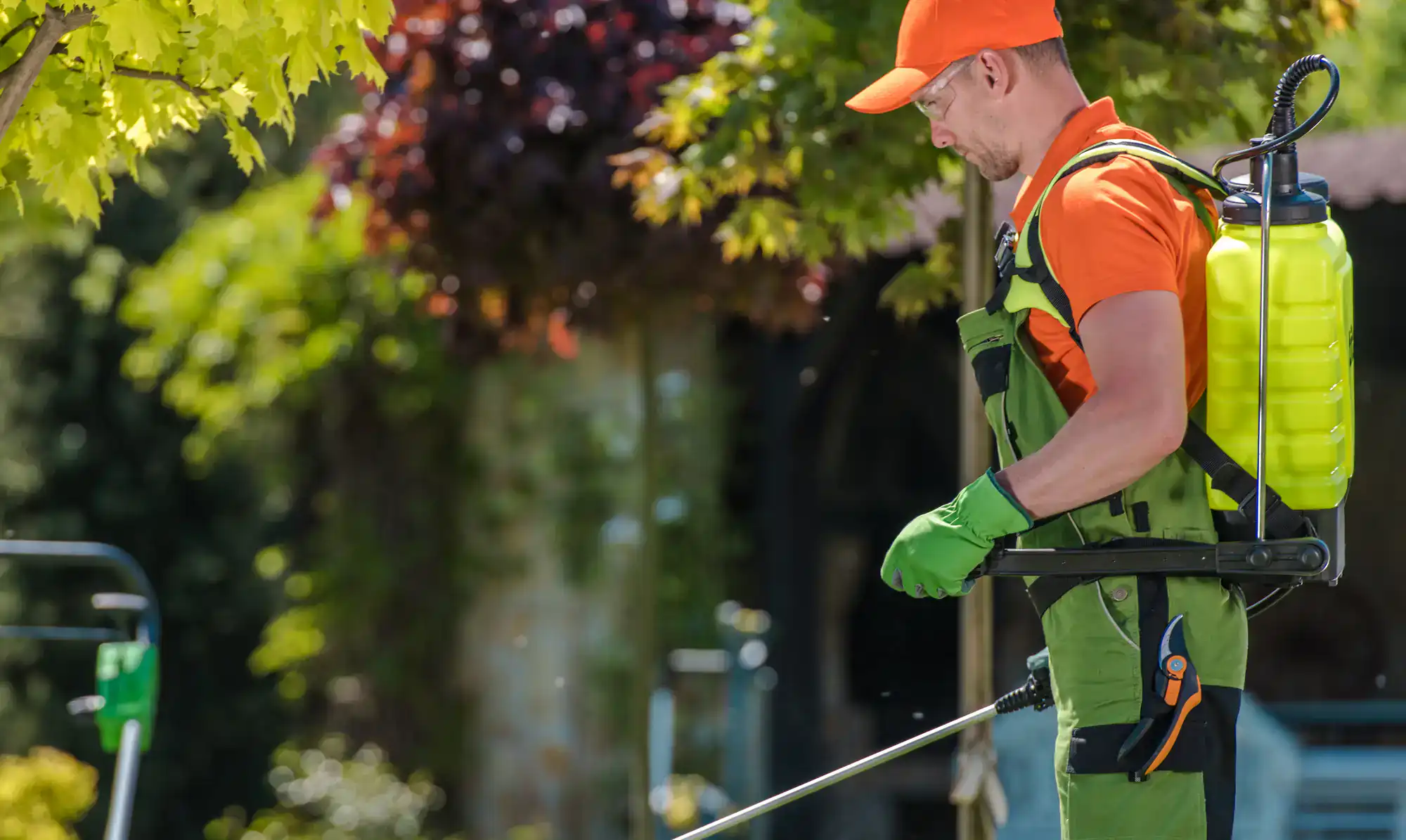
In New York State, anyone applying pesticides to ornamental turf including weed control, grub control, and certain fertilizer treatments is required to hold a valid NYS Department of Environmental Conservation pesticide applicator license. Getting that license requires completing a 30-hour training course and passing a state exam. It’s not a formality. It covers proper product selection, application rates, safety protocols, and how to avoid causing the exact kind of lawn damage that unlicensed operators regularly cause.
Unlicensed operators do exist in Rocky Point’s lawn care market. Homeowners who hire them often don’t find out until something goes wrong a burned lawn from an incorrect application rate, a weed problem that got worse because the wrong product was used, or a grub infestation that wasn’t treated at all because the technician didn’t know what to look for. Beyond the lawn risk, there’s a liability question: if an unlicensed worker is injured on your property while performing work they’re not legally qualified to do, the exposure falls on you. Verifying that your lawn care company’s technicians are licensed before the first visit is a simple step that protects both your lawn and your property.
The pattern is consistent and it shows up in reviews across the market: a homeowner signs up with a national chain or a low-cost local operator, the first season looks okay, and then something slips. A visit gets missed. A treatment goes down at the wrong time. Brown patches show up and nobody can explain why. Customer service absorbs the complaint without fixing anything. By the time the homeowner realizes the program isn’t working, the lawn has lost a full growing season.
Rocky Point’s soil and environmental conditions make this worse than it would be in a more forgiving location. Sandy, acidic soil near the pine barrens doesn’t hide mistakes it amplifies them. A fertilizer applied at the wrong time leaches immediately. An aeration done with inadequate equipment barely touches the compaction. A grub problem left untreated through summer turns into dead patches by September. Rocky Point homeowners tend to switch not because they’re picky, but because they’ve watched their lawn get worse under a program that was never designed for what their property actually needs. The companies that retain customers in this market are the ones that show up with the right credentials, the right equipment, and an actual understanding of what they’re dealing with not a one-size-fits-all schedule.
Useful Links
Other Services we provide in Rocky Point