Hear from Our Customers
Most lawns in Sound Beach aren’t struggling because the homeowner isn’t trying. They’re struggling because whoever treated them last used a program designed for somewhere else. Sandy outwash soils along the North Shore leach nutrients fast faster than the standard fertilizer schedules that national chains run on. When you fix that with a program built for this soil, you stop chasing green and start keeping it.
There’s also the salt factor. If your property sits anywhere near the bluffs on Shore Drive or the streets running north toward the Sound, salt spray is working against your turf year-round. It pulls moisture from the grass blade and messes with nutrient uptake in the root zone. That’s not a problem a generic lawn service from a call center is going to catch. It’s the kind of thing you only know if you’ve been treating North Shore lawns long enough to see it repeat every season.
Beyond the coastal conditions, compacted soil is one of the most common issues in Sound Beach specifically decades of landscaping and foot traffic on smaller lots that were originally laid out as 20-by-100-foot summer parcels. When the root zone is compacted, nothing you put on top of the lawn reaches where it needs to go. The right aeration program changes that, and everything downstream improves.
We’ve been treating lawns across Suffolk County since 1987 that’s nearly four decades of working the same North Shore soil, the same coastal climate, and the same cool-season grasses that homeowners throughout Sound Beach deal with every year. We’re not a franchise. There’s no national call center routing your concerns to whoever picks up. When something needs attention, you’re dealing with people who have actual answers about your lawn.
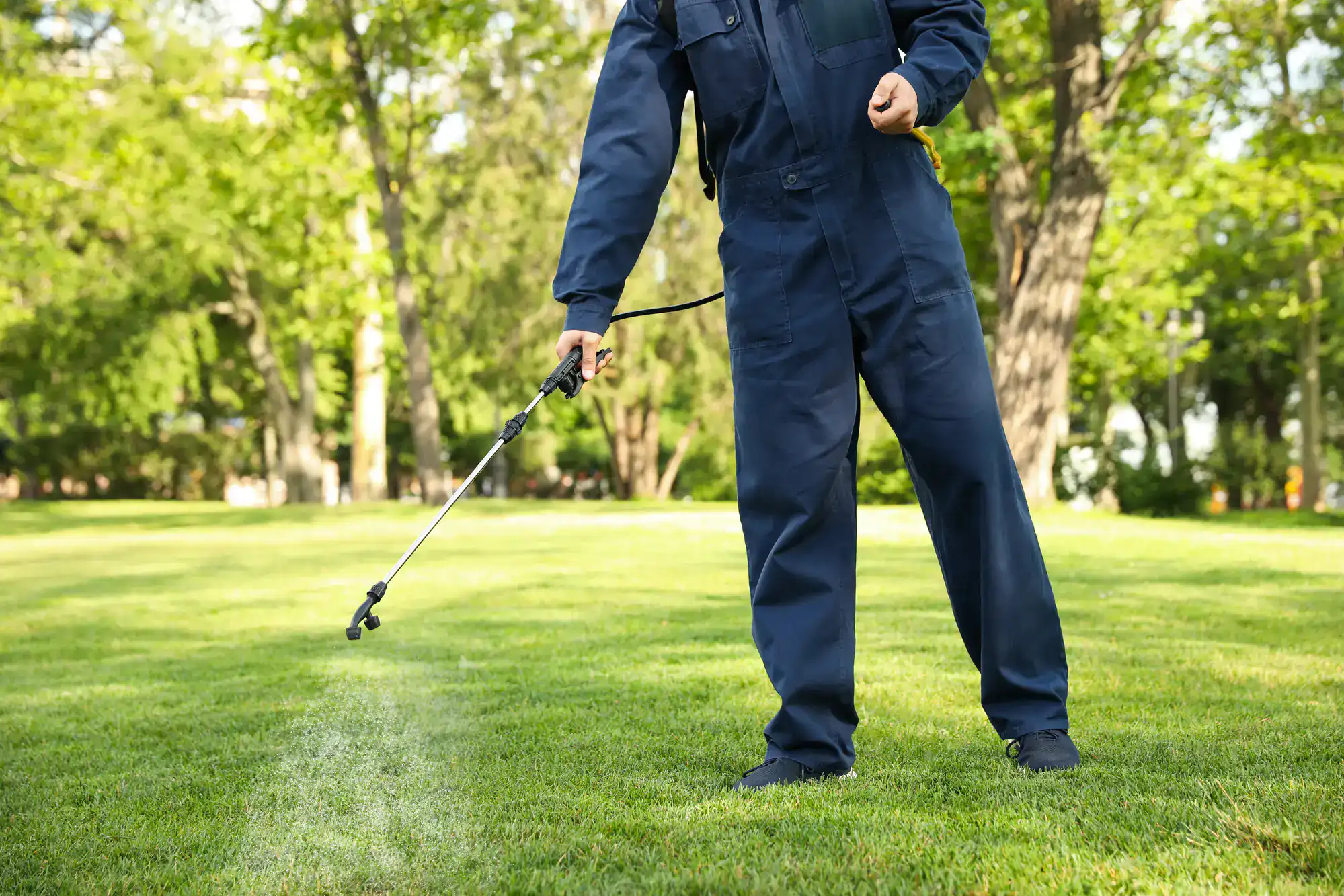
Every technician who shows up at your Sound Beach property is a licensed NYS DEC pesticide applicator not a laborer handed a spreader and pointed at your lawn. Our fleet of five fully wrapped trucks means you always know who’s on your property, and so does everyone else on your block. In a tight-knit hamlet like Sound Beach, that kind of accountability matters.
The fertilizer we use isn’t pulled off a commercial shelf. It’s a custom blend made specifically for our company formulated for Long Island’s sandy coastal soil, not for an average American lawn in an average American climate. That distinction alone explains a lot of the difference in results.
It starts with an honest look at what you’re actually working with. We assess your specific property the grass type, soil condition, shade and sun exposure, weed pressure, and any prior treatment history that might be contributing to the problem. Sound Beach lots vary a lot: some are bluff-adjacent with salt exposure, some are shaded under mature trees, some are open and compacted from years of use. The program gets built around your lawn, not around a standard package.
From there, treatments are timed to what the lawn actually needs seasonally not to a calendar someone printed in a corporate office. On Long Island, soil temperatures typically hit 55°F around mid-April, which is when cool-season grasses start actively growing and when spring fertilization and pre-emergent crabgrass control make the most impact. Fall September through early November is the most important window of the year for Sound Beach lawns. That’s when core aeration, overseeding, and the fertilization that builds root reserves for winter all happen. Suffolk County’s fertilizer blackout runs November 1 through April 1, and every application we schedule respects that regulation.
If your lawn needs more than maintenance if there’s real damage from grubs, drought, disease, or a prior service that made things worse we handle full restoration and new lawn installation from seed. One company, from bare dirt to finished lawn, then maintained year after year.
Ready to get started?
The core of what we deliver is a customized treatment program fertilization, weed control, pest management, and aeration built around the specific conditions of your property. Our fertilizer is a proprietary blend made for Long Island’s soil chemistry, with slow-release characteristics that account for how quickly sandy coastal soils drain. Off-the-shelf products aren’t calibrated for this. Our custom blend is.
Weed control here isn’t just about crabgrass. Sound Beach lawns commonly deal with nutgrass and bentgrass both of which require targeted treatment that a standard program won’t address. Pest pressure is real too: grubs, chinchbugs, and sod webworms are documented problems throughout this climate, and catching them early is the difference between a treatment and a full restoration. Every licensed applicator on our team understands the full picture, not just the surface.
For lawns that need structural help, we use hydraulic core aeration that pulls deeper, more consistent plugs than the consumer-grade equipment most operators use which matters a lot in Sound Beach’s compacted soil. Pair that with professional-grade overseeding in early fall, and you’re setting the lawn up for its strongest growing season. Suffolk County’s groundwater regulations are followed without exception: no fertilization during the November 1 through April 1 blackout, phosphorus-free applications unless a soil test says otherwise. That’s not a selling point it’s just how a licensed professional operates.
Summer is genuinely hard on cool-season grasses, and Sound Beach’s conditions make it harder than most. The sandy soil along the North Shore drains so quickly that nutrients applied in spring are often gone before the grass can fully use them through the heat of July and August. Add high humidity off Long Island Sound which promotes fungal disease and brown patch and you’ve got a lawn under real stress from multiple directions at once.
The other piece people miss is pest damage. Grubs, sod webworms, and chinchbugs are all active in summer, and their damage often looks like drought stress until the lawn fails to recover when cooler weather arrives. A professional lawn treatment program addresses timing, soil nutrition, and pest pressure together. Treating only one of those while ignoring the others is why a lot of Sound Beach lawns look fine in May and rough by August.
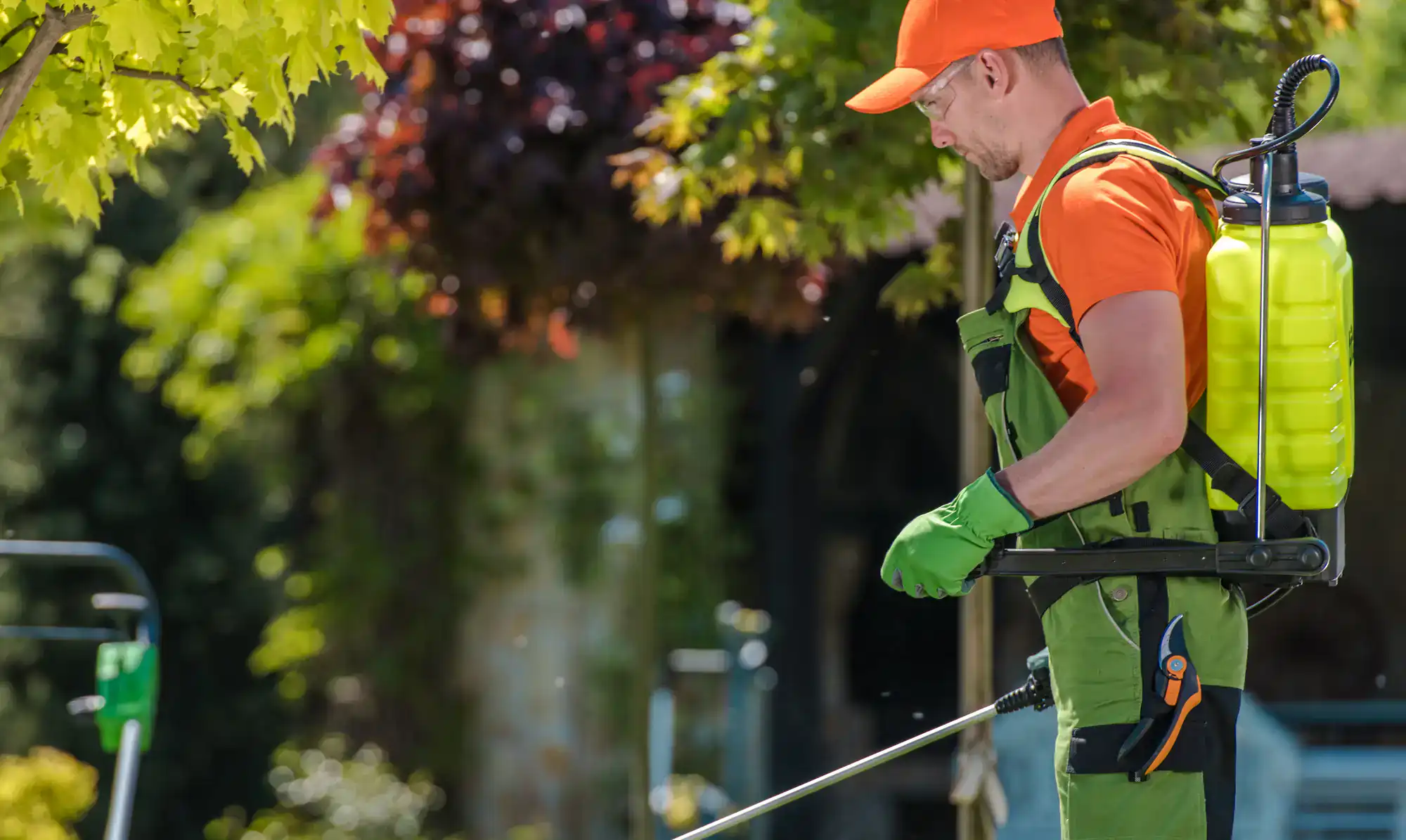
In New York State, anyone applying pesticides or herbicides to turf for hire is legally required to hold a NYS DEC pesticide applicator license a credential that requires a 30-hour training course and a state exam. The license exists because improper pesticide application causes real harm: to the lawn, to the people and pets using it, and to Long Island’s sole-source aquifer, which supplies all of the island’s drinking water entirely from groundwater beneath the surface.
The practical difference for you as a homeowner is significant. A licensed applicator knows what to apply, at what rate, and at what time of year to get results without causing damage. An unlicensed operator may apply the wrong product, at the wrong concentration, at the wrong time and you may not see the consequences until the lawn is already damaged. In Suffolk County, where groundwater protection is taken seriously and fines for blackout period violations can reach $1,000, working with a properly licensed company isn’t optional it’s the only responsible choice.
The two most effective windows for lawn fertilization on Long Island are spring and fall. In spring, you’re looking for soil temperatures to reach around 55°F typically mid-April in Sound Beach which signals that cool-season grasses are actively growing and ready to use what you put down. This is also the window for pre-emergent crabgrass control, which needs to go down before soil temps hit 55°F consistently, so timing matters.
Fall is actually the more important season for Sound Beach lawns. September through early November is when the grass is recovering from summer stress, root systems are actively building reserves for winter, and aeration and overseeding deliver their best results. Fertilizing in fall sets the lawn up for a stronger spring the following year. One hard rule in Suffolk County: no fertilization between November 1 and April 1. That’s a county-enforced blackout period with fines up to $1,000 for violations. Any legitimate lawn treatment company in Sound Beach follows it.
Yes, and it’s one of the more underappreciated challenges for lawns on the northern end of Sound Beach particularly properties along Shore Drive and the streets running toward the bluffs. Salt spray carried inland by wind off the Sound deposits on grass blades, which draws moisture out of the plant tissue through osmosis. Over time, the salt also accumulates in the soil and disrupts the root system’s ability to absorb nutrients and water, even when both are present.
The visible result is usually browning at the tips of grass blades, patchy die-off in exposed areas, and turf that struggles to recover even with regular watering. Properties a few streets back from the water tend to see milder versions of this, while bluff-adjacent lawns can experience it significantly. The solution isn’t complicated, but it does require someone who recognizes what they’re looking at. A treatment program that accounts for salt exposure including the right fertilizer formulation and proper seasonal timing makes a real difference for Sound Beach properties dealing with this challenge.
If your lawn looks thin, grows slowly despite regular fertilization, has areas that stay wet long after rain, or feels spongy underfoot in some spots and rock-hard in others, compaction is likely part of the problem. Compacted soil is specifically common in Sound Beach, where many lots have been built up, landscaped, and used continuously for close to a century on relatively small parcels. When the soil is compacted, air, water, and nutrients can’t reach the root zone effectively so even a well-timed fertilizer application underperforms.
Core aeration physically removes small plugs of soil, opening up pathways for everything the root system needs. We use hydraulic aerators that pull deeper, more consistent cores than the lighter equipment most budget operators use, which matters in denser, compacted soil. Aeration alone improves things, but pairing it with overseeding in early fall when soil temperatures are still warm enough for germination but air temperatures are cooling down is where you see the biggest turnaround. If fertilization hasn’t been moving the needle, aeration is usually the missing piece.
National chains can work for straightforward suburban lawns in average conditions. Sound Beach isn’t that. The sandy coastal soil, salt spray exposure on northern properties, and the specific pest and fungal pressure that comes with a humid North Shore climate require a level of local knowledge that a franchise program designed to scale across thousands of properties in dozens of states isn’t built to deliver. The most consistent complaint homeowners have about national chains isn’t price; it’s variability. Different technicians each visit, generic programs that don’t adapt to what’s actually happening on your lawn, and difficulty reaching anyone with real authority when something goes wrong.
What makes a difference in Sound Beach specifically is a company that has been working this soil long enough to know how it behaves across seasons and that sends licensed professionals, not rotating crews, to every job. That’s a different model than what a national chain offers, and for a property worth $428,000 or more in a community where curb appeal is visible to every neighbor on a 1.6-square-mile block, the difference in results tends to be obvious.
Useful Links
Other Services we provide in Sound Beach