

Hear from Our Customers
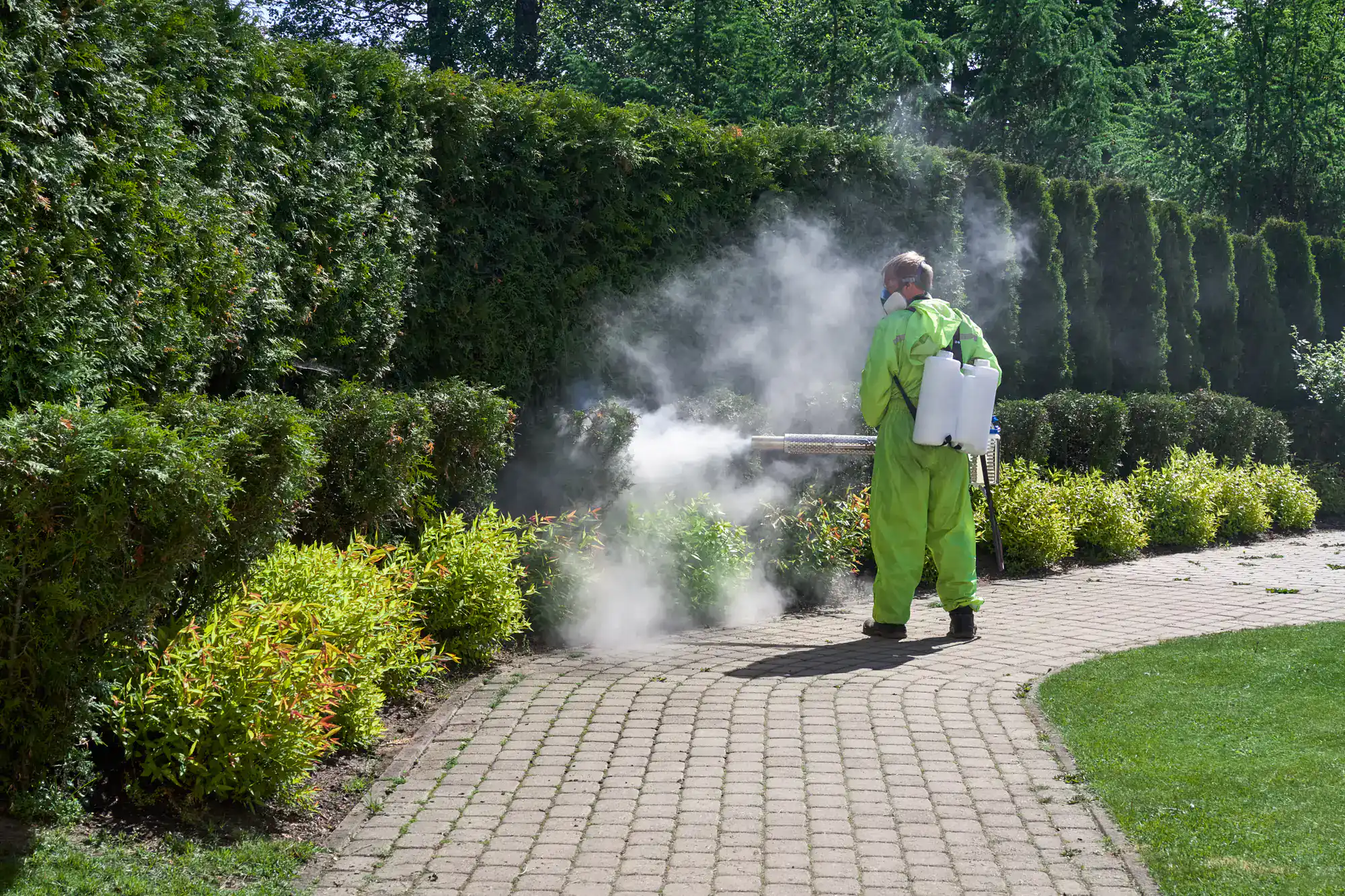
When deer are moving through your North Great River property from the Connetquot Preserve and your dog is coming in from the backyard every afternoon, the risk isn’t hypothetical. Ticks are already there. The question is whether your yard is treated or not.
Professional flea and tick control changes the daily reality of owning a home here. Kids play outside without you scanning them when they come in. Your dog rolls in the grass and you’re not holding your breath. For homeowners with horses or large lots bordering wooded preserve land, that peace of mind is worth more than the treatment itself.
North Great River’s south shore humidity and direct wildlife corridor from the Connetquot Preserve extend tick activity earlier into spring and later into fall than most inland Suffolk County towns. That means the window where your yard is genuinely at risk is longer here and a single annual spray isn’t going to cut it. The right seasonal program, timed to Long Island’s actual tick calendar, is what actually keeps your property protected.
We’ve been treating Suffolk County lawns since 1987. That’s not a marketing number it’s nearly four decades of learning the seasonal patterns, deer pressure, and neighborhood-by-neighborhood pest conditions that define this county. The team that shows up to your North Great River property isn’t a franchise crew dispatched from a call center. These are licensed pesticide professionals who know what they’re doing and are accountable for the results.
North Great River sits in one of the most demanding pest environments in the county bordered by the Connetquot River State Park Preserve to the east and within close range of Heckscher State Park to the south, which the NYSDEC officially designates as the “Home of the White-tailed Deer.” We’ve been working in communities like this for a long time. That local knowledge shows up in how your property gets treated.
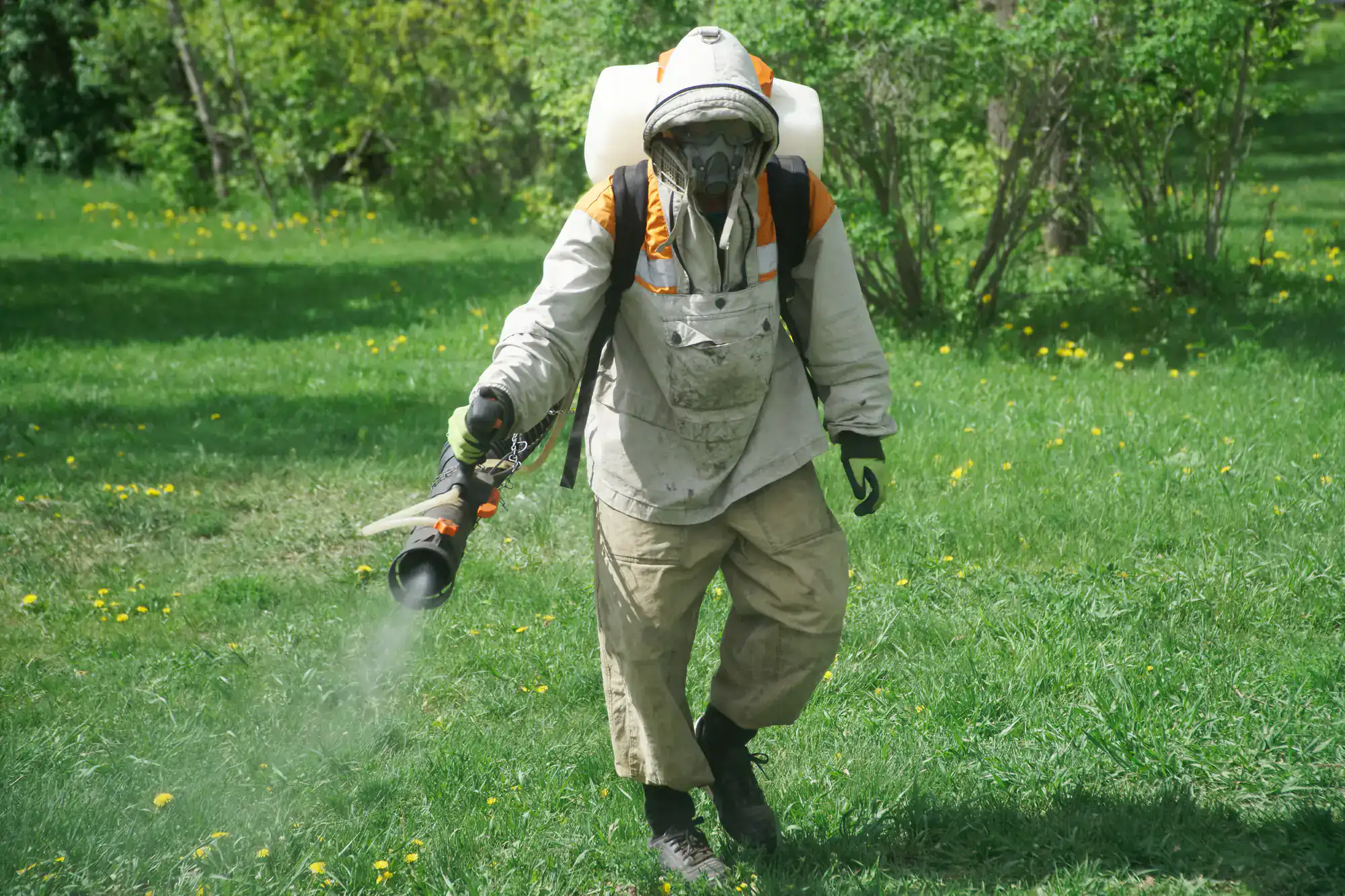
Every property in North Great River gets looked at before anything is applied. Lot size, wooded borders, proximity to the preserve, whether there are horses or large animals on the property all of it factors into how your program is structured. A standard open lawn gets treated differently than a wooded-edge property here, and that distinction matters.
The first application goes down in early April, before the nymphal tick peak hits in May and June. That window when deer ticks are the size of a poppy seed and nearly impossible to spot before they bite is the most critical of the season. Getting ahead of it is the whole point. From there, we space applications through the season to maintain consistent residual protection, with timing adjusted based on temperature and activity patterns specific to the south shore.
Treatment targets the areas where ticks and fleas actually live: the transition zone between your lawn and wooded borders, the undersides of shrubs, shaded fence lines, under decks, and anywhere leaf litter accumulates. These are the harborage zones that store-bought spray misses entirely. Every Lawn Master applicator holds an active NYSDEC Commercial Pesticide Applicator license required by New York State law for any commercial application so what’s going on your property is being applied correctly, at the right concentration, in the right places.

Ready to get started?
Our flea and tick programs are custom-built for each property. There’s no one-size-fits-all package applied across the board. For North Great River homes especially those with wooded rear borders, equestrian setups, or direct trail access to the Connetquot Preserve the program accounts for the specific conditions driving pest pressure on your land.
Treatments use professional-grade products that include Insect Growth Regulators, which break the flea reproductive cycle at the larval stage. This is what separates a professional program from anything available at a garden center. IGRs are what actually stop a flea population from rebuilding between visits store-bought sprays don’t include them, which is why DIY efforts tend to fail after a few weeks.
The seasonal program runs from early April through October, with a minimum of three applications and up to six depending on property size and exposure level. For equestrian properties or lots with significant wooded borders, we extend additional treatment depth into the tree line up to 20 to 30 yards as part of the approach. We also use a custom-blended fertilizer formulated specifically for our programs and operate a fleet of five fully wrapped professional trucks, so when you see us pull up, you know exactly who’s there and why. Online payment is available, which matters when you’re commuting out of Great River Station and don’t have time to chase down an invoice.
Genuinely bad and worse than most people realize until they’ve had a close call. The Connetquot River State Park Preserve is 3,473 acres of pine barrens, wetlands, and woodland that the NYSDEC describes as a wilderness surrounded by suburbs. Deer and wildlife move through it constantly, and there’s no fence between the preserve and the residential properties that border North Great River. Deer are the primary reproductive host for adult female deer ticks they lay eggs on deer, and the hatched larvae and nymphs end up in your lawn, your leaf litter, and your ornamental beds.
A Columbia University study found that 56% of ticks on Long Island carry Lyme disease. New York State recorded over 19,000 confirmed Lyme cases in 2023 alone a 146% increase in a single year. Suffolk County accounts for hundreds of confirmed cases annually, and actual infection rates are estimated to be several times higher due to underreporting. For North Great River homeowners whose backyards directly abut or sit near the preserve, this isn’t a county-level statistic it’s a backyard reality.
Earlier than most people expect. On Long Island’s south shore, tick activity picks up with late-winter warm spells sometimes as early as late February or March. By April, populations are building steadily. The most dangerous window is May through June, when nymphal deer ticks are at their peak. Nymphs are roughly the size of a poppy seed, which makes them nearly impossible to find on skin or a dog’s coat before they’ve already bitten.
A second surge of adult ticks hits in September through November. So realistically, North Great River homeowners are dealing with meaningful tick risk from April through October and the south shore’s bay-adjacent humidity keeps conditions favorable for tick survival longer than in drier inland towns. Starting your program in early April, before the nymphal peak, is the most important timing decision you can make for the whole season.
Yes, when it’s applied correctly by a licensed professional. The products used in our flea and tick programs are formulated for residential yard application and are safe for pets and large animals once dry typically within 30 to 60 minutes of application. The key word there is “correctly.” Concentration, application method, and targeted placement all matter. That’s why New York State requires a valid NYSDEC Commercial Pesticide Applicator license for any commercial pesticide application it’s not a formality, it’s a qualification.
For North Great River properties with horses, we account for pasture areas, hay storage zones, and wooded fence lines all of which are prime tick harborage environments. These areas get specific attention rather than a blanket broadcast spray across the whole property. If you have horses on your property and have questions about re-entry timing or specific product safety, one of our professionals can walk through that with you before the first application goes down.
A few reasons, and they compound each other. First, over-the-counter products don’t contain Insect Growth Regulators the compounds that interrupt the flea reproductive cycle at the larval stage. Without IGRs, you’re killing the adults you can see while the next generation is already developing in your soil and thatch. The population rebuilds within weeks.
Second, application matters as much as the product itself. Ticks don’t live in the middle of your open lawn they live in the transition zones, the leaf litter, the shaded border along your fence, under your deck, and in the wooded edges. If you’re spraying the open grass and missing those harborage areas, you’re treating the wrong places. Third, for properties in North Great River with direct wildlife pressure from the Connetquot Preserve, a single application even a professional one isn’t a permanent solution. The source of the problem is ongoing, which means the program needs to be too.
For most properties in North Great River, a minimum of three applications per season is the floor and for lots with wooded borders, equestrian setups, or direct preserve adjacency, five to six is more realistic. Each professional application we provide approximately four to six weeks of residual protection. After that window, populations can start rebuilding, especially if deer are moving through your property regularly.
The structure of a full seasonal program looks like this: a spring application in early April before the nymphal peak, follow-up treatments through the summer to maintain coverage, and a fall application to address the September-November adult tick surge. Properties with horses or significant wooded borders often benefit from more frequent visits because the source pressure deer and wildlife from the preserve is constant. We build your program around your specific property, not a generic schedule.
Most companies you’ll find ranking for North Great River are either national operators with templated local pages or general pest control companies that handle everything from termites to rodents. We’re different because we’re a lawn care company with nearly 40 years of Suffolk County experience that combines integrated lawn health management with professional pest control under one roof.
That integration matters more than it sounds. A properly maintained lawn aerated, fertilized, and healthy is structurally less hospitable to ticks and fleas than neglected turf. We use a custom-blended fertilizer formulated specifically for our programs and commercial-grade hydraulic equipment that no general exterminator is bringing to your property. Every applicator is NYSDEC-licensed. Every job has owner-level accountability behind it. For homeowners near the Connetquot Preserve who’ve tried the national chains or the one-off pest sprayers and ended up with the same problem six weeks later, that difference in approach is exactly why our results hold.
Useful Links
Other Services we provide in North Great River