
Hear from Our Customers
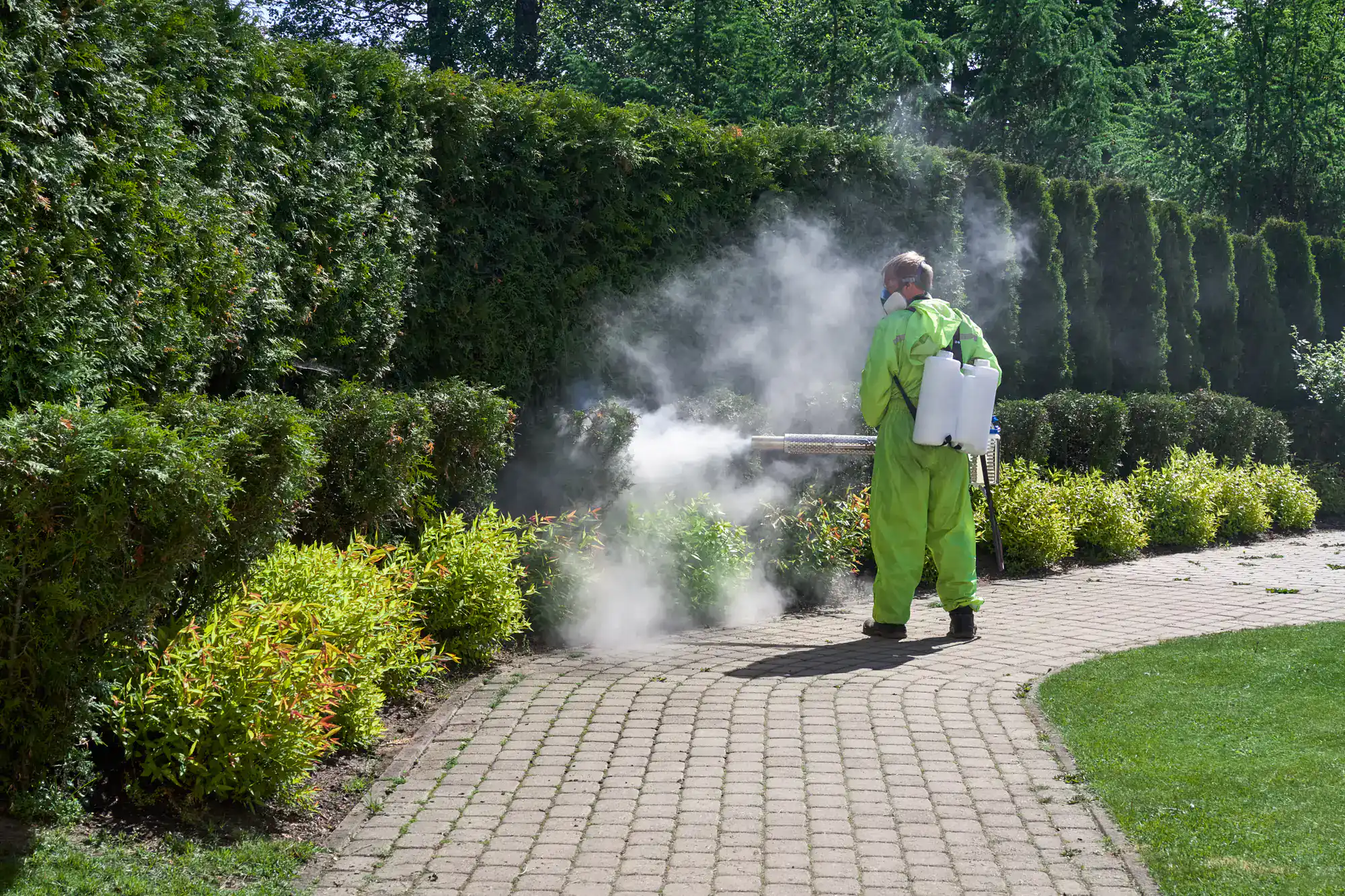
If you’ve found a tick on your child or pulled one off your dog after a walk near Canaan Lake, you already know the problem is real. Suffolk County is one of the highest-risk Lyme disease counties in New York State, and the Town of Brookhaven which governs North Patchogue is specifically flagged as a hot spot by county health authorities. A Columbia University study found that 56% of ticks on Long Island carry Lyme disease. That’s not a statistic you can ignore when your kids play in the backyard every afternoon.
What changes after a proper seasonal program isn’t just the tick count it’s the way you use your yard. You stop checking your kids every time they come inside. Your dog goes out without you scanning the grass first. The back patio gets used again. That’s the actual outcome, and it’s what a well-timed, professionally applied flea and tick program delivers.
North Patchogue’s housing stock mostly established ranch-style and colonial homes with mature ornamental shrubs, shaded borders, and wooded lot edges creates exactly the kind of tick harborage environment that DIY sprays from the hardware store can’t fully address. The transition zones where your maintained lawn meets overgrown fence lines or shrub beds are where ticks concentrate. Treating those zones correctly, at the right time of year, is what makes the difference between a yard you avoid and one you actually enjoy.
We’ve been operating in Suffolk County since 1987 before most of the franchise chains currently ranking on Google for North Patchogue even existed. That’s not just a number. It means our team treating your yard has worked through decades of Long Island seasons, understands how tick pressure builds along waterway corridors like the ones running through North Patchogue near Canaan Lake and the Patchogue River, and knows what the South Shore’s humid summers do to flea populations in older homes.
Every job is handled by a licensed pesticide professional not a labor-only crew sent out with a spray tank. New York State requires NYSDEC certification for commercial pesticide application, and our staff meets that standard on every property we treat. You’ll also see us coming: a fleet of five fully wrapped professional trucks that show up on schedule and do the work right.
Our programs are built around your specific property not a one-size package. Custom-blended formulations, hydraulic equipment, and owner-level accountability on every visit. That’s the standard we’ve held since day one.
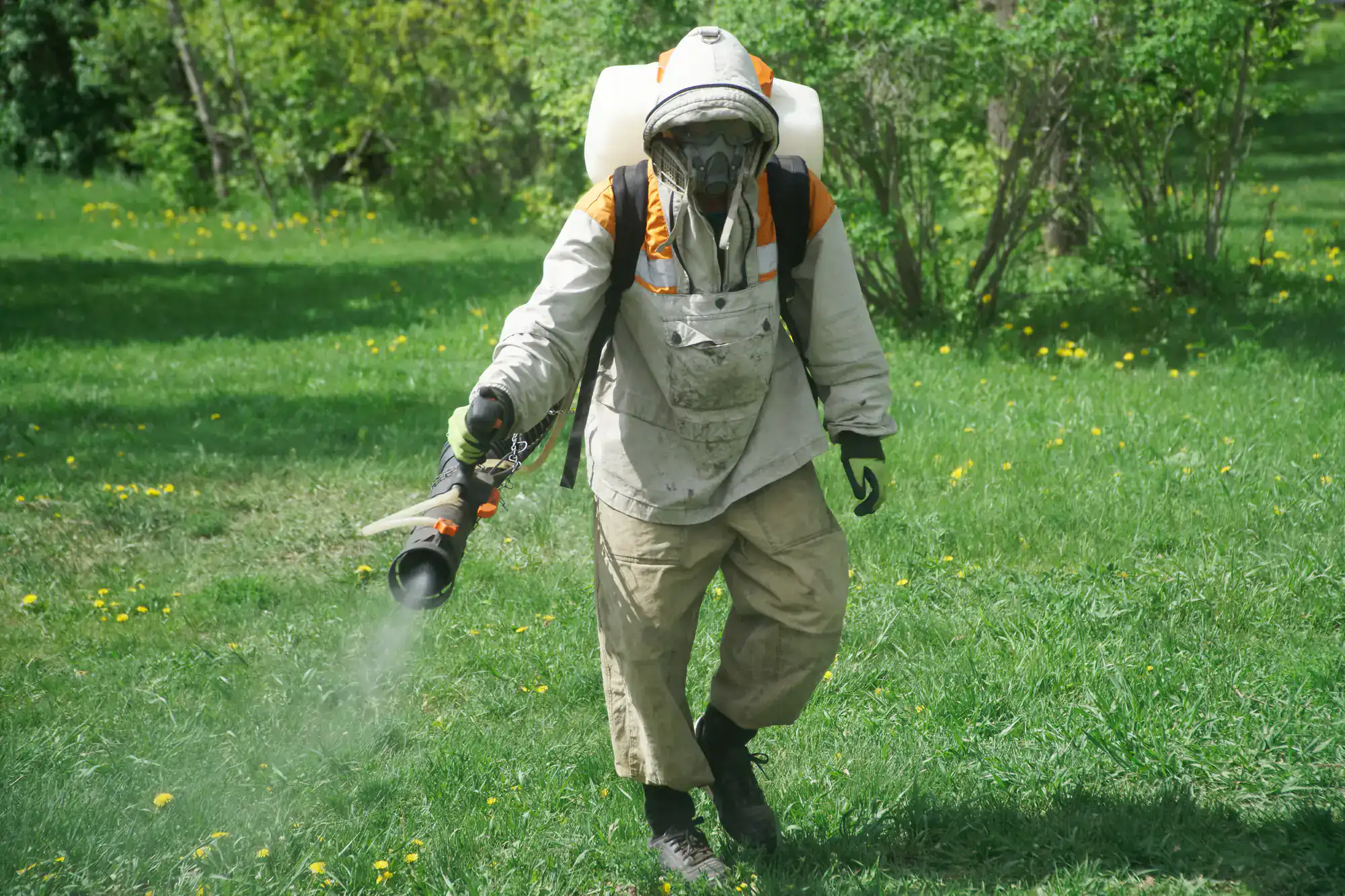
It starts with a property assessment. Before anything gets applied, our technician walks your yard and identifies the specific harborage zones the shrub borders, shaded perimeter edges, leaf litter accumulation areas, and any vegetation transitions near waterways. For properties in North Patchogue, that often includes zones near the Canaan Lake corridor and the mature landscaping that’s common on the hamlet’s established lots. That assessment is what separates a targeted program from a generic broadcast spray.
From there, treatment is timed to Long Island’s actual tick activity calendar. The first application goes down in early April, ahead of the nymphal tick peak that hits in May and June the highest-risk window for Lyme disease transmission. Nymphs are poppy-seed-sized and nearly impossible to spot before they bite, which is exactly why early-season treatment matters. Follow-up applications run every three to four weeks through the summer, maintaining the residual barrier during the peak outdoor season.
The fall treatment typically September through October addresses the adult blacklegged tick surge before winter. Warmer falls on Long Island have pushed this window later than it used to be, so that application still matters even when the calendar says it should be cooling off. By the time the season closes, you’ve had consistent, licensed professional coverage across the windows that actually drive tick exposure in your area not just one spray and a hope.
Ready to get started?
Our flea and tick programs cover the full property not just the open turf. That means the shrub borders, the shaded fence lines, the ornamental planting beds, and the vegetation transition zones that are the actual tick hotspots on a North Patchogue lot. Canaan Lake sits within the hamlet’s two-square-mile footprint, and its shoreline vegetation draws the deer and wildlife that carry adult ticks into residential yards. Properties anywhere near that corridor get treated with that proximity in mind.
Flea treatment for the yard addresses both the active population and the next generation. Flea pupae can sit dormant in lawn debris and ground-level vegetation for months, then hatch when conditions are right. A single treatment won’t break that cycle. Our programs are structured to interrupt it at multiple stages across the season, which is what actually prevents re-infestation rather than just knocking down what’s visible today.
Every program is custom-built for your specific property. The size of your lot, the amount of shade, your proximity to wildlife corridors, whether you have pets all of it factors into what gets applied, where, and when. All applications are performed by NYSDEC-licensed professionals, which is a legal requirement in New York State and something every homeowner in Brookhaven Town should be asking about before they let anyone treat their yard. Online invoice payment is available, so scheduling and billing stay simple from start to finish.
Yes and it’s not just perception. Shallow freshwater bodies with dense shoreline vegetation, like Canaan Lake off Traction Boulevard, create ideal tick habitat. The combination of moist ground, leaf litter, shade, and consistent wildlife access means ticks have everything they need to survive and reproduce along that corridor. Deer the primary host for adult blacklegged ticks move through that area regularly and deposit ticks into residential yards as they pass through.
If your property is within a few blocks of Canaan Lake, or if you’re anywhere along the waterway corridors that run through North Patchogue toward Patchogue Lake and the Patchogue River, your tick exposure risk is meaningfully higher than a property on open turf with no wildlife access. A professional program that accounts for that proximity treating the vegetation transition zones and shaded borders closest to those corridors is the right response. It’s not the same as treating a flat, open suburban lot, and a good technician will assess that difference before applying anything.
For most properties in North Patchogue, a well-structured seasonal program runs from early April through October and includes applications every three to four weeks during the active tick season. That typically works out to six to eight treatments across the season, depending on your property’s specific conditions and how much wildlife pressure you’re dealing with.
One treatment provides roughly four to six weeks of residual protection under normal conditions. The problem with stopping at one or two applications is that you’re only addressing the ticks that are active at that moment not the ones hatching behind them. Long Island’s tick season now runs longer than it did a decade ago, thanks to warmer winters and milder falls. Ticks that historically went dormant in November are now active through December in some years. A program that starts early, maintains consistent coverage through summer, and closes with a fall application before the adult surge peaks is what actually reduces your exposure not a single spray in May.
This is the question we hear most often, and it deserves a straight answer. The products we use in our flea and tick programs are EPA-registered and applied by NYSDEC-licensed technicians who are trained in correct concentrations, targeted application zones, and safe re-entry timing. Once the application has dried typically 30 to 60 minutes after treatment the treated areas are safe for children and pets under normal conditions.
The key word is “licensed.” New York State requires NYSDEC certification for anyone commercially applying pesticides, which means completing required training hours, passing a state exam, and maintaining an active license. When a licensed professional applies product to the right zones at the right rates, the risk profile is very different from someone broadcast-spraying a consumer product across the entire yard. The risk of a tick-borne illness Lyme disease, babesiosis, anaplasmosis is documented and escalating in Suffolk County. The risk of a professionally managed, properly applied treatment is minimal by comparison. Our technician can walk you through exactly what was applied and when it’s safe to go back outside.
The honest answer is application knowledge and timing. Consumer tick sprays from the hardware store can kill ticks on contact but they don’t account for where ticks actually concentrate on your specific property, and they don’t provide the residual coverage a seasonal program delivers. Most homeowners spray the open lawn. Ticks live in the shrub borders, the shaded edges, the leaf litter under ornamental plantings, and the vegetation transition zones along fence lines and wooded lot edges. Those are the zones that matter, and they require targeted application to treat effectively.
There’s also the licensing piece. In New York State, commercial-grade products available to licensed applicators are simply more effective than what’s sold at retail. The formulations are different, the application rates are calibrated for the conditions, and the technician has been trained to identify harborage zones that most homeowners walk past without noticing. If you’ve tried the DIY route and still found ticks on your kids or dog, that’s not a product failure it’s an application and coverage failure. A professional assessment of your North Patchogue property will identify exactly where your yard is falling short.
Earlier than most people think. The window that catches homeowners off guard is May and June, when nymphal deer ticks are at peak activity. Nymphs are roughly the size of a poppy seed nearly impossible to spot before they’ve already been attached long enough to transmit Lyme disease. By the time you notice the problem, the highest-risk window is already open.
The right time to start a program in North Patchogue is early April, before nymph populations peak. That first treatment establishes a residual barrier ahead of the surge, rather than reacting to it after the fact. Given that Suffolk County recorded over 19,000 confirmed Lyme disease cases in 2023 a 146% spike in a single year waiting until you find a tick to call a lawn pest control company is a gamble that’s increasingly hard to justify. Spring is also when flea populations begin building outdoors, particularly in the shaded, moist ground-level areas around mature landscaping, so getting ahead of both problems at once makes practical sense.
Yes. We serve residential properties throughout North Patchogue, including homes along the Route 112 corridor, the Canaan Lake area off Traction Boulevard, and the neighborhoods that run between Sunrise Highway and the northern edges of the hamlet. We’ve been operating throughout the Town of Brookhaven and broader Suffolk County since 1987, so North Patchogue’s specific geography its compact two-square-mile footprint, its mix of mature ranch-style and colonial lots, and its proximity to the waterway corridors feeding into Patchogue Lake is familiar territory.
If you’re not sure whether your specific address falls within our service area, the easiest thing to do is reach out directly. Scheduling is straightforward, online invoice payment is available so there’s no chasing paper bills, and the program we build for your property will be based on what your yard actually looks like not a generic package applied the same way regardless of where you live. For North Patchogue homeowners dealing with real tick pressure, that specificity is what makes a seasonal program worth doing right.
Useful Links
Other Services we provide in North Patchogue