
Hear from Our Customers
You stop finding ticks after every trip outside. Your kids play in the backyard without you mentally running through a checklist afterward. Your dog comes home from the Selden Dog Park on Boyle Road and you’re not spending twenty minutes combing through their coat before they come inside. That’s not a small thing that’s your daily routine, improved in a way that actually matters.
Selden sits in the Town of Brookhaven, which is specifically named as one of the higher-risk tick zones in Suffolk County. The wooded edges around the SCCC Ammerman Campus, the green corridors between residential streets, and the deer pressure that comes with it all add up to a yard that needs more than a hardware store spray bottle. Properties in this part of central Suffolk County dense, residential, and surrounded by just enough tree cover to keep tick populations active are exactly the kind of properties that benefit most from a consistent, professionally managed program.
The difference between one treatment and a seasonal program is the difference between a short-term fix and actually staying ahead of the problem. Ticks have two peak windows on Long Island late spring when nymphs emerge, and again in the fall when adult populations surge. A program built around that actual calendar, applied by licensed professionals who know what they’re treating and why, is what keeps your property protected from April through November.
We’ve been treating Suffolk County properties since 1987. That’s not a tagline it’s just the truth. Long before flea and tick control became a crowded market on Long Island, we were already building a reputation in communities like Selden, Centereach, and Coram by doing the work correctly and showing up consistently.
Every technician who applies product to your property is a NYSDEC-licensed pesticide professional. Not a seasonal hire. Not a labor-only crew. Someone who has been trained, tested, and certified by New York State to do exactly this work. That distinction matters more than most homeowners realize and it’s one of the first things you should ask any company before you let them treat your yard.
We’re owner-operated, which means the expertise behind the program is the same expertise that shows up on the job. You’re not getting a different crew every visit or a call center when something comes up. You’re getting a company that has been driving down Middle Country Road and Nicolls Road in Selden for nearly four decades and still treats every property like the reputation depends on it. Because it does.
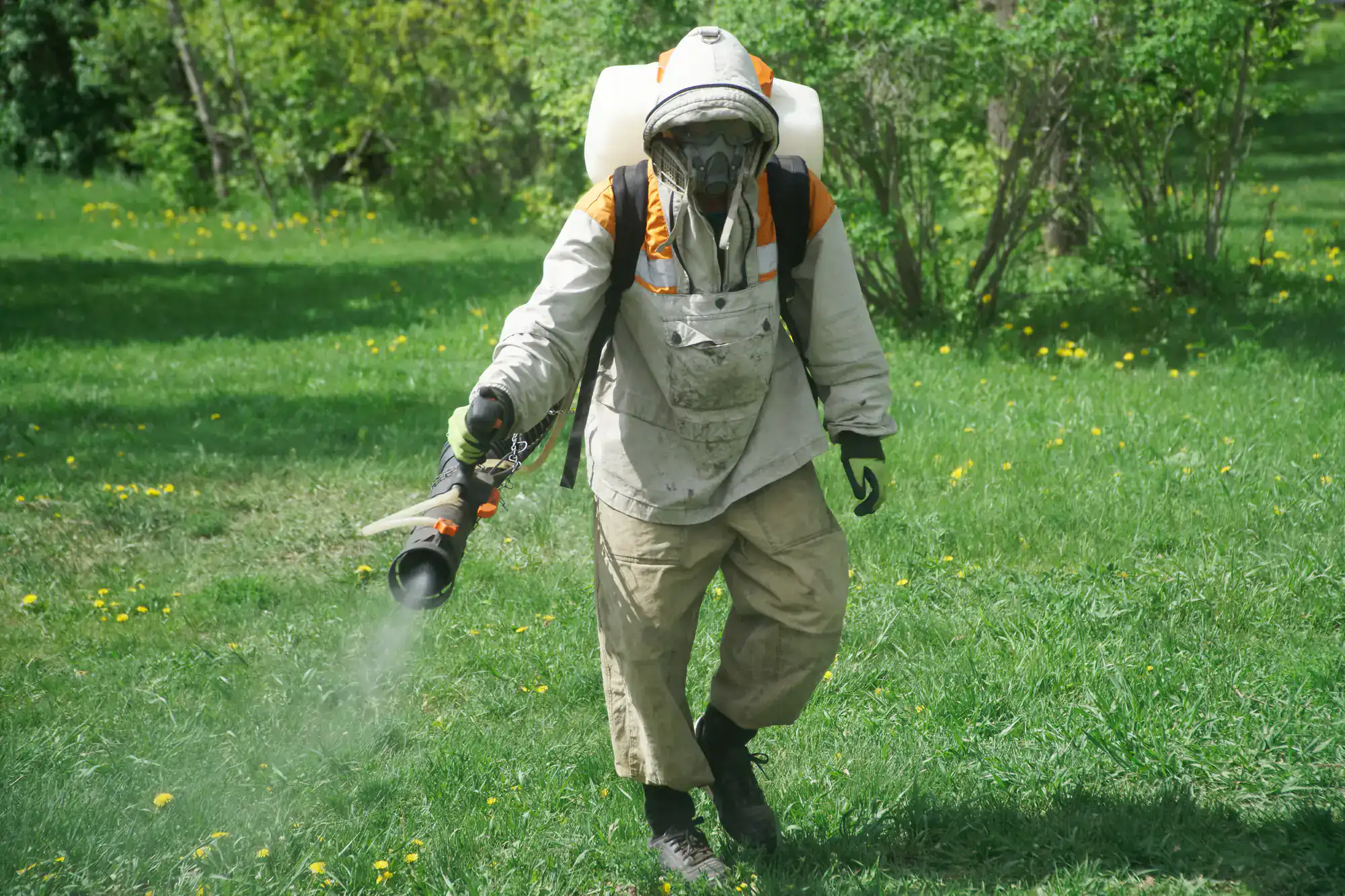
It starts with a property assessment. Before anything gets applied, a licensed technician looks at your specific yard where the wooded edges are, where your pets spend time, whether you’ve got ornamental beds or a fence line that borders a neighbor’s property. A Selden lot that backs up to wooded acreage near the SCCC campus is a different treatment situation than an open suburban lawn closer to Middle Country Road, and the program reflects that.
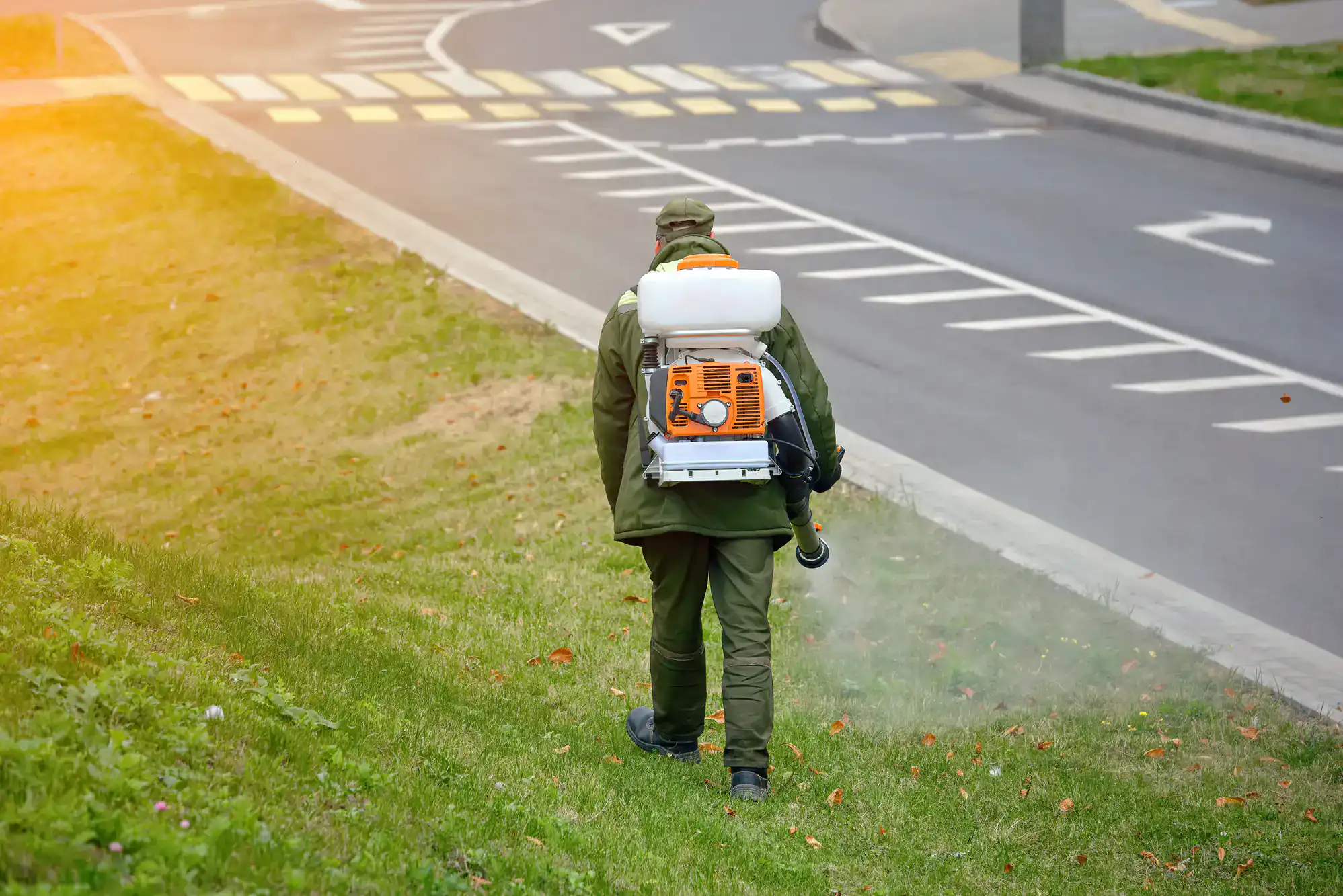
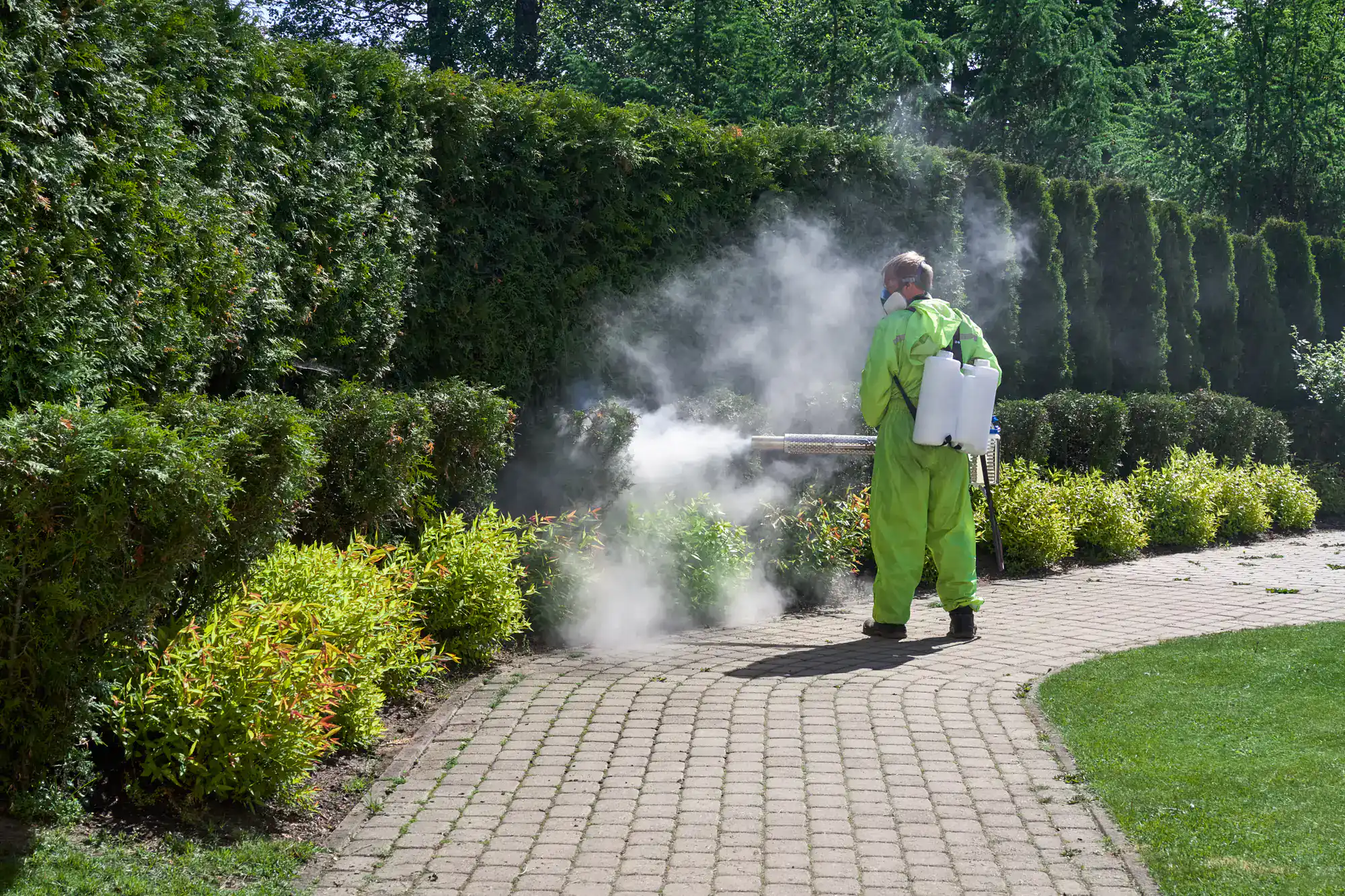
From there, treatment is applied to the areas where ticks and fleas actually live not just broadcast across the open lawn. That means the leaf litter zones, the shaded perimeter, the transition areas between your lawn and any wooded or overgrown sections. These are the harborage zones. That’s where the problem starts, and that’s where the solution has to go. Products we use are professional-grade formulations that include Insect Growth Regulators compounds that break the flea reproductive cycle at the larval stage, something store-bought products typically don’t carry.
On Long Island, the treatment calendar matters as much as the treatment itself. We structure our seasonal programs around the two peak tick windows: a spring application before nymphal tick populations hit their peak in May and June, maintenance treatments every three to four weeks through summer, and a fall application to address the adult tick surge that runs through November. After each application, re-entry is typically safe within 30 to 60 minutes once the product has dried. You’ll receive reminders before each scheduled visit so you’re never caught off guard.
Ready to get started?
Our flea and tick programs are built around your specific property, not a generic package designed for the average Long Island lot. Because Selden is a dense, residential hamlet with a mix of open lawns, wooded borders, and active outdoor spaces including regular foot traffic near Veterans Park and the Selden Park Complex the treatment approach has to account for the full picture of how your yard gets used and what surrounds it.
Each application targets the full harborage zone: lawn perimeter, ornamental beds, fence lines, shaded areas under decks and shrubs, and any wooded transition zones at the edge of your property. For households with dogs that visit the Selden Dog Park on Boyle Road, flea management is built into the program with specific attention to the areas where pets rest and re-enter the home. Professional-grade products are used at concentrations that homeowner-grade formulations simply don’t reach and that difference shows up in how long protection lasts between visits.
All commercial pesticide applications made by Lawn Master are performed in full compliance with New York State Department of Environmental Conservation requirements. Every technician is NYSDEC-certified, and neighbor notification procedures are followed where required by state law. We also offer integrated lawn care fertilization, aeration, and seeding which means your lawn can be managed as a complete, healthy system rather than just a surface that gets sprayed. A well-maintained lawn has less thatch and better drainage, which directly reduces the conditions that fleas and ticks prefer. That’s something no standalone pest control company can offer.
Selden sits within the Town of Brookhaven, which is consistently identified as one of the higher-risk tick areas in Suffolk County. A Columbia University study found that more than 56% of Long Island ticks carry Lyme disease and Suffolk County’s Department of Health has noted that rates in parts of the county may be even higher than that. In 2023, New York State recorded over 19,000 confirmed Lyme disease cases, a 146% increase in a single year.
What makes Selden specifically worth paying attention to is the combination of residential density and green space. The wooded edges near the SCCC Ammerman Campus, the corridors between properties, and the deer pressure throughout central Suffolk County all contribute to a sustained tick population that doesn’t thin out the way it might in a more open, less wooded area. Beyond Lyme, Suffolk County ticks also carry babesiosis and Powassan virus so the risk isn’t limited to one disease. It’s a real, documented problem in this area, and treating your yard consistently is one of the most practical ways to reduce your family’s exposure.
For most properties in Selden, a well-structured seasonal program includes a spring application, maintenance treatments every three to four weeks through the summer, and a fall application before the first hard freeze. That typically works out to somewhere between four and six treatments per season depending on your property size and how much tick pressure you’re dealing with.
The reason a single treatment isn’t enough comes down to how ticks behave on Long Island. Nymphal deer ticks are active from roughly late April through June that’s the most dangerous window because they’re nearly invisible at poppy-seed size and carry the highest Lyme transmission risk. Adult ticks then surge again in September through November. A one-time spray in May addresses the spring population but leaves your yard exposed for the rest of the season. A program built around the actual Long Island tick calendar keeps protection consistent from the first warm weeks of spring through the late fall. That’s what actually makes a difference.
Yes when applied correctly by a licensed professional, the products are safe for children and pets once they’ve fully dried. That typically takes 30 to 60 minutes depending on temperature and humidity. Our technicians will let you know before they leave when it’s safe to re-enter treated areas, and you’ll have that information in advance so you can plan around it.
The key word there is “correctly.” New York State requires that anyone applying pesticides commercially holds a NYSDEC commercial applicator certification which involves a state exam and a minimum 30-hour training program. Our technicians are all licensed to that standard. The products are applied to specific harborage zones shaded perimeters, leaf litter areas, fence lines not broadcast across the entire yard. That targeted approach reduces overall product use while concentrating treatment where it actually matters. If you have a dog that spends time in certain areas of the yard, that gets factored into how the application is planned from the start.
It’s a fair question, and the honest answer is yes the dog park is one of the more direct exposure points for both ticks and fleas in Selden. The off-leash facility on Boyle Road is a great amenity, but it’s also a place where dogs are in contact with grass, other animals, and the kinds of conditions that fleas and ticks thrive in. When your dog comes home, anything that hitched a ride comes with them.
Fleas in particular are worth taking seriously here because they don’t stay on the pet. Once they’re in your home in carpet fibers, in upholstered furniture, in bedding they can establish an indoor infestation that becomes its own separate problem. Flea pupae can stay dormant for months and hatch when they detect warmth or vibration. Treating your yard breaks the cycle before it gets that far. A professional flea treatment program for your outdoor space, combined with whatever your vet recommends for your pet directly, is the most effective way to stay ahead of it especially if the dog park is a regular part of your week.
The biggest practical difference is what’s actually in the product and how it’s applied. Consumer-grade tick sprays are formulated at lower concentrations than professional-grade products that’s a regulatory distinction, not a marketing one. Professional formulations last longer between applications and provide more consistent coverage. More importantly, professional products typically include Insect Growth Regulators, which disrupt the flea reproductive cycle at the larval stage. Store-bought sprays generally don’t include these, which means you might knock down the adult population temporarily without actually stopping the next generation from developing.
The application itself also matters. Ticks don’t live in the middle of your open lawn they concentrate in specific harborage zones: the shaded perimeter, leaf litter, ornamental beds, fence lines, and wooded edges. A licensed technician knows where to treat and why. A homeowner with a backpack sprayer walking across the lawn is covering the wrong ground. If you’ve tried DIY and found yourself retreating every few weeks with inconsistent results, that’s usually why. A professional seasonal program costs more upfront, but it typically works out to less time, less frustration, and better protection across the whole season.
The short answer is early spring before most homeowners think to start. On Long Island, nymphal deer ticks become active when temperatures consistently reach 50°F, which in central Suffolk County can happen as early as late March or early April depending on the winter. By the time you’re thinking about it in May, nymph season is already underway. Nymphs are the most dangerous tick life stage because they’re nearly impossible to see and carry the highest rate of Lyme disease transmission.
Getting your first application in before that window opens typically in April means you’re treating proactively rather than reactively. Selden’s inland location means it doesn’t have the moderating influence of the Sound or the bay that the North Shore and South Shore communities have, so temperature swings here can be more pronounced. A mild stretch in March can push tick activity earlier than expected. Starting your program in early spring, maintaining it through summer, and closing it out with a fall treatment in September or October gives you the most complete seasonal coverage. If you’re calling in June because you just found a tick on your child, that’s not a failure but earlier is always better when it comes to tick control on Long Island.
Useful Links
Other Services we provide in Selden