
Hear from Our Customers
If you’ve reseeded the same dead patches near your driveway or along the back fence two or three seasons in a row, the problem isn’t the seed. Active fungal disease kills new grass before it can root and no amount of overseeding fixes that until the pathogen is gone. This is the cycle most Selden homeowners are stuck in, and it’s a frustrating one.
Central Suffolk County’s sandy loam soil drains fast, which sounds like a good thing until late summer hits. When daytime conditions dry out and overnight dew builds up, that combination is exactly what dollar spot needs to spread across your lawn. Add in the heat that sits over inland Selden from June through August without the coastal breeze that South Shore towns get and nighttime temperatures routinely stay above 70°F. That’s brown patch territory, and it can take out large sections of turf within days.
When you get the right treatment at the right time, the disease stops spreading. The lawn stabilizes. You stop buying bags of seed every fall. And the patches that kept coming back they don’t come back, because the underlying problem has actually been addressed.
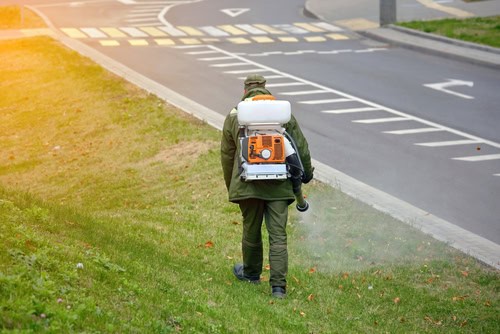
We hold a New York State DEC commercial pesticide applicator license the credential required by law for any business applying pesticides for hire in New York. That license isn’t just a piece of paper. It grants access to restricted-use fungicide formulations that aren’t available at the Home Depot on Middle Country Road or any retail store on Long Island. These are professional-grade products used on golf courses and managed turf facilities, and they’re only legal in the hands of a licensed applicator.
We serve Selden and the surrounding central Suffolk County area from our Port Jefferson Station base, just up Nicolls Road. We know the soil conditions here, the diseases that hit hardest in this part of the county, and the seasonal windows when intervention actually makes a difference. Every application comes with written documentation what was applied, at what rate, on what date because that’s what NYS law requires of licensed applicators, and because you deserve to know exactly what’s going on your lawn. Many Selden properties also deal with pests, so we provide dedicated flea & tick control in Selden.
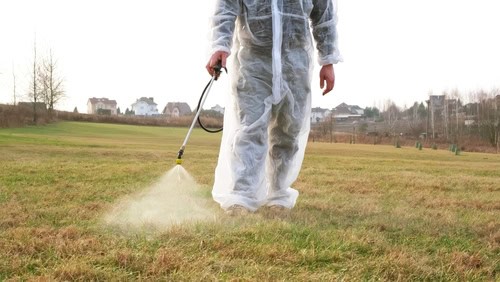
The first thing we do is identify what’s actually wrong. Brown patch, dollar spot, and red thread are the three most common fungal diseases on Long Island lawns, but they look different, peak at different times of year, and require completely different chemistry. Treating brown patch with a red thread fungicide or the other way around wastes money and lets the real disease keep spreading. So before anything gets sprayed, we figure out exactly what we’re dealing with.
Once the pathogen is confirmed, we select the right fungicide for the job and time the application to Selden’s specific disease windows. Red thread is a spring and fall disease, peaking when temperatures are in the 60–75°F range and nitrogen is low in the soil common conditions on Selden’s sandy, fast-draining lots. Brown patch is a summer disease, driven by the sustained heat and humidity that builds in central Suffolk County from late June through August. Dollar spot overlaps both, staying active from late spring through early fall.
We also rotate fungicide chemistries across applications different modes of action to prevent resistance from building up over time. It’s one of the most overlooked parts of professional lawn disease management, and it’s a big reason why programs like ours keep working year after year while DIY treatments gradually stop.
Ready to get started?
Selden’s housing stock skews older most homes here were built between the late 1950s and early 1980s, which means most lawns have been in the ground for 50 years or more. Older established lawns accumulate thatch, and a thatch layer over half an inch traps moisture right at the crown of the grass plant exactly where fungal pathogens do the most damage. Our diagnostic visit accounts for this. We’re not just looking at the surface; we’re looking at what’s underneath it and why your lawn keeps getting hit.
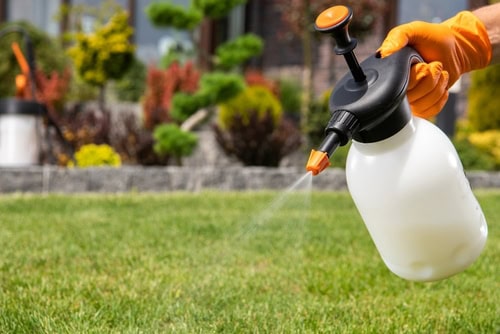
Every treatment we deliver uses professional-grade fungicide products restricted-use formulations that require a NYS DEC license to purchase and apply. These aren’t the same products sitting on a shelf at the garden center. They’re more effective, applied at precise rates, and matched to the specific pathogen we’ve identified on your property. As required under New York State law, we provide written notification to adjacent property owners before any application and deliver full documentation after every visit.
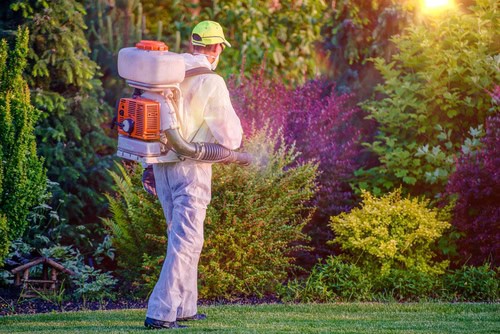
For Selden homeowners managing recurring disease the kind that comes back in the same spots every spring or every August we offer a season-long fungicide program that covers the full disease pressure window with properly timed, chemistry-rotated applications. It’s built for lawns that have been fighting the same battle for years and haven’t been able to get ahead of it.
The short answer is that you likely have an active brown patch infection Rhizoctonia solani that never fully cleared up. Brown patch is a warm-season fungal disease that thrives when nighttime temperatures stay above 70°F and humidity is high. In Selden, that combination is common from late June through August. Because Selden sits inland in central Suffolk County without the cooling effect of direct coastal breezes, heat tends to sit and build extending the window when brown patch is most destructive.
The reason it keeps coming back in the same spots often comes down to one of three things: the disease was never fully treated, the lawn has a thatch layer that’s holding moisture at the soil surface and creating ideal conditions for reinfection, or the wrong product was used at the wrong time. Reseeding over active disease doesn’t work the pathogen kills new seedlings before they establish. The fix is proper diagnosis, targeted fungicide treatment with the right chemistry, and then reseeding once the disease is clear.
They’re three different diseases caused by three different pathogens, and they respond to different fungicide chemistries which is why correctly identifying the disease before treating it matters so much. Brown patch appears as large, irregular tan or brown circles and is most active in summer when temperatures are high and humidity is elevated. Dollar spot shows up as small, silver-dollar-sized straw-colored patches and is most common from late spring through early fall, particularly on drought-stressed lawns which describes a lot of Selden properties given the sandy, fast-draining soil in this part of Suffolk County.
Red thread is a cool-season disease that peaks in spring and fall, typically when temperatures are between 60–75°F. It’s identified by the distinctive pink or red mycelial threads visible at the tips of grass blades and tends to hit lawns that are low in nitrogen. Sandy soils like Selden’s don’t hold nitrogen well, which is why red thread is a recurring problem here every spring. Each disease needs its own treatment approach applying a one-size-fits-all fungicide spray rarely solves any of them.
Legally, yes if you’re hiring someone to apply pesticides on your property in New York State, that person or company must hold a NYSDEC commercial pesticide applicator license. It’s not optional, and it’s not a technicality. An unlicensed operator applying pesticides for hire is breaking state law, and hiring one creates real exposure for you as the homeowner.
Beyond the legal requirement, the license matters because of what it allows. Only licensed commercial applicators can purchase and use restricted-use pesticides professional-grade fungicide formulations that aren’t available at retail. The products available at garden centers and big-box stores in Selden are consumer-grade, lower-concentration versions of the same active ingredients. They can work in mild cases, but for established or recurring disease, they often fall short. A licensed applicator also provides written pre-notification to adjacent property owners before any application and delivers full documentation after every visit both required under NYS law and both important for homeowners who care about what’s being applied near Long Island’s groundwater.
It’s a fair question because they can look similar at first glance both can cause brown, thinning, or dead-looking grass. The difference is usually in the pattern and the timing. Drought stress tends to affect the lawn more uniformly, especially in areas with full sun exposure. Fungal disease typically shows up in distinct patterns: circular or irregular rings, patches with defined edges, or areas with a specific texture at the blade tips like the pink threads of red thread disease or the tan lesions you see with brown patch.
Timing is another clue. If the brown areas appear during or right after a stretch of hot, humid nights in July or August, brown patch is a strong possibility. If you’re seeing small straw-colored patches in late spring when the lawn is coming out of dormancy, dollar spot is more likely. If there are visible pink or reddish threads on the grass blades in April or May, that’s red thread. The safest approach is a professional diagnostic visit guessing and applying the wrong product wastes money and gives the actual disease more time to spread.
It depends on whether you’re treating an active infection or running a preventative program. For an active disease outbreak say, brown patch that’s already spreading across the lawn in mid-July you’re typically looking at one curative application followed by a monitoring period, with a second application if conditions remain favorable for disease activity. Most active infections can be brought under control within two to three applications when the right product is used.
For lawns with a history of recurring disease, a preventative program is more effective and more cost-efficient over time. That means scheduled applications timed to Selden’s disease windows spring applications ahead of red thread season, early summer applications before brown patch pressure builds, and late-season applications if dollar spot is still active. A season-long program typically involves three to five applications spaced across the growing season, rotating chemistry to prevent resistance. Older Selden homes with established thatch accumulation often benefit most from this approach because the underlying conditions that favor disease don’t disappear after a single treatment.
Yes, and it happens more easily than most people realize. Red thread, for example, spreads through spores that can travel up to eight feet from a single infected area and those spores move on foot traffic, mowing equipment, and wind. Brown patch spreads through infected thatch and soil, and it can cross property lines through shared equipment or even runoff after a heavy rain. In a neighborhood of established single-family homes like most of Selden, where lawns are adjacent and mowing crews often service multiple properties on the same street, disease can move between yards within a single season.
This is actually one of the reasons New York State requires licensed applicators to provide written pre-notification to adjacent property owners before any pesticide application. It’s a legal requirement, but it also reflects the reality that lawn disease treatment affects more than just one property. If you’re seeing active disease on your lawn and your neighbor’s yard is also showing similar symptoms, that’s worth noting when you call it helps us understand the scope of what we’re dealing with and plan the treatment accordingly.
Useful Links
Other Services we provide in Selden