
Hear from Our Customers
Kyllinga doesn’t just look bad it spreads. One small patch near a downspout or an overwatered irrigation zone can quietly colonize a significant portion of your lawn within a single season. By the time most Selden homeowners call, the infestation is already larger than it was in the spring.
When the right program is in place, that stops. The patch stops spreading, the existing kyllinga dies back, and your desirable turf the tall fescue and bluegrass that belongs in a central Long Island lawn has room to fill back in. That’s the outcome: not just a treated weed, but a lawn that’s actually recovering.
Selden’s housing stock makes this especially relevant. Most homes here were built between the 1950s and 1970s, which means decades of compaction, thatch buildup, and grade changes that collect moisture in exactly the spots kyllinga loves. Add a residential irrigation system that’s been running the same schedule for years, and you’ve got the conditions kyllinga needs to thrive. Treating the weed is one part of the job. Understanding why it showed up in your specific lawn is the other part and that’s where a lot of generic programs fall short.
We’re based in Port Jefferson Station just up Nicolls Road from Selden and operate exclusively in Suffolk County. We’re not a national franchise with a regional manager assigned to your zip code. We’re a locally owned lawn specialist that knows Selden’s soil, its regulatory environment, and the specific weed pressure that comes with it.
That distinction matters more than it sounds. Most of the lawn care providers you’ll find serving Selden are tree service or landscaping companies that offer lawn care as a side offering. None of them have kyllinga-specific content, kyllinga-specific programs, or the licensed access to the professional-grade sedge chemistry that actually works. We do.
Every applicator working under the Lawn Master name carries a New York State DEC Commercial Pesticide Applicator license Category 3a, Ornamental and Turf. That’s the credential required to legally purchase and apply the herbicides that control kyllinga. It’s not optional, and not everyone operating in this market has it. When ticks and fleas show up, our Selden flea and tick control keeps the yard safe.
It starts with identification. Kyllinga and nutsedge are both sedges, and they’re both common in Selden lawns, but they’re not identical and treating them as if they are is one of the most common reasons a program fails. Before anything gets sprayed, the specific sedge species in your lawn gets confirmed. That step alone puts our program ahead of most of what’s available in Selden.
Once the weed is confirmed, the treatment program is structured around the biology not around billing convenience. Kyllinga has an underground rhizome network that survives a single application and regenerates within weeks. An effective program requires a minimum of two to three targeted applications spaced four to six weeks apart during the active growing season. In the Long Island climate, that window runs from late May through late August. Selden’s inland position in central Suffolk means it gets the full intensity of summer heat without the coastal moderation of the Sound shoreline, which actually accelerates kyllinga growth during peak season making that treatment window critical to hit correctly.
Before any application, we check the SCDHS pesticide buffer zone map. Selden sits in the central aquifer recharge zone, and Suffolk County Local Law 41-2007 requires licensed applicators to verify buffer zone compliance before treating. That step happens on every visit, without exception. After the final treatment, the program doesn’t just stop post-treatment recommendations for overseeding and irrigation adjustment are part of the conversation, because bare areas left behind by kyllinga are re-entry points if they’re not addressed.
Ready to get started?
The herbicides that reliably control kyllinga halosulfuron-methyl (Sedgehammer) and sulfentrazone (Dismiss) are not available at the Home Depot on Middle Country Road or anywhere else on the retail shelf. They require a New York State DEC Commercial Pesticide Applicator license to purchase and apply in professional-grade formulations. If you’ve already tried a retail product on the kyllinga in your Selden lawn and watched it come back, that’s not a failure of effort it’s a product access problem. Those products simply aren’t the same chemistry.
What we bring to a kyllinga control program in Selden is the licensed access to the right tools, the knowledge to apply them at the right time, and the follow-through to structure a multi-application program that matches how the weed actually grows. One spray is not a program. Two to three applications, timed correctly through the summer, with species-level identification driving the product selection that’s a program.
The service also includes a post-treatment assessment. Kyllinga leaves behind thin or bare areas when it dies back, and those spots need attention overseeding with appropriate cool-season turf varieties, soil restoration where needed, and irrigation adjustments where overwatering contributed to the problem in the first place. For Selden homeowners with established lawns and homes worth close to $500,000, protecting that investment means more than killing the weed. It means restoring the lawn that’s supposed to be there.

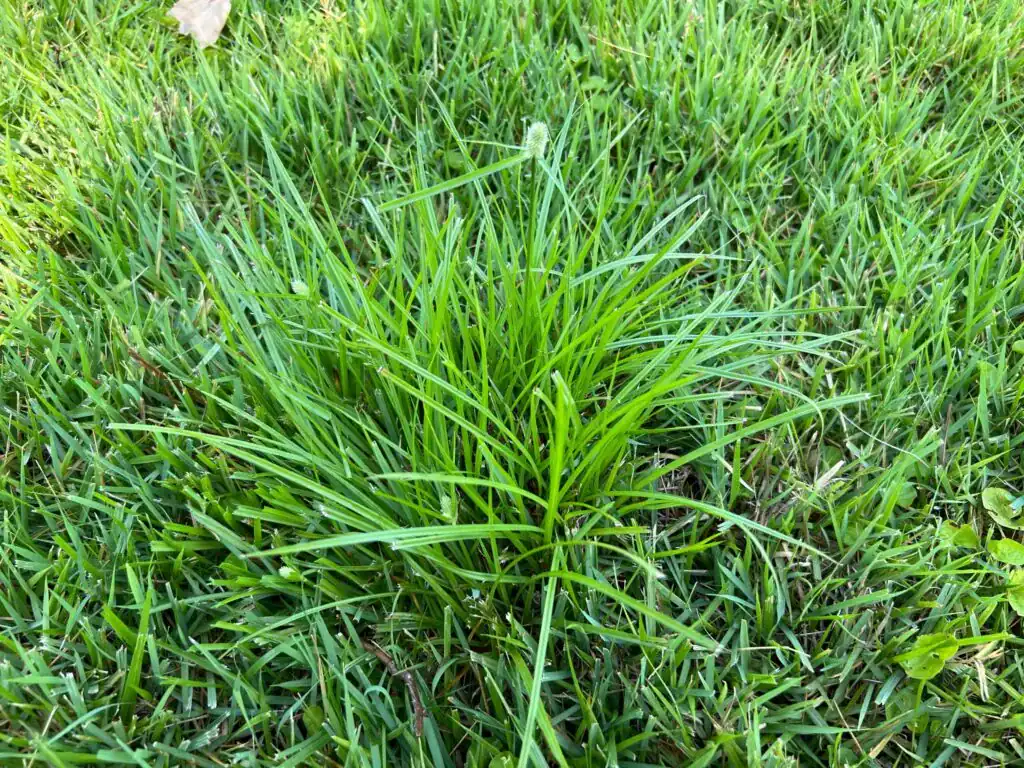
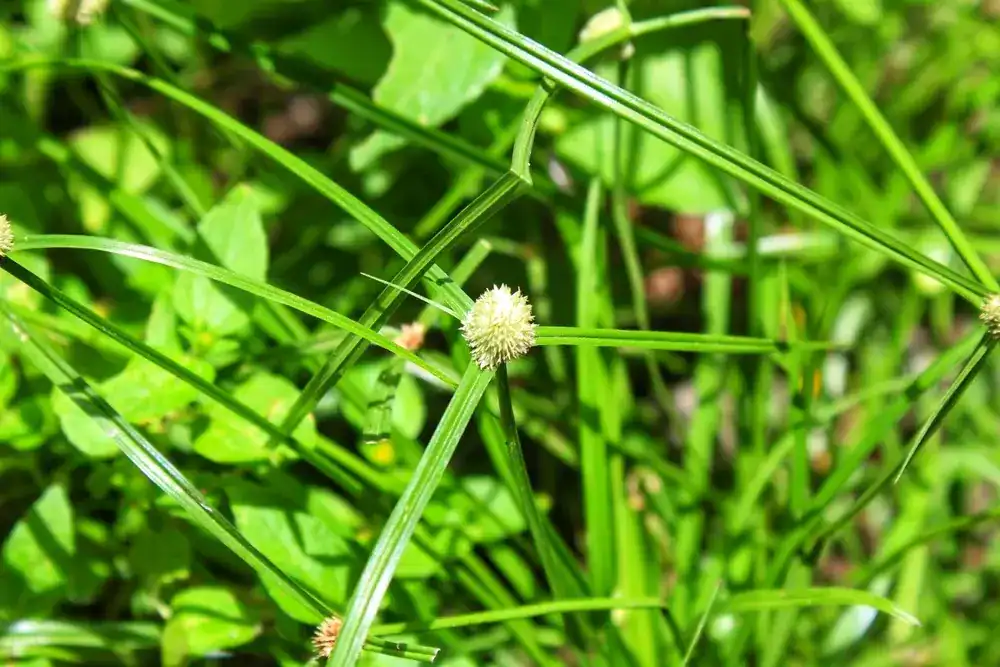
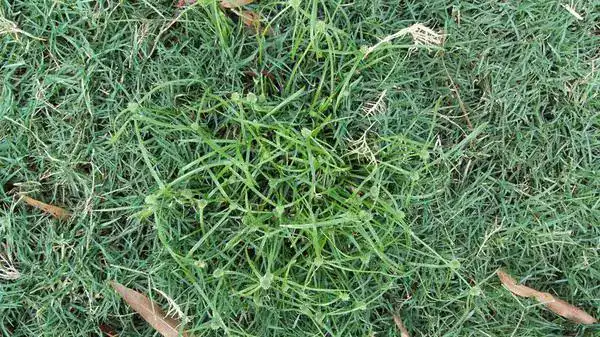
Both kyllinga and nutsedge are sedges, and they look similar enough that they’re frequently confused even by lawn care companies that should know better. The most reliable visual clue is the seed head: kyllinga produces a small, round or slightly elongated spike at the top of the stem, while nutsedge produces a more branched, multi-pronged seed head. Kyllinga also tends to grow lower and denser, forming a tight mat-like patch that sits closer to the soil surface, while nutsedge grows more upright and tall.
In Selden lawns specifically, both species show up and both thrive in the moist, low-drainage conditions that are common in the area’s older residential neighborhoods. The distinction matters because treatment protocols can differ, and a company that lumps both into a generic “sedge program” without confirming the species first is taking a shortcut that may cost you results. Correct identification before any application is the first step in every program we run.
This is the most common frustration homeowners bring to us, and the answer is straightforward: the products available at retail including the home improvement stores along Middle Country Road are not the same chemistry used in professional-grade kyllinga control. The herbicides that reliably kill kyllinga, halosulfuron-methyl and sulfentrazone, require a New York State DEC Commercial Pesticide Applicator license to purchase in professional formulations. They are simply not on the retail shelf.
Beyond product access, timing matters. Kyllinga is most vulnerable to herbicide uptake when it’s actively growing typically June through mid-August in the Long Island climate. An application made outside that window, even with the right product, will underperform. And kyllinga’s underground rhizome network means a single application, even a well-timed one with professional chemistry, is rarely enough to eliminate an established infestation. The biology of the plant requires a multi-application program. Retail products, applied once, against a weed with deep rhizomes the odds were never in your favor.
For most established infestations, you’re looking at a minimum of two to three targeted applications spaced four to six weeks apart during the active growing season. That timeline exists because of how kyllinga grows the underground rhizome network survives the first application and regenerates new growth within weeks. The follow-up applications target that regrowth while the plant is still metabolically active and susceptible.
In the Long Island climate, the effective treatment window runs from late May through late August. Selden’s inland position in central Suffolk County means the area experiences the full intensity of summer heat without the moderating influence of the Long Island Sound shoreline, which accelerates kyllinga’s growth during peak season and reinforces why hitting that window correctly matters. A program that starts in late May and runs through mid-August with properly timed applications gives you the best chance of full elimination before the plant moves toward fall dormancy. Programs that start too late in the season or that stop after one application rarely produce complete results.
This is a legitimate concern for Selden homeowners, and it deserves a straight answer. Selden sits in the central aquifer recharge zone of Long Island, and the Long Island aquifer system is the sole source of drinking water for every Suffolk County resident there is no municipal water supply alternative. Suffolk County Local Law 41-2007 establishes pesticide-free buffer zones around public drinking water supply wells throughout the county, and licensed commercial applicators are required to check the Suffolk County Department of Health Services pesticide buffer zone map before any application.
We operate exclusively in Suffolk County and check the SCDHS map before every treatment. If your property falls within or near a designated buffer zone, that gets identified before any product is applied not after. The proximity of Selden to the Long Island Pine Barrens region adds additional environmental sensitivity to this conversation, and it’s one of the reasons that hiring a licensed, locally operating applicator who knows the county’s specific regulatory requirements matters more here than it might in other parts of New York.
It can come back, and understanding why is the key to preventing it. Kyllinga thrives in moist, poorly drained soil the kind of conditions that develop in low spots, near downspouts, along overwatered irrigation zones, and in shaded areas under mature trees. In Selden’s established residential neighborhoods, where homes were built decades ago and irrigation systems have been running the same schedules for years, those conditions are common. If the underlying conditions aren’t addressed after treatment, kyllinga has a clear path back in.
Post-treatment, the focus shifts to two things: restoring the bare areas where kyllinga was crowding out desirable turf, and adjusting the conditions that allowed it to establish in the first place. That means overseeding with appropriate cool-season grass varieties, correcting drainage where possible, and recalibrating irrigation schedules to reduce the sustained soil moisture kyllinga depends on. A dense, healthy lawn is the best long-term defense kyllinga establishes most aggressively where turf is thin or stressed. Closing those gaps after treatment is what separates a one-season fix from a lasting result.
Most lawn care providers operating in Selden including several that show up prominently in local search results are tree service or landscaping companies that offer lawn care as part of a broader menu of services. That’s not a criticism; it’s just a structural reality. When kyllinga is a side problem for a company whose primary expertise is tree removal or landscape installation, the depth of knowledge applied to sedge identification and treatment reflects that.
Kyllinga control requires species-level identification, access to licensed professional-grade herbicides that are not available at retail, a multi-application program structured around the plant’s biology, and post-treatment follow-through to restore the lawn and prevent reinfestation. That’s a specific set of capabilities. A general landscaper with a spray license can apply a product but knowing which product, at what timing, in how many applications, and what to do with the lawn afterward is a different conversation. For a Selden homeowner with an established lawn and a home worth close to half a million dollars, the difference between a specialist and a generalist is the difference between solving the problem this season and dealing with it again next year.
Useful Links
Other Services we provide in Selden