
Hear from Our Customers
If you live near Cathedral Pines County Park or back up to any stretch of wooded land in Middle Island, you already know the drill. You let the dog out, the kids play in the grass, and somewhere in the back of your mind you’re thinking about ticks. That’s not how your yard should feel.
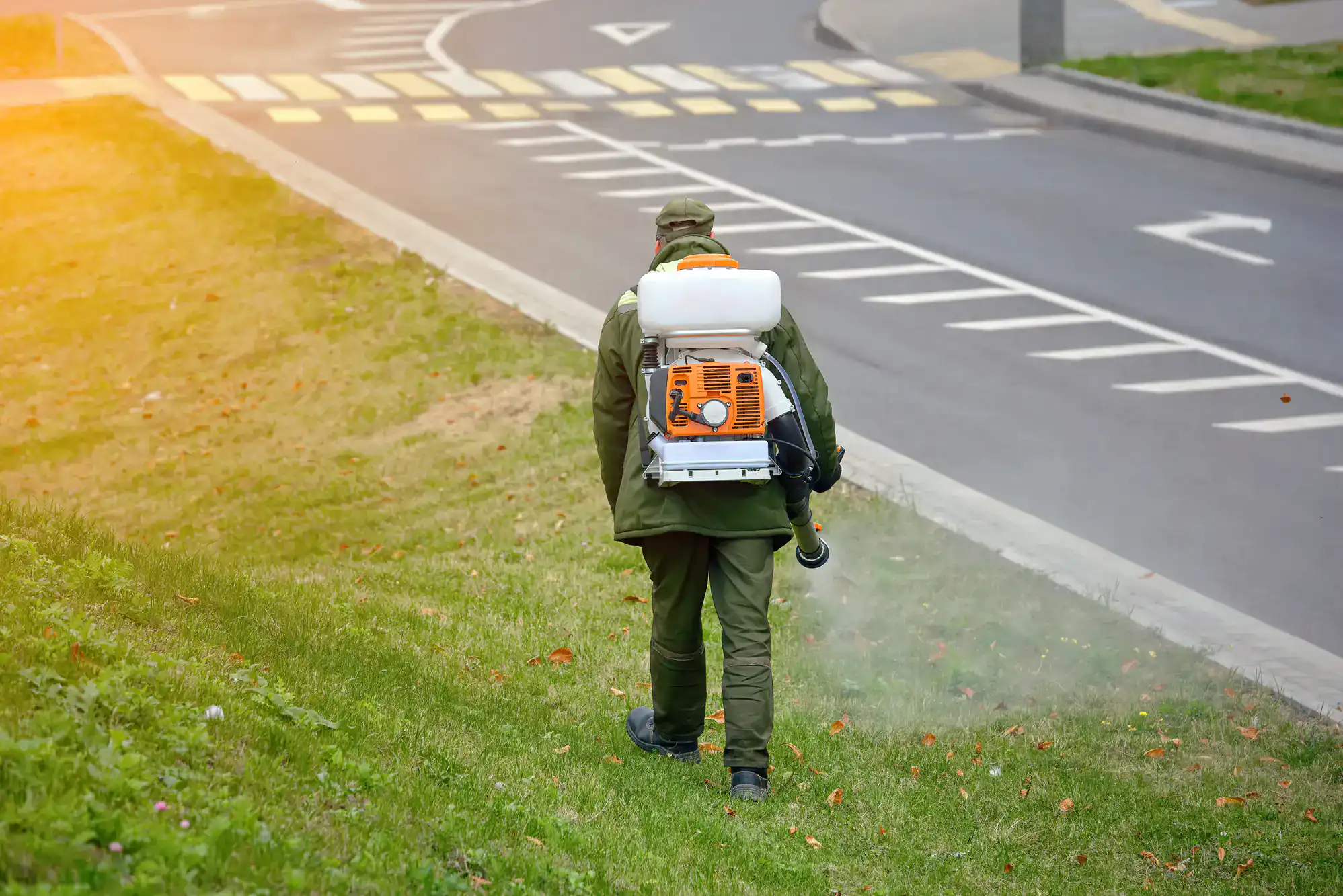
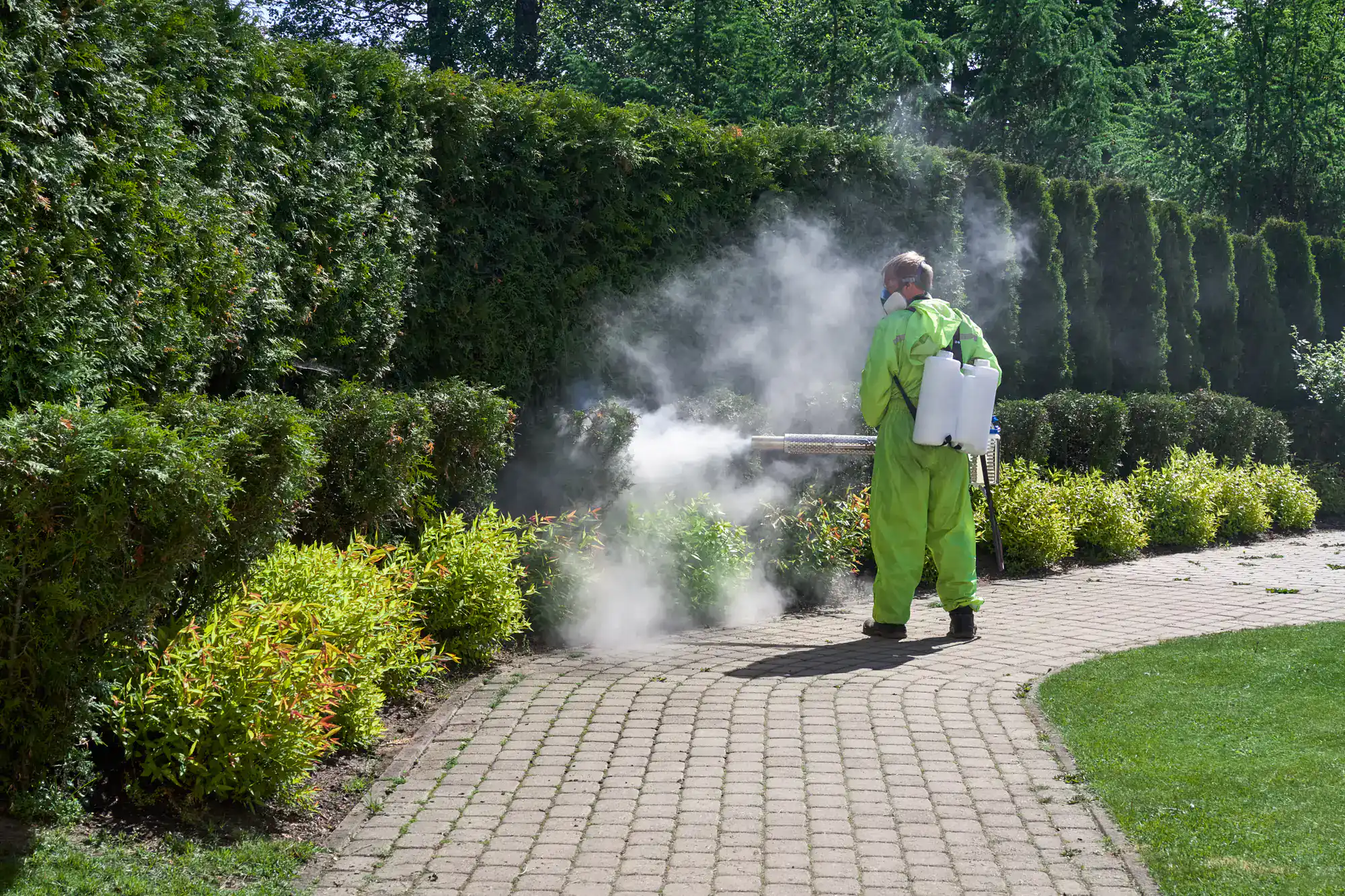
Professional flea and tick control changes that. Not because it’s a magic force field, but because when a licensed technician treats the right zones the wooded edges, under the deck, along the fence line, the brushy transition areas where ticks actually wait you’re not just spraying the lawn and hoping for the best. You’re cutting off the problem where it starts.
Middle Island’s geography makes this more important than it is in most towns. The Carmans River headwaters run through Cathedral Pines, and the deer population that comes with East Bartlett Pine Barrens State Forest doesn’t stop at your property line. Every deer that crosses your yard can drop dozens of ticks. A properly timed, properly applied seasonal program keeps that pressure from turning into a real health risk for your family and pets because in Suffolk County, 56% of blacklegged ticks carry Lyme disease. That’s not a regional statistic. That’s your backyard.
We’ve been operating in Suffolk County since 1987. That’s not a tagline it’s the reason we understand the specific conditions that make a property in Middle Island different from one in Holbrook or Commack. The Pine Barrens adjacency, the Carmans River corridor, the wooded lots near Cathedral Pines these aren’t abstract risk factors to us. They’re the properties we’ve been treating for decades.
Every technician on our team holds a valid NYSDEC Commercial Pesticide Applicator license. That’s the legal requirement for applying pest control products in New York State, and it’s a standard that not every company you’ll find online actually meets. When one of our five fully wrapped professional vehicles pulls into your driveway in Middle Island, you’re getting a licensed professional who knows what they’re doing, not a seasonal laborer handed a spray tank.
We’re a lawn care company, which means we also understand that a well-maintained lawn is part of your tick defense. Ticks thrive in thatch, overgrowth, and moisture. We treat the pest problem and address the lawn conditions that make it worse.
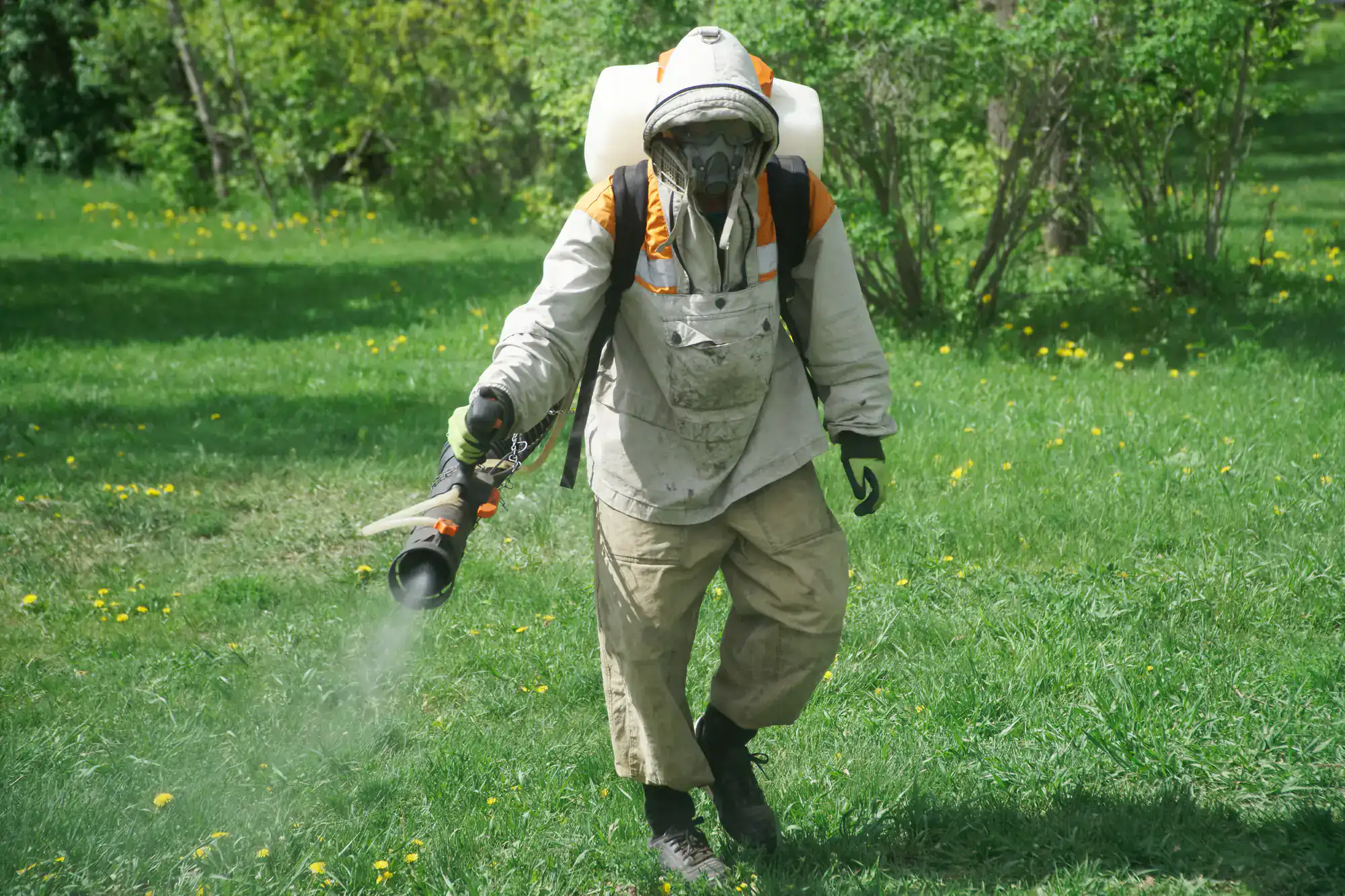
It starts with a property assessment. Before anything gets applied, we look at your specific lot where the wooded borders are, how close you are to deer movement corridors, whether you have shaded areas or brush edges that create tick habitat. A property backing up to the Pine Barrens near Cathedral Pines gets treated differently than a cleared suburban lot, and that distinction matters.
From there, we build a seasonal program around Middle Island’s actual tick calendar. Blacklegged tick nymphs the ones that are nearly impossible to spot are most active from May through June. Adult ticks surge again in September through November. Lone star ticks are active across most of the warm season. That means your program starts in early spring when temperatures hit around 50°F and runs through late fall, with applications spaced roughly every 30 days for consistent coverage. One spray in June doesn’t cut it here.
Each treatment focuses on the zones where ticks live, not just the open lawn. Wooded edges, under decks, along fence lines, leaf litter areas, and the transition zones between your maintained yard and any natural borders that’s where the work happens. After the product dries, typically within 30 to 60 minutes, your yard is ready to use. We handle the scheduling, the timing, and the follow-through. You just get your yard back.
Ready to get started?
Flea and tick control in Middle Island isn’t a single spray and a handshake. Because this hamlet sits directly adjacent to protected Pine Barrens land with Cathedral Pines County Park, Prosser Pines Nature Preserve, and East Bartlett State Forest all within or bordering the community the tick pressure here is seasonal, sustained, and driven by wildlife movement that doesn’t stop between visits.
A complete program through us includes a minimum of three applications per season, with most properties benefiting from up to six. Each application is performed by a NYSDEC-licensed technician using professional-grade products that provide four to six weeks of residual protection. We treat the full yard with emphasis on the high-risk transition zones wooded borders, shaded areas, under structures, and any brush or leaf litter edges that tick populations use as staging ground. If you’re near Artist Lake or back up to any stretch of wooded land along the Carmans River corridor, those areas get specific attention.
Flea treatment is included in the same program. Raccoons, opossums, and Eastern cottontail rabbits are common throughout Middle Island’s Pine Barrens-adjacent neighborhoods, and they bring fleas with them. If you have pets that spend time outside, flea pressure is a real secondary concern not just a theoretical one. Your program covers both, applied by the same licensed professional on the same visit, without you having to manage two separate service relationships.
For most Middle Island properties, a minimum of three treatments per season is the baseline but six is closer to what provides consistent protection across the full tick season. The reason the frequency matters here specifically is that Middle Island’s tick pressure doesn’t come from one direction. You’ve got blacklegged tick nymphs peaking in May and June, adult ticks surging again in September through November, and lone star ticks active across most of the warm season in between. That’s a long window.
Each application provides roughly four to six weeks of residual protection under normal conditions. If you’re near Cathedral Pines County Park, back up to wooded land, or have regular deer movement through your yard which is common for properties near the East Bartlett Pine Barrens corridor you’re dealing with continuous reintroduction of ticks throughout the season. Spacing treatments every 30 days keeps that barrier intact instead of leaving gaps where the protection has worn off and new ticks have moved in.
Middle Island sits at the geographic center of Long Island, surrounded by the Central Pine Barrens ecosystem which is one of the largest contiguous pine barrens habitats on the East Coast. Cathedral Pines County Park is not nearby; it’s in Middle Island. The Carmans River headwaters run through it. East Bartlett Pine Barrens State Forest borders the community directly. These are not background details they’re the reason tick pressure here is structurally higher than in more developed suburban areas of Suffolk County.
The wildlife that drives tick populations white-tailed deer, Eastern cottontail rabbits, white-footed mice is abundant throughout this habitat. Hikers at Cathedral Pines have documented finding multiple ticks after a single trail walk. If you live near the park, your yard is part of the same ecosystem those trails run through. Suffolk County already ranks among the top counties statewide for confirmed Lyme disease cases. Middle Island’s Pine Barrens adjacency puts it at the higher end of that risk range.
The products available at hardware stores are consumer-grade formulations, and they’re designed for homeowners to apply themselves which means they’re formulated to a lower concentration and applied by someone without training in where ticks actually live and hide. Most people spray the lawn perimeter and call it done. Ticks don’t live on the open lawn. They live in the wooded edges, under the deck, in leaf litter, along fence lines, and in the brushy transition zones between your maintained yard and any natural borders.
A licensed professional knows where to treat because they understand tick biology and behavior not because they read the back of a bottle. NYSDEC-licensed applicators in New York State are required to complete a 30-hour training course and pass a state examination before they can legally apply commercial pesticide products. Beyond the credentials, professional-grade products provide four to six weeks of residual protection per application when applied correctly. Store-bought sprays typically break down much faster, especially after rain and in a community like Middle Island where deer and wildlife are continuously reintroducing ticks throughout the season, the gap in protection adds up quickly.
The short answer is earlier than most people think. Blacklegged tick nymphs the most dangerous stage because they’re roughly the size of a poppy seed and nearly impossible to spot become active when temperatures consistently reach around 50°F. On Long Island, that can happen in March or early April depending on the year. By the time most homeowners are thinking about tick season, nymphal tick activity is already building.
For Middle Island specifically, starting your first application in early spring before the nymphal peak in May gives you the best chance of establishing a protective barrier before tick activity is at its highest. Because Middle Island is inland and surrounded by Pine Barrens forest rather than buffered by coastal air, it doesn’t get the moderating effect that shoreline communities sometimes experience. Tick emergence here tends to track closely with inland Long Island temperatures, which means spring programs should start no later than April for properties with any wooded borders or wildlife movement.
Keeping your lawn mowed and maintained absolutely helps reduce tick habitat ticks don’t thrive in short, dry, open grass. But in Middle Island, the source of the problem isn’t usually the lawn itself. It’s the wooded borders, the brushy edges, the leaf litter along fence lines, and the wildlife moving through those areas and into your yard. A deer that walks across your property at night doesn’t care how short your grass is.
This is actually one of the reasons our approach works well for Middle Island properties. Because we’re a full-service lawn care company not just a pest control operation we treat the pest problem and address the lawn conditions that create tick-friendly habitat at the same time. Thatch buildup, overgrowth, and poor drainage all contribute to the kind of moist, shaded microenvironments where ticks concentrate. A properly aerated, fertilized, and maintained lawn reduces those conditions. The tick treatment handles the active population. The lawn program reduces the habitat that sustains it.
The honest answer depends on your property and your situation. If you have a small, fully cleared lot with no wooded borders and minimal wildlife pressure, a consistent DIY program with the right products might give you reasonable results. But that description doesn’t fit most Middle Island properties especially those near Cathedral Pines County Park, Artist Lake, or any stretch of the Carmans River corridor.
The cost of a professional seasonal program in Middle Island typically runs in a range that most homeowners find reasonable relative to what they’re protecting. One-time treatments in the area run roughly $100 to $500 depending on property size. A full seasonal program with multiple applications costs more, but it provides continuous coverage across the entire tick season rather than a single treatment that wears off and leaves gaps. When you factor in what a Lyme disease diagnosis actually costs in medical bills, time off work, and the real possibility of long-term health complications the math changes pretty quickly. Suffolk County reported over 19,000 confirmed Lyme cases in 2023 alone. That’s not a remote risk for someone living next to the Pine Barrens. It’s a reason to take the season seriously from the start.
Useful Links
Other Services we provide in Middle Island