
Hear from Our Customers
Most Middle Island homeowners who call us have already tried fertilizing. They’ve done it faithfully, season after season, and the lawn still looks thin, patchy, or just flat tired. The problem usually isn’t the fertilizer. It’s that the soil is too compacted to let it work. Nutrients sitting on top of sealed ground don’t reach roots they leach away, especially in the sandy Pine Barrens-adjacent soil that defines so much of this area.
When you open that soil up with real core aeration, everything changes. Water penetrates instead of running off. Fertilizer reaches the root zone where it actually does something. Grass thickens from the ground up rather than just greening on the surface for a few weeks. For homeowners near Golf Course Estates or Birchwood at Spring Lake, where the visual standard is set by the fairways next door, that difference is visible and it matters.
There’s also a timing piece that’s easy to miss. Cool-season grasses fescue, bluegrass, ryegrass, which dominate Middle Island lawns recover fastest in late summer and fall. Aerate in that window, overseed right after, and the grass fills in before winter. Miss the window and you’re waiting another full year. Suffolk County’s fertilizer ban kicks in November 1st, so the fall program has a hard deadline. Getting it done right, on time, with a licensed professional handling the fertilizer side that’s the difference between a lawn that comes back strong in spring and one that doesn’t.
We’ve been working in Suffolk County since 1987. That’s not a line it means we’ve spent nearly four decades learning how central Suffolk lawns actually behave. The sandy soils around the Pine Barrens. The way nutrients leach out fast. The timing quirks that come with cool-season grass in a coastal climate. We know Middle Island because we’ve worked it, season after season, for longer than most of our competitors have been in business.
Every job gets a licensed pesticide professional on-site not a seasonal crew member supervised from a distance. Our fleet of five fully wrapped trucks covers the Route 25 corridor through Coram and into Middle Island regularly. We use hydraulic aerators and custom-blended fertilizer formulated specifically for Long Island soil, not generic product pulled from a national catalog.
If you’re in the Longwood school district area, near Artist Lake, or anywhere in the 11953 ZIP, you’re in our service area and you’re getting the same level of service we bring to every property we touch.
It starts with a real look at your lawn not a glance from the truck. We assess the degree of compaction, check thatch depth, look at how the grass is growing (or not growing), and factor in your soil type. In Middle Island, that almost always means accounting for sandy, Pine Barrens-influenced soil that drains fast and compacts under regular foot traffic and mowing pressure. That context shapes everything that comes next.
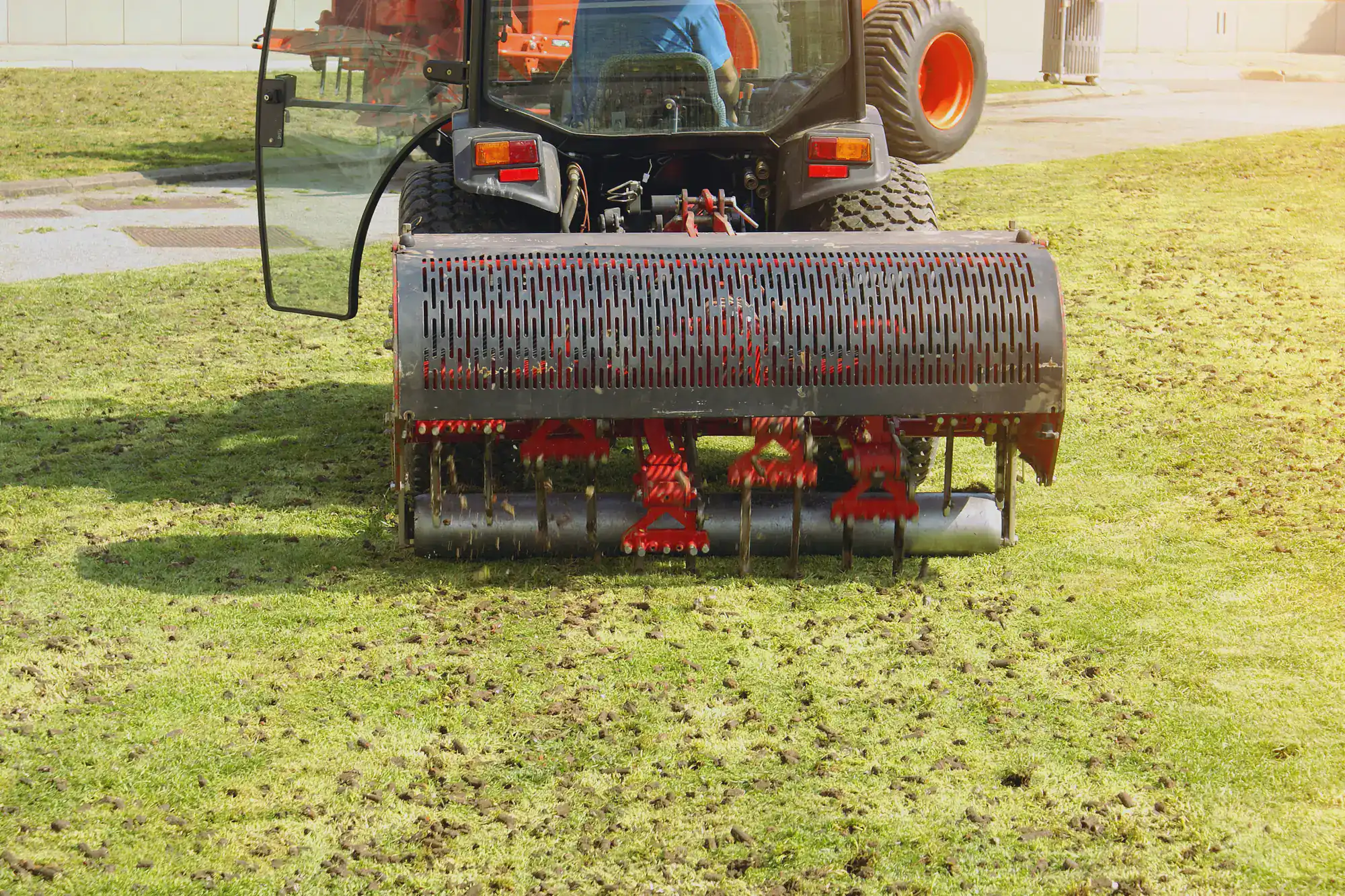
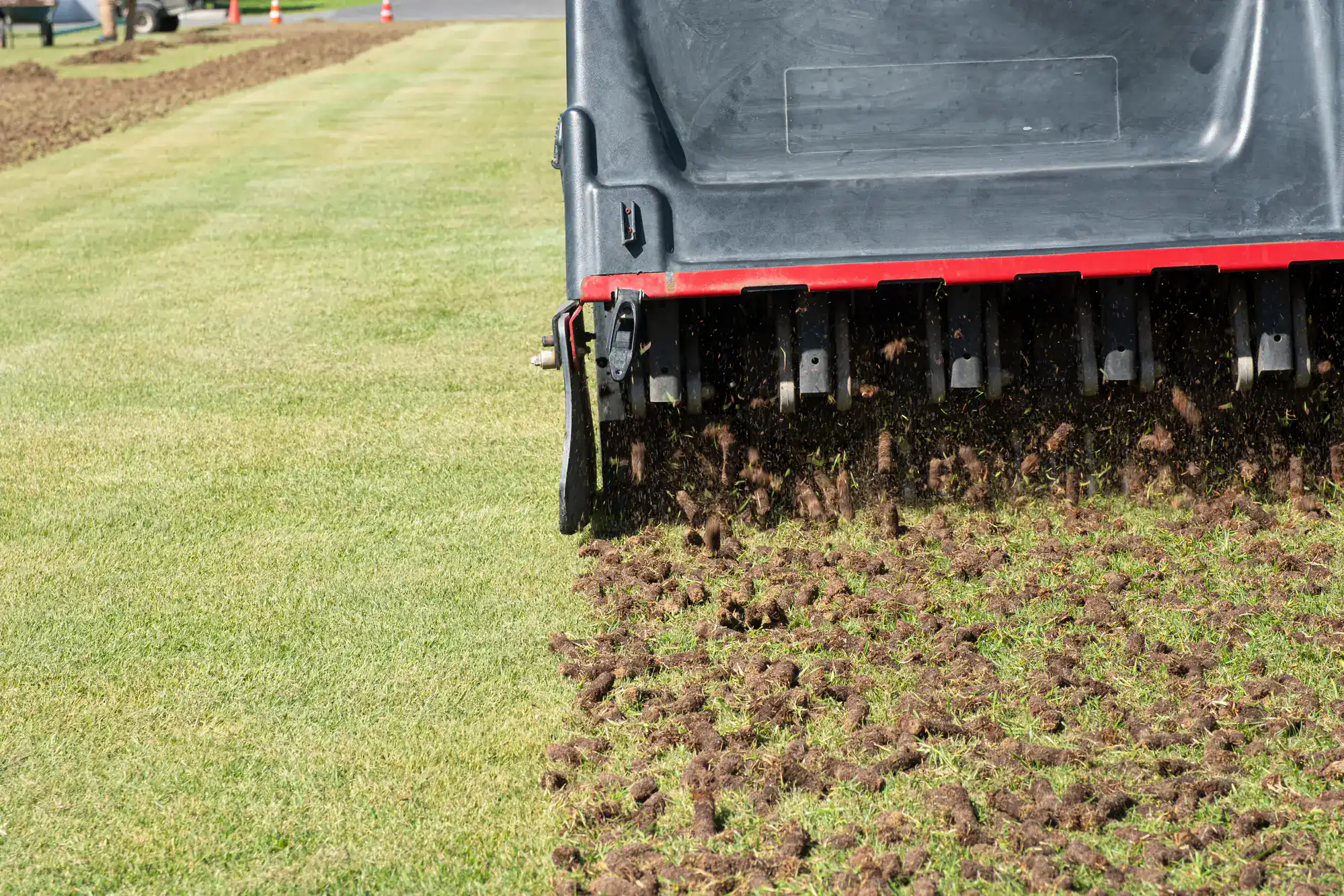
Then we aerate. We use hydraulic core aerators that pull actual plugs of soil from the ground not spike aerators that just push soil aside and make compaction worse. The cores get left on the surface to break down naturally, returning organic matter to the soil. If overseeding is part of your program, we seed immediately after aeration while the channels are open and seed-to-soil contact is at its best. That timing is deliberate it’s not just convenient, it’s agronomically correct.
The fertilization step follows, and here’s where the Suffolk County fertilizer ban matters. Everything needs to be wrapped up before November 1st. We plan our fall schedule around that deadline so your lawn gets the full program aeration, overseeding, and fertilization within the legal window. You don’t have to track the calendar. That’s our job.
Ready to get started?
We don’t sell off a menu. Every program is built around what your specific lawn needs its soil condition, grass type, compaction level, thatch depth, and how it’s been managed before we arrived. For Middle Island properties, that customization is especially important. Sandy, fast-draining soil adjacent to the Pine Barrens behaves differently than the heavier soils you’d find in North Shore or South Shore communities, and a program that ignores that difference isn’t going to produce real results.
Core aeration is the foundation of most renovation programs, but it’s rarely the whole picture. Depending on what we find, your program might include overseeding with cool-season grass varieties suited to Long Island’s climate, application of our custom-blended fertilizer formulated specifically for this region, or a full lawn restoration if the turf has deteriorated beyond what aeration alone can fix. We also handle new lawn installs from seed for properties that need a complete reset.
As for lawn aeration cost, the honest answer is that it depends on your lawn’s size and condition. Nationally, professional core aeration runs anywhere from $100 to $350 for a typical residential lot. We’ll give you a real number after we understand your property not a ballpark designed to get you to call and then change. If you want to know what your lawn actually needs and what it’ll cost, reach out and we’ll tell you straight.
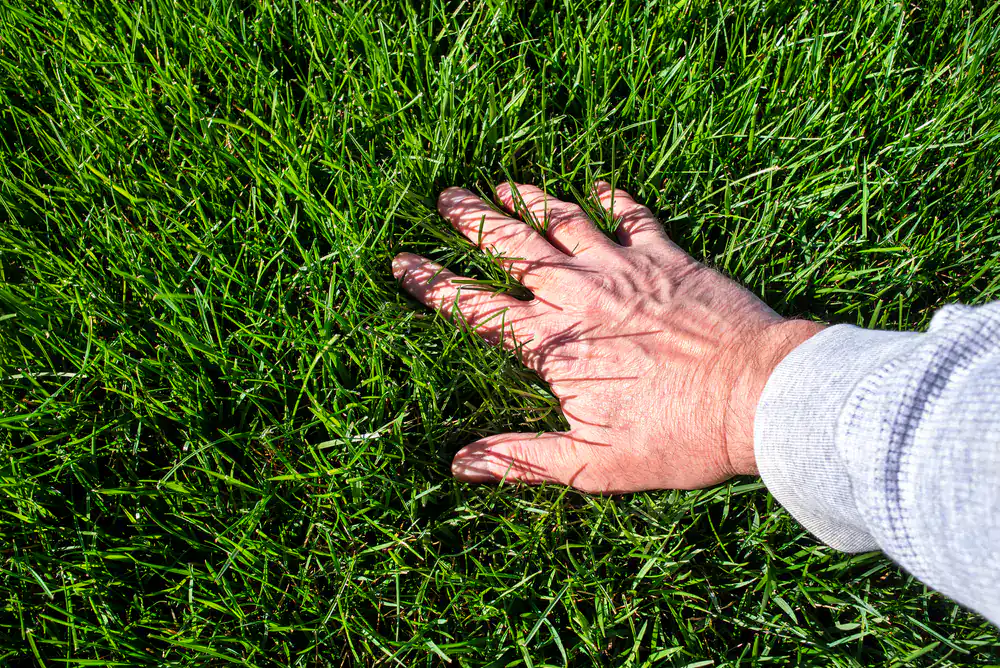
The simplest test you can do yourself: after watering or a rain, push a standard screwdriver into your lawn. If you can’t get it 3 inches deep without real effort, the soil is compacted. You might also notice water pooling on the surface instead of soaking in, grass thinning in high-traffic areas, or fertilizer applications that don’t seem to do much. Those are all signs that the soil is sealed off and roots can’t breathe.
In Middle Island specifically, the sandy Pine Barrens-influenced soil creates a situation where compaction can sneak up on you. Sandy soil drains fast, which can make it feel like it’s in good shape but it still compacts under mowing and foot traffic, and when it does, nutrients leach right through instead of reaching the root zone. If your lawn has been fertilized regularly but still looks underwhelming, compaction is very likely the missing piece. A professional assessment will confirm it and tell you exactly what the lawn needs.
For the cool-season grasses that dominate Middle Island lawns fescue, Kentucky bluegrass, perennial ryegrass late August through October is the optimal aeration window. Soil temperatures are still warm enough for the grass to recover and fill in quickly, while the cooler air reduces heat stress on the newly opened turf. Aerating in this window and overseeding right after gives the grass the best possible chance to establish before winter dormancy.
There’s also a regulatory reason to act in fall rather than waiting. Suffolk County’s fertilizer ban runs from November 1st through April 1st, which means the complete fall program aeration, overseeding, and fertilization has to be finished before that cutoff. If you miss it, you can still aerate, but the fertilization component waits until spring, and your lawn enters winter without the nutrient support it needs to come back strong. Booking early in the fall season ensures you get the full program in the right order, within the legal window.
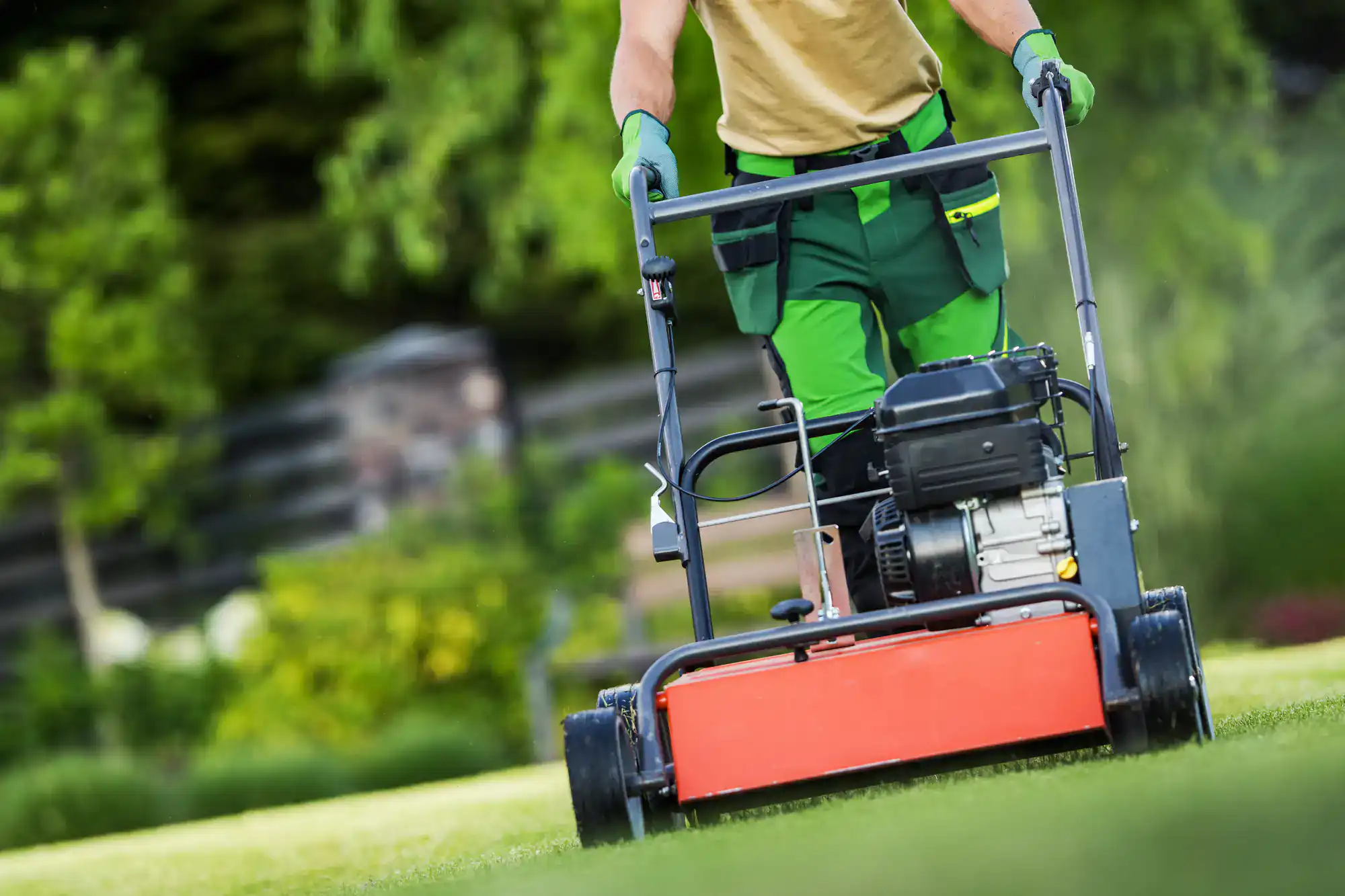
Core aeration pulls small plugs of soil out of the ground and leaves them on the surface to break down. That physical removal is what creates real space for air, water, and nutrients to penetrate. Spike aeration, by contrast, just pushes a solid tine into the ground which actually compresses the surrounding soil further rather than relieving it. For lawns that are already compacted, spike aeration tends to make the problem worse over time.
For Middle Island lawns with sandy, compacted soil, core aeration is the only method worth doing. The plugs left on the surface also break down into organic matter that slowly improves soil structure which matters in Pine Barrens-adjacent areas where the native soil is naturally low in organic content. We use hydraulic core aerators that pull clean, consistent plugs at the right depth. Consumer-grade rental aerators and light-duty spike machines don’t deliver the same penetration or consistency, which is why so many homeowners rent a machine, do the work themselves, and don’t see the results they expected.
Indirectly, yes and it’s worth understanding why. Suffolk County’s fertilizer ban exists because Long Island sits over a sole-source aquifer, and fertilizer nitrogen that doesn’t get absorbed by grass roots eventually leaches into the groundwater. Middle Island is particularly sensitive to this because the Carmans River headwaters originate at Cathedral Pines County Park right here in the hamlet, flowing through the Pine Barrens recharge zone that feeds that aquifer.
Core aeration improves how efficiently your lawn absorbs the fertilizer you apply. When the soil is compacted, nutrients sit near the surface and leach away especially in sandy soil that drains fast. When you aerate first and then fertilize through open channels, the roots actually capture more of what you’re putting down. That means less waste, less runoff, and a more effective program overall. It’s also why working with a licensed professional matters here our applicators understand the county regulations, the timing requirements, and how to apply product in a way that’s both effective and responsible given the groundwater sensitivity of this area.
You can rent a consumer-grade aerator for around $75 to $100 a day, and for a small, lightly compacted lawn in good shape, it might be enough. But there are a few things worth considering before you go that route. Consumer rental aerators are built for light-duty use they’re heavier than they look, physically demanding to operate, and they don’t deliver the same tine depth or consistency as professional hydraulic equipment. On a compacted Middle Island lawn with sandy-over-hardpan soil, shallow penetration means you’re doing a lot of work for limited results.
There’s also the overseeding and fertilization side. Aeration alone is one piece of the puzzle. If you’re not following it with the right seed and a properly timed fertilizer application one that accounts for Suffolk County’s November 1st cutoff and uses product formulated for Long Island’s soil you’re leaving a significant portion of the benefit on the table. We handle all of it in the right sequence, with licensed applicators handling the regulated products. For most Middle Island homeowners, the cost difference between renting and hiring a professional is smaller than they expect once you factor in your time, the physical effort, and what you’d need to buy separately to complete the full program.
Homes in Golf Course Estates and Birchwood at Spring Lake sit adjacent to maintained fairways and manicured grounds which sets a visible standard that most homeowners in those communities take seriously. The challenge is that residential lawns don’t get the same daily attention that a golf course turf does, and the soil conditions on residential lots are often meaningfully different from the heavily managed turf next door.
What we typically see on properties in those communities is a combination of compaction from regular use, thatch buildup that prevents water from penetrating, and grass that’s thinned out over time because the root system never had room to develop properly. Core aeration addresses all three. It breaks the compaction, creates channels through the thatch layer, and gives overseeded grass a direct path to the soil. For homeowners in these developments who want their lawn to hold up next to golf course-quality surroundings, a professional aeration and overseeding program in the fall followed by a custom fertilizer application before the November 1st county deadline is the most reliable way to get there and maintain it year after year.
Useful Links
Other Services we provide in Middle Island