
Hear from Our Customers
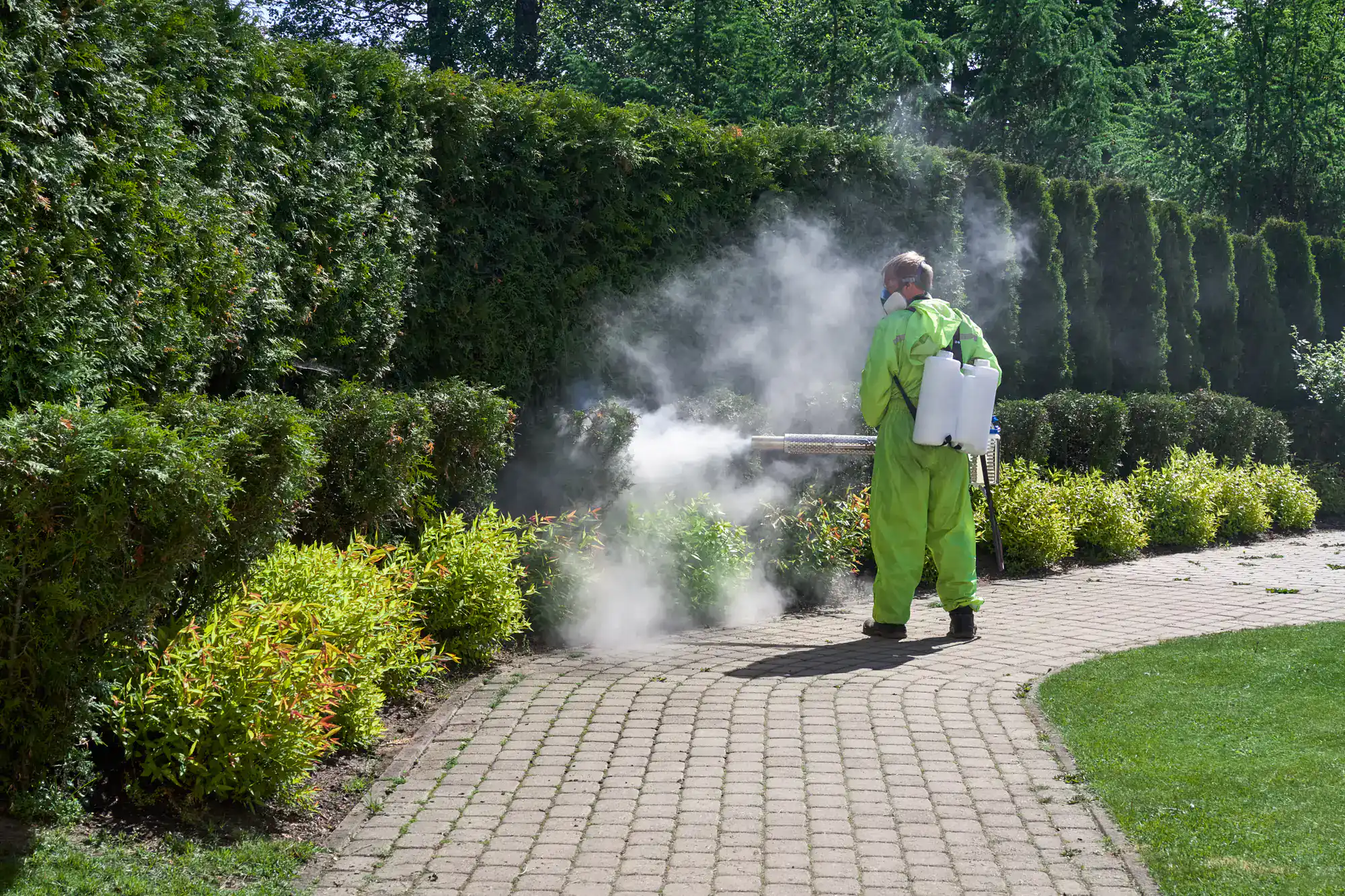
When ticks are a known problem in your Terryville neighborhood, the backyard stops feeling like a place to relax. Kids stay inside. Dogs get checked after every trip out. You find yourself scanning the grass before you let anyone near it. That’s not how it should be and it doesn’t have to stay that way.
Terryville sits right in the zone where suburban living meets genuine wooded terrain. Properties here especially in areas like the Birchwood Section often back up to tree lines, mature canopy, and the kind of leaf litter and shaded ground cover that ticks actively seek out. Add the deer pressure that comes with living near undeveloped corridors in northern Brookhaven Town, and you have a yard that needs more than a hardware store spray to stay protected.
A properly timed seasonal program eliminates active fleas and ticks, disrupts their reproductive cycle, and keeps your lawn treated through both the spring nymphal surge and the fall adult surge the two windows where Long Island tick activity is highest. The result is a yard your family and pets can actually use, from April through November, without the anxiety that comes with knowing what’s out there.
We’ve been operating out of Port Jefferson Station since 1987 which puts us in the same ZIP code, the same school district, and the same community as Terryville. This isn’t a regional company covering Long Island from a distant office. The people treating your yard know Route 347, know the North Shore, and have been working on properties like yours in this specific corner of Brookhaven Town for close to four decades.
Every technician on a Lawn Master job is a licensed pesticide professional under NYSDEC requirements not a seasonal laborer following a spray checklist. That distinction matters more than most people realize. It means the person on your property has completed the required state training, passed the exam, and knows exactly what to apply, where, and how much. You’re not guessing at credentials.
Our trucks are fully wrapped, the equipment is commercial-grade, and the programs are custom-built for each property not templated from a national playbook. That’s been our standard here since before many of Terryville’s current residents moved in.
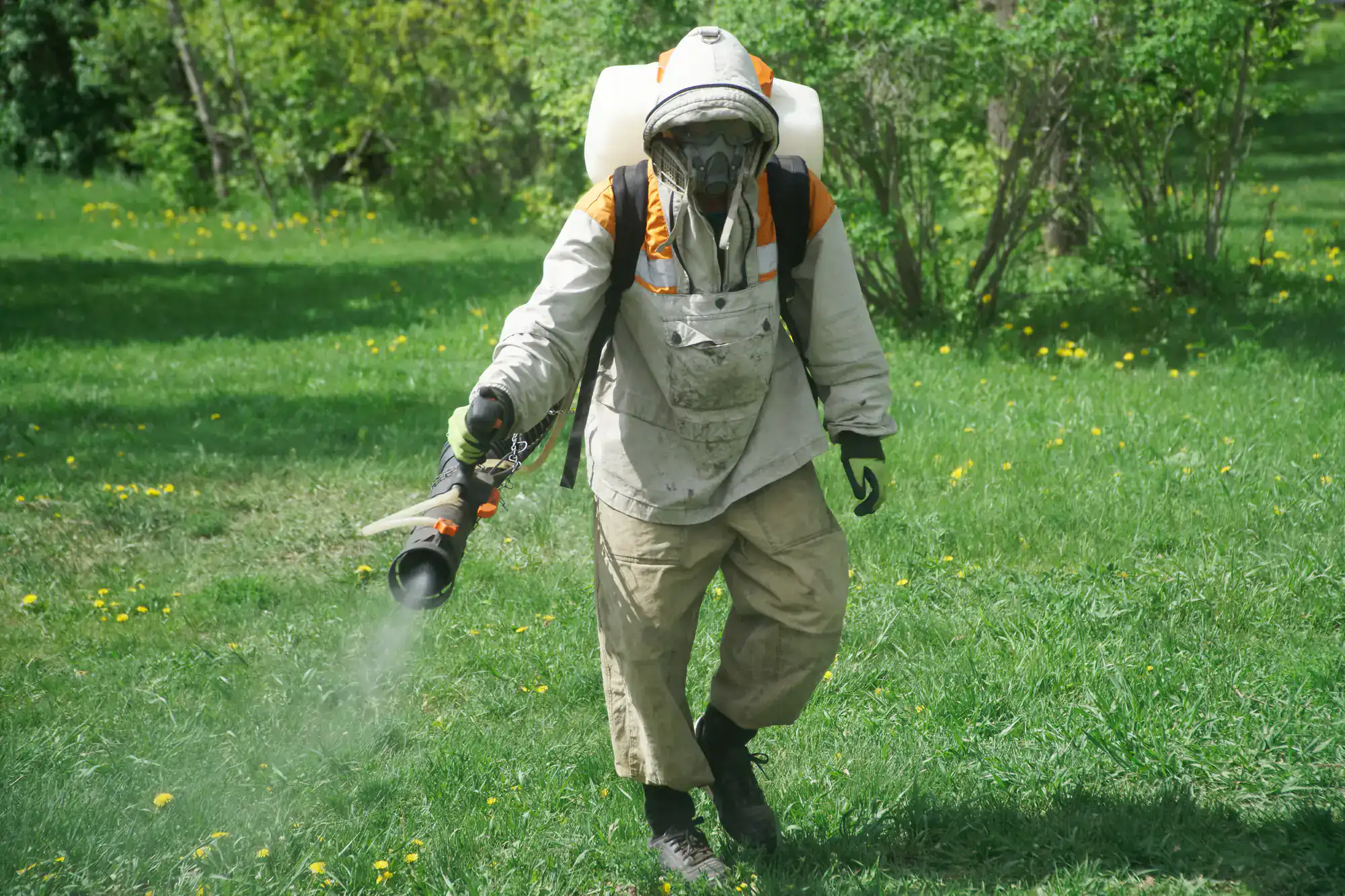
It starts with your specific property. Terryville lots vary some are open and flat, others have wooded rear lines, mature trees, or shaded areas that hold moisture well into the afternoon. Before any product goes down, we assess the conditions on your property: where the deer are moving through, where ticks are most likely to concentrate, which areas your kids and pets use most. The program gets built around that, not around a standard template.
Treatment targets the areas that actually matter the wooded transition zone where maintained lawn meets tree line, the undersides of deck structures, the north and east-facing sides of shrubs, and the leaf litter accumulation along fence lines. These are the harborage zones where blacklegged ticks concentrate on Long Island properties. Spraying the lawn edge alone doesn’t cut it, and any professional who tells you otherwise hasn’t been doing this long.
Applications are timed to Long Island’s documented tick calendar. The spring program gets ahead of the nymphal tick peak which hits in May and June, right as Comsewogue School District families are finishing the school year and spending more time outdoors. From there, treatments continue every 30 days through the active season, with a fall application to address the adult tick surge before winter. Each treatment provides roughly four to six weeks of protection. A full seasonal program keeps that protection continuous.
Ready to get started?
Our flea and tick programs are built specifically for residential properties in Suffolk County which means they account for the conditions that make North Shore yards different from anywhere else. The coastal humidity along the Long Island Sound extends tick survival season earlier into spring and later into fall than inland communities see. That’s factored into the timing of every application we make.
The program covers all three tick species documented on Long Island blacklegged (deer) ticks, American dog ticks, and lone star ticks as well as fleas at every stage of their lifecycle. That last part is important. Flea treatments that only target adults miss the eggs and larvae already in your yard. The products we use include Insect Growth Regulators, which interrupt the reproductive cycle and prevent the next generation from developing. That’s the difference between a treatment that works and one that feels like it worked for two weeks.
Every program is custom-tailored to your property. A half-acre lot in the Birchwood Section with a wooded rear line gets treated differently than a more open quarter-acre property closer to Terryville Road. The number of applications, the specific zones targeted, and the seasonal timing all get adjusted based on what your yard actually looks like. We don’t do one-size-fits-all and after nearly 40 years of treating Suffolk County properties, the custom approach is the only one that consistently holds up.
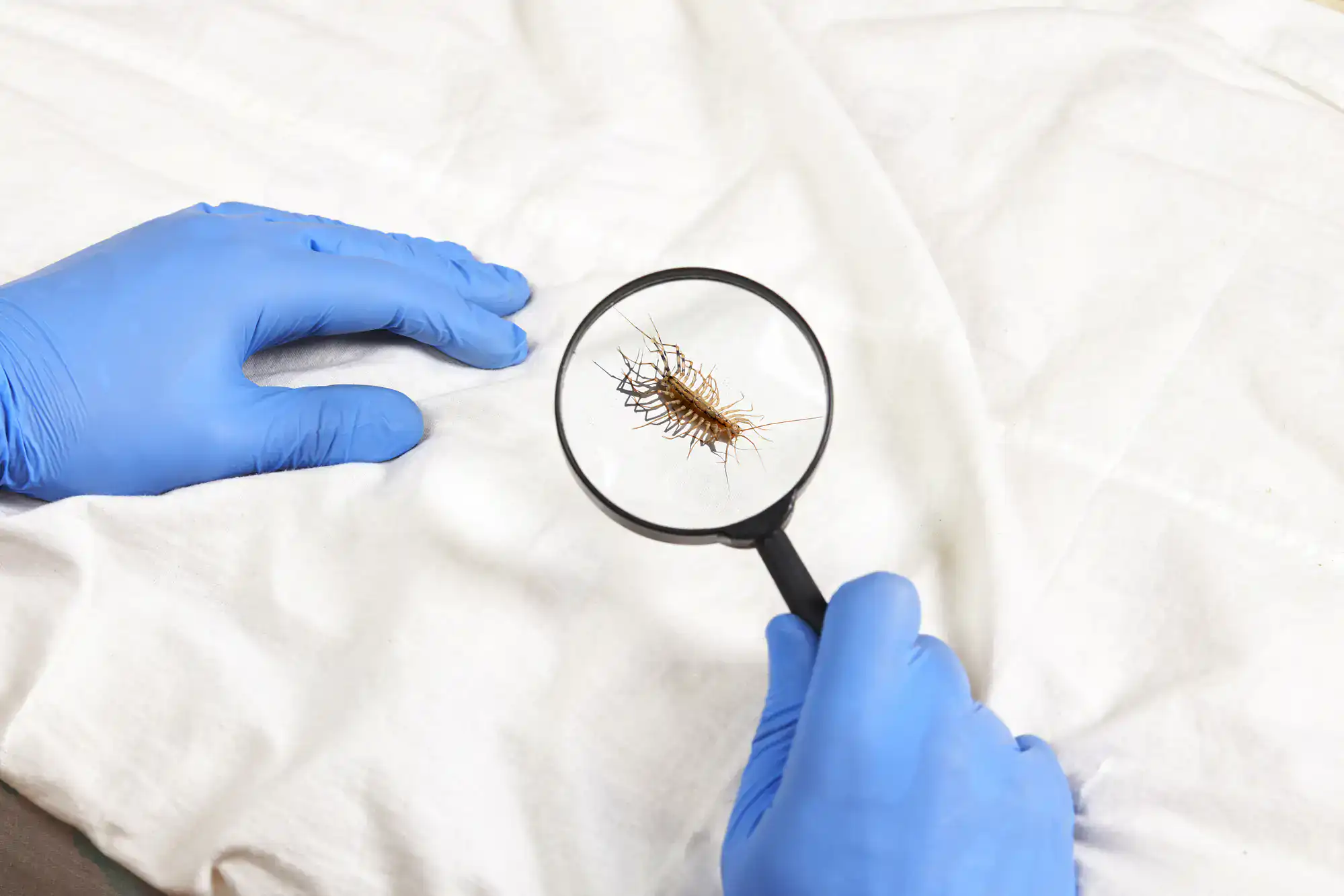
Most Terryville properties need a minimum of three applications to get meaningful control but for yards with wooded borders, heavy deer activity, or pets that spend significant time outside, a full seasonal program of five to six applications is the more effective approach. Each treatment provides roughly four to six weeks of protection, so spacing matters as much as the number of visits.
Long Island has two documented tick activity peaks: the nymphal surge from May through July, and the adult surge from September through November. A single spring application leaves your yard completely unprotected through the fall. A program that covers both windows with maintenance treatments in between is what actually keeps tick populations down across the full outdoor season. For a property near the wooded corridors of northern Brookhaven Town, that continuity is what makes the difference.
The safety concern is legitimate and worth addressing directly. Our professional-grade products are applied at precise concentrations by NYSDEC-licensed applicators who have passed a state exam on safe handling and targeted application. They go where ticks actually live harborage zones, wooded edges, shaded ground cover not broadcast-sprayed across the entire yard. Re-entry is typically safe within 30 to 60 minutes of the product drying.
Store-bought sprays are formulated at lower concentrations and almost never include Insect Growth Regulators, which means they’re less effective and require more frequent reapplication. The bigger risk calculation for Terryville families isn’t the treatment it’s leaving the yard unprotected during peak nymphal tick season, when ticks are the size of a poppy seed and nearly impossible to spot before they bite. Columbia University research found that 56% of ticks on Long Island carry Lyme disease. That context matters when weighing the decision.
DIY tick spray fails for a few consistent reasons. The first is coverage most homeowners spray the lawn perimeter and visible grass, but ticks concentrate in the transition zone between maintained lawn and wooded or overgrown border. They live in leaf litter, under deck structures, in the shaded sides of shrubs, and along fence lines. If those areas aren’t treated, the lawn edge application doesn’t accomplish much.
The second issue is timing. Ticks on Long Island have two active peaks, and a single application in spring or fall only addresses one of them. The third issue is product consumer-grade sprays lack the active ingredient concentration and adjuvants that professional products use to bind to vegetation and hold up through rain and heat. On a North Shore property with the wooded character common in Terryville, the combination of missed zones and underpowered product is why DIY results are so inconsistent.
On Long Island’s North Shore, tick activity resumes with the first consistent warm spells in late March or early April sometimes earlier than homeowners expect. The coastal microclimate that comes with proximity to the Sound means Terryville’s tick season starts a bit earlier in spring and runs later into fall than inland communities in central or southern Suffolk County. Waiting until you see a tick on your dog or your child to schedule treatment means you’re already behind.
The ideal start point is early April, before nymphal ticks reach peak activity in May and June. That timing positions your first application to be active during the highest-risk window of the year. Flea season follows a similar pattern fleas become active once temperatures consistently hit 50°F, which in Terryville’s climate typically means March through April. Starting early gives the program time to work before outdoor activity picks up and exposure risk is highest.
Yes, and it’s worth understanding why. Wildwood State Park covers over 600 acres of undeveloped forest in the immediate area, and it’s a documented tick habitat. Residents who hike the trails, walk dogs near the park’s wooded edges, or let kids play in areas adjacent to the park are regularly exposed to tick-dense environments. The issue is that ticks don’t stay in the park they travel on deer, on pets, and on clothing back into residential yards.
Deer are the primary reproductive host for adult blacklegged ticks, and deer movement through Terryville neighborhoods especially properties adjacent to wooded corridors deposits ticks directly onto residential lawns. If your yard backs up to tree cover or sits in a path that deer regularly travel, that pressure is ongoing throughout the season. We account for this by treating the property’s wooded transition zone and high-traffic deer corridors, not just the open lawn area.
The risk in Suffolk County is well-documented and not overstated. New York State reported over 19,000 confirmed Lyme disease cases in 2023 a 146% increase in a single year. Suffolk County accounts for a significant portion of those cases, reporting approximately 500 confirmed cases annually, with actual infection rates estimated to be several times higher due to underreporting. Columbia University research found that 56% of ticks on Long Island carry Lyme disease, and the Suffolk County Department of Health has noted that North Shore communities where Terryville sits may see rates above the county-wide average.
For Terryville specifically, the combination of wooded residential lots, high deer pressure, proximity to Wildwood State Park, and the North Shore’s coastal humidity creates conditions that sustain tick populations at levels higher than many other parts of Long Island. Lyme disease caught early is treatable. Caught late, it can mean months of complications. The cost of a seasonal tick control program is a fraction of what a single Lyme diagnosis costs medically, financially, and in terms of time and stress on your family.
Useful Links
Other Services we provide in Terryville