
Hear from Our Customers
Most Terryville homeowners who call us have already tried something else. A national chain. A tree service that offered to throw in lawn care. Maybe a few bags of fertilizer from the store. The lawn looked okay for a few weeks, then thinned out again, or burned, or just never really improved. That cycle ends when the program is actually built around your lawn not a zip code.
Terryville’s soil drains fast. That’s the nature of Haven Loam the sandy, well-draining soil that runs through most of Suffolk County. When nutrients wash through before your roots can absorb them, it doesn’t matter how much product goes down. Timing, formulation, and release rates are everything. A custom-blended fertilizer calibrated for Long Island’s soil chemistry delivers nutrients when and where your grass can actually use them.
The homes along Terryville Road and off Route 347 tend to be established 40, 50, even 60 years of compaction, thatch buildup, and shifting soil pH. A lawn that age needs a program that accounts for its history. When you get that, the difference is visible: deeper color, thicker turf, fewer bare patches, and a lawn that doesn’t fall apart the moment summer heat arrives.
We’ve been working in Suffolk County since 1987. That’s nearly four decades of treating Long Island lawns through every drought cycle, every grub outbreak, and every regulatory change the state has thrown at this industry. The knowledge built over that time isn’t transferable to a national chain’s training manual it lives in the work.
The communities around Route 347 Terryville, Port Jefferson Station, Mount Sinai have been part of our service area for a long time. We know how North Shore humidity affects fungal disease pressure in summer. We know the fall fertilization window that makes or breaks a cool-season lawn on Long Island. We know what these neighborhoods look like after a bad winter and what it takes to bring them back.
Every technician we send is a licensed pesticide professional not a seasonal hire supervised by someone with a certification. In a county where the drinking water comes entirely from the aquifer beneath your lawn, that distinction matters more than most people realize.
It starts with understanding what your lawn is actually dealing with. Soil type, sun exposure, existing weed pressure, how the lawn has been treated before these things determine what your program needs to look like. For most Terryville properties, that means accounting for Haven Loam’s drainage characteristics, any compaction that’s built up over the years, and the specific weed pressure common to North Shore neighborhoods.
From there, we build a treatment schedule that follows Suffolk County’s fertilization calendar. That means no applications between November 1st and April 1st a county regulation that carries a $1,000 fine and exists specifically to protect Long Island’s sole-source aquifer. Spring applications begin once soil temperatures reliably cross 55°F, typically mid-April. The fall window mid-August through mid-October is the most important period of the year for cool-season grasses, and we plan around it accordingly.
Each visit is made by a licensed pesticide professional who knows your property and builds on what was done last time. If aeration or overseeding is part of your program, we use hydraulic equipment commercial-grade aerators that pull deeper plugs than anything a smaller operator or a weekend rental can deliver. You get a consistent program, applied by someone who’s accountable for the results.
Ready to get started?
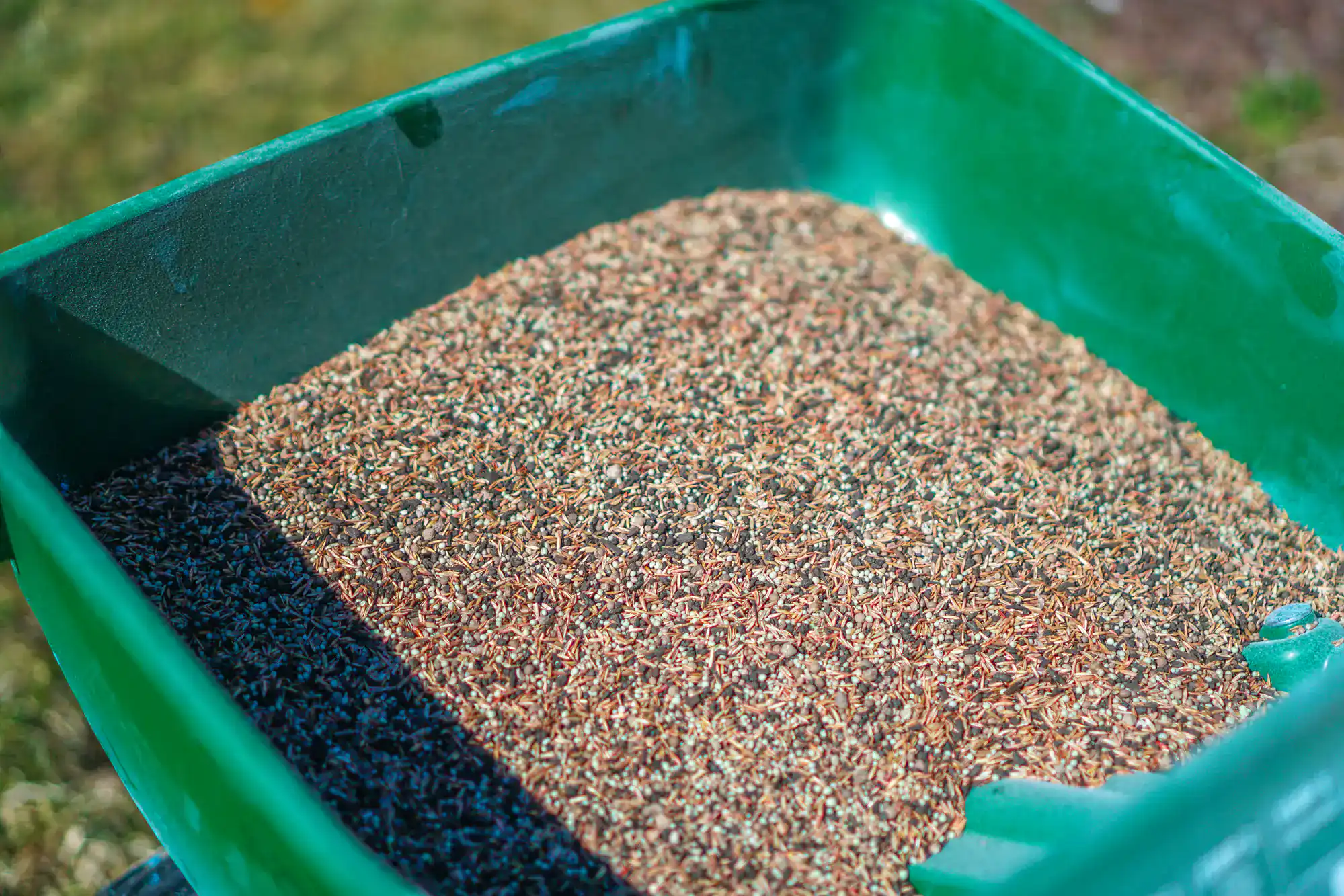
Our fertilizer isn’t sourced from a commercial distributor and applied the same way every other company applies it. It’s a custom-blended formulation made specifically for us calibrated for Long Island’s soil chemistry, drainage patterns, and the cool-season grasses that make up most Suffolk County residential lawns. No competitor showing up in Terryville search results can say the same.
Beyond fertilization, the program covers what your lawn actually needs. Crabgrass pre-emergent with precise timing because in Terryville’s climate, too early means it breaks down before germination, and too late means it misses the window entirely. Weed control for broadleaf pressure. Grub prevention and treatment, which is a real and recurring issue in the established lawns that dominate this part of Brookhaven. And for lawns dealing with nutgrass or bentgrass two of the most stubborn problems on Long Island we offer targeted control that most generalist companies simply aren’t equipped to handle.
If your lawn has reached the point where a maintenance program alone won’t turn it around, we also install new lawns from seed using hydraulic seeders that achieve the kind of even, deep seed-to-soil contact that hand-seeding never delivers. Whether you need a targeted renovation or a full fresh start, the program is built around what your specific property needs not what the route schedule says everyone in the zip code gets this week.
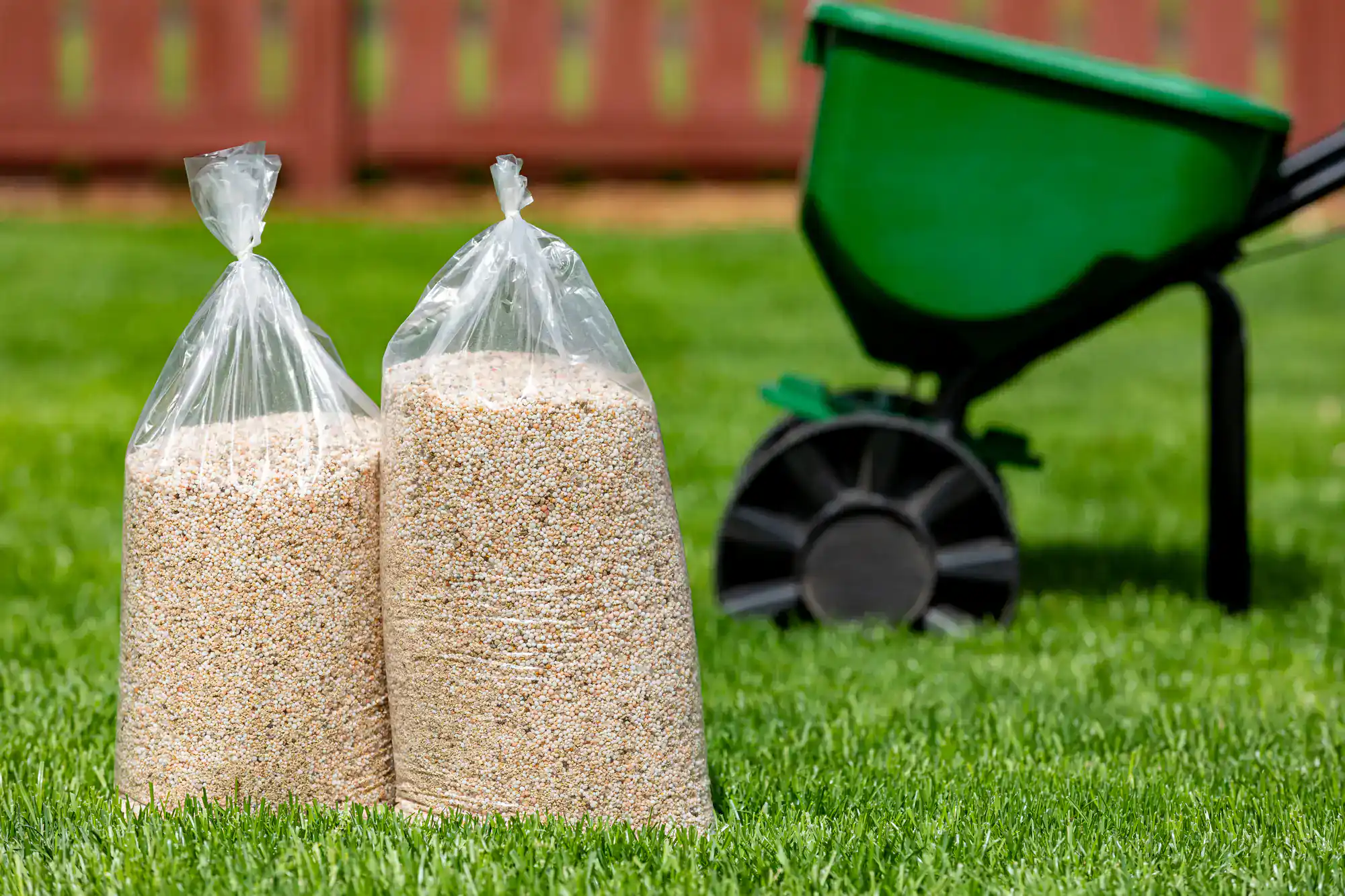
Suffolk County prohibits lawn fertilization between November 1st and April 1st no exceptions. This regulation was put in place specifically because Long Island relies entirely on a sole-source aquifer for its drinking water, and nutrient runoff during dormant months poses a direct contamination risk. Violations carry a $1,000 fine, and the county does enforce it.
The practical implication for Terryville homeowners is that your active treatment season runs from roughly mid-April through late October. Spring applications should wait until soil temperatures consistently reach 55°F pushing too early when the ground is still cold means the grass isn’t actively growing and can’t absorb what’s being applied. The fall window, particularly early September through mid-October, is the single most important period for cool-season grasses. That’s when roots are building the energy reserves they’ll carry through winter, and a well-timed fall application makes a measurable difference in how your lawn comes out of dormancy the following spring.
The most common reason is that the product isn’t matched to the soil. Terryville sits on Haven Loam a sandy, fast-draining soil that doesn’t hold nutrients the way denser soils do. If you’re applying a standard granular fertilizer from a home improvement store, a significant portion of those nutrients can wash through the soil profile before your grass roots ever reach them, especially after a heavy rain. You’re putting product down, but the lawn isn’t getting the benefit.
The other factor is compaction. Lawns on established properties in Terryville many of them 40 to 60 years old develop compaction over time that physically blocks water, air, and nutrients from reaching the root zone. Fertilizing a compacted lawn is like watering a sponge that’s already been squeezed dry. Core aeration breaks that cycle by pulling plugs and opening channels for everything to get through. When aeration and a properly formulated fertilizer work together, you start seeing the results that fertilization alone never delivered.
For the cool-season grasses that make up most Terryville residential lawns Kentucky bluegrass, perennial ryegrass, tall fescue, fine fescue Cornell Cooperative Extension recommends roughly 2 to 3 pounds of nitrogen per 1,000 square feet per year. In practice, that typically translates to a program of four to six applications spread across the active season, from mid-spring through fall.
What matters more than the number of applications is the timing and the formulation at each visit. An early spring application that pushes too much top growth before the roots are ready creates a lawn that’s vulnerable to summer stress. A missed fall application leaves the grass under-nourished heading into winter. The goal isn’t to hit a magic number of visits it’s to deliver the right nutrients at the right time, in a form the soil can actually hold onto. For Haven Loam, that means paying close attention to release rates and not over-applying in a single visit, because the drainage will work against you.
In New York State, any business applying pesticides for hire including fertilizers that contain weed control or pest management components must be registered with the NYSDEC. Beyond registration, each application site must be supervised by a certified commercial pesticide applicator. Getting that certification requires passing the NYSDEC Core exam plus a category-specific exam, and recertifying every three years with 24 continuing education hours.
The difference in practice is accountability. A licensed applicator is personally and legally responsible for every application they make. They know what products are legal to apply in Suffolk County, at what rates, and under what conditions. They understand the Neighbor Notification Law that requires 48-hour advance written notice to neighbors within 150 feet before a pesticide application. They know the phosphorus restrictions that apply in this county. An unlicensed or improperly supervised technician may not know any of this and on Long Island, where every drop that goes into the ground eventually reaches the aquifer, that gap in knowledge has real consequences.
Yes, and it’s a meaningful one. Most of the companies that show up in search results for lawn care in Terryville are primarily tree service companies that offer lawn fertilization as a secondary service. Their core expertise, their equipment investment, and their trained staff are built around tree work. Lawn fertilization is an add-on.
A dedicated lawn fertilization specialist builds everything around the lawn the product formulation, the equipment, the treatment calendar, the staff certifications. When a problem like nutgrass, bentgrass, or a grub infestation shows up, a specialist has the specific chemistry and the protocol to address it. A tree service adding lawn care to their menu often doesn’t. For a Terryville homeowner with an established lawn that has real history and real challenges, the difference between a specialist and a generalist shows up in the results over time not just after the first application.
Fertilization alone won’t fix a lawn that has structural problems. Bare patches that persist year after year are usually the result of compaction, thatch buildup, soil pH imbalance, grub damage, or disease and sometimes a combination of all of them. Adding nutrients to a lawn with those underlying issues is like painting over a wall with water damage. The surface might look better briefly, but the problem is still there.
For lawns in that condition and there are plenty of them in Terryville, where the housing stock runs 40 to 70 years old the right answer is usually a renovation. That means aerating to break up compaction, addressing any pest or disease issues, correcting pH if needed, and overseeding with a hydraulic seeder to get genuine seed-to-soil contact across the bare areas. In some cases, a full lawn installation from seed is the most practical path forward. The best time to do this on Long Island is mid-August through late September, when soil temperatures are still warm enough for germination but the brutal summer heat has backed off. If you’ve been patching the same spots for years, a real renovation is almost always more cost-effective in the long run than another season of band-aid treatments.
Useful Links
Other Services we provide in Terryville