
Hear from Our Customers
Living near the Carmans River and the pine barrens is one of the best parts of being in Yaphank. The deer in the backyard, the trails through Southaven County Park, the quiet that comes with having preserved land nearby it’s genuinely a great place to be. But that same natural environment is why tick pressure here is heavier than in most of the surrounding towns. The Carmans River creates a continuous wildlife corridor right through the center of the hamlet, and deer move through it constantly, dropping ticks into residential lawns along the way.
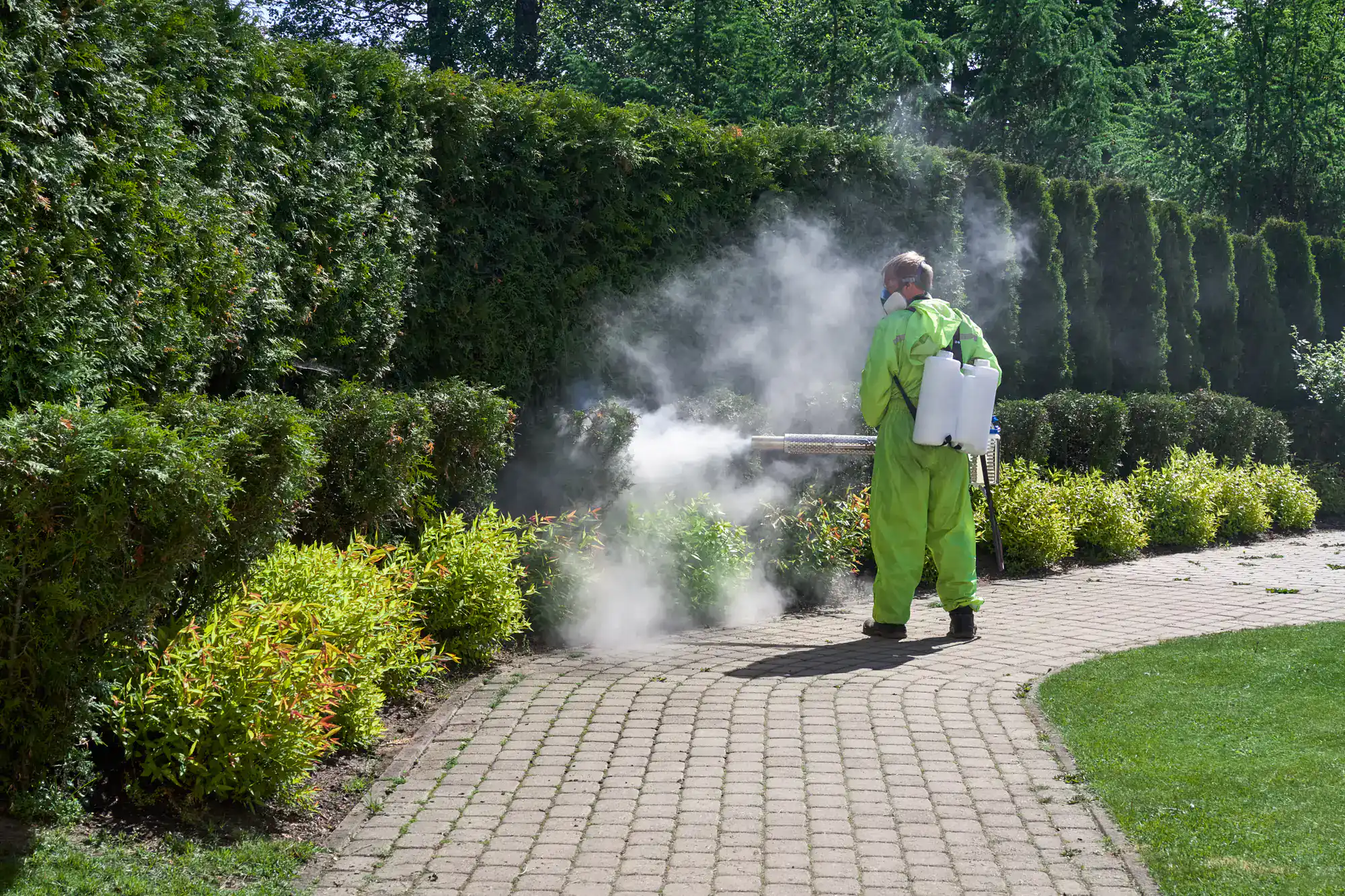
What professional treatment actually does is reduce the tick population in the areas where your family spends time the lawn, the garden border, the shaded spots along your fence line. It doesn’t eliminate every tick in the pine barrens, but it puts a real barrier between your yard and the surrounding wildlands. After a properly timed seasonal program, most homeowners in Yaphank notice the difference within the first few weeks: fewer ticks on the dog, less anxiety about the kids playing outside, and the ability to actually use your yard the way you intended.
For properties in Yaphank that back up to wooded edges or sit near the Carmans River corridor, that outcome isn’t a luxury. It’s the difference between a yard you use and one you avoid from May through November.
We’ve been serving Suffolk County since 1987, and we’ve spent those decades learning what makes pest control work in Yaphank specifically. The pine barrens soil conditions, the deer pressure that comes off Brookhaven National Laboratory’s grounds, the way tick season stretches longer along the Carmans River than it does in more developed hamlets these are things you learn by being here, not by reading a franchise manual.
Every job we handle is managed by a licensed professional, not a labor-only crew. Our technicians hold active NYSDEC Commercial Pesticide Applicator certifications, which matters in Yaphank specifically because properties near the Carmans River fall under state waterway buffer regulations. You need someone who knows those rules and follows them not someone who’s guessing.
We’re based out of Port Jefferson Station, roughly 15 miles north of Yaphank within the same Town of Brookhaven. This isn’t a regional company dispatching from two counties away. We’re a local operation that has been working these same roads and properties for decades.
It starts with an assessment of your specific property not a generic walkthrough, but an actual look at where the risk is concentrated. In Yaphank, that usually means paying close attention to wooded borders, shaded lawn edges, brush lines near any water, and anywhere deer are known to transit. Properties near the Carmans River or adjacent to preserved land like Brookhaven State Park get a different level of attention than a standard open lot, because the harborage zones are different.
From there, we build a custom treatment program around your property’s conditions and Long Island’s documented tick activity calendar. The first application goes down in early spring, before nymphal ticks the poppy-seed-sized ones that are hardest to spot and most likely to transmit Lyme disease reach their May-June peak. Follow-up treatments are spaced every three to four weeks through the active season, and a fall application targets adult ticks before they overwinter in your lawn’s leaf litter and thatch.
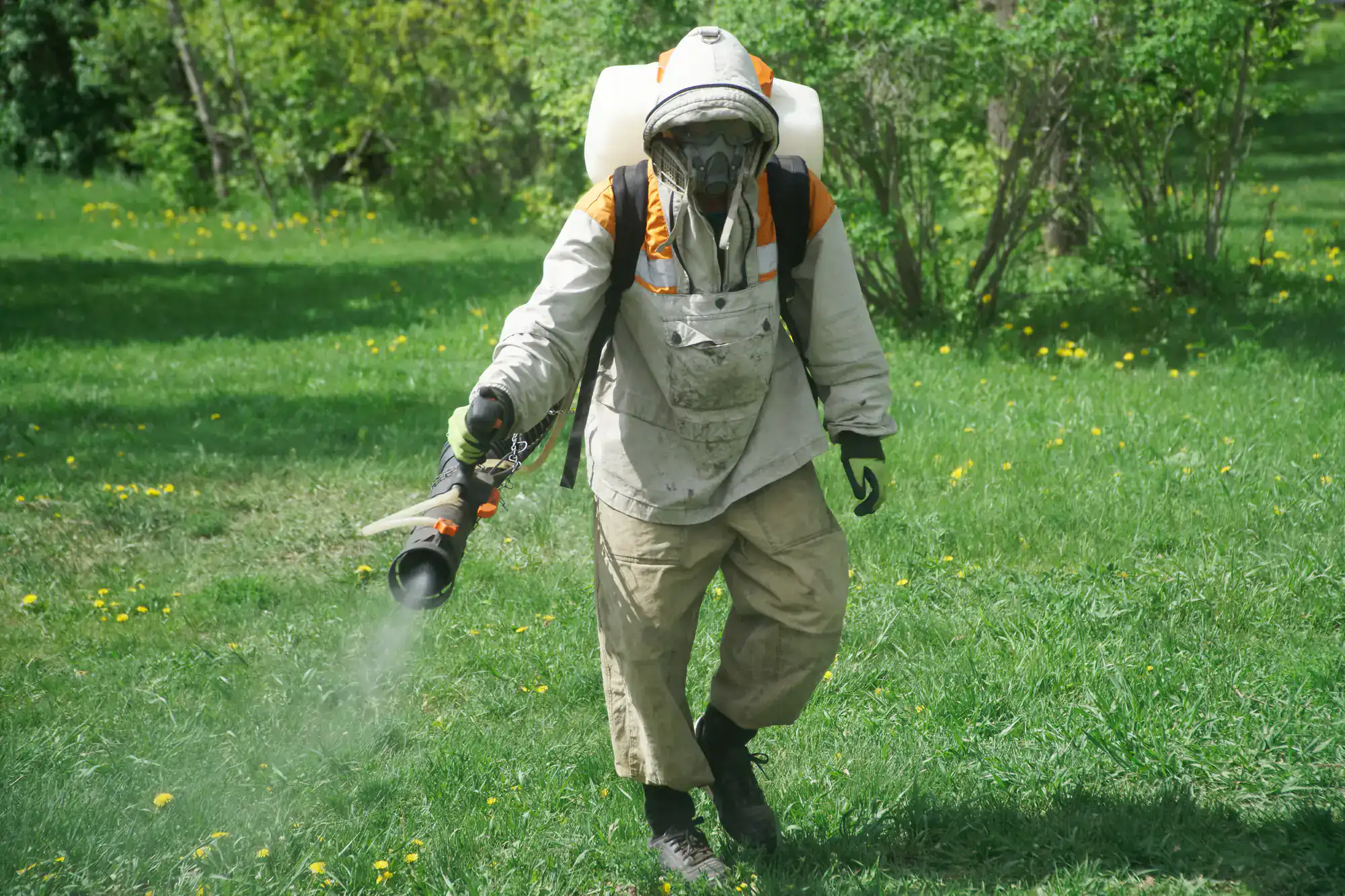
Each treatment is applied by a licensed professional, and your family and pets can be back outside in about 30 to 60 minutes once the product has dried. If your property borders the Carmans River or any other regulated waterway, we follow buffer zone requirements as a matter of course that’s part of what a NYSDEC license actually means in practice.
Ready to get started?
Yaphank properties aren’t uniform, and the treatment program shouldn’t be either. A homeowner near the Boulevard Shopping Center with a standard residential lot has a different exposure profile than someone whose backyard edges up against the Carmans River Pine Barrens State Forest off Gerard Road. We build each program around what’s actually on your property deer pressure, wooded transitions, shaded harborage zones, proximity to water, and how your family uses the space.
Flea control is part of the same program. The wildlife corridors running through Yaphank raccoons, opossums, squirrels, and deer moving through from BNL’s grounds and Southaven County Park create constant reinfestation pressure for fleas, not just ticks. If you have a dog or outdoor cats, that pressure is real and it doesn’t stop after one treatment. A seasonal program addresses both threats together, which is more effective than treating them separately.
Because we also handle professional lawn care, there’s an integrated benefit that standalone pest control companies can’t offer: a properly maintained lawn aerated, fertilized, with healthy turf density actually reduces the moist, shaded, thatch-heavy conditions that ticks and fleas prefer. You’re not just spraying over a problem. You’re addressing the environment that creates it. No other company ranking for tick control in Yaphank can say that.
Yaphank sits in one of the higher-risk tick environments on Long Island, and the geography explains why. The Carmans River runs directly through the center of the hamlet, creating a continuous riparian woodland corridor that deer use as a travel route year-round. Deer are the primary reproductive host for adult blacklegged ticks, so wherever deer move regularly, tick populations follow. Most neighboring towns Medford, Holbrook, Ronkonkoma are more fully developed and don’t have the same combination of a river corridor, adjacent pine barrens, and thousands of acres of undeveloped land from Brookhaven National Laboratory sitting right on the border.
A Columbia University study found that 56% of ticks on Long Island carry Lyme disease, and the Suffolk County Department of Health has noted that infection rates may be even higher in areas with dense woodland and high deer pressure which describes Yaphank specifically. That’s the honest answer to why a seasonal program matters more here than in a standard suburban hamlet.
One treatment is not enough for a full season, and in Yaphank it’s especially important to understand why. Tick activity on Long Island follows two documented peaks: nymphal ticks in May and June, and adult ticks again in October and November. Each application provides roughly four to six weeks of protection, which means a single spray in May leaves your yard unprotected through the entire summer and fall. The Carmans River corridor and the surrounding pine barrens also mean that reinfestation pressure in Yaphank is higher than in more developed areas deer and wildlife are continuously moving through, depositing new ticks throughout the season.
A properly structured seasonal program typically includes a spring application before the nymphal peak, maintenance treatments every three to four weeks through the summer, and a fall application to address adult ticks before they overwinter. That’s the approach that actually keeps tick populations suppressed across the full exposure window not a one-and-done spray in April.
Professional treatment and a store-bought spray from a hardware store are doing fundamentally different things, even if the label says the same active ingredient. The difference is in application where the product goes, how much is used, how evenly it’s distributed, and whether the person applying it actually knows where ticks are harboring on your specific property.
Ticks don’t live in the middle of your lawn. They concentrate in the transition zones the shaded edges, the brush borders, the leaf litter along fence lines and wooded perimeters. In Yaphank, where many properties have wooded borders or back up to preserved land, those transition zones are often larger and more complex than a homeowner can effectively treat with a pump sprayer. We assess those zones first, then apply product in a targeted way that a DIY approach typically misses. The protection per application also lasts four to six weeks when done correctly, which is why a seasonal program of multiple applications outperforms a single DIY treatment by a significant margin.
This is one of the most common questions from homeowners in Yaphank, and it’s a fair one. Properties near the Carmans River fall under NYSDEC buffer zone regulations that govern how and where pesticides can be applied near regulated waterways. A licensed applicator someone holding an active NYSDEC Commercial Pesticide Applicator certification is trained in these requirements and applies products in compliance with state environmental law. An unlicensed crew, or a homeowner using a store-bought product, may not be aware of these restrictions at all.
As for your family and pets, the products we use in professional tick treatment are applied in a targeted way to tick harborage zones not broadcast-sprayed across your entire yard. Once the treatment dries, which typically takes 30 to 60 minutes, the treated areas are safe for normal use. Our licensed professionals will walk you through any specific precautions relevant to your property before the application begins, so there are no surprises.
The short answer is earlier than most people think. Ticks become active when temperatures consistently reach around 45°F, which on Long Island typically happens in late March or early April. Fleas follow a similar timeline, becoming active once temps hold above 50°F. By the time most homeowners notice ticks on their pets or find one on themselves, the nymphal population the hardest-to-see life stage and the one most responsible for Lyme disease transmission is already at or near its May-June peak.
In Yaphank specifically, the Carmans River corridor maintains higher humidity levels than drier, more open suburban areas, which can extend tick activity at both ends of the season. Starting treatment in early April, before that nymphal emergence, is the most effective timing. Waiting until you’ve already found a tick is reactive at that point, the population is already established. Getting ahead of it by a few weeks is what makes the seasonal program actually work.
Yes, and it’s one of the more important distinctions for homeowners in this area. A standard residential lot in a fully developed hamlet is a relatively straightforward treatment defined lawn edges, minimal wildlife pressure, limited harborage zones. A wooded lot in Yaphank that borders the Carmans River, backs up to preserved land near Brookhaven State Park, or sits adjacent to the pine barrens off Gerard Road is a different situation entirely.
For those properties, the assessment phase matters more. The wooded transition zone the area where your maintained lawn meets the brush, leaf litter, and shaded understory of the surrounding natural environment is where the vast majority of tick activity is concentrated. Treating only the lawn perimeter misses it. We identify those harborage zones on your specific property and build the treatment plan around them, including the frequency and placement of applications needed to maintain a real barrier between your yard and the surrounding wildlands. For Yaphank’s more rural and wooded lots, that property-specific approach isn’t a premium add-on it’s just what the job actually requires.
Useful Links
Other Services we provide in Yaphank