
Hear from Our Customers
Most lawns in Yaphank aren’t struggling because of neglect. They’re struggling because whoever treated them last used a program that was never designed for this area. Sandy, acidic soil near the Pine Barrens drains nutrients faster than standard fertilizer schedules account for. By the time a generic six-week program is halfway through its cycle, the nutrients have already leached past the root zone. The grass gets nothing, the weeds move in, and you’re left wondering why you’re still paying for a service that isn’t working.
When your lawn gets a program built around what’s actually in the ground the right fertilizer blend, the right pH correction, the right timing things change visibly and fairly quickly. Thin patches thicken. Weeds lose the foothold they’ve been exploiting. The turf starts holding color through the summer heat instead of burning out by July.
For properties near the Carmans River or bordering Southaven County Park, there’s another layer to this. The buffer zone regulations and phosphorus restrictions that apply throughout Suffolk County matter more here than almost anywhere else on Long Island. We manage all of that automatically as part of our licensed professional service. You don’t have to think about it, and you’re not inadvertently contributing to runoff into a waterway that runs right through your neighborhood.
We’ve been treating lawns in Yaphank and throughout Suffolk County since 1987 which means we were working here before the Brookhaven Technology Center took its current shape and before most of our competitors existed in any form. That’s not a number thrown out for effect. It represents nearly four decades of learning exactly how Long Island’s soils behave, how its pest cycles run, and how its seasons actually play out not how a national training manual says they should.
Every technician who shows up to your property holds a NYS DEC Commercial Pesticide Applicator Certificate. That credential requires 30 hours of training, a written state exam, and two years of supervised field experience. It’s not a formality it’s the difference between someone who knows what they’re applying and why, and someone who’s just following a route sheet.
The fertilizer we use isn’t purchased off a wholesale pallet. It’s custom-blended specifically for our programs and formulated for Long Island’s soil conditions including the sandy, low-organic-matter substrate that defines properties in and around Yaphank. Five fully wrapped trucks run throughout this area every week. When your neighbors start asking who’s been treating your lawn, there’s a good chance they’ve already seen one of our trucks.
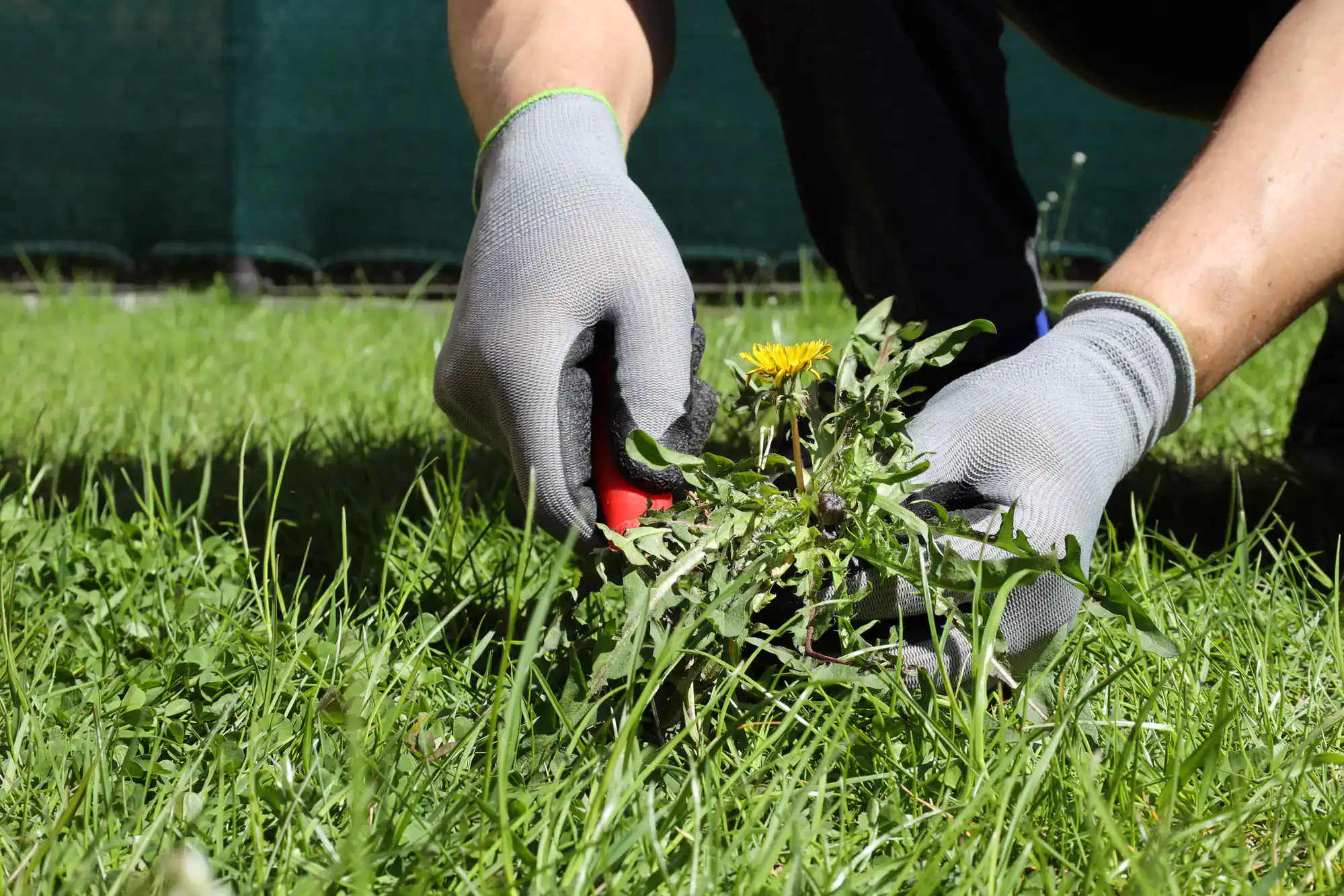
It starts with an honest look at what you’re actually dealing with. Yaphank properties vary more than most some sit on larger lots with wooded edges and heavy shade, others are open and full-sun but sitting on soil so sandy it barely holds moisture for a week. Before anything gets applied, we assess the condition of your turf, the soil type, the sun exposure, and any existing damage. That assessment is what separates a program that works from one that just runs on a schedule.
From there, your program gets built around what your lawn actually needs. If the soil pH is off which it frequently is in this part of Suffolk County, given the proximity to the Pine Barrens lime gets worked into the plan before fertilization can do much good. If there’s compaction, aeration comes first, and we use hydraulic equipment that reaches 3 to 4 inches into the soil rather than the rental-grade drum aerators that barely scratch the surface. If the turf is thin or damaged beyond what a maintenance program can recover, we lay out a restoration approach clearly before any money changes hands.
Timing matters here more than people realize. The fall treatment window late August through October is the most important period for cool-season turf recovery in the Northeast, and Yaphank’s slightly cooler inland temperatures mean that window can open a bit earlier than on the South Shore. Suffolk County’s fertilizer blackout period runs from November 1 through April 1, and every program we build is designed around that schedule automatically. You get notified before each visit, and after each treatment you know exactly what was applied and why.
Ready to get started?
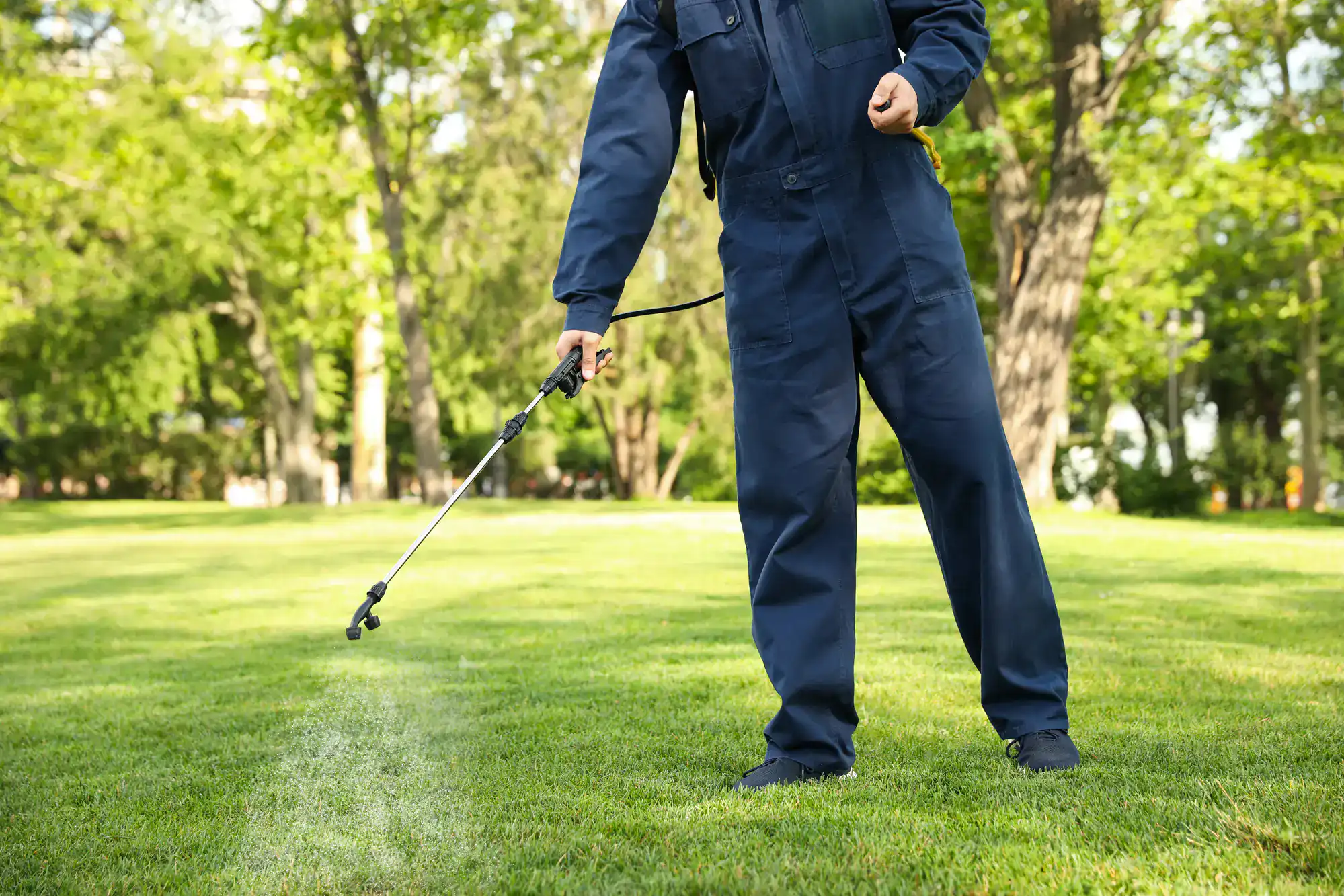
The core of what we deliver is a multi-round fertilization and weed control program using a custom-blended fertilizer that isn’t available anywhere else not at a big box store, not through a competitor. It’s formulated specifically for Long Island’s soil conditions, which means it’s designed to perform in the sandy, fast-draining, acidic soils that are especially common in Yaphank’s Pine Barrens-adjacent landscape. Pre-emergent crabgrass control goes down in the spring before the soil temperature climbs past the germination threshold. Broadleaf weed control runs through the season as needed. Grub control is available for properties showing activity, and it’s timed to the actual lifecycle of the pest not just applied on a calendar date.
Aeration and overseeding are handled with hydraulic aerators and professional-grade seeders equipment that actually penetrates compacted soil and ensures seed-to-soil contact instead of just scattering seed on top of a hard surface. For lawns that are past the point of a standard maintenance program, full restoration from seed is an option. That includes soil preparation, seeding, and a follow-up program to establish the new turf correctly.
Every program is custom-designed for the specific property. A shaded lot near Southaven County Park has different needs than an open, full-sun lawn closer to the LIE corridor, and the program reflects that. If your property sits near the Carmans River, all Suffolk County buffer zone and phosphorus regulations are factored in and followed without you having to ask. Invoices are handled online no paper chasing, no mailed checks, which matters when your commute already takes the better part of an hour each way.
The most common reason is soil pH. Yaphank sits at the edge of the Long Island Central Pine Barrens, and the soils here trend acidic often with pH levels below the 6.0 to 7.0 range that cool-season turf needs to actually absorb nutrients. When the pH is off, fertilizer applications are largely wasted. The nutrients are chemically unavailable to the grass regardless of how much product gets put down, and weeds which tolerate acidic conditions far better than turf fill the gaps.
The fix isn’t more fertilizer. It’s pH correction first, then a fertilization program that’s formulated for the actual soil you have. Sandy Pine Barrens-adjacent soils also drain much faster than heavier suburban soils, so standard slow-release programs can exhaust themselves before the grass absorbs what it needs. Once the soil chemistry is corrected and the program matches the soil type, most Yaphank lawns respond noticeably within a single growing season.
TruGreen has a facility at 5 Todd Court right here in Yaphank, so they’re a genuine local presence but their model is built around scale, not customization. The same program gets applied across thousands of properties throughout the region, and the technician treating your lawn this visit is frequently not the same person who was there last time. There’s no continuity of knowledge about your specific property, and the products used are standard wholesale formulations, not blends designed for Long Island’s particular soil conditions.
Our fertilizer is custom-blended specifically for our programs and for Long Island’s soils. Every technician holds a NYS DEC Commercial Pesticide Applicator Certificate. And the program your lawn gets is built around what’s actually happening on your property the soil type, the sun exposure, the pH, the existing damage not a template applied uniformly from one end of Suffolk County to the other. If you’ve been on a TruGreen program and your lawn hasn’t improved meaningfully, the program likely wasn’t designed for what Yaphank’s soils actually require.
Yes, there are real restrictions, and they matter more in Yaphank than in most parts of Suffolk County. The Carmans River runs directly through the hamlet and is an actively monitored waterway. Suffolk County’s fertilizer law requires a no-application buffer zone of 20 feet from any water body, restricts phosphorus applications on established turf, and mandates slow-release nitrogen formulations in many situations. On top of that, the county-wide blackout period prohibits nitrogen and phosphorus fertilizer applications from November 1 through April 1. Violations carry fines of up to $1,000 per application.
We manage all of this automatically it’s built into how the program is designed and scheduled. If your property is near the river, a tributary, or any of the wetland areas within Southaven County Park, those buffer zones are identified and respected before anything gets applied. If you’re currently applying fertilizer yourself or using an unlicensed operator near the Carmans River corridor, the regulatory exposure is real, and the environmental impact is significant.
The honest answer is that a lot of lawns getting maintenance programs actually need restoration first. If more than 40 to 50 percent of your lawn is weeds, bare soil, or dead turf, adding fertilizer and weed control to what’s left isn’t going to give you the lawn you’re picturing. You’d be maintaining a problem rather than solving it. Restoration means starting over in the damaged areas soil preparation, seeding with the right turf species for your conditions, and a follow-up program to establish the new growth correctly.
In Yaphank specifically, restoration need is often driven by a combination of factors: drought stress from the fast-draining sandy soils, grub damage that went undetected for a season or two, or pH imbalance that slowly starved the turf over years of fertilization that never really worked. New homeowners who inherited a neglected lawn are also common candidates. The assessment at the start of any program we run identifies whether you’re looking at a maintenance situation or a restoration situation and that distinction gets communicated clearly before any work begins.
For cool-season turf which is what most Yaphank lawns are growing the fall window is by far the best time for aeration and overseeding. Late August through mid-October is the target range. Soil temperatures are still warm enough for germination, the summer heat stress is easing off, and the cooler nights favor establishment of new grass without the competition pressure from crabgrass and other warm-season weeds that dominate in spring and summer.
Yaphank’s slightly cooler inland temperatures compared to South Shore communities closer to the ocean mean this window can open a little earlier here than in coastal towns. Aeration should happen before overseeding, and it should be done with equipment that actually penetrates the soil. Hydraulic aerators pull cores 3 to 4 inches deep, which creates the seed-to-soil contact that makes overseeding work. A lightweight drum aerator that barely scratches the surface won’t give new seed anywhere meaningful to establish, which is why a lot of DIY overseeding attempts produce disappointing results on Yaphank’s compacted sandy soils.
It depends on what you’re comparing. If you’re buying fertilizer at a big box store and applying it on a rough schedule, you’re likely spending money on a product that isn’t formulated for Yaphank’s soils, applying it at times that may conflict with Suffolk County’s blackout period or buffer zone requirements, and doing it without the pH assessment that determines whether any of it will actually work. The money gets spent either way the question is whether it produces results.
The practical calculation for most Yaphank homeowners also includes time. With an average commute of over 34 minutes each way, weekends are already compressed. Researching the right products, timing applications correctly around the county’s fertilizer regulations, renting or buying proper aeration equipment, and diagnosing why the lawn isn’t responding that’s a significant time investment on top of a full week. A professional program that actually works costs more upfront than a bag of fertilizer, but it tends to cost less over two or three seasons than repeatedly treating a problem that never gets properly diagnosed.
Useful Links
Other Services we provide in Yaphank