
Hear from Our Customers
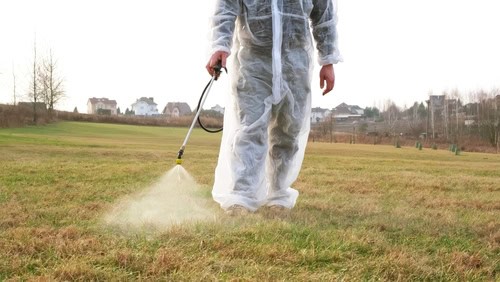
If you’ve reseeded the same area two or three times and it keeps coming back bare, you’re not dealing with a seed problem. You’re dealing with an active fungal disease that’s still in the soil, and no amount of overseeding fixes that until the pathogen is treated first. That’s the cycle most East Setauket homeowners are stuck in and it’s exactly what a properly diagnosed, professionally applied fungicide program is designed to break.
East Setauket sits right along Conscience Bay and Setauket Harbor, both tidal inlets feeding into Long Island Sound. That coastal position keeps nighttime temperatures elevated and humidity high well into the evening the exact conditions that let brown patch spread across a lawn in 48 to 72 hours during peak summer. Inland communities don’t deal with this the same way. Your lawn does, and the treatment program needs to reflect that.
The sandy loam soils common to this part of the North Shore drain quickly, which sounds like a good thing until a dry stretch hits and your turf gets stressed. Dollar spot thrives in exactly that scenario drought-stressed, nitrogen-deficient grass on fast-draining soil. Once you understand what’s actually causing the damage, the fix becomes a lot more straightforward. That’s what professional diagnosis gives you that a bag from the garden center never will.
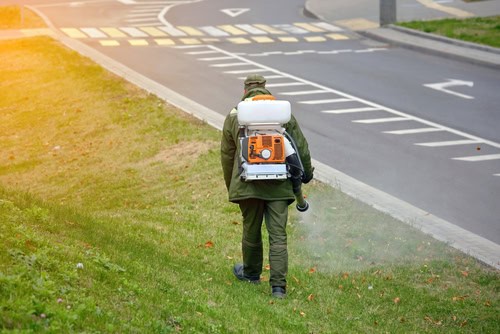
We are a New York State DEC-licensed pesticide applicator based out of Port Jefferson Station a short drive from East Setauket via Route 25A. That license isn’t a marketing badge. It’s a legal requirement to apply pesticides for hire in New York State, and it’s the reason we have access to professional-grade fungicide formulations that simply aren’t available at any retail store. The same products used on golf courses and professional athletic fields. No unlicensed operator can touch them.
Earning that license means passing state-administered exams, meeting experience thresholds, and completing continuing education every three years. It also means every application we perform comes with written documentation of what was applied, at what rate, and when a legal requirement under NYS DEC rules that holds us accountable in a way that no handshake service ever could.
For homeowners near Conscience Bay and the protected coastal waters of Setauket Harbor, that accountability matters beyond just your lawn. Proper application rates, correct product selection, and legal compliance aren’t optional in this environment and with us, they’re never an afterthought.
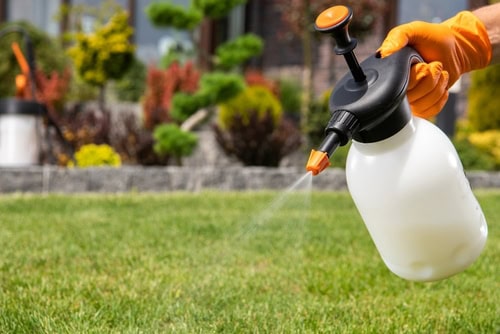
The first thing we do is look at your lawn not reach for a sprayer. Brown patches in East Setauket can come from brown patch fungus, dollar spot, red thread, drought stress, or grub activity, and they can look nearly identical on the surface. Applying a fungicide to a drought-stressed lawn doesn’t help anyone. Applying the wrong fungicide to an active disease makes the problem worse. So we start by identifying exactly what’s going on before any product is selected.
Once the disease is confirmed, we match the treatment to the specific pathogen. Brown patch, which peaks here from June through August when North Shore nighttime temperatures stay above 70°F, gets treated with chemistry targeted to Rhizoctonia solani. Dollar spot, which tends to hit East Setauket lawns hardest during dry stretches on the area’s fast-draining soils, gets a different approach. Red thread the cool-season disease that spreads fast in the 60 to 75°F range common to North Shore springs and falls gets addressed before it has a chance to move across the lawn.
Across the treatment program, we rotate fungicide chemistries between different modes of action. This prevents resistance from building up in the fungal population, which is what happens when the same product gets applied repeatedly. It’s standard practice on professional turf, and it’s the kind of program management that actually produces lasting results rather than temporary relief.
Ready to get started?
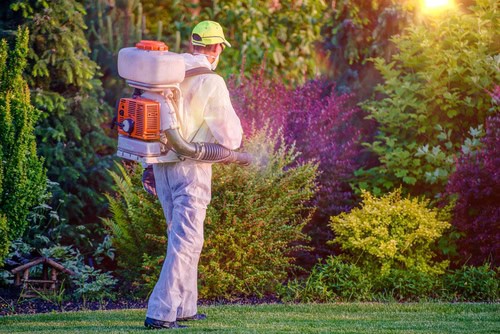
What we bring to an East Setauket property isn’t a fixed spray schedule it’s a program built around what your specific lawn is dealing with. That starts with access to restricted-use fungicide formulations that we can legally purchase and use in New York State because of our license. These aren’t products you’ll find at a home improvement store. They’re professional-grade concentrations of active ingredients like azoxystrobin and propiconazole the same chemistry used on golf course fairways and professional sports fields.
For lawns in East Setauket with a documented history of recurring disease, we offer a preventative program that times applications to the actual disease pressure windows of the North Shore’s maritime climate before symptoms appear, before the disease spreads, and before you’re looking at a full-lawn renovation. For lawns with active disease already visible, we apply curative treatment to stop the spread and begin recovery. The program design depends on your lawn’s history and current condition, not a one-size schedule.
Every application we perform is followed by written documentation provided to you product name, application rate, date of service. This is a legal requirement under NYS DEC rules for commercial pesticide applicators, and it means you always have a clear, accountable record of what was done on your property. In a community as close to protected coastal habitat as East Setauket, that level of documented compliance isn’t a bonus it’s exactly what responsible professional service looks like.
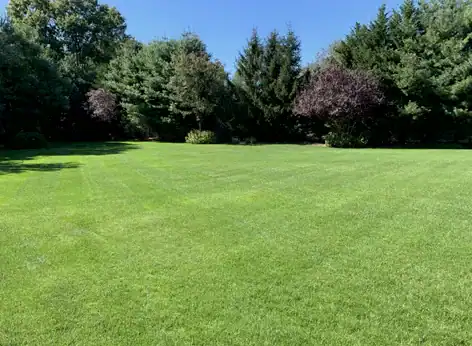
The most likely culprit is brown patch, caused by the fungal pathogen Rhizoctonia solani. It thrives when nighttime temperatures stay above 70°F and relative humidity is elevated conditions that East Setauket experiences regularly from June through August, amplified by the maritime air coming off Conscience Bay and Long Island Sound. The coastal position of the Three Village area keeps nighttime temperatures higher than inland Suffolk County communities, which extends the active window for this disease.
The reason it keeps coming back in the same spots is usually because the disease was never fully eliminated it was managed or it went dormant, but the pathogen remained in the soil. Reseeding over active disease doesn’t fix it. A properly timed, professionally applied fungicide treatment targeting the specific pathogen does. Once the disease is treated and the turf recovers, preventative applications timed to East Setauket’s actual summer disease window can keep it from cycling back the following year.
Dollar spot is a fungal disease caused by Clarireedia jacksonii. It shows up as small, straw-colored patches roughly the size of a silver dollar sometimes expanding to about five inches across and it’s frequently mistaken for drought damage or bare spots from foot traffic. It’s active from late spring through early fall and tends to hit hardest in turf that’s nitrogen-deficient and dealing with dry-wet cycles.
On Long Island’s North Shore, including East Setauket, the sandy loam soils common to this area drain quickly. That means even a modest dry stretch can stress turf enough to create the exact conditions dollar spot needs to take hold. The disease doesn’t need standing water it needs stressed grass, and the fast-draining soils here produce that regularly. We can confirm whether what you’re seeing is dollar spot or something else, and apply the right fungicide chemistry to stop it rather than guessing at a fix.
You can try, but there are two real problems with that approach. The first is diagnosis most homeowners can’t reliably distinguish between brown patch, dollar spot, red thread, and drought stress without training. Applying a fungicide to the wrong disease, or to a lawn that’s just drought-stressed, wastes money and lets the actual problem continue spreading.
The second problem is product access. In New York State, the most effective professional-grade fungicide formulations are classified as restricted-use pesticides. They cannot be purchased without a NYS DEC commercial pesticide applicator license. What’s available at retail stores is a limited selection of lower-concentration products that often aren’t strong enough to control established disease. If you’ve already tried a store-bought fungicide and it didn’t work, this is likely why. We have access to the chemistry that actually resolves the problem, not just temporarily suppresses it.
Red thread has a pretty distinctive look once you know what to search for. The infected grass blades develop pink or reddish thread-like strands the fungal mycelium extending from the tips, and the affected patches take on a tan or bleached appearance. It’s common enough to be mistaken for fertilizer burn or an insect problem, which is why treatment often gets delayed until the disease has already spread.
Red thread is a cool-season disease, which means it’s most active in East Setauket during spring and fall when temperatures sit in the 60 to 75°F range. The North Shore’s maritime climate extends those windows your springs tend to stay cooler and moister longer than communities further inland, and the same is true in fall. A single active pustule can spread spores up to eight feet, so what starts as a small patch in April can cover a large section of lawn by May if it’s left untreated. A targeted fungicide application from us stops it. Waiting to see if it clears up on its own usually makes it worse.
It matters quite a bit, and it’s one of the reasons hiring a licensed applicator specifically is important in East Setauket. Conscience Bay and Setauket Harbor are both classified by the New York State Department of State as Significant Coastal Fish and Wildlife Habitat areas. That designation reflects the ecological sensitivity of these waterways, and it means pesticide applications near them carry real environmental responsibility.
A NYS DEC-licensed commercial pesticide applicator is legally required to follow label directions precisely, apply products at correct rates, and comply with all state environmental regulations. These aren’t suggestions they’re enforceable legal obligations. An unlicensed operator applying products near a protected coastal habitat isn’t just cutting corners on your lawn; they’re creating environmental and legal exposure that a licensed professional is specifically trained and required to avoid. For homeowners in East Setauket, this is one of the clearest practical reasons to verify that whoever you hire holds a valid NYS DEC license before they apply anything to your property.
For lawns in East Setauket with a history of recurring disease, preventative treatment is almost always the more cost-effective approach. By the time visible symptoms appear brown patches, straw-colored spots, pink threads the disease has typically been active for days or weeks already. Curative treatment at that point stops the spread, but it can’t undo the damage that’s already done. Depending on the severity, you may still be looking at reseeding or lawn renovation work after treatment.
A preventative program times fungicide applications to the specific disease pressure windows that East Setauket experiences the summer brown patch window driven by North Shore humidity and elevated nighttime temperatures, the spring and fall red thread window extended by the maritime climate off Long Island Sound, and the dollar spot window that opens up during dry stretches on the area’s fast-draining soils. If your lawn has gone through this cycle more than once, a preventative program breaks it. The cost of prevention is consistently lower than the cost of emergency treatment plus the reseeding that often follows.
Useful Links
Other Services we provide in East Setauket