
Hear from Our Customers
Most homeowners in Shoreham dealing with brown, dying patches have already tried something. A bag from the hardware store. Reseeding the same spot in September. Watering less. None of it worked because none of it addressed the actual disease. That’s the difference between guessing and diagnosing.
When you know what pathogen is present, you can treat it correctly. Brown patch, dollar spot, and red thread each respond to different fungicide chemistry. Applying the wrong product doesn’t just waste money it gives the disease more time to spread while you wait for results that won’t come.
In Shoreham specifically, the conditions that drive fungal disease are more persistent than in most of Suffolk County. The Sound generates overnight humidity and morning dew that keeps grass blades wet for extended hours exactly the environment brown patch needs to move fast. Add in the North Shore’s heavier, loam-rich soils that hold moisture longer than the sandy soils further south, and you have a yard that stays in the disease window longer on both ends of the season. Getting the treatment right the first time matters more here than it does in a lot of other places.
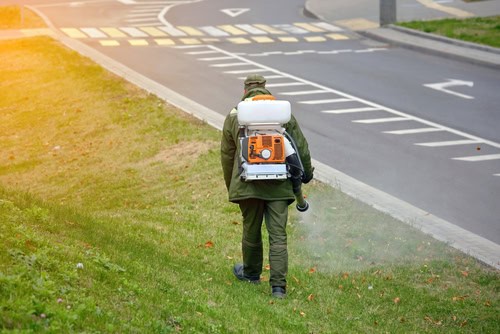
Lawn Master is a licensed commercial pesticide applicator serving Suffolk County and that license isn’t a formality. Under New York State law, only a NYSDEC-certified commercial applicator can legally purchase and apply the professional-grade fungicide formulations used to treat established lawn disease. The products used on golf courses and athletic turf. The ones you cannot buy at any store in Shoreham or anywhere else in New York.
We operate out of Port Jefferson Station, roughly 10 to 15 miles west along Route 25A from Shoreham. We know the North Shore corridor intimately the rocky, loamy soils around the Shoreham-Wading River area, the way Sound-side humidity behaves differently than conditions further inland, and the specific disease pressures that come with wooded, hilly terrain and shaded yards that dry slowly after rain.
This isn’t a national franchise running templated programs across zip codes. We’re a local Suffolk County business that understands your specific corner of Long Island and that shows up in the results.
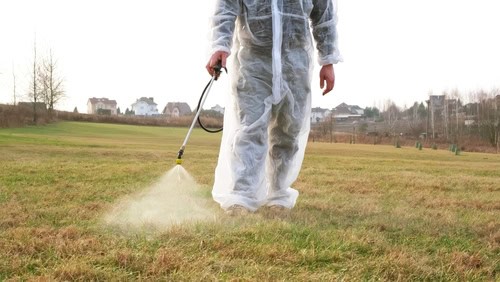
The process starts with an on-site assessment of your lawn. Not a quick glance from the truck a real look at the affected areas, the pattern of damage, the surrounding conditions, and the time of year. Brown patch, dollar spot, and red thread each leave distinct signatures, and correctly identifying which one you’re dealing with determines everything that follows.
Once the disease is identified, we match the right fungicide chemistry to the specific pathogen. In Shoreham, where a single yard can have drought-stressed slopes showing dollar spot and moisture-retaining shaded areas showing brown patch at the same time, this step is not optional. A single product applied across the whole lawn won’t address both. Our programs are built around what’s actually present not a fixed schedule.
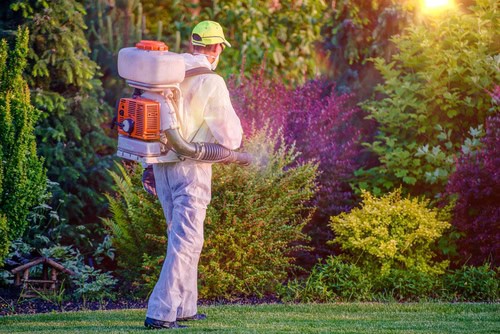
Applications are timed to Shoreham’s disease windows: preventative treatments before brown patch season opens in late June, targeted curative treatments when disease is already active, and fall applications to address red thread as temperatures cool. After every visit, you receive written documentation of exactly what was applied, at what rate, and when a legal requirement under NYS DEC regulations that also gives you a clear record of what’s been done to your property. Lawn markers are placed on the day of application, and neighbors within 150 feet receive the required 48-hour advance written notice.
Ready to get started?
Brown patch is the dominant summer threat on Long Island, and Shoreham’s Sound-side humidity makes it particularly aggressive here. It develops when nighttime temperatures hold above 68 to 70°F and moisture stays on the grass blades conditions that the Sound sustains throughout July and August. By the time you see the large tan circles with a dark border, the disease has already been active for days. Preventative fungicide application timed to early June, before those conditions peak, is almost always more effective and less expensive than waiting for visible symptoms.
Dollar spot shows up differently small, straw-colored patches up to about five inches across, often mistaken for drought damage or insect activity. It tends to appear on the elevated, faster-draining slopes that are common on Shoreham’s hilly terrain, where turf gets drought-stressed during dry stretches. It’s active from late spring through early fall and requires a different treatment approach than brown patch entirely.
Red thread is a cool-season disease that peaks in spring and fall, when temperatures are between 60 and 75°F and nitrogen levels in the turf are low. In Shoreham’s wooded yards, where shade keeps things cool and moist well into May and again in October, red thread has a longer active window than in more open communities. It spreads up to eight feet from a single infection point fast enough that a small problem in a shaded corner becomes a large one quickly. We cover all three diseases under our fungicide treatment program near Shoreham, NY, with chemistry rotated across applications to prevent resistance buildup over time.
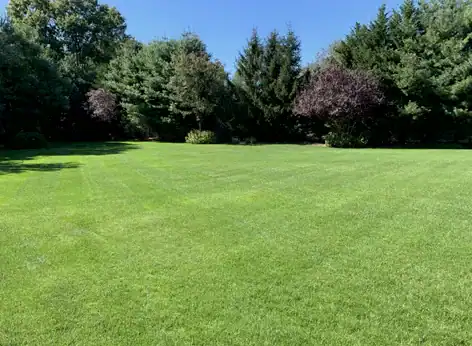
Brown patch is caused by a fungal pathogen called Rhizoctonia solani, and it thrives under a very specific set of conditions: nighttime temperatures above 68 to 70°F, elevated humidity, and prolonged moisture on grass blades. Shoreham checks all three boxes throughout July and August. The village sits directly on Long Island Sound, which generates persistent maritime humidity and overnight dew that keeps turf wet far longer than inland communities experience. That’s not a minor difference it’s the reason brown patch spreads faster and stays active longer in Sound-adjacent yards than it does in communities further south or west.
If you’re seeing the same areas go brown every summer, the disease is likely returning because the conditions that triggered it never fully resolved, and the pathogen is still present in the soil. Reseeding without treating the underlying fungal activity is one of the most common reasons the same patches fail year after year. A professional diagnosis confirms whether brown patch is actually what you’re dealing with because dollar spot and other diseases can look similar and treatment is then matched to the specific pathogen.
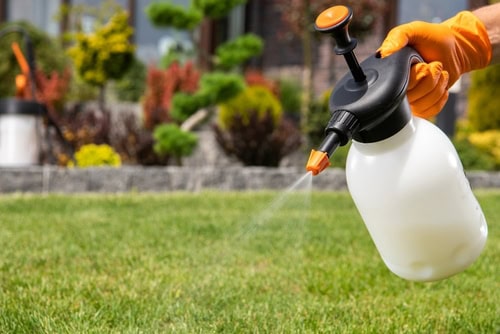
You can try, but there’s a real limitation worth understanding before you spend the money. The fungicide products available at retail stores hardware stores, garden centers, big-box home improvement stores contain lower concentrations of active ingredients than the professional-grade formulations we use. Under New York State law, the more effective restricted-use pesticide formulations can only be purchased and applied by a NYSDEC-certified commercial pesticide applicator. That’s not a technicality it’s the reason professional treatment produces results that consumer products often can’t replicate on established disease.
There’s also the diagnosis problem. Most homeowners applying store-bought fungicide are treating what they think the disease is, not what it actually is. Brown patch, dollar spot, and red thread require different active ingredients. Applying a product designed for one disease to a lawn that has another wastes time and gives the pathogen more opportunity to spread. If you’ve already tried a retail product and didn’t see results, that’s a strong signal that either the diagnosis was off, the concentration was insufficient, or both.
Red thread is one of the more visually distinctive lawn diseases you’ll see pinkish-red threads extending from the tips of grass blades, sometimes visible from a distance as a reddish or coral tint across patches of turf. The affected areas are typically irregular in shape and may look bleached or straw-colored as the disease progresses. It’s most active when temperatures are between 60 and 75°F and the turf is wet and low in nitrogen which maps almost exactly to Long Island’s spring and fall shoulder seasons.
On the North Shore, including Shoreham, red thread tends to have a longer active window than in more open or inland communities. The wooded, hilly terrain around Shoreham creates shaded areas that hold cool temperatures and moisture well into May in the spring and well into October in the fall. Shaded turf dries more slowly after rain and dew, which extends the conditions red thread needs to spread. It can travel up to eight feet from a single infection point, so a small problem in a shaded corner of your yard can become a significant one in a short period of time if it’s not treated.
The short answer is that it depends on your lawn’s history and where you are in the season. If your yard has had brown patch, dollar spot, or red thread in previous years, you’re a strong candidate for a preventative program meaning fungicide is applied before visible symptoms appear, timed to the onset of conditions that favor each specific disease. For Shoreham lawns, that typically means a preventative application for brown patch in late May to early June, before nighttime temperatures climb above 70°F and Sound humidity peaks.
If disease is already visible if you’re looking at brown circles, straw-colored patches, or pink-red threads right now that calls for a curative approach. Curative treatments are still effective, but they work best when applied early in the disease cycle, before it has spread widely. The longer active disease goes untreated, the more turf is lost and the more extensive the recovery process becomes. In either case, the starting point is the same: identifying which disease you’re dealing with before selecting the treatment. A lawn with a history of recurring issues in the same spots is almost always better served by a preventative program going forward.
No and this is one of the most common and costly mistakes homeowners make, especially in the fall. September is the ideal time to overseed cool-season turf on Long Island, and many Shoreham homeowners do exactly that after a summer of brown patch damage. The problem is that if the fungal pathogen is still present in the soil which it often is, even after the visible symptoms have faded new seedlings can be killed before they ever establish. You end up spending money on seed and prep work, watching it fail, and assuming you did something wrong. Usually, the disease was still active.
The right sequence is to treat the disease first, confirm it’s been resolved, and then reseed into clean turf. This is especially relevant in Shoreham, where the fall red thread window overlaps with overseeding season. A lawn that’s being treated for red thread in September or October needs that treatment to run its course before new seed goes down. Our approach accounts for this timing the goal is always to set up reseeding for success, not just treat the disease in isolation.
It does, and it’s worth understanding why. Fungal lawn diseases don’t spread randomly they develop when three conditions align: a susceptible host, a fungal pathogen in the soil, and an environment that favors growth. You can’t control the first two, but the environment is where Shoreham’s Sound-side location makes a real difference. Maritime humidity, overnight dew, and fog off the water keep grass blades wet for longer periods than most inland Suffolk County communities experience. That extended leaf wetness is one of the primary drivers of brown patch development and spread.
For most Shoreham homeowners with a history of lawn disease, a single curative application per year isn’t enough to stay ahead of it. The conditions that triggered the disease last July will be back next July. A preventative program timed to your lawn’s specific disease history and Shoreham’s seasonal patterns is typically more effective and more cost-efficient over time than reacting after the damage is already visible. The cost of professional fungicide treatment is also worth keeping in perspective: for a home valued at $650,000 or more, protecting the lawn that contributes to that curb appeal is a reasonable investment, not an extravagance.
Useful Links
Other Services we provide in Shoreham