
Hear from Our Customers
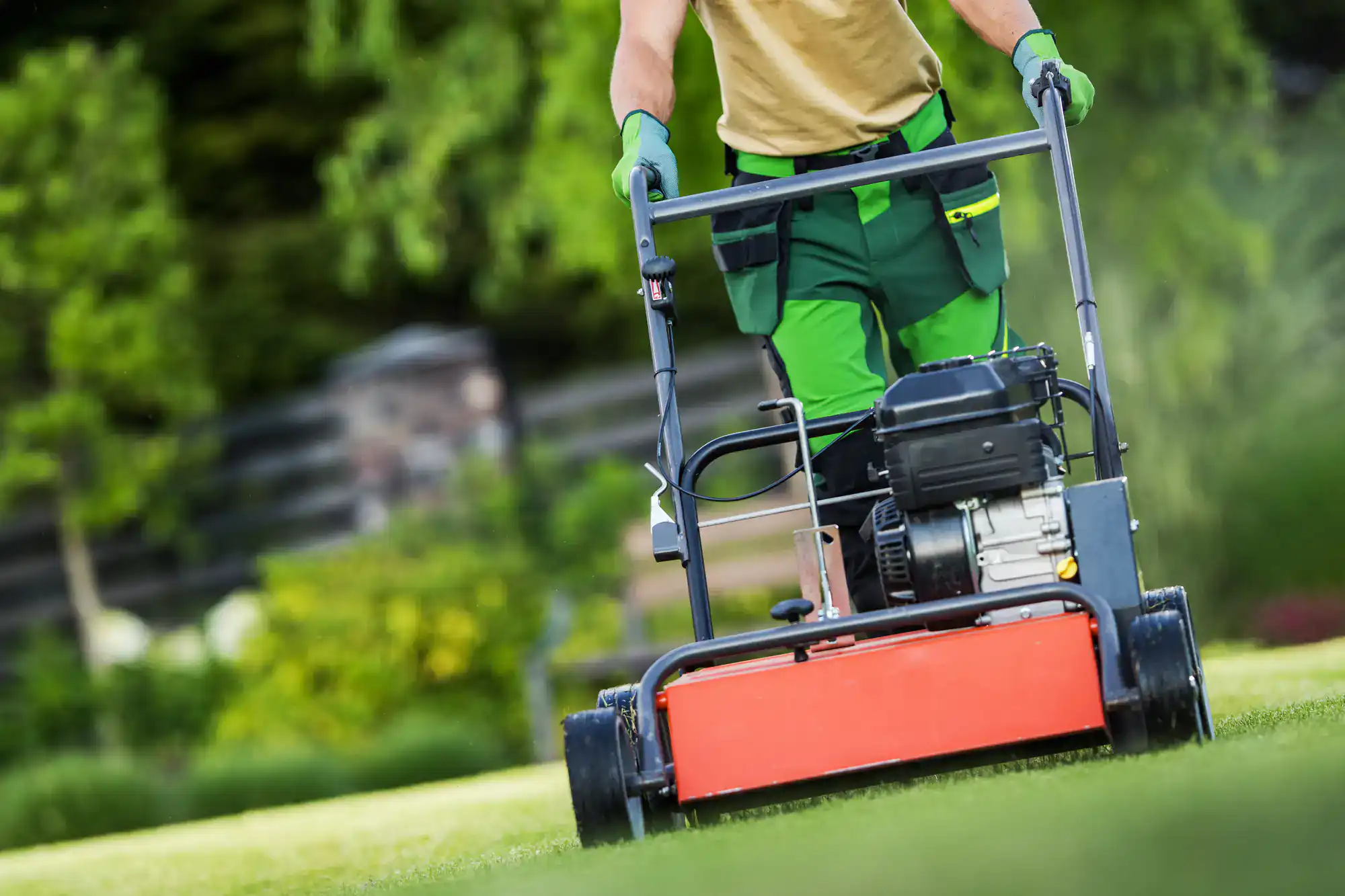
Compacted soil is invisible, but the damage it does isn’t. You see it in the thin patches that never fill in, the dry spots that don’t recover after rain, the grass that looks stressed all summer no matter how much water you put down. The root zone is being choked off, and no amount of fertilizer or seed applied to the surface is going to change that.
Core aeration pulls plugs of soil from the ground, opening channels so water, air, and nutrients can actually reach the roots. For properties in Islandia where the soils are sandy glacial outwash that compact readily under mowing equipment and seasonal freeze-thaw cycles this isn’t a luxury service. It’s the foundational treatment that makes everything else you do to your lawn actually work.
There’s another layer here that’s specific to Islandia. The village is primarily not connected to municipal sewers, which means the overwhelming majority of homes rely on septic systems. The soil around drain fields is especially prone to compaction and disruption over time. Treating those areas correctly takes professional knowledge knowing where the system is, how to work around it, and how to improve soil health without causing problems underground. That’s not something you want to hand off to whoever shows up from a platform app.
We’ve been serving Suffolk County since 1987 two years after Islandia incorporated as a village. That’s not a number we throw around for effect. It means we’ve worked in these soils, through every drought and wet spring Long Island throws at us, long enough to know what actually works here versus what just sounds good on a website.
Every job is handled by a licensed pesticide professional not seasonal labor supervised by someone with an off-site credential. We run a fleet of five fully wrapped trucks, use hydraulic aerators that outperform anything available at a rental center, and apply a custom-blended fertilizer formulated specifically for Long Island soil conditions. You won’t get a generic program designed for some other part of the country.
We’ve worked on properties all across central Suffolk County from the residential streets off Old Nichols Road to neighborhoods near the Route 454 corridor. We understand the soil history in Islandia, the septic-system prevalence, and the specific challenges that come with maintaining a quality lawn in this part of the county. That local knowledge shows up in the results.
Before anything else, we assess the lawn. A simple compaction test pushing a screwdriver into watered soil tells you a lot. If it won’t go three inches without real resistance, the soil is compacted and the roots are suffering for it. In Islandia, where decades of mowing, foot traffic, and the natural behavior of glacial soils have compressed the ground over time, this test almost always confirms what the lawn is already showing you visually.
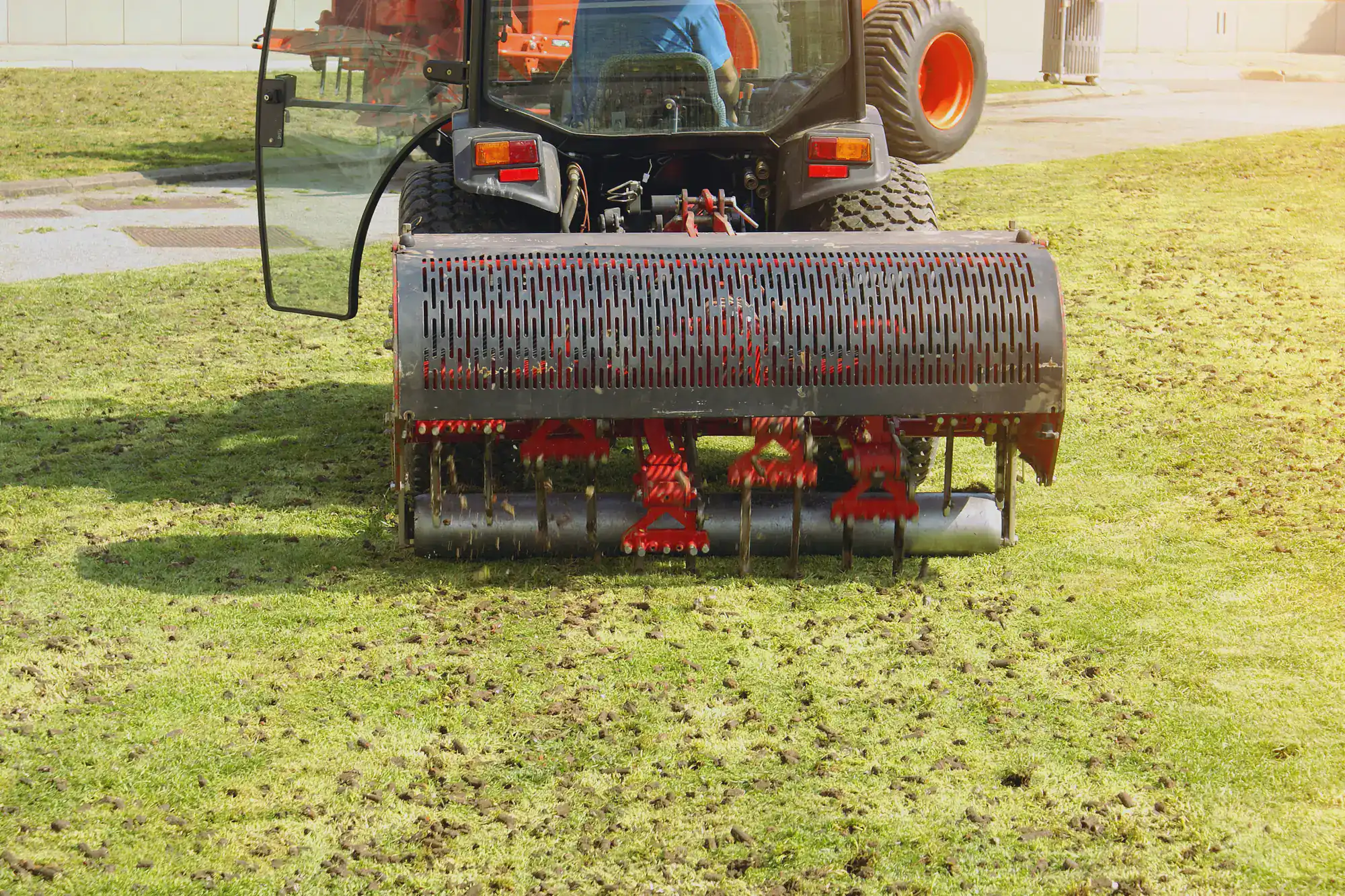
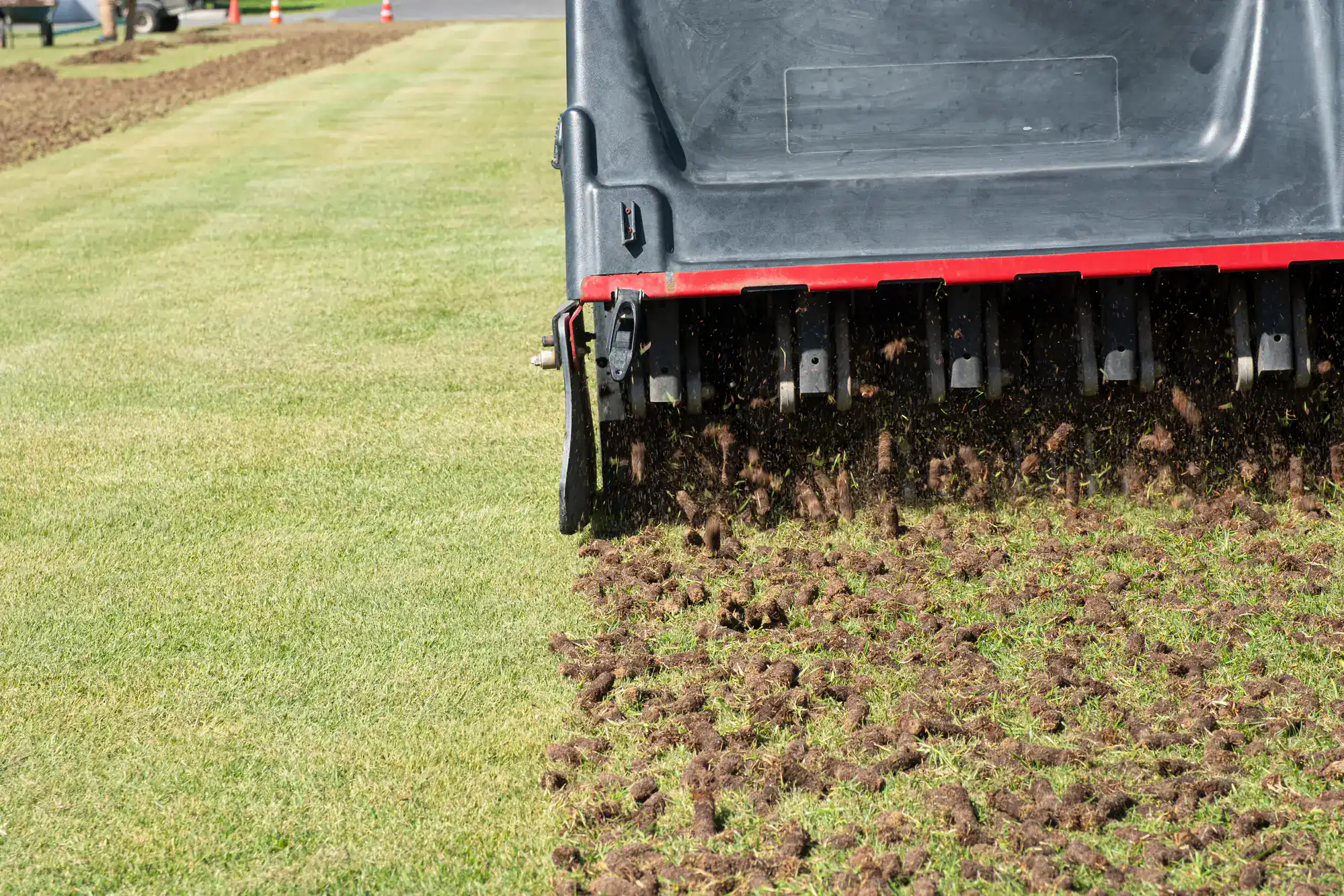
Once we’re on-site, we run the hydraulic core aerator across the lawn, pulling two-to-three-inch plugs from the soil at consistent intervals. Those plugs get left on the surface that’s intentional. They break down within a couple of weeks and return organic matter back into the soil. What’s left behind is a network of open channels that allow water, air, and nutrients to penetrate the root zone instead of pooling or running off the surface.
Timing matters here more than most people realize. The optimal window for Islandia lawns is late summer through October, when soil temperatures are still warm and cool-season grasses are entering their strongest growth phase. Suffolk County’s fertilizer application ban kicks in November 1st, so everything aeration, overseeding, and any accompanying fertilizer application needs to happen before that deadline. We plan around that calendar every year, and our schedule fills up fast in the fall. If you’re thinking about it, earlier is better.
Ready to get started?
Professional core aeration from us isn’t a line item on a generic service menu. It’s part of a program built specifically around your lawn’s actual condition soil type, compaction level, grass variety, and any site-specific factors like septic system locations or shaded areas that need a different approach. That’s a meaningful difference from calling a platform-based service and getting whoever’s available that week.
The national average for professional core aeration runs roughly $75 to $300 for a residential property, with most standard yards landing between $107 and $202. What you’re paying for with us isn’t just the machine time it’s the licensed professional running the equipment, the hydraulic aerator that penetrates deeper than rental units, and the 37 years of Suffolk County experience informing every decision made on your property. When aeration is paired with our custom-blended Long Island fertilizer and overseeding where needed, the investment compounds. You’re not just aerating you’re setting up every future application to work harder.
For Islandia homeowners, there’s also the septic system factor. Working around drain fields correctly requires real knowledge of where systems are located and how to treat those areas without disrupting them. That expertise is built into every job we do here, not an add-on you have to ask for.
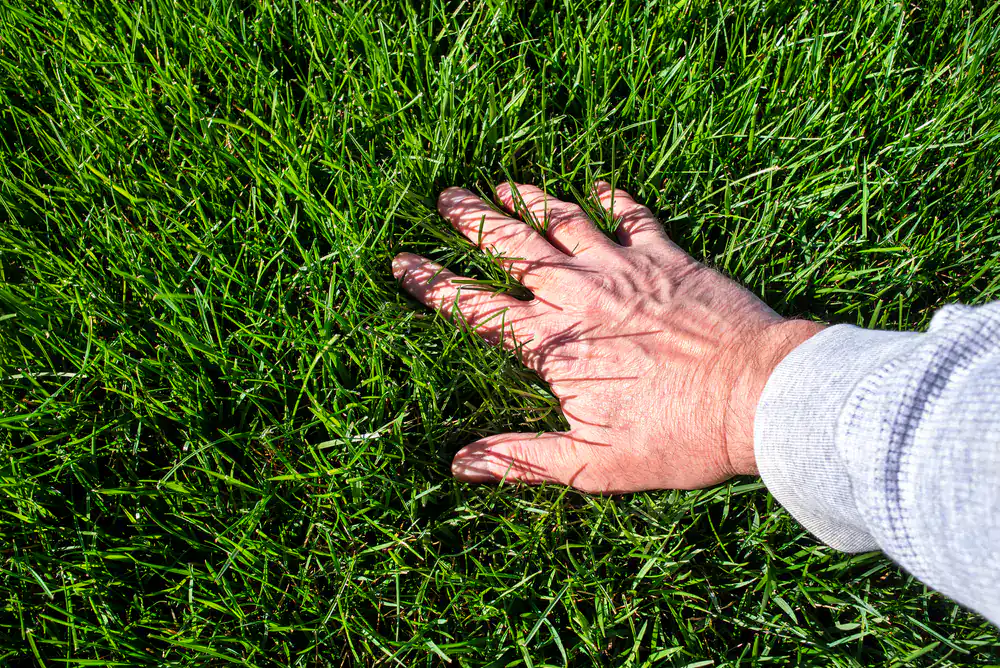
The most reliable way to check is a simple dirt compaction test water the lawn thoroughly, then push a standard screwdriver into the turf. If you can’t get it three inches deep without real effort, your soil is compacted. You can also look at the lawn itself: thin patches that don’t fill in, dry spots that don’t recover after rain, water that pools on the surface instead of soaking in, or grass that looks stressed through summer even with regular watering. Any of those signs point to a compaction problem.
In Islandia specifically, the soils are sandy glacial deposits that compact readily under mowing equipment and the seasonal freeze-thaw cycles that Long Island winters produce every year. If your lawn has been mowed regularly for several years without professional aeration, compaction is almost certainly present to some degree. The question isn’t usually whether aeration is needed it’s whether you’re catching it before the lawn deteriorates further.
For the cool-season grasses that make up virtually every lawn in Islandia fescues, Kentucky bluegrass, perennial ryegrass the optimal aeration window is late August through October. Soil temperatures are still warm enough to support root activity, air temperatures are cooling, and the grass is entering its most vigorous growth phase of the year. Aeration during this window gives the lawn the best possible conditions to recover and strengthen before winter.
There’s also a hard deadline to keep in mind: Suffolk County’s fertilizer application ban takes effect November 1st, with fines up to $1,000 for violations. Any aeration paired with fertilizer or overseeding needs to be completed before that date. That window fills up faster than most people expect. If you’re planning fall aeration in Islandia, reaching out in August or early September gives you the best chance of getting on our schedule before it closes.
Yes but it needs to be done carefully, and by someone who understands what’s underground. Islandia is primarily not connected to municipal sewers, so the vast majority of residential properties rely on septic systems and cesspools. The soil around drain fields is often compacted and disrupted from installation and settling over time, which means it genuinely benefits from aeration. But aerating in those areas without knowing where the system is located can cause real damage.
When we work on a property with a septic system, our licensed professional on-site accounts for the system’s location before the aerator ever moves. We know how to treat drain field areas to improve soil health without compromising the system underneath. That’s not a specialized add-on it’s standard practice for us because we’ve been working on septic-system properties across Suffolk County for nearly four decades. It’s the kind of thing that matters a lot in Islandia and gets overlooked entirely when you hire someone without that local experience.
It makes a measurable difference but only if the soil is actually compacted, which in most Islandia lawns it is. Here’s the practical reality: compacted soil prevents water, air, and nutrients from reaching the root zone. That means every dollar you spend on fertilizer, every gallon of water you apply, and every bag of seed you put down is working at a fraction of its potential. You’re not getting bad results because you’re doing the wrong things. You’re getting bad results because the soil isn’t letting any of it through.
Core aeration opens that up. After a professional aeration, fertilizer reaches the roots instead of sitting on the surface. Seed makes soil contact instead of resting on thatch. Water infiltrates instead of running off. The lawn you’ve been trying to grow finally has the conditions it needs to actually grow. Most homeowners who do it once and see the difference in the following season don’t skip it again. It’s not an upsell it’s the fix for the underlying problem that everything else you’ve been doing couldn’t solve on its own.
Doing them together is almost always the better approach, and the timing works out perfectly in the fall window. Aeration creates natural seed pockets the holes left by the core aerator give seed direct contact with soil, which is exactly what germination requires. Overseeding onto an un-aerated lawn means seed is sitting on thatch or compacted surface soil with poor contact and poor odds. Doing it right after aeration dramatically improves germination rates.
For Islandia lawns, fall is the right time for both. The soil is warm, the air is cooling, and cool-season grasses are primed to establish before winter. Pairing aeration with overseeding and a post-aeration fertilizer application all completed before Suffolk County’s November 1st ban gives the lawn the best possible foundation heading into the following spring. It’s the most efficient use of the fall window, and it’s how we approach it when the lawn assessment shows thin or bare areas that would benefit from new grass.
The most honest answer is that the differences are operational, not cosmetic. We’ve been serving Suffolk County since 1987 that’s not a marketing line, it’s nearly four decades of working in these specific soils, on these specific properties, through every seasonal condition Long Island produces. No company that started in the last ten or fifteen years can offer that kind of local depth.
Every job is handled by a licensed pesticide professional. Not a crew of seasonal workers supervised by an off-site credential holder an actual licensed applicator on your property, making informed decisions about your specific lawn. We use hydraulic core aerators that outperform rental-grade equipment, a custom-blended fertilizer formulated for Long Island soil conditions, and programs built around each lawn individually rather than packaged tiers sold off a menu. For Islandia homeowners with septic systems, mature trees, and properties that have their own specific history, that level of expertise and accountability isn’t a bonus it’s what you actually need to see real results.
Useful Links
Other Services we provide in Islandia