
Hear from Our Customers
Most lawns in Islandia aren’t struggling because the homeowner doesn’t care. They’re struggling because whoever treated them last didn’t really understand what they were working with. Long Island’s sandy, fast-draining soil doesn’t hold nutrients the way heavier soils do. If the fertilizer isn’t formulated for that reality, a good chunk of it washes right through the root zone before the grass ever benefits from it. That’s not a minor inefficiency it’s the reason your lawn looks the same in October as it did when you started.
The Levitt-era homes that make up much of Islandia’s residential core have mature, established lawns that have been through decades of mowing, foot traffic, and seasonal stress. That kind of history creates compaction. Compaction blocks water, air, and nutrients from reaching the roots and no amount of fertilizer fixes a lawn that can’t absorb it. The right treatment program addresses what’s actually happening beneath the surface, not just what’s visible from the curb.
When a lawn is treated correctly with the right products, applied at the right time, by someone who actually knows Suffolk County’s soil and seasonal patterns the difference shows up fast. Thicker turf. Fewer bare patches. Weeds getting crowded out instead of taking over. A lawn that holds up through the summer heat instead of thinning out by July. That’s what a real lawn care program delivers, and it’s what we’ve been doing in this county since 1987.
We’ve been treating lawns in Suffolk County since 1987. That’s not a marketing number it’s the length of time it takes to actually understand a place. The soil here. The seasonal timing. The grub pressure that peaks every summer. The fertilizer blackout that runs from November through April. The way central Suffolk County’s inland heat hits cool-season grass hard in July and August. That knowledge doesn’t come from a corporate manual. It comes from doing this work here, year after year, in communities like Islandia where established neighborhoods have real lawn care needs.
Every technician we send to your property is a licensed NYS DEC pesticide applicator not a labor crew following instructions, but a trained professional who knows what they’re doing and why. We run five fully wrapped, branded trucks, so you always know who’s on your property, even when you’re at work across town near the Hauppauge corridor. No anonymous vans. No rotating faces you’ve never met. Just accountable, professional service on every visit.
It starts with your lawn as it actually exists right now not a template program built for some average property somewhere else. We look at your grass type, your soil condition, your sun and shade exposure, your weed pressure, and any history of past treatment. From there, a custom program gets built around what your lawn specifically needs to improve.
From there, treatments are timed around what’s actually happening in the ground not a fixed calendar. In central Suffolk County, that means soil temperature drives the schedule. Pre-emergent weed control goes down at the right window for crabgrass suppression. Fall treatments aeration, overseeding, and fertilization are completed before Suffolk County’s mandatory November 1 blackout date, which is the most critical window of the entire year for cool-season lawns. Miss it, and you’re starting the next spring already behind. Hit it right, and your lawn enters winter with the root strength to bounce back fast.
If your lawn needs more than maintenance if grubs have caused real damage, or a previous company left it worse than they found it we handle full restoration and new lawn installation from seed as well. One company, start to finish, no handoffs. Our online customer portal makes it easy to manage your account and pay by credit card without a phone call, which matters when your schedule doesn’t leave much room.
Ready to get started?
Our treatment programs cover the full range of what Suffolk County lawns actually need fertilization, weed control, grub prevention, core aeration, overseeding, and targeted treatments for persistent problems like nutsedge and bentgrass. These aren’t add-ons you get upsold on after the fact. They’re part of a program built around your lawn from the start.
The fertilizer itself is a proprietary blend we make specifically for Lawn Master not an off-the-shelf product. It’s formulated for Long Island’s sandy, acidic soil, which means the nutrients release at the right rate for how quickly this soil drains. That matters in Islandia, where properties near Honeysuckle Pond and the Connetquot River corridor sit in a sensitive environmental zone. Applying the wrong product at the wrong rate isn’t just bad for your lawn it’s a real concern for the groundwater that supplies the entire region’s drinking water. Our licensed professionals apply treatments in compliance with all Suffolk County and New York State regulations, including the phosphorus restrictions and the November 1 fertilizer blackout.
Hydraulic core aerators and professional-grade seeders are the equipment standard we use not the consumer tow-behind units that most services use. If your lawn has been compacted by years of use, which is common in Islandia’s older housing stock, proper hydraulic aeration opens the soil in a way that actually makes a difference. And if you’re starting from scratch new construction, a lawn destroyed by grubs, or bare ground from a previous renovation we install new lawns from seed and carry them through to a full maintenance program.
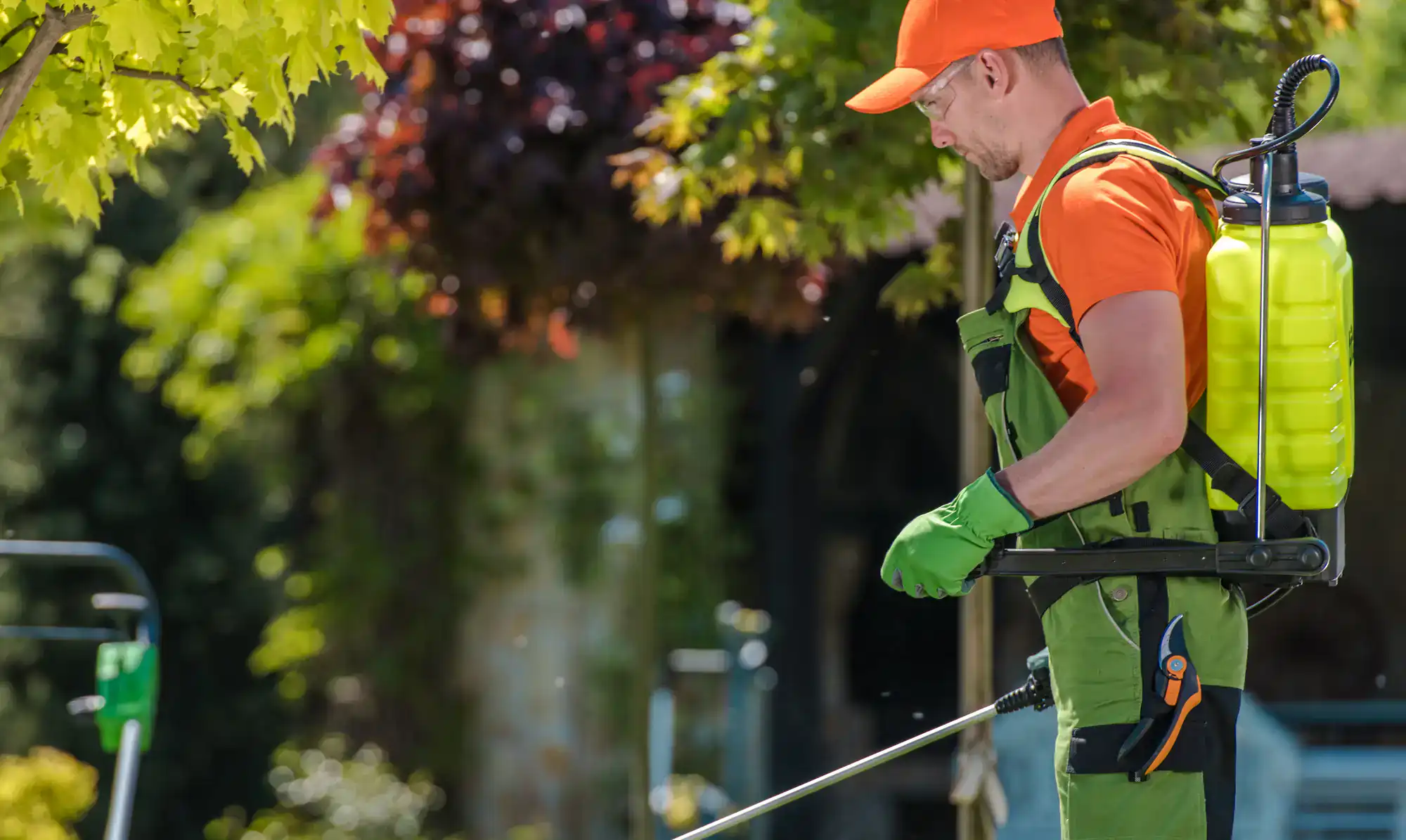
The most effective schedule for Islandia lawns follows Suffolk County’s seasonal windows rather than a fixed calendar. Cool-season grasses which make up the majority of lawns in this area grow most actively in spring and fall, which is when fertilization and overseeding have the most impact. Spring treatment typically begins once soil temperatures reach around 55°F, which in central Suffolk County usually happens by mid-April. That’s also the window for pre-emergent weed control to get ahead of crabgrass before it germinates.
Summer is a maintenance and monitoring phase. High-nitrogen fertilizer applications during July and August can push excessive top growth and increase heat stress on already-struggling turf, so a good program pulls back during this period rather than pushing hard. The fall window from early September through the end of October is the single most important treatment period of the year. Aeration, overseeding, and a strong fall fertilization all need to happen before Suffolk County’s November 1 blackout date. A lawn in Islandia that gets the fall program right is set up to come back strong the following spring.
Japanese beetle grubs are one of the most common and damaging lawn pests throughout Suffolk County, and Islandia is no exception. Adult beetles lay eggs in the soil during summer, and the larvae spend late summer and fall feeding on grass roots just below the surface. By the time the visible damage appears brown patches that don’t respond to watering, or sections of turf that feel spongy and pull away from the soil the root damage is already done.
The early warning signs are easy to miss. Increased bird activity on your lawn, particularly crows and starlings digging at the turf, is often the first indicator. Skunks and raccoons digging overnight are another. If you’re seeing either of these, it’s worth investigating before the damage spreads. A preventive grub control treatment applied at the right time in early summer before the eggs hatch is far more effective than trying to treat an active infestation in the fall. We include grub prevention as part of a complete treatment program, timed to Suffolk County’s beetle activity cycle.
Suffolk County Local Law 41-2007 prohibits the application of lawn fertilizer from November 1 through April 1 each year. Violations carry fines of up to $1,000 per incident. The law exists because cool-season grasses go dormant when soil temperatures drop below 55°F, and fertilizer applied during dormancy doesn’t feed the lawn it leaches through Long Island’s sandy soil and into the groundwater that supplies the entire region’s drinking water. Long Island sits over a sole-source aquifer, meaning there’s no backup water supply. Nitrogen runoff is a documented and serious environmental concern here.
What this means practically is that your fall treatment window is limited. Everything that needs to happen aeration, overseeding, and fall fertilization has to be completed before November 1. If you wait too long or work with a company that doesn’t prioritize the fall schedule, you lose that window entirely and start the following spring with a lawn that didn’t get the root-building nutrition it needed going into winter. New York State also prohibits phosphorus in lawn fertilizer unless a soil test confirms a deficiency, which is another reason why working with a licensed, regulation-fluent company matters.
Summer thinning is one of the most common frustrations for Suffolk County homeowners, and it usually comes down to one of a few things: the wrong fertilizer timing, the wrong product for Long Island’s soil, or compaction that’s preventing nutrients from reaching the root zone in the first place. Cool-season grasses like tall fescue and Kentucky bluegrass the dominant turf types in Islandia naturally slow their growth and go into a semi-dormant state during hot, humid summers. That’s normal. What makes it worse is pushing high-nitrogen fertilizer during that stress period, which forces top growth the plant can’t sustain.
Long Island’s sandy soil compounds the problem. Nutrients leach out of the root zone quickly, especially with the drainage rates typical of central Suffolk County. If the fertilizer isn’t formulated to release slowly and stay available to the roots, it’s largely wasted. We use a custom-blended fertilizer made specifically for Long Island’s soil conditions not a generic commercial product which addresses this directly. Pairing the right fertilizer with proper aeration to break up compaction gives the roots the access they need to actually use what’s being applied. That combination is usually what separates a lawn that holds up through August from one that thins out by the Fourth of July.
DIY lawn care is completely manageable for basic maintenance mowing, watering, maybe a bag of fertilizer from the hardware store. But there’s a gap between keeping a lawn alive and actually improving it, and that gap usually comes down to timing, product selection, and equipment. The fertilizer blackout period in Suffolk County, the soil pH issues common to Long Island’s sandy outwash soils, the grub pressure that peaks every summer, the pre-emergent timing window for crabgrass getting all of that right consistently, year after year, takes more than a few YouTube videos and a spreader.
The other factor is time. Many Islandia homeowners are working professionals commuting to the Hauppauge Industrial Park, managing full schedules, and not looking to spend their weekends troubleshooting a lawn. A professional program removes that entirely. You get licensed applicators using commercial-grade equipment and a custom fertilizer blend that’s actually built for this soil, applied on the right schedule, with the regulatory compliance already handled. For a property in a market where median home values are in the $420,000–$450,000 range locally, the cost of a professional program is a reasonable investment in protecting what you own.
The honest answer is that it depends on what you’ve experienced before and what you’re actually looking for. National chains like TruGreen operate at scale, which creates real variability in who shows up to your property, how well they know the local conditions, and how easy it is to get a real response when something goes wrong. The pattern that comes up consistently in reviews from Suffolk County homeowners is inconsistency the service is fine until it isn’t, and by the time you notice the problem, the season is already gone.
We operate differently by structure, not just by marketing claim. Every technician is a licensed NYS DEC pesticide applicator. The fertilizer is a proprietary blend we make for Long Island’s specific soil chemistry. We’ve been operating in Suffolk County since 1987 long enough to have treated lawns through every drought, every grub outbreak, and every regulatory change this county has seen. Five fully branded trucks run in the field, so you always know who’s on your property. If you’ve already tried a national chain and walked away disappointed, those structural differences are exactly what you were missing and they’re not things a franchise operation can replicate.
Useful Links
Other Services we provide in Islandia