
Hear from Our Customers

Most lawns in East Shoreham don’t fail because of neglect. They fail because the program treating them was never designed for this soil. The sandy, fast-draining glacial soils on the North Shore leach nutrients before the turf can absorb them so if your lawn looks thin and pale a few weeks after a fertilizer application, that’s not a watering problem. That’s a product problem.
When you’re running a program that accounts for how your soil actually behaves, the difference shows up fast. Density comes back. Color holds longer. The bare patches that kept returning usually grub damage or compaction stop cycling back every summer because the root system underneath is finally strong enough to resist them.
For homeowners in East Shoreham near Long Island Sound, there’s also the salt spray factor. Properties closer to the water deal with additional turf stress that mid-island lawns simply don’t face. A program built for your specific lot sun exposure, soil condition, proximity to the water, tree canopy coverage gets results that a one-size-fits-all route truck never will.
Lawn Master has been operating in East Shoreham and throughout Suffolk County since 1987. That’s not a rounded number it’s a specific founding year that predates most of the competition in this market by a decade or more. The families living in East Shoreham today have watched a lot of lawn companies come and go. We’ve been here the whole time, visible in driveways along Route 25A and throughout the Shoreham-Wading River corridor.
Every technician who treats your lawn holds a valid NYS DEC Commercial Pesticide Applicator Certificate a credential that requires formal training, a state exam, and two years of supervised field experience. That’s not a formality. It’s the difference between someone who knows what they’re applying and why, and someone who’s following a route sheet.
Our fleet of five fully wrapped trucks is a familiar sight throughout East Shoreham and the neighborhoods along William Floyd Parkway. If you’ve seen us in a neighbor’s driveway, you already know what we look like when we show up.
It starts with an honest assessment of what your lawn is actually dealing with. Shaded lots in East Shoreham behave differently than full-sun properties they need different grass varieties, different fertilization rates, and different overseeding timing. Before anything gets applied, we look at what’s there and build the program around it.
From there, your season is mapped out in advance. Pre-emergent crabgrass applications go down in early-to-mid spring, timed to soil temperature rather than a calendar date because on the North Shore, the germination window shifts year to year. Grub preventive treatments are scheduled for the narrow June-to-early-July window when they’re actually effective. Fall aeration and overseeding the most important work of the year for cool-season turf gets done when soil temperatures are right for germination, not just when it’s convenient.
Suffolk County’s fertilizer blackout period runs from November 1 through April 1, and every program we run is built around that regulation automatically. The winterizer application goes down before the window closes, because that single treatment does more for spring green-up and root development than anything else in the calendar. You don’t have to track any of this. That’s the point.
Ready to get started?
The fertilizer we use isn’t purchased off a pallet from a wholesale distributor. It’s a custom-blended product formulated specifically for our programs and for Long Island’s soil conditions. No other lawn care company serving East Shoreham offers it. That matters here because the sandy, low-organic-matter soils on the North Shore don’t hold nutrients the way heavier soils do and a product that performs well elsewhere will consistently underdeliver on your lawn if it wasn’t built for this.
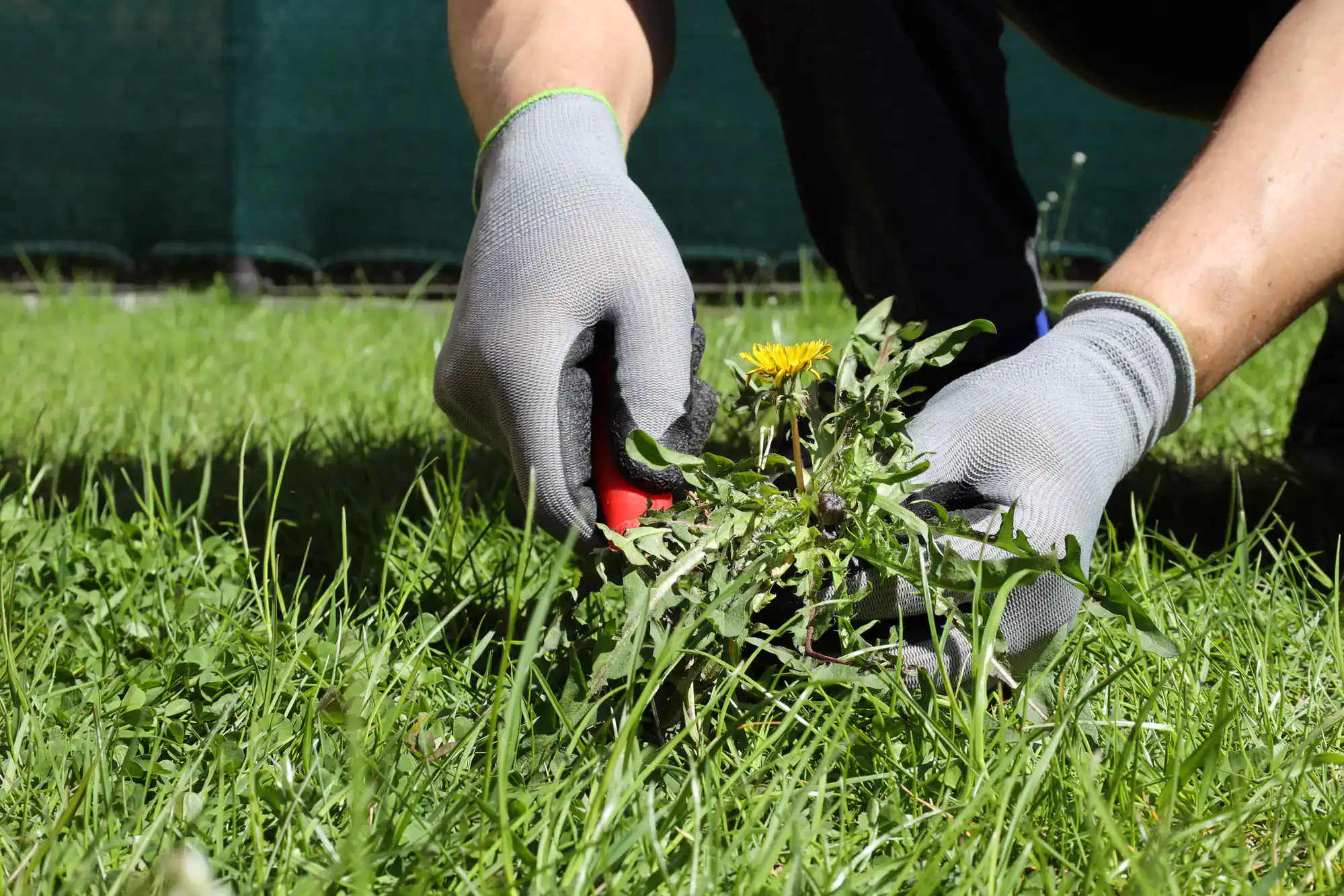
Beyond fertilization, our programs include pre-emergent and post-emergent weed control, grub prevention, core aeration with hydraulic aerators that penetrate compacted soil far more effectively than the lightweight drum equipment most companies use, and overseeding with varieties matched to your lawn’s actual conditions sun, shade, or a mix of both. If your lawn has significant damage or has been neglected for years, full restoration and new lawn installation from seed are also available.
Suffolk County phosphorus restrictions and buffer zone requirements near water bodies apply to many properties in East Shoreham given its North Shore location. Every program we run is designed with these regulations built in not as an afterthought, but as part of how the program is structured from day one.
The most common reason is that the fertilizer being used wasn’t formulated for the soil it’s going into. East Shoreham sits on glacially deposited, sandy North Shore soils that drain quickly and leach nutrients before the root zone can absorb them. A standard fertilizer product the kind most companies buy in bulk and apply everywhere releases too fast for this soil type. The nitrogen washes through, the turf gets a brief flush of green, and then it fades again within a few weeks.
The fix isn’t more fertilizer. It’s the right fertilizer, applied at the right rate for your specific soil conditions. Slow-release nitrogen formulations hold in sandy soil longer, which is why Suffolk County regulations actually require them in certain applications. A program built around your soil’s actual behavior not a generic schedule is what produces lasting density and color instead of a temporary boost that disappears by the next visit.
Grub damage typically shows up in late summer as irregular patches of brown, dead turf that feel spongy underfoot and pull up easily almost like a loose rug because the root system underneath has been eaten through. Japanese beetle and European chafer grubs are the primary culprits in East Shoreham and throughout Suffolk County, and they’re consistent enough in this area that preventive treatment is worth building into any serious lawn care program.
The treatment window for preventive grub control is narrow roughly June through early July, before the larvae hatch and move deeper into the soil where contact products can’t reach them. Miss that window and you’re dealing with the damage in August and September rather than preventing it. If you’re already seeing patches this season, a curative treatment can help, but it won’t restore the turf that’s already gone. That’s where overseeding in the fall becomes part of the recovery plan.
Suffolk County prohibits the application of nitrogen and phosphorus fertilizers to turf from November 1 through April 1. The regulation is part of the county’s Reclaim Our Water initiative, designed to protect groundwater and coastal waterways including Long Island Sound, which borders East Shoreham to the north from nutrient runoff. Violations carry fines of up to $1,000 per application.
For your lawn program, this means the timing of your last fall application matters a great deal. The winterizer treatment typically applied in October or early November just before the blackout begins is the single most impactful fertilizer application of the entire year for cool-season turf. It fuels root development through the winter and drives the spring green-up you see in March and April. A licensed company builds this window into the program automatically. An unlicensed operator, or a homeowner buying product at a retail store, may be applying during the blackout period without realizing it.
Yes, and it’s a meaningful one. A landscaping company’s core business is mowing, trimming, and property maintenance. When they offer fertilization, it’s typically an add-on service not a program they’ve built their operation around. The person applying the product may or may not hold a valid NYS DEC Commercial Pesticide Applicator Certificate, which is legally required for anyone applying pesticides commercially in New York State.
A dedicated lawn care company structures its entire operation around the health and condition of the turf itself. Program design, application timing, product selection, and soil assessment are the core of the work not a side service added to a mowing route. In practice, this means the technician treating your lawn understands why a specific product is being applied at a specific rate at a specific time of year, rather than following a generic schedule. For a lawn dealing with the specific conditions of East Shoreham sandy soil, shade variability, coastal wind exposure that depth of knowledge is what actually moves the needle.
For most lawns in East Shoreham, visible improvement starts showing up within the first full treatment cycle usually four to six weeks after the initial application. Color and density are typically the first things that change. Weed pressure starts declining as pre-emergent and post-emergent treatments take effect over the first season. Bare or thin areas take longer, especially if they’ve been struggling for multiple seasons, because the underlying soil condition compaction, pH imbalance, thatch buildup needs to be corrected before the turf can respond fully.
The most significant improvement usually happens after a complete fall program that includes aeration and overseeding. Fall is the most important season for cool-season turf on Long Island’s North Shore soil temperatures are warm enough for germination, crabgrass competition has ended, and the cooler, moister weather gives new seed the best possible establishment conditions. Homeowners who start a program in spring and follow through to a full fall aeration and overseeding typically see a dramatic difference by the following spring compared to where they started.
The most common reason is that the program being applied isn’t matched to the lawn receiving it. Many companies including large national operators that service the East Shoreham and Suffolk County market run the same program on every property regardless of soil type, sun exposure, grass species, or existing problem areas. In a community like East Shoreham, where you can have a heavily shaded lot with fine fescue under mature oaks right next to a full-sun lawn with a crabgrass problem and sandy soil that drains in hours, that approach produces predictably inconsistent results.
The second issue is technician continuity. When a different person shows up every visit with no knowledge of your lawn’s history, the assessment quality drops and problems get missed. A program that’s genuinely built around your specific property and executed by someone who knows what was done last time and what needs to happen this time is a fundamentally different experience than a route truck working through a list. That’s the gap between what most people have tried and what actually works long-term.
Useful Links
Other Services we provide in East Shoreham