
Hear from Our Customers
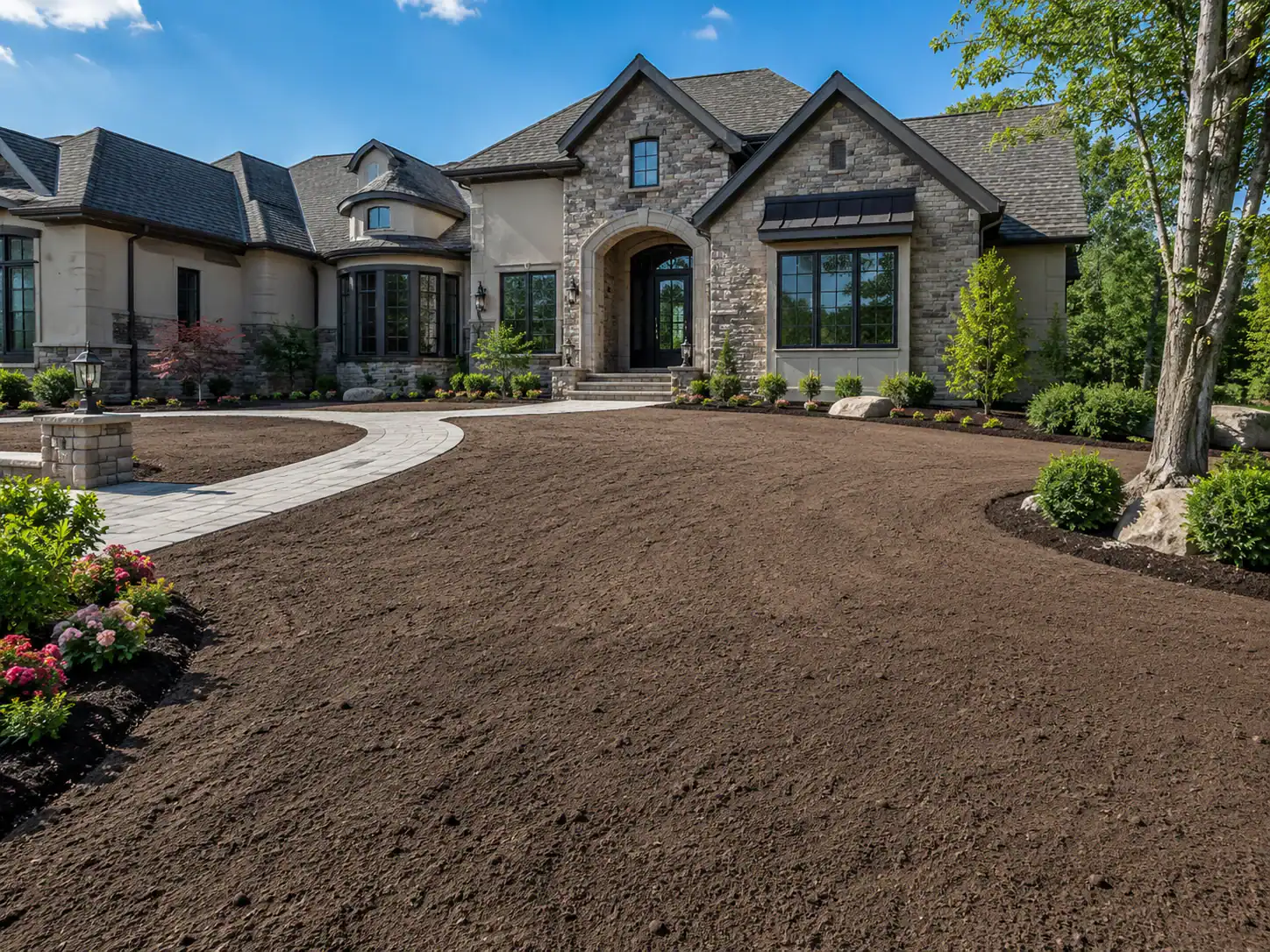
When restoration is done right, the difference is visible within a single growing season. Bare patches fill in. Thin, struggling turf gets density back. The lawn holds color through summer instead of fading out by July. And the underlying problems the ones that caused the decline in the first place are gone, not just masked.
In Dix Hills, that matters more than almost anywhere else in Suffolk County. These are large properties, often over an acre, with mature oak and maple canopies that create real shade and root competition challenges. A lot of the bare spots and thinning areas you’re looking at right now aren’t random they’re concentrated under tree lines, in low-drainage zones, or in sections that have been compacted over decades of mowing and foot traffic. Fixing those areas means understanding why they failed, not just throwing seed at them.
The lawns here also carry real weight when it comes to property value. Homes in Dix Hills regularly sell above a million dollars, and curb appeal is part of what justifies that number. A lawn that looks neglected stands out in this neighborhood and not in a good way. Getting it back to where it belongs isn’t just an aesthetic decision. It’s a practical one.
We’ve been operating in Suffolk County since the mid-1980s. That’s nearly four decades of working on Long Island lawns through drought years, disease outbreaks, grub cycles, and everything in between. We’re not a national brand with a local phone number. We’re a licensed, independent operation that has built our reputation entirely on results in this county.
We hold a New York State pesticide applicator’s license, which matters when you’re dealing with fungal disease, grub damage, or weed pressure that requires professional-grade treatment. It also means we operate in full compliance with Suffolk County’s fertilizer and pesticide regulations the nitrogen application windows, the phosphorus restrictions tied to soil test results, all of it. You don’t have to wonder whether the products going on your lawn are legal or appropriate. They are.
We’ve worked on lawns throughout the Town of Huntington, including properties in and around the Half Hollow Hills district and Dix Hills specifically the shaded backyards, the rolling terrain, the soil variability that comes with this part of central Long Island. We know what these lawns look like when they’re struggling, and we know what it takes to bring them back.
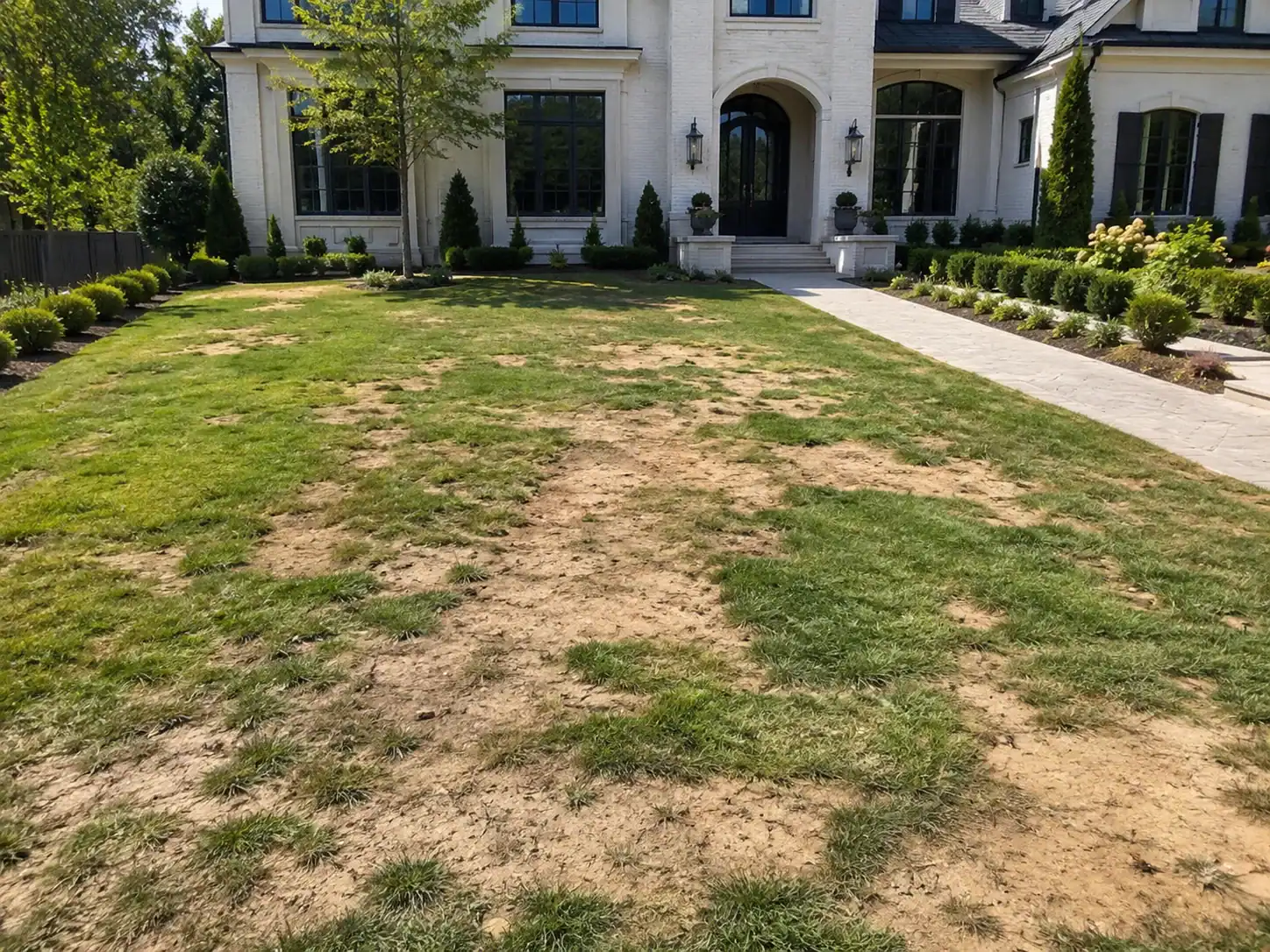
It starts with a real assessment. Before anything gets applied or seeded, we look at what’s actually going on soil compaction, pH levels, thatch depth, signs of disease or pest activity. In Dix Hills, that diagnostic step is especially important because the conditions vary so much from one part of a property to another. A north-facing backyard under a mature oak has a completely different set of problems than the sunny front lawn facing the street. We don’t treat them the same way.
Once we know what we’re dealing with, we address the soil first. If the pH is off, we correct it. If the soil is compacted which is one of the most common issues we see on established properties in this area we core aerate before we do anything else. Trying to seed into compacted soil is one of the main reasons DIY restoration attempts fail. The seed never makes proper contact with the soil, and germination rates are terrible. We use professional slice seeding equipment that cuts directly through thatch and deposits seed at the right depth, giving it a real chance to establish.
From there, the program continues through the season. On Long Island, the optimal window for aeration and seeding is late August through mid-October, when soil temperatures are in the right range for cool-season grass germination. We time everything around that window and follow up to make sure the new growth is establishing the way it should. You’re not left wondering what happened after we leave.
Ready to get started?
Lawn restoration and lawn renovation are not the same thing, and the distinction matters before you make any decisions. Restoration is about reviving an existing lawn correcting the soil, managing thatch, repairing bare and thin areas, and getting the turf that’s already there back to full health. Renovation means tearing out what exists and rebuilding from scratch. Most Dix Hills lawns even ones that look pretty rough don’t need renovation. They need a proper restoration program that actually addresses the root cause of the decline.
What that program includes depends on what your lawn actually needs. Soil testing and pH correction are almost always part of it, because Long Island soils are frequently acidic and nutrient-depleted without regular amendment. Core aeration is standard on properties with any degree of compaction, which covers most established neighborhoods in the Half Hollow Hills area. Slice seeding follows, using cool-season turf varieties selected for your specific conditions shade-tolerant blends for the tree-canopied sections, denser performance varieties for the open sunny areas. If there’s active fungal disease or grub damage present, those get treated before any seeding work begins, because reseeding into an untreated problem is money wasted.
Suffolk County’s groundwater protection regulations also shape how we work. Nitrogen applications are restricted between November 1 and April 1, and phosphorus applications require a soil test to justify. We build every restoration program around those rules not around what’s convenient. If your lawn is genuinely beyond restoration, we’ll tell you honestly and point you toward our renovation service. But in most cases, what you have can be saved.
Restoration means working with the lawn you already have correcting the soil, repairing bare patches, improving density through slice seeding or overseeding, and treating any underlying issues like compaction, disease, or grub damage. The existing turf and root system are preserved and revived. Renovation is a full rebuild: the existing lawn is killed off or stripped away, the soil is regraded or heavily amended, and the lawn is started from scratch with new seed or sod.
Most Dix Hills properties we assess don’t need renovation. Even lawns that look significantly damaged large bare areas, widespread thinning, persistent brown patches often have a viable soil biology and root structure underneath that can support a full recovery. The key is diagnosing the actual cause of the decline before making that call. If your lawn is a candidate for restoration, that’s always the less disruptive and more cost-effective path. If it’s genuinely beyond saving, we’ll be upfront about that and walk you through what renovation would involve.
In most cases, yes it can be saved. The lawns we see on properties throughout Dix Hills and the Half Hollow Hills area that look the most damaged are usually suffering from a combination of compacted soil, thatch buildup, and either disease pressure or grub activity that was never properly treated. None of those are death sentences for a lawn. They’re fixable problems that require the right sequence of treatments, not a full tearout.
The situations where restoration genuinely isn’t viable are less common: catastrophic soil failure, complete root death across the entire lawn, or site conditions that make turf establishment essentially impossible without a full rebuild. A north-facing backyard completely blocked by mature tree canopy, with roots running wall to wall, might be one of those cases but even then, there are shade-tolerant turf options worth exploring before writing it off. The only way to know for sure is a proper assessment. We’d rather look at your lawn and give you an honest answer than have you spend money on the wrong approach.
For most properties, you’ll see meaningful germination and early density within three to four weeks of slice seeding assuming the timing is right and conditions cooperate. Full density, where the restored areas genuinely blend with the surrounding turf, typically takes one full growing season. That’s not a hedge it’s just how cool-season grass works on Long Island.
The timing of when you start matters a lot. On Long Island, the optimal window for aeration and overseeding is late August through mid-October, when soil temperatures are between 50°F and 65°F. Seed that goes down in that window has warm soil to germinate in and enough time to establish roots before winter dormancy. Seeding after mid-October is risky the seedlings may not get enough root development before the ground freezes. Spring seeding is possible for spot repairs, but it competes with crabgrass pre-emergent applications, which complicates the program. If you’re thinking about restoration for your Dix Hills property, the fall window is the right time to act.
The most common causes we see on Dix Hills properties are soil compaction, thatch buildup, fungal disease, and Japanese beetle grub damage and they often show up together. Compaction is especially prevalent on established properties where the soil has been driven over, walked on, and mowed for 30 or 40 years without aeration. Thatch builds up on lawns that have been heavily fertilized without corresponding aeration to break it down. Fungal diseases like brown patch and dollar spot thrive in Long Island’s humid summer conditions warm days, warm nights, and periodic heavy rain create the perfect environment for them. And grub damage from Japanese beetles is a documented problem throughout the Town of Huntington, including Dix Hills.
The reason identification matters so much is that treating the wrong problem doesn’t fix anything. A lawn with active brown patch fungus that gets reseeded without fungal treatment will fail again. A lawn with a grub infestation that gets overseeded without treating the grubs will look fine for a few weeks and then collapse again. Our process starts with a diagnostic assessment soil testing, pH analysis, thatch measurement, pest and disease evaluation before any treatment plan is built. That’s not extra work. It’s the only way to get a result that actually lasts.
Cost varies depending on the size of your property, the extent of the damage, and what the diagnostic assessment reveals. A Dix Hills lawn that needs core aeration, slice seeding, soil pH correction, and a follow-up fertility program is going to be priced differently than a smaller spot repair on a lawn that’s otherwise in decent shape. Lot sizes in Dix Hills are typically large most properties are well over half an acre, many are a full acre or more which affects the scope of any restoration program.
What we can tell you is that the cost of doing it right once is almost always less than the cost of doing it wrong twice. Homeowners who attempt DIY restoration with broadcast seed from a home improvement store, or who hire a company that doesn’t diagnose before treating, often end up calling us a season or two later after the problem has gotten worse. At that point, more of the lawn has declined, and the restoration scope is larger. Getting an accurate estimate starts with a proper assessment of your specific property that’s the only way to give you a number that actually means something.
Yes, and addressing those issues before restoration seeding begins is non-negotiable. Reseeding a lawn that has active fungal disease or an untreated grub population is one of the most common reasons restoration programs fail. The new seedlings get infected or consumed before they ever establish, and the homeowner is left with the same problem they started with plus the cost of another round of seed.
For fungal issues like brown patch or dollar spot, which are genuinely common in Dix Hills given Long Island’s humid summer climate, we treat with professional-grade fungicides applied by NYS-licensed applicators before any seeding work begins. For grub damage, we use curative treatments timed to the grub’s vulnerable life stage, then rehabilitate the soil, and then seed. Suffolk County’s groundwater protection regulations govern how and when these products can be applied, and we operate in full compliance with those rules. You’re not getting a shortcut you’re getting a program that’s designed to work, legally and agronomically, for your specific lawn.
Useful Links
Other Services we provide in Dix Hills