
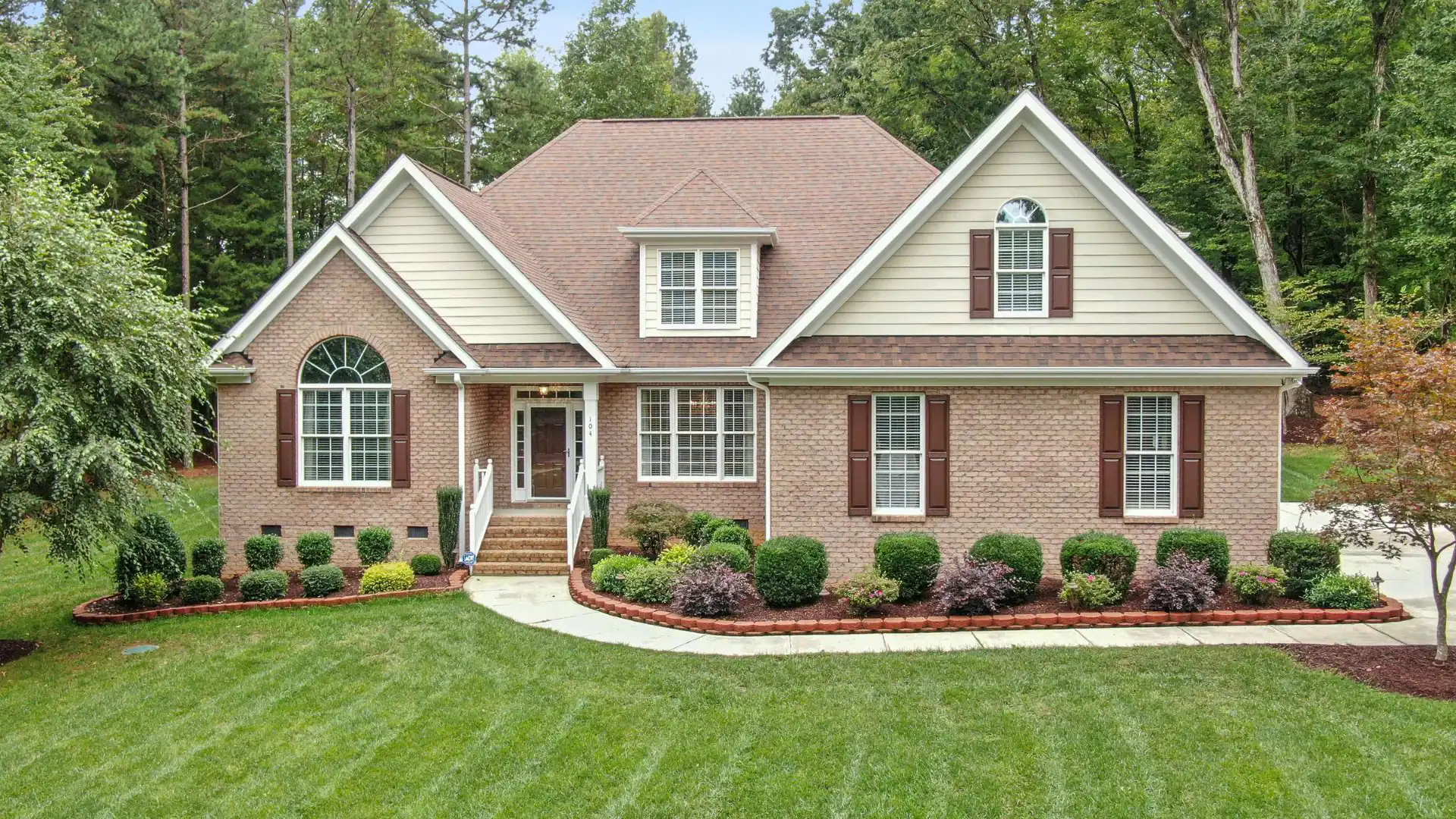
Hear from Our Customers
There’s a specific kind of frustration that comes with finishing a major project new construction, a pool, a full exterior renovation and then standing in front of bare ground. Everything else looks exactly the way you planned it. The lawn doesn’t exist yet. In Dix Hills, where the average home is worth over a million dollars and the Half Hollow Hills school district premium is baked into every listing, that bare ground isn’t just an eyesore. It’s the one thing standing between a finished property and an unfinished one.
A professionally installed lawn from bare ground changes that. Done correctly, it completes the exterior picture, protects your topsoil from erosion, and sets up a lawn that will look the way it’s supposed to for years not just for the first season. That matters here more than in most places, because Dix Hills properties sit on large lots with real grade changes, slopes, and drainage patterns that will punish a rushed or poorly planned installation. The rolling terrain that makes this hamlet beautiful also means water moves, soil shifts, and a lawn that wasn’t properly graded and prepared will show it fast.
When the process is done right soil evaluated, graded properly, the right seed variety selected for your specific conditions what you get is a lawn that establishes evenly, holds through its first winter, and becomes the kind of exterior that matches the rest of what you’ve built. That’s the outcome. Not just grass. A finished property.
We’ve been installing lawns on Long Island since the mid-1980s. Not maintaining them. Not fertilizing them on a schedule. Installing them from bare ground up on properties across Suffolk County, including the large-lot, high-expectation homes throughout Dix Hills and the Town of Huntington corridor.
That length of time on this specific soil matters. The conditions in Dix Hills aren’t uniform. The ground near Wolf Hill Road tends to be sandier. Properties near Jericho Turnpike have heavier, more compacted soil. Lots along Vanderbilt Parkway have their own drainage patterns. New construction sites whether in a development like Tiziana Estates or a custom teardown-rebuild come with compacted subsoil, stripped topsoil, and buried debris that will undermine any installation that doesn’t account for them. We’ve seen all of it, and our process reflects that.
We’re a lawn installation and renovation company, not a general landscaping crew that seeds on the side. When the project is your property, that distinction is worth something.

The first thing that happens isn’t seeding. It’s a site evaluation. In Dix Hills, where properties have real elevation changes, variable soil conditions, and in most new construction or post-renovation scenarios compacted or stripped ground, what’s underneath matters as much as what goes on top. The evaluation looks at your existing grade, drainage patterns, soil condition, and whether topsoil needs to be brought in before anything else happens. On a sloped property, this step determines whether your lawn stays where you put it or washes downhill in the first heavy rain.
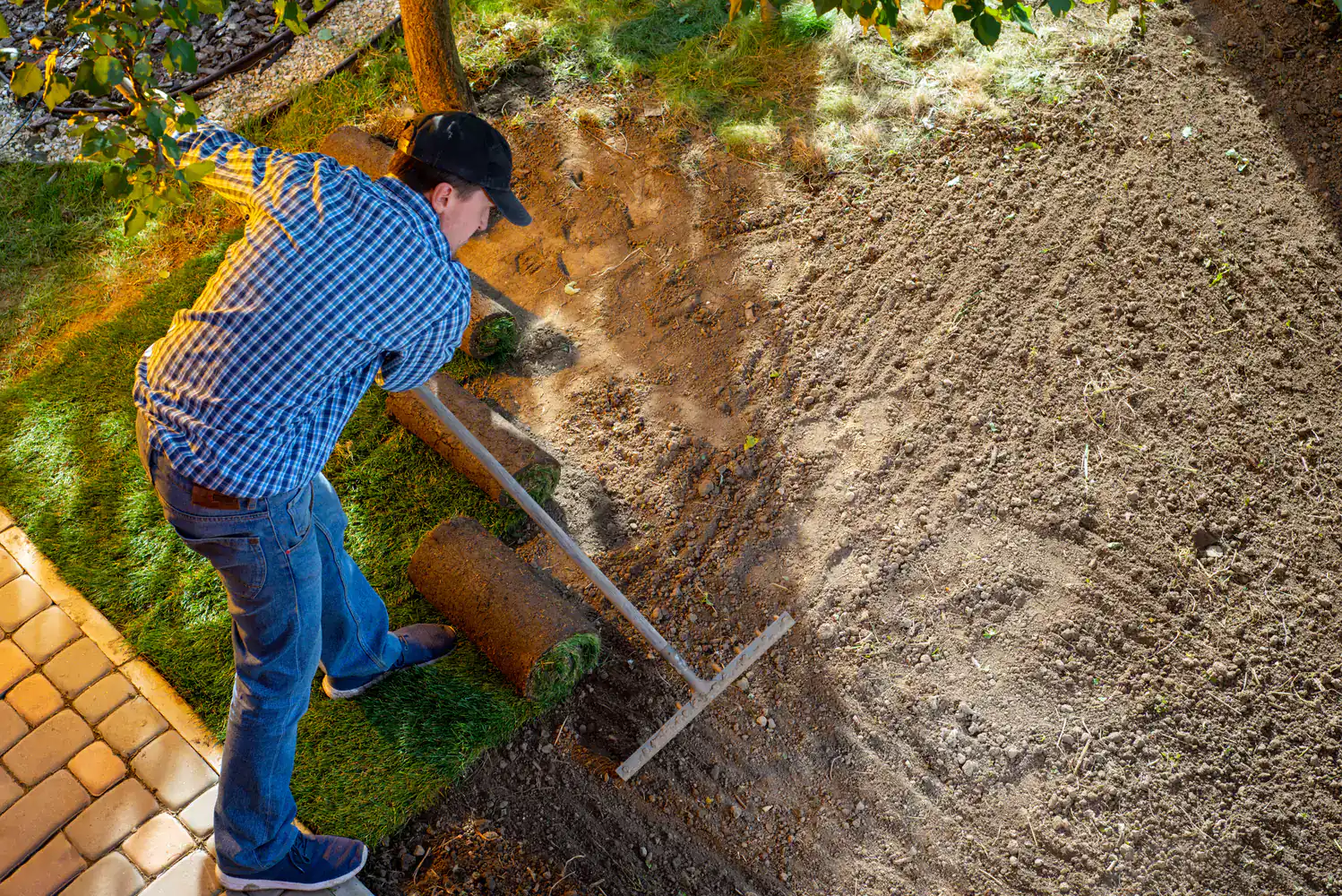
Once the ground is ready properly graded, amended, and prepared the right installation method gets selected for your property. For larger Dix Hills lots, seeding is often the most effective approach: a single-pass application of seed, fertilizer, and protective mulch that establishes a dense lawn at a fraction of pricing. For smaller areas or specific sections, other methods may be more appropriate. The decision is based on your property, your timeline, and what will actually work not a one-size approach.
Timing is built into the process, not an afterthought. On Long Island, late August through October is the optimal window for cool-season grass installation. The soil is still warm, the air is cooling, and fall rains support establishment without the irrigation demands of a summer seeding. After installation, you’ll get clear guidance on watering, mowing height, and first-year care because the establishment phase is where most lawns succeed or fail, and you should know exactly what to do.
Ready to get started?
New lawn installation in Dix Hills isn’t a simple flat-ground seed job. The properties here are large half-acre to full-acre lots are common and the terrain is genuinely hilly. That means grading work, drainage planning, and slope management are often part of the scope before installation even begins. If you’re coming off a construction project, there’s a good chance your topsoil was stripped during the build. Bringing in quality topsoil to a minimum depth of four to six inches is frequently necessary to give new seed a real root environment to work with.
Our new lawn installation service covers the full scope: site assessment, grading evaluation, topsoil where needed, seed variety selection matched to your specific conditions, installation by the method that fits your property, erosion control during establishment, and post-installation guidance. For Dix Hills properties with large open areas, seeding delivers strong results efficiently. For properties with specific sections shaded areas, slopes, or spots with different soil profiles the approach gets adjusted accordingly.
Suffolk County’s groundwater protection regulations also factor into how new installations are handled here. The county relies entirely on groundwater for its drinking water supply, and there are specific rules around fertilizer and pesticide application near sensitive recharge areas. A professional installer who knows these regulations handles the job correctly from the start which matters in a community where doing things right isn’t optional.
The honest answer is that it depends on the scope of your specific property. For a Dix Hills lot which tends to run large, often half an acre or more new lawn installation from bare ground can range from $5,000 to $20,000 or more depending on the method, how much grading work is needed, whether topsoil has to be brought in, and the total square footage being installed.
The biggest variable in Dix Hills is usually the condition of the ground itself. New construction sites and post-renovation properties often need significant soil preparation before any seed goes down, and that work affects the total project cost. The best way to get an accurate number is a site evaluation, because what’s under your ground matters as much as what goes on top of it.Both methods work well when they’re matched to the right situation. That’s appealing after a long construction project when you want the property finished fast. The tradeoff is cost, especially on the larger lots common in Dix Hills.
Seeding particularly seeding is significantly more cost-effective on large areas and produces a lawn that’s genetically matched to your specific soil and climate conditions from the start. The establishment period is longer, typically 60 to 90 days before the lawn is fully filled in, but the end result on a properly prepared site is a dense, healthy lawn that holds up well over time. For most Dix Hills properties coming off new construction or a major renovation, seeding is the stronger long-term value. The right answer for your specific property depends on your timeline, your budget, and the condition of your ground which is exactly what a site evaluation is designed to determine.
Dix Hills has more soil variability than most communities in Suffolk County, and the terrain amplifies the challenge. The ground near Wolf Hill Road tends to be sandier it drains fast, which can work against new seed establishment if irrigation isn’t managed carefully. Near Jericho Turnpike and in lower-lying sections, the soil is heavier and more compacted, which restricts root penetration and water movement. Add the rolling hills throughout the hamlet and you have a situation where water follows grade, drainage patterns vary significantly from one section of a property to another, and a flat-ground approach simply doesn’t apply.
On new construction and post-renovation sites, the problem is compounded. Heavy equipment compacts the subsoil to the point where seeds can’t establish meaningful root systems without significant soil preparation first. Topsoil gets stripped during construction and often isn’t replaced. What’s left is frequently not a suitable growing medium without amendment. Understanding these conditions before installation not after is the difference between a lawn that establishes correctly and one that comes in thin, patchy, or washes out on the first slope. This is why a site assessment is the starting point, not an optional add-on.
Late August through October is the optimal window for new lawn installation on Long Island, and that holds true for Dix Hills specifically. Cool-season grasses which are the standard for this region germinate best when soil temperatures are still warm from summer but air temperatures are starting to drop. That combination allows the seed to germinate quickly while reducing the heat stress that kills off new seedlings in midsummer installations.
Fall installations in Dix Hills also benefit from the area’s typically reliable September and October rainfall, which supports establishment without the heavy irrigation demands of a summer seeding. The lawn goes into its first winter with a developing root system and comes back strong in spring. Spring installations are possible, but they face real headwinds aggressive crabgrass and broadleaf weed competition that goes after new seedlings, and the risk of a hot, dry summer arriving before the lawn is fully established. If you’re planning a new lawn installation in Dix Hills and you have any flexibility on timing, fall is the right call. If your project wraps up in spring or early summer, that conversation is worth having early so the plan accounts for the conditions you’ll be working with.
In most cases on new construction sites in Dix Hills, yes. Construction activity strips the existing topsoil the biologically active, nutrient-rich layer that grass roots need to establish and replaces it with compacted subsoil, fill material, and sometimes buried construction debris. Seeding directly onto that surface produces poor results at best. The seed may germinate, but without a proper growing medium, the roots can’t penetrate, water doesn’t move correctly, and the lawn comes in thin and struggles from the start.
The general standard for a new lawn installation is a minimum of four to six inches of quality topsoil across the planting area. In Dix Hills, where properties often have significant grade changes, that topsoil application also needs to account for proper slope and drainage you don’t want to add topsoil in a way that creates new drainage problems or directs water toward the foundation. Part of the site evaluation process is determining exactly how much topsoil is needed, where it needs to go, and how the grading should be set before installation begins. Getting this right at the start is what separates a lawn that thrives from one that requires a redo within a few seasons.
For a seed-based installation including seeding initial germination typically begins within 7 to 21 days depending on the seed variety, soil temperature, and moisture conditions. By 30 to 45 days after a fall installation in Dix Hills, you should have visible, meaningful coverage across the seeded area. Full establishment meaning a dense, rooted lawn that can handle normal foot traffic and its first mowing generally takes 60 to 90 days from installation.
The establishment period is when most new lawns either succeed or fail, and the biggest factor is what happens during those first 60 days. Watering consistency is critical in the early weeks the seed needs to stay moist but not saturated. Mowing too early, too short, or with a dull blade can set back a new lawn significantly. Traffic on a newly seeded area before the roots are established causes damage that shows up weeks later. We provide specific establishment guidance as part of every new installation what to water, when to mow, what to watch for because the process doesn’t end when the seed goes down. For Dix Hills properties with slopes or drainage variation, that guidance is tailored to your specific site conditions, not a generic handout.
Useful Links
Other Services we provide in Dix Hills