
Hear from Our Customers
Compacted soil is quiet. It doesn’t announce itself it just slowly chokes out everything you’ve been investing in. Fertilizer sits on top instead of reaching roots. Water runs off instead of soaking in. Grass thins out in patches and you keep reseeding the same spots every fall, wondering why nothing sticks.
That cycle is almost always a compaction problem, and it’s extremely common in Lake Grove. The glacial soils across central Suffolk County a mix of sandy loam and heavier clay-prone layers left behind by the last ice age compact under regular mowing equipment, foot traffic, and Long Island’s annual freeze-thaw cycles. Year after year, without aeration, the damage stacks up quietly beneath the surface.
Once that compaction is relieved with proper core aeration, the difference shows up fast. Fertilizer reaches the root zone the way it’s supposed to. Grass fills in thicker. Color improves. And the lawn you’ve been maintaining for years finally starts performing like it should especially heading into fall, when Lake Grove’s cool-season grasses are at their most receptive to recovery and growth.
We’ve been working in Suffolk County since 1987. That’s not a number on a website it’s nearly four decades of learning exactly how Long Island lawns behave, what the soil does in a dry August, and what it takes to actually get results in this specific climate and geography. We’ve watched a lot of companies come and go in that time. We’re still here, still on the road from Port Jefferson Station to Lake Grove and everywhere in between.
Every job is handled by NYSDEC-licensed pesticide professionals. Not seasonal labor. Not a crew supervised by a single off-site license holder. The person on your Lake Grove property is certified, accountable, and trained to assess what your lawn actually needs before any equipment touches the ground. Add in a fleet of five fully wrapped trucks, custom-blended fertilizer made specifically for our programs, and hydraulic aerators that outperform anything available at a rental counter and you have a company that looks and operates exactly the way a $700,000 property deserves.
It starts with an assessment, not an assumption. Before any equipment rolls out, a licensed professional looks at your property your soil type, your grass variety, your drainage patterns, where it’s thinning, where it’s holding water. Lake Grove lawns vary more than people expect. A property in the Brittany Hills area on a larger lot behaves differently than a tighter lot closer to the Middle Country Road corridor, and a program that ignores those differences isn’t really a program.
From there, we schedule your aeration within the optimal window for Lake Grove’s cool-season grasses typically late August through October. That timing matters. Aerating during this window means your grass roots are actively expanding heading into fall, and the newly opened soil channels give them room to do exactly that. It also means any fertilizer applied after aeration and we use a custom-blended formula, not an off-the-shelf product goes down before Suffolk County’s November 1 fertilizer application ban takes effect. Missing that window isn’t just a scheduling inconvenience. It means waiting until April to fertilize, and losing months of recovery time your lawn won’t get back.
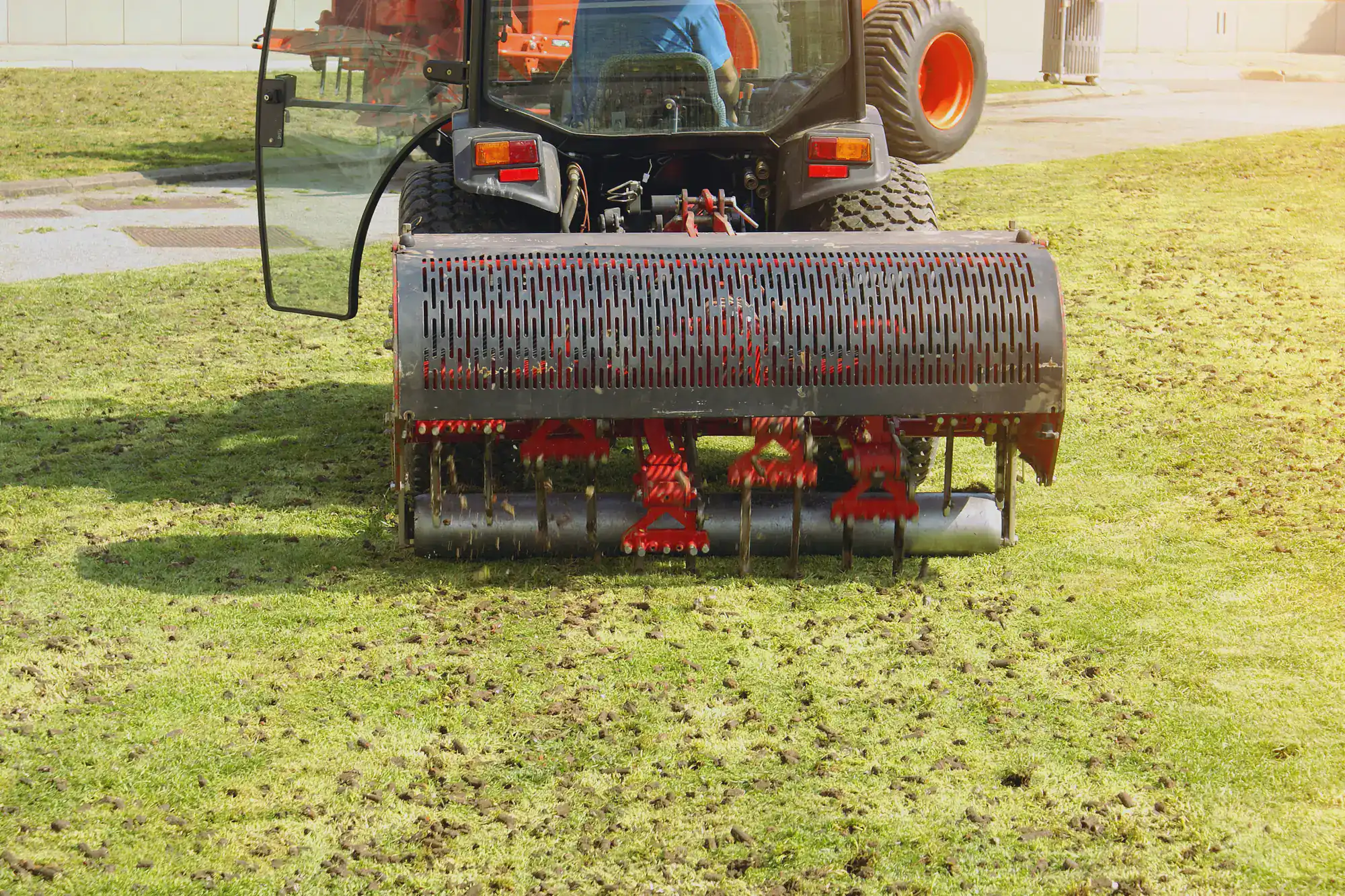
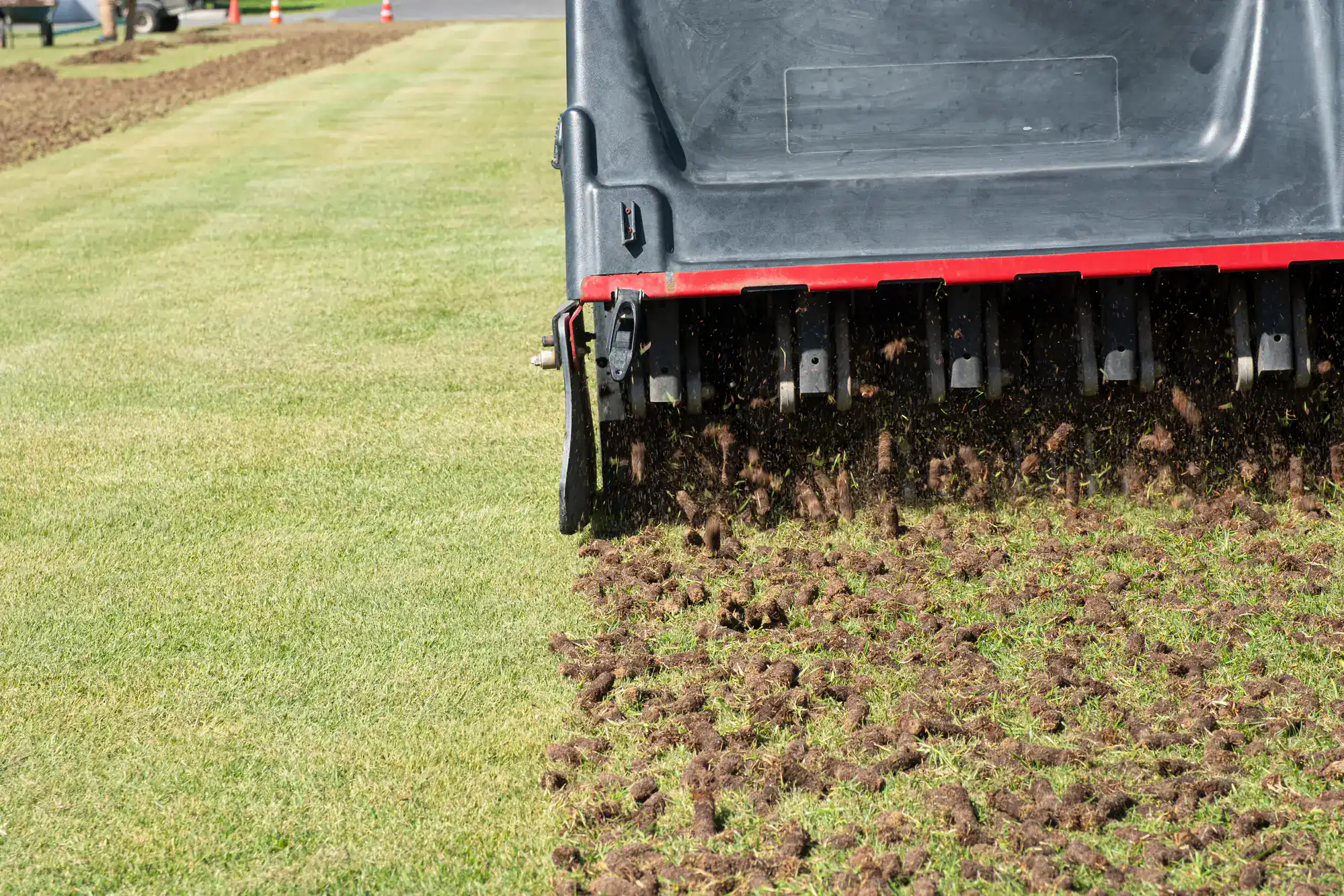
The aeration itself is done with hydraulic core aerators professional-grade machines that pull clean plugs at consistent depth, even in compacted or resistant soil. When the job is done, you’ll see the cores on the surface. That’s normal, and it’s a good sign. Those plugs break down within a couple of weeks and return organic matter to the soil. What you won’t see is the single-pass, seeds-thrown-down-and-gone approach that shows up in reviews for budget operators in this area. That’s not how we work.
Ready to get started?
We don’t sell packages off a menu. Every program is assessed and built around your specific property. That said, here’s what’s consistently included when we service a Lake Grove lawn: a pre-job property assessment by a licensed professional, hydraulic core aeration with equipment that actually penetrates compacted Suffolk County soil, and the option to pair aeration with overseeding using our hydraulic seeders for bare or thinning areas. If your lawn needs more than aeration nutgrass control, bentgrass removal, or a full restoration from seed that gets diagnosed and addressed as part of the same conversation.
Pricing for professional core aeration in the Lake Grove area typically runs in the range of $150 to $350 for a residential property, depending on lawn size and condition. That’s a fraction of what a full lawn renovation costs and a full renovation is often what happens when compaction goes unaddressed for too long. For a home with a median listing price pushing $733,000 in this market, protecting that investment with annual or biennial professional aeration is straightforward math.
One thing worth knowing: Suffolk County’s fertilizer application ban runs November 1 through April 1. Any fertilization that’s part of your fall aeration program needs to be completed before that deadline. We plan every fall schedule with that cutoff in mind, so your lawn gets the full benefit of the treatment window not a rushed job squeezed in at the last minute.
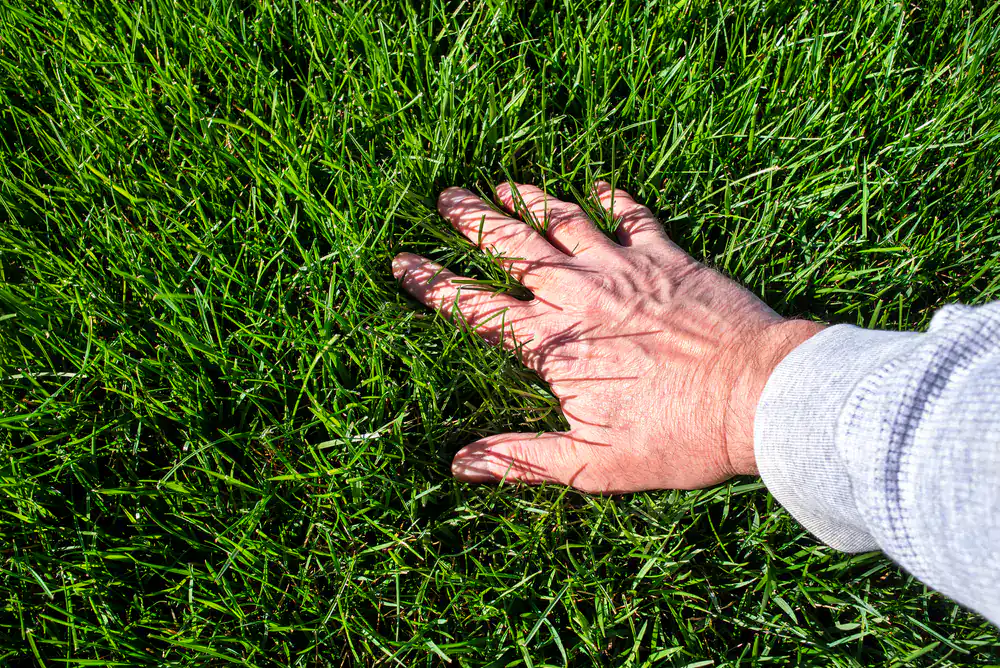
For Lake Grove lawns, fall is the right window specifically late August through October. The cool-season grasses that dominate this part of Suffolk County, including tall fescue, Kentucky bluegrass, and perennial ryegrass, are in their most active growth phase during this period. Soil temperatures are still warm enough to support root expansion, air temperatures are dropping, and the grass is primed to take full advantage of the channels that aeration opens up.
There’s also a regulatory reason to prioritize fall in Lake Grove. Suffolk County’s fertilizer application ban kicks in on November 1 every year, which means any fertilization paired with your aeration needs to happen before that date. Waiting until late October cuts it close. Most Lake Grove homeowners who call in September get the timing right. Those who wait until November are already past the window. Spring aeration is possible, but it conflicts with pre-emergent weed control applications aerating after you’ve put down a pre-emergent breaks the weed barrier and reduces its effectiveness significantly.
The simplest test you can do at home is the screwdriver test. After a good rain or a full watering cycle, take a standard 6-inch screwdriver and push it straight into the lawn. If it won’t go 3 inches without real resistance, your soil is compacted. That’s the physical wall your grass roots are hitting every time they try to grow deeper.
Beyond the screwdriver test, look at how your lawn behaves. If water pools or runs off quickly after rain instead of soaking in, that’s a compaction sign. If you’re fertilizing every year but the color and density aren’t improving the way they should, compaction is likely the reason nutrients can’t reach the root zone when the soil is too dense to absorb them. In Lake Grove, where lawns sit on glacial-origin soils that naturally compact under mowing equipment and seasonal freeze-thaw cycles, this is a common situation. It doesn’t mean the lawn is ruined. It means it needs aeration before anything else you’re doing can actually work.
Core aeration removes actual plugs of soil from the ground typically 2 to 3 inches deep and about half an inch in diameter. Those plugs leave behind open channels that allow air, water, and nutrients to penetrate directly into the root zone. The cores you see left on the surface after the job break down naturally within a couple of weeks and return organic material to the soil. It’s a genuinely corrective process.
Spike aeration, by contrast, uses solid tines to punch holes without removing any material. The problem is that pushing soil aside without removing it can actually increase compaction in the surrounding area over time. It’s a lighter, faster process which is why some budget operators use it but it doesn’t address the underlying problem the way core aeration does. For Suffolk County lawns dealing with real compaction from clay-heavy glacial soils and years of mowing traffic, spike aeration is not a meaningful solution. Core aeration is the professional standard, and it’s what we use on every job.
Usually, yes and here’s why. Bare spots that return in the same locations year after year are almost always a symptom of something happening below the surface, not just on it. Compacted soil prevents grass roots from establishing deeply, which makes those areas vulnerable to drought stress, foot traffic, and competition from weeds. You can reseed those spots every fall and get temporary results, but without addressing the compaction underneath, the grass never develops the root system it needs to survive long-term.
When aeration is paired with overseeding which we can do using hydraulic seeders in the same visit the results are significantly better than overseeding alone. Seed dropped into aeration holes has direct soil contact, moisture retention, and access to nutrients in a way that surface-broadcast seed on compacted ground simply doesn’t. If you’ve been fighting the same bare patches along the side yard or in high-traffic areas of your Lake Grove lawn for a few seasons, aeration and overseeding together is almost certainly the right prescription, not another bag of seed.
For most residential lawns in Lake Grove and the surrounding Suffolk County area, once a year is the right frequency particularly for lawns that see regular mowing traffic, have children or pets using them, or are dealing with the heavier, more compaction-prone soil layers common in this part of Long Island. Annual fall aeration keeps the soil from reaching the point where compaction becomes a serious problem, and it keeps every other investment you’re making in your lawn fertilizer, overseeding, irrigation working efficiently.
If your lawn has been neglected for several years or is showing significant signs of compaction and thinning, you may benefit from two rounds in the first year one in spring and one in fall to accelerate recovery. After that, annual fall aeration is typically sufficient to maintain what you’ve built. Lawns with lighter, sandier soil profiles and minimal traffic can sometimes stretch to every other year, but in a fully developed, high-density suburban village like Lake Grove where lawns are in constant use, annual aeration is the professional recommendation.
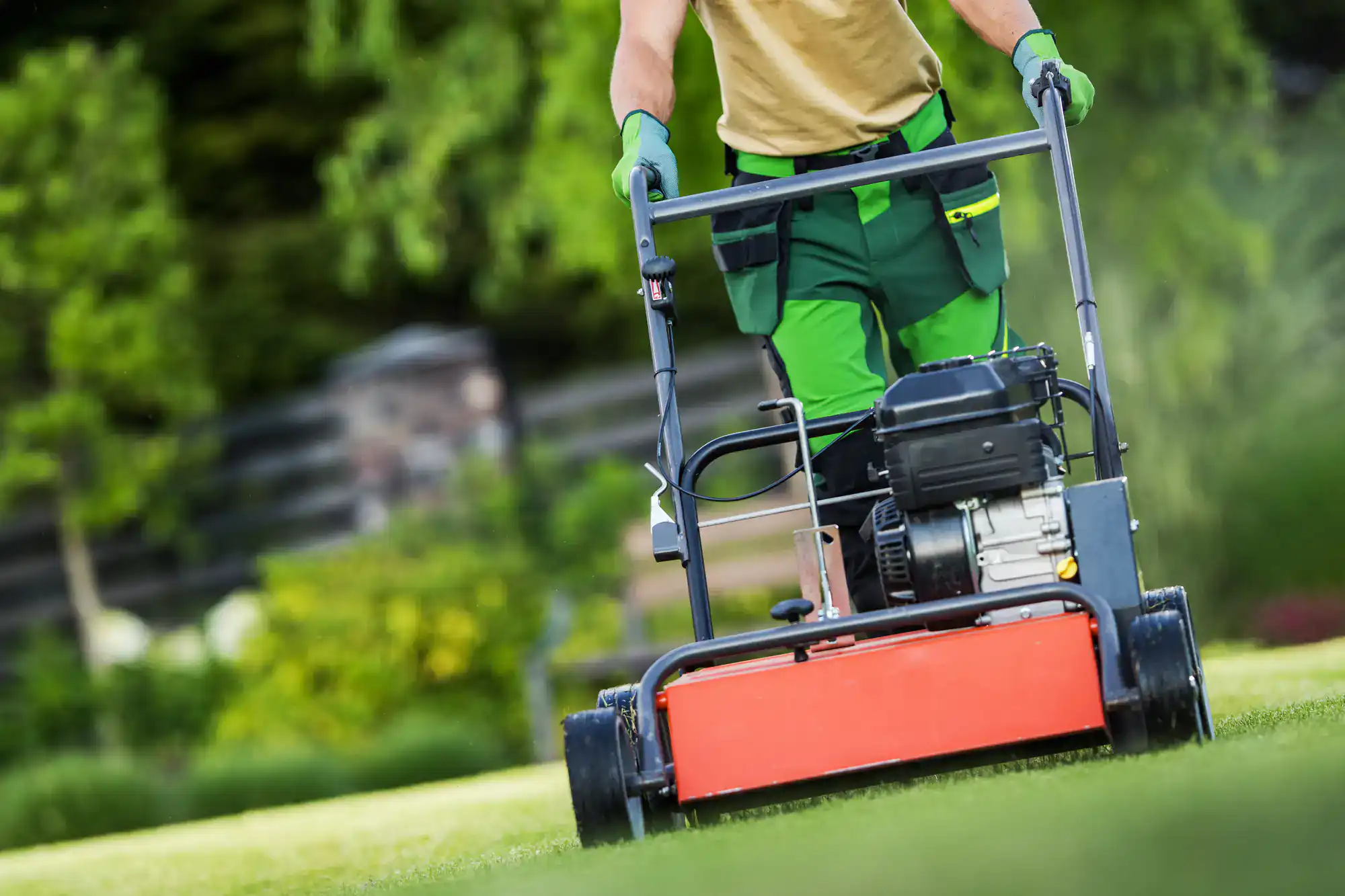
Rental aerators are almost always light-duty consumer machines walk-behind units that work reasonably well on soft, healthy soil but struggle to achieve consistent tine depth in compacted or clay-heavy ground. That’s a real problem, because compacted soil is exactly the condition you’re trying to treat. If the machine can’t penetrate deeply and uniformly, you’re going through the motions without getting the result.
We use hydraulic core aerators professional-grade equipment that delivers consistent depth and clean plug extraction regardless of soil resistance. Beyond the equipment difference, every job is handled by a licensed pesticide professional who assesses your property before the machine touches the ground. We know what your lawn actually needs, we know the Suffolk County fertilizer ban timeline, and we know how to pair aeration with overseeding or fertilization in a way that produces real results. The cost difference between a rental run and a professional service is real, but so is the gap in outcomes. For a Lake Grove homeowner with a property in the $700,000 range, the question isn’t whether professional aeration is worth the price it’s whether you can afford to keep spending on a lawn that isn’t responding because the foundation work was never done right.
Useful Links
Other Services we provide in Lake Grove