Hear from Our Customers
Most Yaphank lawns that look thin, patchy, or dull aren’t lacking fertilizer they’re lacking access. When soil gets compacted, roots can’t pull in water, air, or nutrients no matter how much you put down. Core aeration fixes that by physically removing plugs of soil and opening up channels that let everything reach the root zone the way it’s supposed to.
For properties in Yaphank, this matters more than people realize. A lot of the land here sits on a mix of sandy Pine Barrens loam and heavier clay zones and those two soil types compact and drain very differently. Sandy soil can look fine on the surface but become surprisingly firm under mowing equipment over time. Clay-influenced areas hold compaction hard and don’t release it on their own. If your lawn has been fertilized regularly and still isn’t responding, compaction is usually the reason nobody told you about.
There’s also the timing factor. Suffolk County’s fertilizer ban kicks in November 1st, which means if you want to aerate and fertilize in the same season the most effective combination for cool-season grass recovery you’ve got a window that closes fast. Getting aeration done right, with the right equipment and a licensed professional, means that window actually works in your favor instead of slipping by.
We’ve been treating lawns across Suffolk County since 1987. That’s not a tagline it means our team has spent nearly four decades working through the exact soil conditions, seasonal patterns, and local quirks that affect properties in Yaphank and the surrounding Brookhaven area. The Carmans River corridor, the Pine Barrens-adjacent lots, the newer construction compaction from developments like Country Pointe Meadows none of it is unfamiliar territory to us.
Every job is handled by a licensed pesticide professional. Not a seasonal crew member supervised by someone off-site an actual licensed applicator on your property, accountable for what gets applied and how. That’s a New York State requirement that not every company in this market actually meets, and it matters especially in a community that sits above a sole-source aquifer supplying drinking water to millions of Long Islanders.
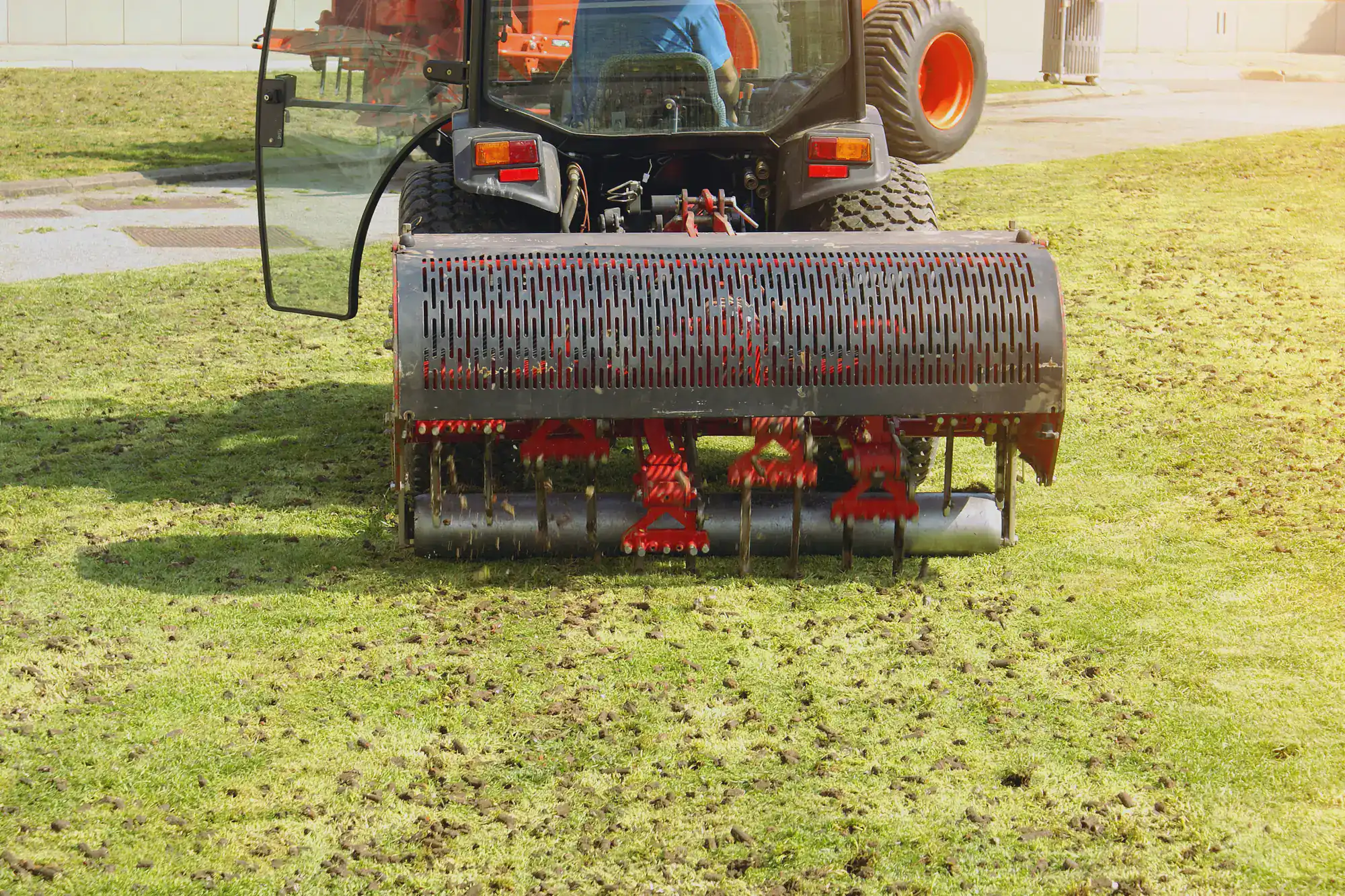
Our equipment is professional-grade hydraulic aerators not the light-duty rental machines that can’t reach the compaction layer in heavier soil. We run five fully wrapped trucks on the routes. Online invoice payment is available. We’re a real operation that has been showing up in this county for a long time.
It starts with a look at your actual lawn not a generic checklist. Soil type, compaction level, thatch depth, grass variety, shade patterns, and drainage all factor into what we recommend. A Yaphank property along a wooded corridor near Mill Road is going to have different needs than a newer home off William Floyd Parkway where construction equipment compacted the soil before the sod ever went down. The assessment drives everything.
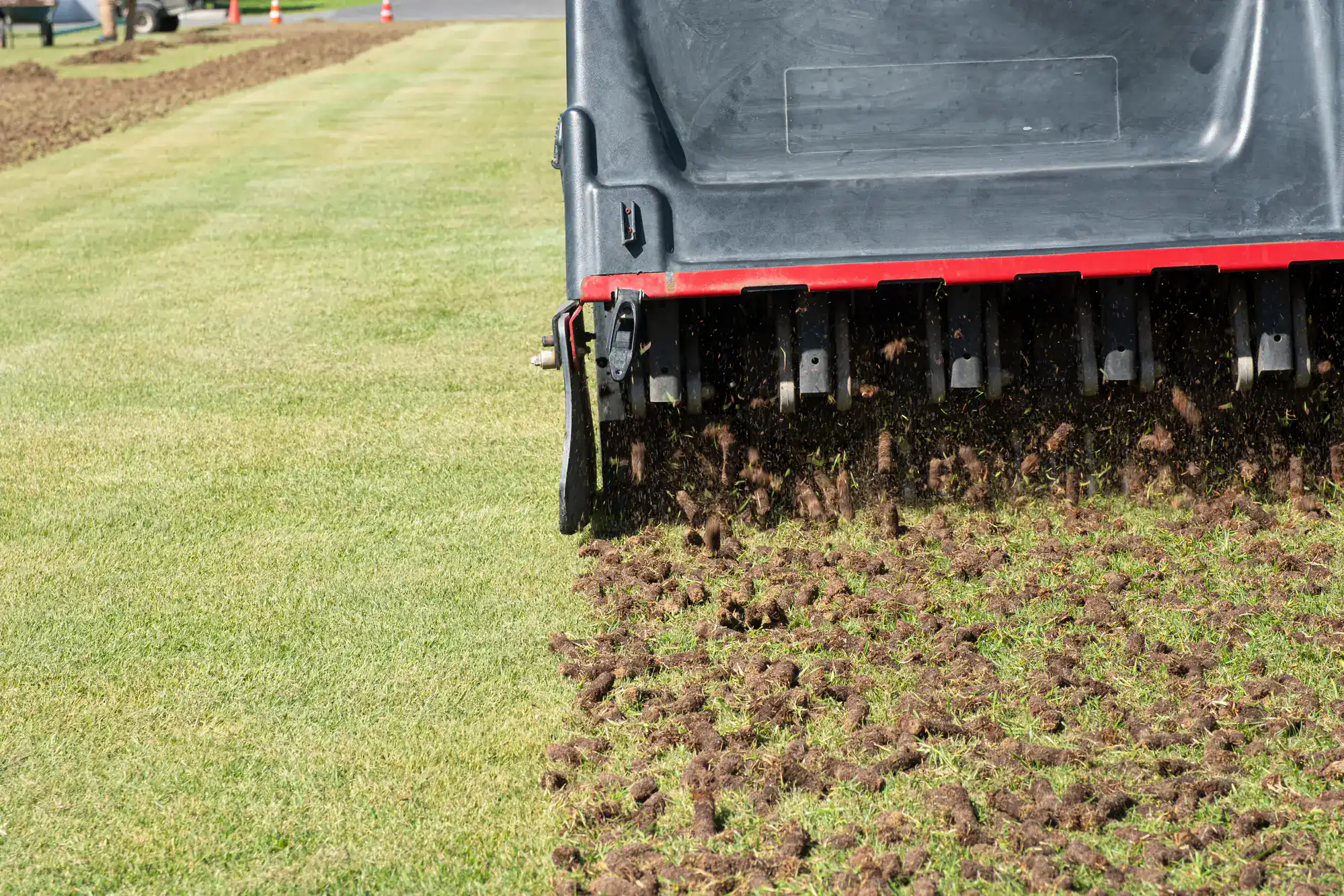
From there, our hydraulic core aerator goes to work. It pulls clean plugs from the soil typically two to three inches deep across the full lawn area. Those plugs break down on the surface over a couple of weeks and return organic matter to the soil. The holes they leave behind are the access points your grass roots have been waiting for: direct channels for water, air, and nutrients to reach where they actually do something.
If overseeding is part of the plan, it happens immediately after aeration while the soil is open and receptive. Fall is the right window for this in Yaphank soil temperatures are still warm, the grass is in its strongest recovery phase, and you’re ahead of the November 1st fertilizer cutoff. We coordinate the full sequence so nothing gets wasted and nothing gets missed.
Ready to get started?
Professional core aeration for a residential property in Yaphank typically runs in the range of $75 to $300 depending on lawn size, soil conditions, and whether overseeding is added. Renting an aerator yourself runs $75 to $100 a day but consumer machines don’t match the penetration depth of hydraulic professional equipment, and they struggle in clay-influenced soil. The gap in results is real, and it shows in the lawn within a season.
What we bring to a Yaphank property goes beyond the equipment. Every program we build is customized around your specific lawn grass type, soil profile, compaction severity, and what the property needs to recover and hold. The custom-blended fertilizer we use is formulated specifically for Long Island soil chemistry, not pulled from a national supplier’s catalog. For Yaphank properties on highly permeable sandy loam, that matters because nutrients need to be delivered efficiently before they leach past the root zone.
Suffolk County’s fertilizer ban $1,000 fine for applications between November 1st and April 1st creates a hard deadline that makes scheduling earlier in fall the smart move. Our team plans capacity in advance, and the slots that allow for a full aeration-and-fertilization program before the ban fill up. If you’re thinking about it, the time to act is before October, not after.
For most Yaphank lawns, late August through mid-October is the window that actually delivers results. The cool-season grasses that dominate properties here fescue, Kentucky bluegrass, perennial ryegrass recover fastest when soil is still warm but air temperatures have started to drop. That combination triggers aggressive root growth, which means the open channels left by aeration get colonized quickly and the lawn fills in before winter.
There’s also a regulatory factor specific to Suffolk County that makes fall timing more urgent than most homeowners realize. The county’s fertilizer ban takes effect November 1st, and violations carry a $1,000 fine. If you want to aerate and follow up with a fertilizer application in the same program which is the most effective approach for lawn recovery that window is roughly eight to ten weeks long. Spring aeration is possible, but it conflicts with pre-emergent weed control timing and generally produces weaker results for cool-season turf. Fall is the play, and it goes fast in Yaphank.
There are a few things to look for that are pretty reliable indicators. If water puddles on your lawn after rain instead of soaking in, that’s compaction. If you push a screwdriver into the soil and it stops at two inches or less, that’s compaction. If your grass looks thin and tired despite regular watering and fertilizing, and nobody’s ever aerated the lawn that’s almost certainly compaction.
Yaphank properties have a few specific compaction triggers worth knowing about. Lots with significant tree coverage accumulate organic debris that can build up into a thatch layer over time, and mowing equipment following the same paths season after season creates compaction channels that compound the problem. If your home was built as part of a newer development Country Pointe Meadows, or anywhere near the Boulevard corridor construction equipment likely compacted the soil before your lawn was ever established. New construction lawns in Yaphank are among the most common candidates for aeration, and they often struggle for years before a homeowner realizes what the underlying issue actually is.
Core aeration physically removes plugs of soil from the ground typically two to three inches deep leaving open channels that allow air, water, and nutrients to reach the root zone directly. Spike aeration just pokes holes without removing anything, which can actually increase compaction in the areas around each spike by pushing soil sideways rather than pulling it out. For lawns with real compaction problems, spike aeration is largely ineffective.
This distinction matters more in variable soil conditions like those found across Yaphank. In clay-influenced zones, spike aeration does almost nothing the soil is dense enough that the displaced material just closes back in. Core aeration with a hydraulic machine that achieves proper penetration depth is the only method that actually breaks the compaction layer and gives roots room to move. Consumer-grade aerators including most rental machines often can’t reach the depth needed to address compaction in heavier soils. That’s the functional difference between renting a machine and hiring a professional with the right equipment.
Yes, and it’s one of the most direct benefits for properties where water sits on the surface after rain. When soil is compacted, it loses its ability to absorb water at a normal rate the surface essentially becomes semi-impermeable, so rainfall and irrigation run off instead of soaking in. Core aeration reopens the soil structure, which restores infiltration and reduces pooling.
For Yaphank homeowners, this connects to something bigger than just a soggy lawn. The hamlet sits within the Long Island Pine Barrens ecosystem, which serves as a critical recharge area for the sole-source aquifer that supplies drinking water across the region. Proper water infiltration on residential properties supported by healthy, aerated soil is part of how that recharge actually works at a neighborhood level. A lawn that absorbs water instead of shedding it isn’t just better for your grass. It’s functioning the way the land under it was designed to function. Aeration won’t fix a drainage problem caused by grading or infrastructure, but for lawns where compaction is the culprit, it’s the right first step.
Aeration and overseeding together is the most effective combination for filling in thin or bare areas, and the timing works well in Yaphank’s fall window. Aeration opens the soil right before seed goes down, giving new grass direct contact with the root zone instead of sitting on a compacted surface where germination rates drop significantly. The two services complement each other in a way that neither does as well on its own.
The key is doing it in the right order and at the right time. Seed goes down immediately after aeration while the channels are open and soil temperatures are still warm enough to support germination typically above 50°F, which holds through October in Suffolk County most years. Waiting too long into fall reduces germination success because the ground cools faster than the grass can establish. If overseeding is part of your plan, it needs to happen before the November fertilizer ban closes the window on the follow-up application that helps new seed establish. We sequence the full program so the timing works and the results hold through to spring.
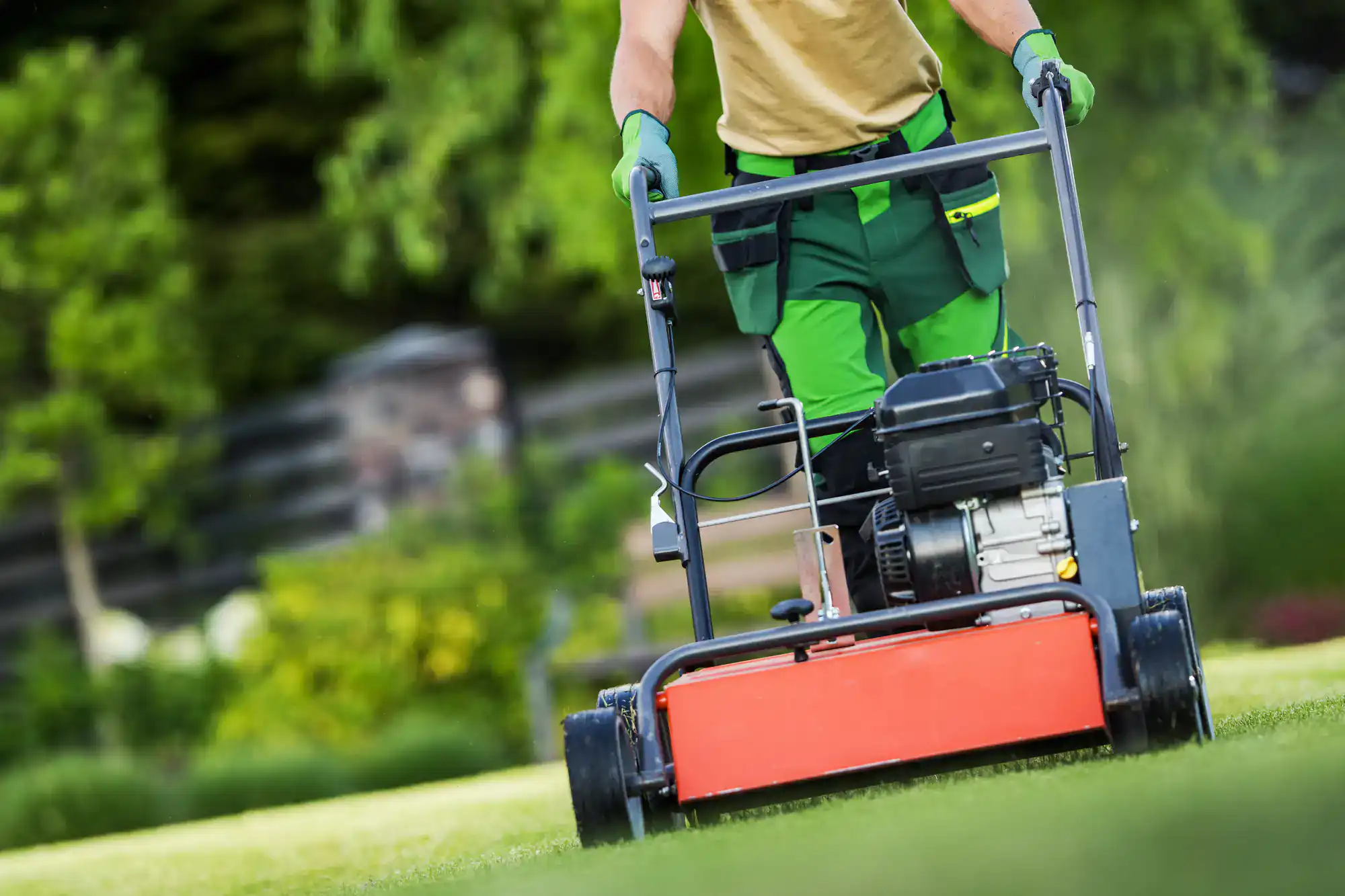
Renting an aerator is a reasonable idea on paper the machines are available locally, the day rate is around $75 to $100, and the job looks straightforward. In practice, the results are often disappointing, and here’s why: consumer aerators are built for light residential use. They don’t have the weight or hydraulic pressure to penetrate deeply enough in compacted or clay-influenced soil, and they frequently skip or produce shallow, inconsistent cores that don’t open the soil the way a professional machine does. You can spend a full Saturday on it and barely scratch the compaction layer.
There’s also the assessment piece that a rental machine can’t provide. Knowing how deep to go, where the compaction is worst, whether overseeding makes sense, what the soil’s nutrient situation looks like, and how to time everything around Suffolk County’s fertilizer ban that’s the part of the job that actually determines whether aeration works or just looks like it happened. We bring the equipment and the knowledge together. For a Yaphank property where soil conditions vary and the fall window is short, that combination is what gets you a lawn that actually responds not just a lawn that got poked.
Useful Links
Other Services we provide in Yaphank