
Hear from Our Customers
Middle Island is one of the few places on Long Island where you can look out your window and see fairways from Spring Lake Golf Club or Middle Island Country Club right down the road. That daily comparison raises the bar and a generic fertilizer program picked up from the Walmart on Middle Country Road isn’t going to clear it. The soil here is sandy, fast-draining, and naturally acidic from decades of Pine Barrens influence. Nutrients wash right through before your grass has a chance to use them. That’s not a you problem. That’s a soil problem and it needs a program built around it.
When a lawn in Middle Island gets treated right, the difference shows up fast. The turf fills in, the color holds through summer, and the thin patches that kept coming back every year start to disappear. Core aeration in the fall opens up the root zone so water and nutrients actually reach the grass instead of running off. Overseeding with the right cool-season blend bluegrass, rye, and fescue calibrated for Long Island’s climate gives you density that lasts.
What you end up with is a lawn that doesn’t just look better for a week after a treatment. It builds on itself. Each season, it gets thicker, more resilient, and easier to maintain. That’s what a program designed for Middle Island’s actual conditions delivers not a template, not a national chain’s one-size approach, but real results grounded in how this soil actually behaves.
We’ve been treating lawns in Suffolk County since 1987, and we’ve spent decades working the same soil in Middle Island and the surrounding communities. That’s not a tagline it’s a track record you can actually verify. While national chains rotate technicians and app-based services send whoever’s available, we’ve been working in Middle Island long enough to know exactly what your lawn needs and when it needs it.
Every technician is a licensed NYS DEC pesticide applicator. That matters here more than most places. Middle Island sits directly over Long Island’s sole-source aquifer the only drinking water source for 2.8 million people and the Pine Barrens surrounding the hamlet are a federally recognized recharge zone. Applying the wrong product at the wrong rate isn’t just bad for your lawn. In this community, it’s a real environmental issue. Our licensed professionals know the difference.
The fleet of five fully wrapped trucks you’ll see on the roads around Golf Course Estates and Longwood Road isn’t just branding. It’s accountability. You know exactly who’s on your property, and so does every neighbor on the block.
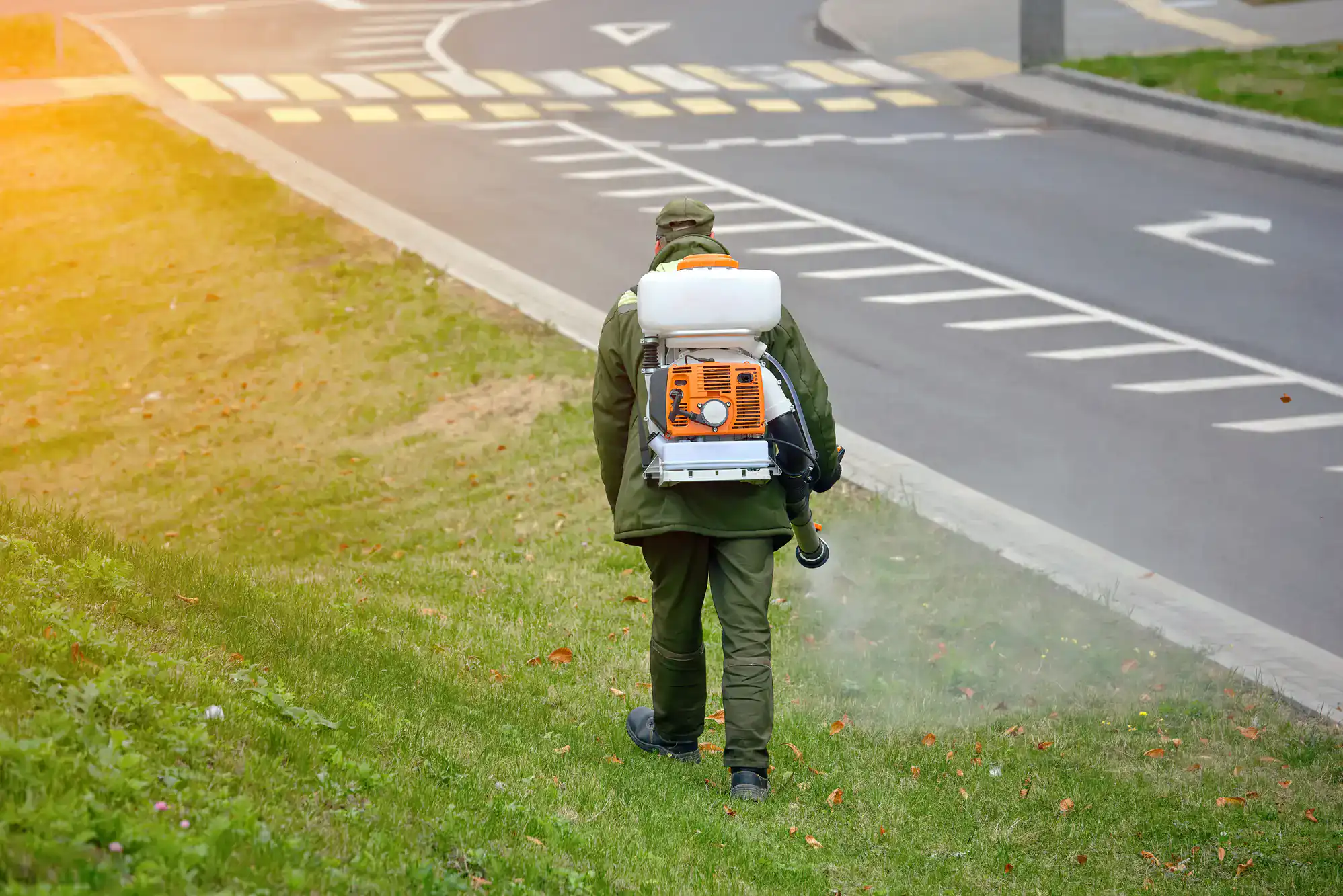
It starts with your lawn specifically not a clipboard checklist that gets applied to every property on the route. We look at what’s actually happening: the grass type, the soil condition, the sun and shade coverage, the weed and pest pressure, and whether past treatments have left any gaps. A lot of Middle Island properties back up to wooded Pine Barrens land, which means shaded edges that need a different approach than the open, sun-exposed areas closer to the street.
From there, we build a custom program around what your lawn actually needs. Fertilizer applications use our proprietary blend formulated specifically for Long Island’s sandy, nutrient-leaching soil so you’re not just putting product down that washes away before the roots can absorb it. Timing matters too. Suffolk County’s fertilizer blackout runs from November 1 through April 1, so the program is structured to work within that window and make every application count.
Fall is the most important season for Middle Island lawns. That’s when core aeration and overseeding happen hydraulic aerators pulling deep, consistent cores, followed by seeding with a blend suited to Long Island’s cool-season climate. The work done in fall is what determines how your lawn looks the following spring. Our schedule is built around that reality, not around what’s convenient for the calendar.
Ready to get started?
Every lawn we treat in Middle Island gets a program shaped around what’s actually going on in that yard. That includes fertilization with a custom-blended product made specifically for us not a commercial off-the-shelf formula calibrated for the fast-draining, acidic soil profile that defines this part of Suffolk County. Lime applications are a standard part of the program here, not an add-on, because Pine Barrens-adjacent soil regularly runs below the pH range where grass can actually absorb nutrients.
Weed control covers the usual suspects crabgrass, broadleaf weeds but also the ones that generic programs miss entirely, like nutsedge (nutgrass), which spreads fast in Middle Island’s moist sandy soil during summer. Grub control is built into the program as well. Japanese beetle pressure is consistent across this area, and the damage they cause to root systems in late summer is one of the most common reasons lawns in this ZIP code fall apart heading into fall.
For lawns that are past the point of treatment whether from grub damage, years of neglect, or a new build starting from bare dirt we also handle full new lawn installation from seed. And all of it is done by licensed NYS DEC pesticide applicators, in full compliance with Suffolk County’s fertilizer regulations and New York State’s phosphorus restrictions. The program is built for this place, not adapted from somewhere else.
The most common reason is soil pH. Middle Island’s proximity to the Pine Barrens means the soil here tends to be naturally acidic often significantly below the 6.2 to 7.0 range where cool-season grasses can actually absorb nutrients. When the pH is off, it doesn’t matter how much fertilizer you apply. The grass physically cannot take it up, and the product either sits uselessly or washes through the sandy soil into the groundwater.
The fix is lime applied consistently until the pH stabilizes combined with a fertilizer that’s formulated for Long Island’s specific soil chemistry rather than a generic blend. Our custom fertilizer is built with the slow-release characteristics that sandy, fast-draining soil requires. Once the pH is corrected and the right product is going down at the right time, most lawns in Middle Island respond quickly. Thinness that’s persisted for years can turn around within a single season when the underlying soil issue is actually addressed.
Suffolk County prohibits fertilizer applications from November 1 through April 1 every year. This applies to all residential and commercial properties in the county, including Middle Island. Violations carry fines of up to $1,000. The law exists to protect Long Island’s sole-source aquifer the only drinking water source for the island from nitrogen runoff during the months when grass is dormant and can’t use what’s applied.
For your lawn care schedule, this means the fall application window is critical. The last fertilizer treatment of the year needs to happen before November 1, timed to strengthen roots heading into winter without triggering late-season growth that’s vulnerable to frost. Spring treatments can begin again after April 1. A professional program built around this calendar not just squeezed into it makes sure your lawn gets everything it needs within the legal window, without wasting applications or risking a fine.
Grub damage typically shows up in late summer and early fall as irregular brown patches that feel spongy underfoot. If you grab a handful of turf and it pulls up like loose carpet roots and all that’s a strong sign grubs have been feeding on the root system below the surface. Japanese beetles are the primary culprit across Suffolk County, including Middle Island, and they lay eggs in turf through the summer months. By August and September, the larvae are actively feeding.
The tricky part is that grub damage often looks like drought stress at first, so homeowners water more and the problem keeps getting worse. If the brown patches don’t respond to irrigation, that’s a red flag. Treatment is most effective when it’s applied preventively in early summer before the eggs hatch, or curatively in late summer when the grubs are still small and close to the surface. Waiting until fall when the damage is visible usually means the grubs have already moved deeper and are harder to reach. A program that includes grub control as a scheduled treatment not a reactive add-on is the right approach for this area.
That depends on what you’ve been getting from the DIY approach. If your lawn is consistently thin, weedy, or recovering slowly from summer stress, the issue usually isn’t effort it’s that the products available at retail stores aren’t formulated for Long Island’s specific soil conditions, and the timing and rate of application require experience to get right. A bag of fertilizer from a big-box store applied at the wrong time or wrong rate can burn turf, feed weeds, or wash straight into the groundwater without doing much for your grass.
Professional lawn care also means licensed applicators handling pesticides and herbicides which matters in Middle Island, where the sandy soil drains directly toward the aquifer. Beyond compliance, a professional program catches problems early: grub pressure before it destroys a root system, pH issues before they make fertilizer useless, weed populations before they take over. The cost of a professional program is usually less than the cost of fixing a lawn that’s been managed with the wrong products at the wrong times for a few seasons.
It matters more than most people realize. Middle Island’s climate and soil favor cool-season grasses specifically a blend of Kentucky bluegrass, perennial ryegrass, and fine fescue. Bluegrass gives you density and color but needs good sun and consistent moisture. Ryegrass establishes quickly and handles foot traffic well. Fine fescue is the right choice for the shadier edges of a property which is relevant for a lot of Middle Island homes that back up to wooded Pine Barrens land or sit under mature tree canopy.
Problems come up when the wrong grass type is in the wrong spot, or when a lawn has been overseeded with a generic blend that doesn’t account for the site conditions. A shaded area seeded with bluegrass will stay thin no matter how well you maintain it. Getting the species right for each zone of your lawn sun, partial shade, full shade is one of the things a professional assessment catches that a DIY program typically misses. We seed with blends suited to Long Island’s cool-season climate and evaluate each area of the lawn before recommending a mix.
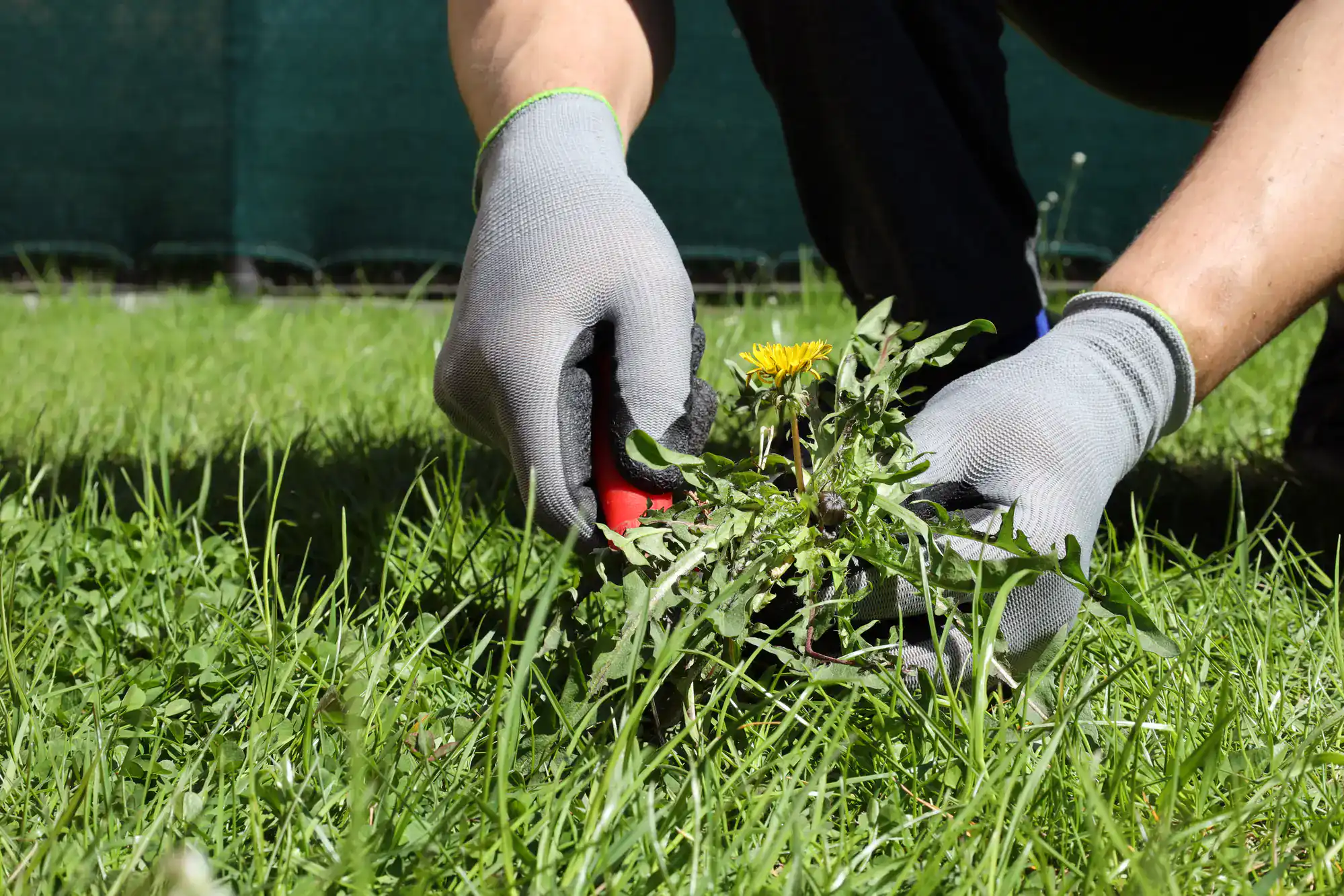
Nutsedge often called nutgrass is one of the most stubborn lawn invaders on Long Island, and it’s especially common in Middle Island’s sandy, moisture-retentive soil. It’s not actually a grass, which is why standard broadleaf weed controls don’t touch it. It grows faster than turf in summer heat, has a distinctly lighter green color, and spreads through underground nutlets that can survive even if you pull the visible plant. Mowing it down just encourages it to spread.
Effective control requires a targeted herbicide specifically labeled for sedge applied at the right growth stage, usually when the nutsedge is actively growing in early to mid-summer. One application rarely eliminates it entirely because the nutlets in the soil can sprout repeatedly over multiple seasons. A consistent, multi-year approach is what actually gets it under control. We include nutsedge treatment as part of a complete lawn program rather than treating it as a one-time fix, because that’s what the biology of the plant actually requires. If you’ve been watching it come back every summer despite your best efforts, a targeted professional treatment is the only thing that’s realistically going to change that pattern.
Useful Links
Other Services we provide in Middle Island