Hear from Our Customers
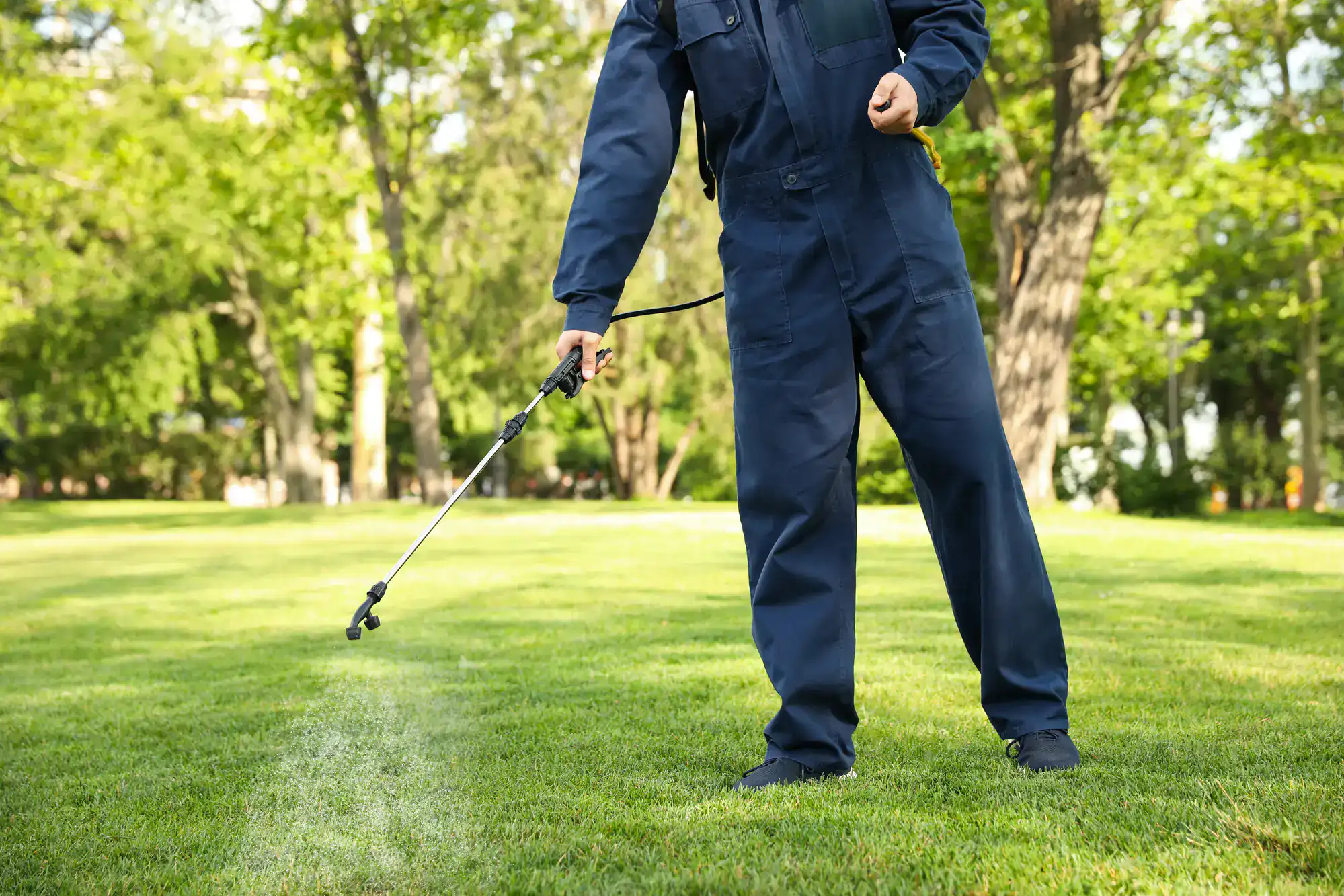
The soil under most Yaphank properties is sandy outwash the same fast-draining material that lines the trails through Southaven County Park. It looks fine on the surface, but it doesn’t hold nutrients the way denser soils do. Standard fertilizer drains through before your grass can use it, which is why so many lawns here green up for a few weeks and then fade right back. A program that accounts for that drainage rate with a fertilizer blend actually formulated for Long Island soil chemistry holds differently. You stop chasing results and start seeing them hold.
The other thing that changes is the time you get back. Lawn care done right, on a consistent schedule, by someone who knows what they’re doing, removes you from the equation entirely. No more weekends spent troubleshooting brown patches or debating whether to try a different bag from the hardware store. Your lawn gets handled. The Carmans River runs right through the center of Yaphank, and the aquifer beneath it supplies drinking water for the entire island so knowing the person treating your lawn is licensed, compliant with Suffolk County’s fertilizer blackout rules, and not cutting corners on application rates matters here more than it might somewhere else.
We’ve been treating residential lawns in Suffolk County since 1987. That’s not a number thrown out to sound established it means we were already working this area before Country Pointe Meadows was built, before a lot of Yaphank’s current neighborhoods filled in, and well before most of the national chains had a branch address anywhere near here. That kind of tenure builds a specific kind of knowledge that doesn’t come from a training manual.
Every technician who shows up to your Yaphank property is a NYS DEC-licensed pesticide applicator. Not a labor-only crew member, not someone still learning the route. A licensed professional who has completed the state’s required training and passed the licensing exam. Five fully wrapped, branded trucks run throughout Suffolk County you’ll know exactly who’s on your property and who to call if you ever have a question. That level of accountability is visible, and in a community as connected as Yaphank, it matters.
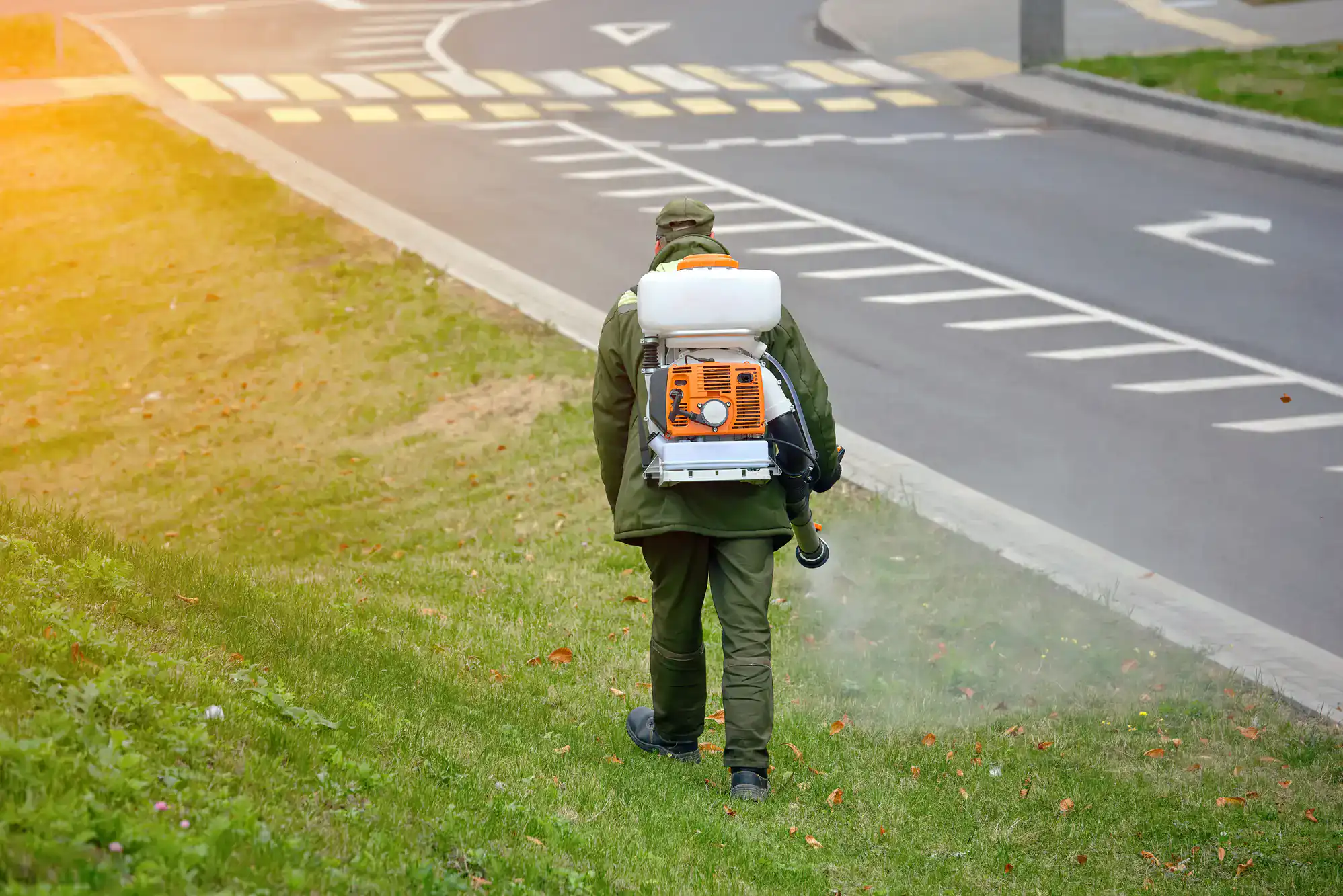
It starts with an assessment of your specific property not a glance from the truck, but an actual look at your grass type, soil condition, shade coverage, weed pressure, and any problem areas. Yaphank properties vary more than people expect. A lawn backing up toward the Southaven County Park corridor with heavy oak canopy has completely different needs than a sunny Colonial on Yaphank Estates. Fine fescue handles shade differently than tall fescue or perennial ryegrass handles open sun, and getting that wrong from the start means the whole program underperforms.
From there, we build a custom treatment schedule around your lawn’s actual conditions and the seasonal calendar for this part of Long Island. Timing matters here Suffolk County prohibits fertilizer applications between November 1 and April 1, and soil temperatures in central Suffolk don’t reliably hit the 55°F threshold for active growth until mid-April. Applications go out when conditions are right, not just when it’s convenient. Fall is the most critical window for aeration and overseeding in this climate, and our hydraulic aerators pull actual soil cores rather than just poking the surface which makes a real difference in how well seed establishes and how deeply nutrients penetrate going into winter.
If your lawn needs restoration work or you’re starting from bare soil, we handle that too. New installs, damaged lawn recovery, grub damage from Japanese beetles all of it is within scope. You get one company, one point of contact, and a program that adjusts as your lawn improves.
Ready to get started?
The foundation of every program is our custom-blended fertilizer a product formulated specifically for us and calibrated for Long Island’s sandy, fast-leaching soil. You won’t find it at a hardware store. It’s designed to release nutrients at a rate that matches how quickly Yaphank’s outwash soil drains, which is why it produces results that off-the-shelf products consistently fail to hold. New York State prohibits phosphorus in lawn fertilizer unless a soil test confirms a deficiency, and every application we make is compliant with both state law and Suffolk County’s seasonal blackout requirements.
Beyond fertilization, our programs include targeted weed control, grub control Japanese beetle pressure is real in sandy Suffolk County soil and can devastate a root zone quickly and pre-emergent applications timed to soil temperature rather than just the calendar. Aeration and overseeding are available using hydraulic equipment that outperforms the consumer-grade alternatives most companies use. For lawns dealing with nutsedge or bentgrass, we have dedicated treatment options rather than the standard “we’ll keep treating it” non-answer.
Every program is built around your lawn’s specific grass type, sun and shade exposure, and current condition. Whether you’re maintaining a healthy lawn, recovering from a prior service’s damage, or starting a new install from seed, the scope adjusts to what’s actually needed. Nothing is templated. Nothing is one-size-fits-all.
The main reason is soil. Yaphank sits on sandy glacial outwash the same fast-draining material you’ll find throughout Southaven County Park. Sandy soil doesn’t retain moisture or nutrients the way clay-heavy soils do, so whatever you apply tends to leach through before the grass root system can fully absorb it. Add summer heat stress on cool-season grasses like tall fescue and Kentucky bluegrass, and you’ve got a lawn that needs more precise timing and better-formulated inputs than most generic programs provide.
The fix isn’t applying more product it’s applying the right product at the right time. A fertilizer blend calibrated for Long Island’s soil drainage rate holds longer than a standard commercial formula. Consistent moisture management during dry stretches helps too, since sandy Yaphank soil dries out faster than most homeowners expect between rain events. A well-timed program that accounts for these conditions will produce results that actually hold through July and August instead of fading by late June.
In New York State, any company applying pesticides or herbicides to your lawn is legally required to hold a valid NYS DEC pesticide applicator license. Getting that license requires completing a 30-hour state training course and passing the New York State licensing exam. It’s not a registration it’s a tested credential. An unlicensed applicator working on your property is operating illegally, and if something goes wrong a burned lawn, an improperly applied product, a violation of the county’s fertilizer blackout rules your options for recourse are significantly limited.
Beyond the legal issue, licensing signals a baseline of knowledge. A licensed applicator knows which products are appropriate for which grass types, how to calibrate application rates, and what the county and state regulations require. In Yaphank, where properties sit over Long Island’s sole-source aquifer and alongside the Carmans River watershed, having someone on your lawn who actually knows what they’re doing and is accountable to a state license isn’t a bonus. It’s the minimum standard you should expect.
Fall is the window specifically late August through October. Cool-season grasses like tall fescue, Kentucky bluegrass, and perennial ryegrass are the dominant varieties on Yaphank lawns, and they do their most active root development when temperatures drop back into the 60s. Aerating and overseeding during this period gives new seed the best possible conditions: moderate temperatures, consistent rainfall, and reduced competition from summer weeds that have mostly stopped germinating.
Spring seeding is possible but comes with more risk. Soil temperatures in central Suffolk County don’t stabilize for cool-season grass germination until mid-April, and by the time new seedlings establish, summer heat is already approaching. Fall seeding also benefits from aeration done with hydraulic core equipment, which pulls actual plugs from the soil rather than just puncturing the surface. In Yaphank’s compacted sandy-clay areas, those cores create real channels for seed, water, and nutrients to reach the root zone which is what makes the difference between seed that takes and seed that washes away.
Suffolk County prohibits fertilizer applications between November 1 and April 1. That’s a hard cutoff violations carry fines up to $1,000. The rule exists to protect Long Island’s sole-source aquifer, which supplies drinking water for the entire island, and waterways like the Carmans River that run through Yaphank. During the blackout period, no nitrogen or phosphorus-based fertilizer can be applied to your lawn, regardless of what the grass looks like or what a salesperson might tell you.
For your lawn schedule, this means the late October application is your last opportunity before the ground goes dormant, and April is when the program picks back up but only once soil temperatures confirm active growth, not just because the calendar flipped. A company that knows these rules builds its schedule around them automatically. If a lawn service is offering you a November or March fertilizer application in Suffolk County, that’s a compliance issue worth taking seriously. We structure our program around the blackout window from the start, so you’re never in a position where your lawn is being treated illegally.
The honest answer depends on what your time is worth and what results you’re actually getting on your own. Most homeowners who try to manage their own lawn care in central Suffolk County run into the same wall: the products available at big-box stores aren’t formulated for Long Island’s sandy, fast-draining soil, so results are inconsistent. You apply, it looks better for a few weeks, then it fades. You try a different product. The cycle repeats.
A professional program uses commercial-grade inputs including fertilizer blends specifically formulated for this soil type applied at calibrated rates by someone who knows how to read what your lawn actually needs. Beyond the product difference, there’s the time factor. Lawn care done right across a full season takes roughly 70 hours of your time when you account for applications, aeration, overseeding, weed management, and troubleshooting. Most homeowners working full-time jobs or commuting from Yaphank’s LIRR station don’t have that time to spare and even when they do, the results rarely match what a consistent professional program delivers.
Start with licensing. Ask directly whether the company’s technicians hold active NYS DEC pesticide applicator licenses. This is a legal requirement in New York, not an optional credential, and a surprising number of operators including some larger regional services don’t meet it consistently across their entire crew. If a company can’t confirm that the person showing up to your property is licensed, that’s your answer.
After licensing, look at how the program is built. A company that offers you a package before they’ve seen your lawn is selling you a template, not a program. Yaphank properties vary significantly shaded lots near the Carmans River corridor have different grass type needs than open, sun-exposed yards in Yaphank Estates or townhomes at Country Pointe Meadows. A program worth paying for starts with an assessment of your specific conditions and builds from there. Finally, look for a company with a visible local presence and real accountability a named business, branded vehicles, a track record in Suffolk County. In a close-knit community like Yaphank, reputation travels, and a company that’s been operating here since 1987 has had nearly four decades to either earn or lose it.
Useful Links
Other Services we provide in Yaphank