
Hear from Our Customers
Living next to preserved open space is one of the things that makes Islandia a genuinely nice place to live. The greenbelt trails, Lakeland County Park, the mature trees that have been growing in these Levitt-era yards since the 1960s it all adds up to a neighborhood that feels different from the rest of central Long Island. It also adds up to some of the most persistent tick pressure in Suffolk County.
Deer move through those greenbelt corridors constantly. White-footed mice the primary carrier of the bacteria that causes Lyme disease thrive in exactly the kind of wooded, leaf-litter-rich edges that border residential properties here. A Columbia University study found that 56% of ticks on Long Island carry Lyme disease. That number hits differently when the greenbelt is literally inside your village boundaries.
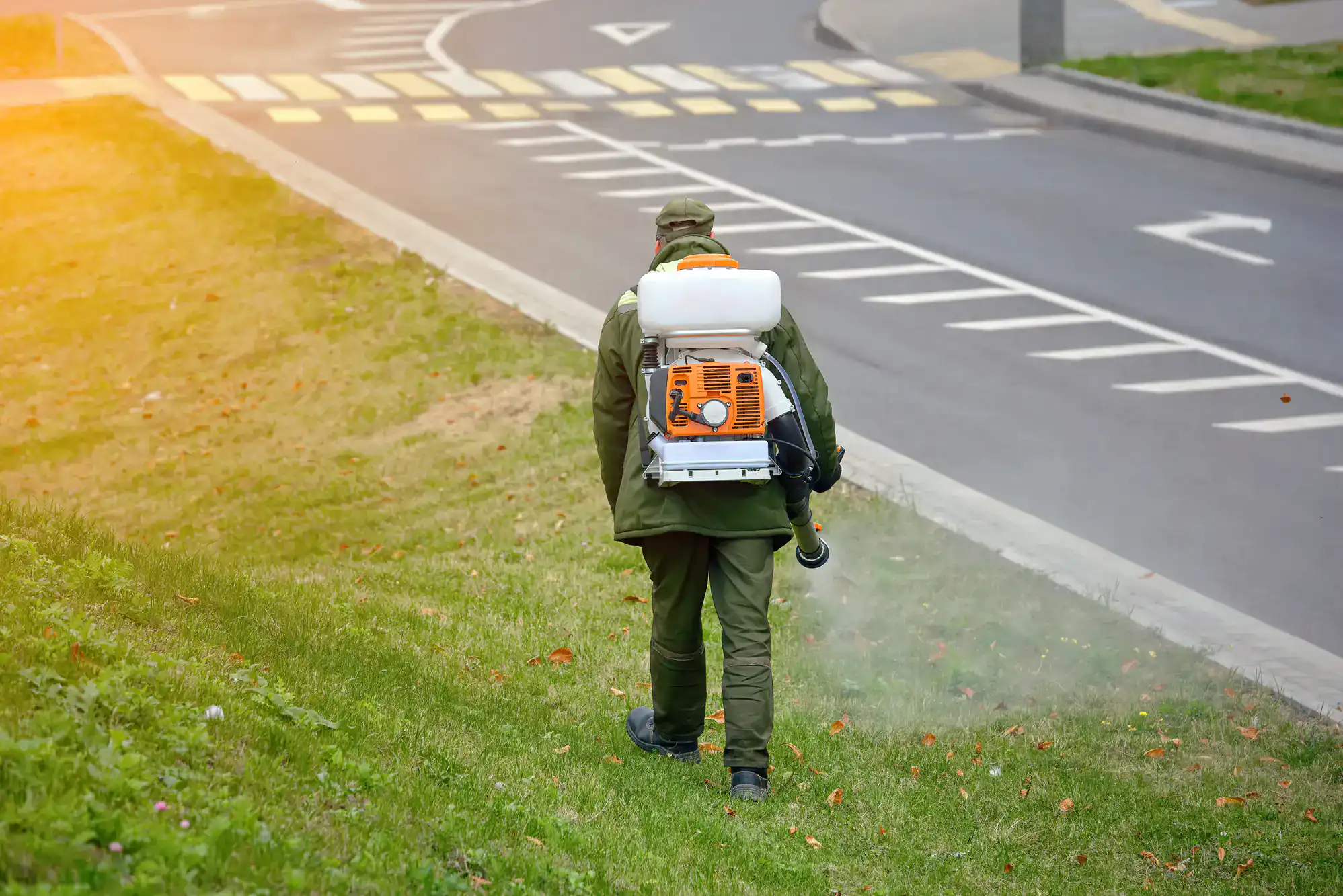
What changes after our professional treatment isn’t just the tick count it’s the way your family uses the yard. Kids playing outside without a post-playtime tick check turning into a 20-minute inspection. Dogs coming in from the backyard without you wondering what they picked up along the fence line. That’s what this is actually about. Not a spray schedule a yard you can use again.
We’ve been serving Suffolk County since 1987. Islandia only became an incorporated village in 1985 so when residents here were still figuring out what their new village government looked like, we were already building a track record in this county. That’s not a trivia point. It means the people doing your treatment have decades of real experience with the specific tick habitats, deer pressure patterns, and seasonal timing that define central Long Island and Islandia specifically.
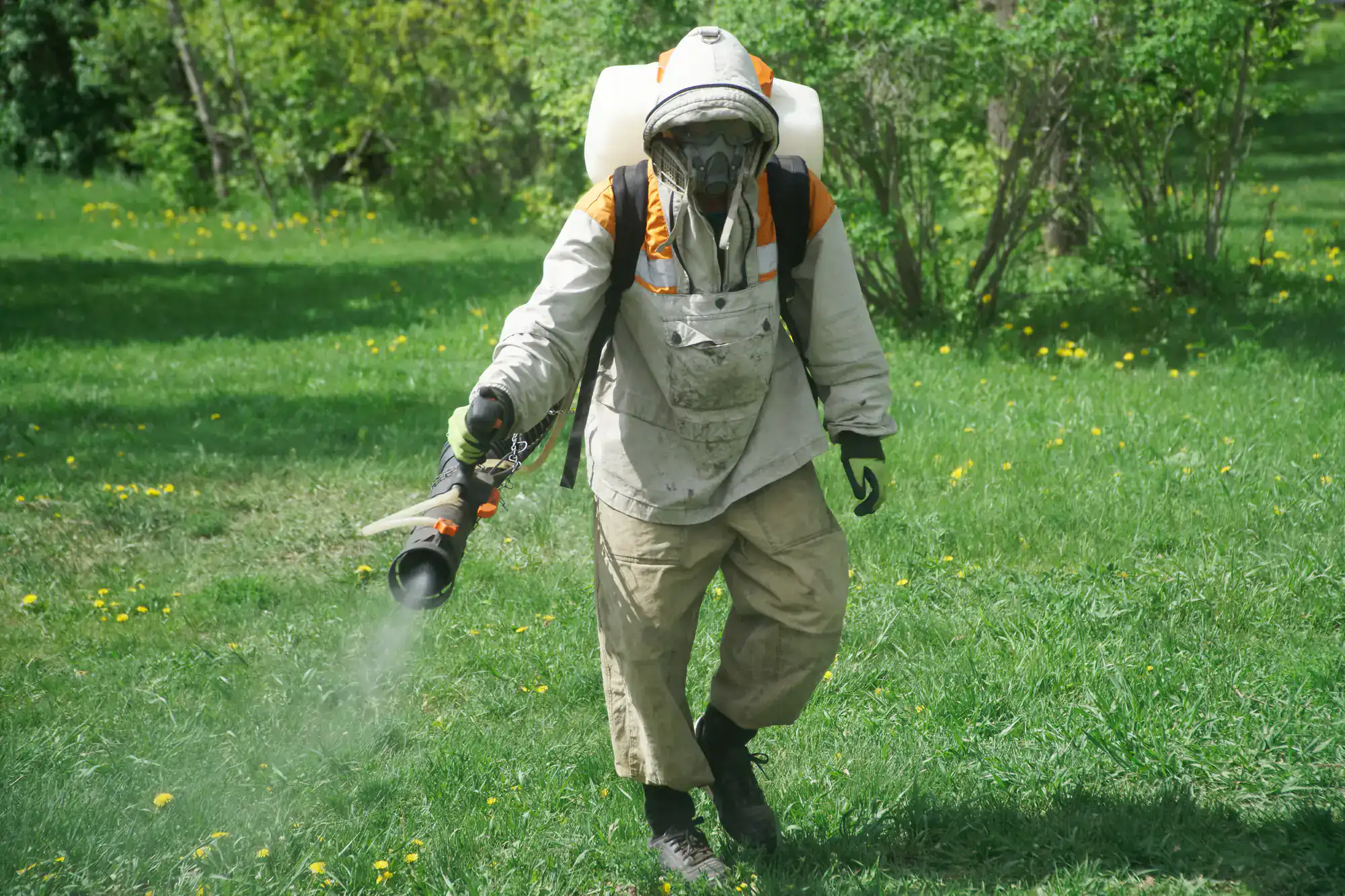
Every job is handled by a licensed pesticide professional not a seasonal crew member handed a spray tank. New York State requires NYSDEC certification for any commercial pesticide application, and we employ applicators who have earned and maintained that license. You’re not getting someone going through the motions. You’re getting someone who knows the difference between a property that backs up to the Islandia greenbelt and one that doesn’t and treats them accordingly.
It starts with understanding your property not just its square footage, but its actual conditions. Does your yard border greenbelt land or naturalized areas near Islandia Farm? Do you have mature foundation plantings, dense shrub borders, or shaded areas that hold moisture? These are the spots where ticks concentrate, and they’re the first places our licensed applicators look when assessing your property.
From there, treatment is timed to Long Island’s actual tick calendar. Nymphal deer ticks the ones the size of a poppy seed that are responsible for most Lyme disease transmission peak between May and July. That’s when your first application matters most. Summer maintenance treatments follow every three to four weeks through peak outdoor season, and a fall application addresses the adult tick surge that runs from September through November. Missing that fall window means overwintering populations are already set up in your yard before spring.
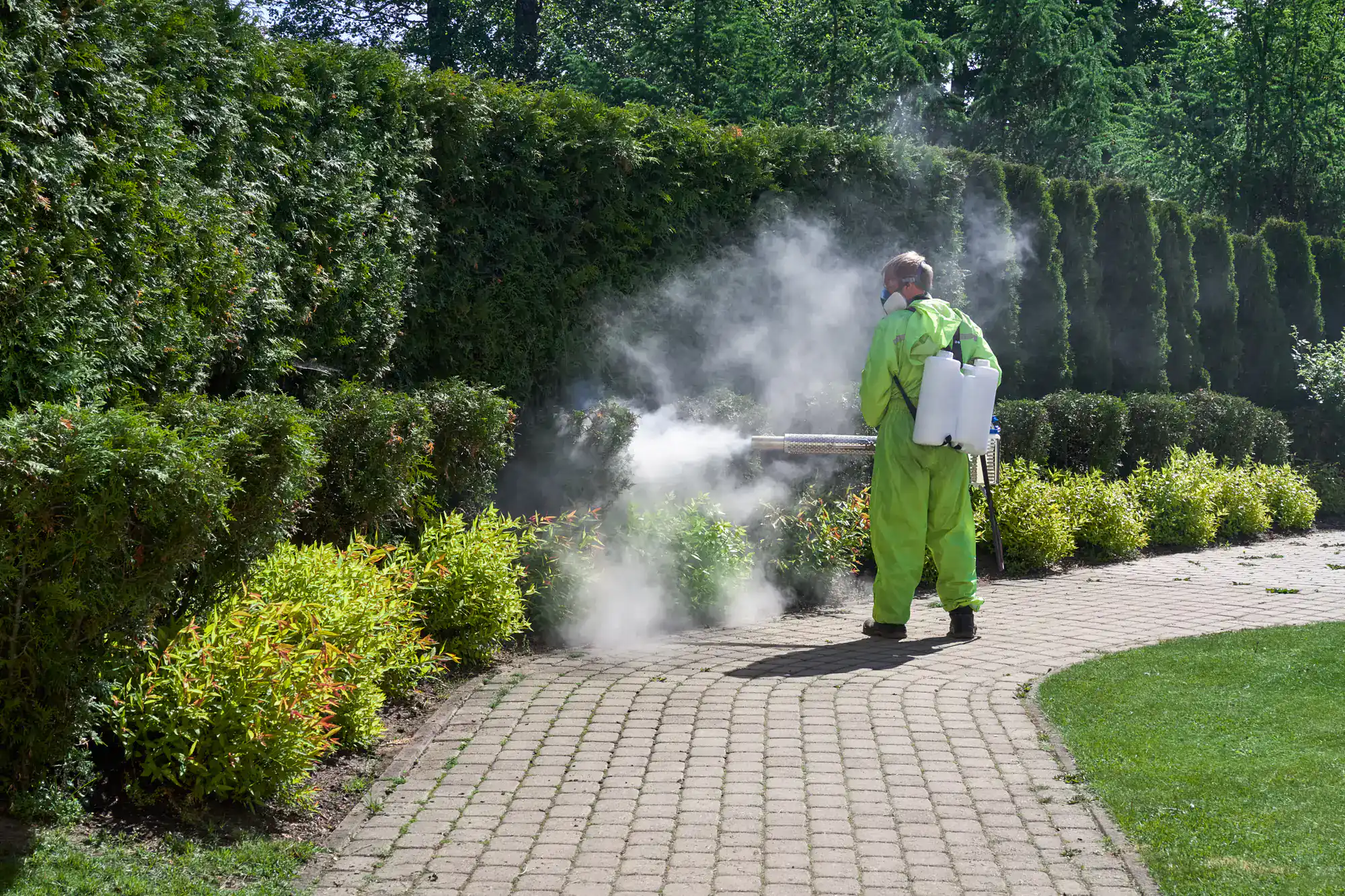
For flea control, the exterior barrier targets the zones where pets pick up fleas: fence lines, under decks, the shaded border areas along your property’s edge. Our professional-grade products include Insect Growth Regulators that break the flea life cycle at every stage eggs, larvae, pupae, and adults. That’s what separates our professional treatment from anything you’d pick up at a hardware store. Once the work is done, the product needs time to dry typically 30 to 60 minutes and then your yard is ready to use.
Ready to get started?
Most of the homes in Islandia were built as part of the original Levitt & Sons development around 1963. That means the landscaping on these properties has had 60-plus years to mature large shade trees, established ornamental shrubs, thick foundation plantings, and the kind of accumulated leaf litter in beds and borders that ticks use as harborage. A program designed for a newer subdivision with open turf doesn’t apply here. We build treatment plans around what’s actually on your property.
The seasonal program we offer covers the full active tick window for central Long Island spring kickoff before nymphal tick peak, summer applications through the high-activity months, and a fall treatment before adult ticks begin overwintering in your yard. Flea barrier treatment is included for properties with pets, targeting the specific zones where flea exposure happens: shaded borders, fence lines, deck perimeters, and any areas where your pets spend time near naturalized vegetation.
All applications are made by NYSDEC-licensed pesticide professionals using commercial-grade products. We also offer online credit card invoice payment and seasonal reminders so you’re not managing the schedule yourself. For Islandia homeowners who want to go further, flea and tick control integrates directly into our broader lawn health programs fertilization, aeration, overseeding because a healthier, properly maintained lawn is genuinely less hospitable to pests than one with thatch buildup and moisture retention issues.
The 275-plus acres of Suffolk County Greenbelt inside Islandia’s village boundaries create a permanent, structural source of tick pressure for residential properties nearby. It’s not just that ticks live in the greenbelt it’s that the greenbelt sustains the two populations that drive the deer tick life cycle. Deer travel through those corridors regularly, dropping adult ticks as they move. White-footed mice, which are the primary reservoir host for Borrelia burgdorferi the bacteria that causes Lyme disease are abundant in the wooded and brushy edges of exactly this kind of preserved open space.
The problem for homeowners in Islandia is that the transition zone between a maintained yard and a naturalized greenbelt edge is precisely where ticks concentrate in the highest numbers. They don’t spread evenly across open lawn they cluster in shaded, moist, leaf-litter-rich areas at the border of your property. That’s why greenbelt-adjacent properties in Islandia need treatment that specifically targets those transition zones, not just a perimeter spray around the lawn’s outer edge.
For most properties in central Suffolk County, a minimum of three to four applications per season is the standard but the timing matters as much as the frequency. The first application should go down in early spring, before nymphal deer ticks hit their peak activity window in May through July. Nymphal ticks are the size of a poppy seed and responsible for the majority of Lyme disease transmission, so getting ahead of that window is critical.
Summer maintenance applications every three to four weeks keep populations suppressed through the months when your family is actually using the yard. Then a fall application typically September through November addresses the adult tick surge and reduces the number of ticks that will overwinter in your yard and be active again the following spring. Skipping the fall treatment is one of the most common mistakes homeowners make, and it’s one of the main reasons tick problems seem to reset every year despite regular spring and summer spraying.
Yes once the product has dried, the treated areas are safe for children and pets to use. Drying typically takes 30 to 60 minutes depending on temperature and humidity. Our licensed applicators will let you know the specific window for your property on the day of treatment, and the online reminder system means you’ll have advance notice before each scheduled application so you can plan accordingly.
The more important safety point is actually about who’s applying the product, not just what it is. New York State requires NYSDEC certification for any commercial pesticide application that means proper training in product selection, application rates, and targeted placement. An unlicensed applicator using the wrong concentration or applying product in the wrong locations creates real risk. We apply the right product, in the right amount, in the right places which is what makes the treatment both effective and safe.
You can, but the results are usually disappointing and for properties in Islandia, the gap between DIY and professional treatment is wider than average. Store-bought products are consumer-grade formulations applied without the training to know where ticks actually live on your specific property. Spraying the open lawn won’t solve a tick problem that originates from a wooded border, a shaded foundation bed, or a fence line adjacent to greenbelt land. You’re treating the wrong places with a weaker product.
Our professional-grade tick control uses commercial formulations that aren’t available over the counter, applied by licensed pesticide professionals who assess your property’s actual harborage zones before treating. For flea control specifically, our professional products include Insect Growth Regulators that break the flea life cycle at the egg, larva, and pupa stages not just the adults you can see. Store-bought sprays don’t include IGRs at effective concentrations, which is why flea infestations treated with hardware store products often seem to clear up and then come right back within a few weeks.
A standalone tick control company does one thing. We do tick and flea control as part of a complete lawn health program and that distinction matters more than it sounds. Ticks and fleas don’t thrive equally in all yard conditions. A lawn with heavy thatch buildup retains moisture and creates the kind of cool, damp microclimate that ticks favor. Dense, overgrown shrub borders and leaf litter accumulation in beds provide harborage that no amount of spraying fully eliminates if the underlying conditions aren’t addressed.
When the same company handling your tick treatment also understands your lawn’s drainage, thatch levels, and overall health, the treatment program is built around the actual conditions on your property not just a seasonal spray calendar. For Islandia homeowners with Levitt-era properties and 60-plus years of landscape maturation, that integrated approach is genuinely more effective than a pest-only company that shows up, sprays, and leaves without ever looking at why your yard is attractive to ticks in the first place.
It can, and it’s a reasonable thing to be aware of. The redevelopment of the former CA Technologies campus on Veterans Memorial Highway the site was imploded in January 2024 and is being rebuilt into multiple light industrial and manufacturing buildings involves large-scale clearing and construction on a parcel that had been an established, vegetated site for decades. When habitat like that is disrupted, deer and rodent populations that were using it as cover tend to disperse into adjacent areas, including residential neighborhoods nearby.
White-footed mice in particular are highly sensitive to habitat disruption and will move into new areas quickly when their established range is disturbed. Since mice are the primary reservoir host for the bacteria that causes Lyme disease, an influx of displaced rodents into residential yards near the construction zone can meaningfully increase tick pressure in those neighborhoods. If your property is near the Route 454 corridor or within a few blocks of the former campus site, that’s worth factoring into how seriously you take a seasonal tick treatment program this year and going forward.
Useful Links
Other Services we provide in Islandia