

Hear from Our Customers
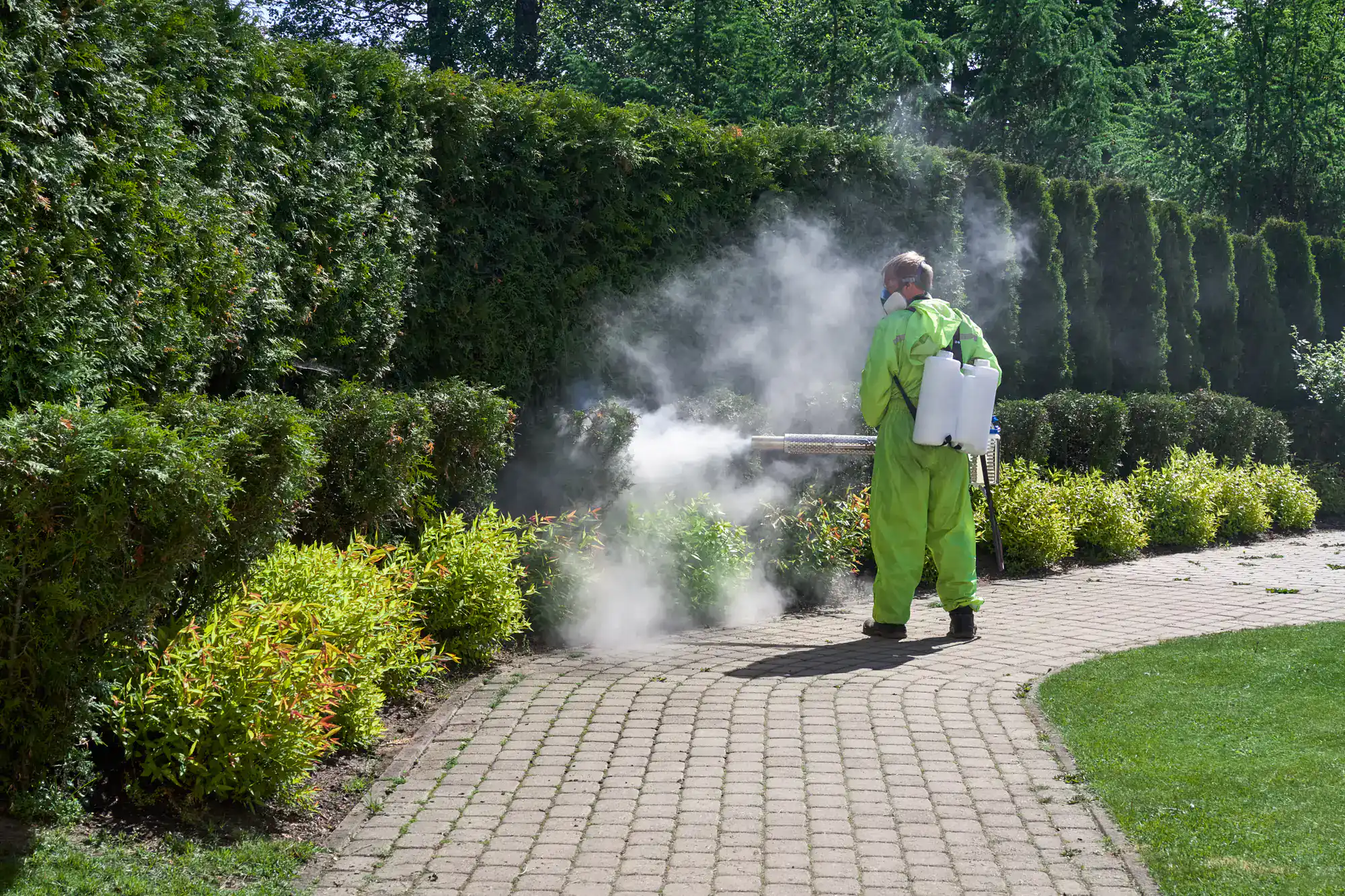
If you’ve got a dog that walks to the beach, kids who play near the tree line, or a wooded border between your lawn and the Sound, you already know the tick situation in Shoreham Village isn’t casual. More than half of the ticks on Long Island carry Lyme disease and the North Shore, where you live, has some of the highest infection rates in Suffolk County. Columbia University research and Suffolk County health data point directly at your zip code.
What changes when you have a real seasonal program in place is simple: you stop second-guessing the yard. The path to the beach, the garden, the back lawn where your kids actually spend time all of it becomes usable again from April through November. You’re not spraying a can of consumer product around the perimeter and hoping for the best. You’re working with licensed professionals who know where ticks actually live on a Shoreham property the leaf litter along the bluff edge, the stone walls bordering older homes, the shaded transition zones between your lawn and the woods.
A healthy, properly maintained lawn also plays a role here. Ticks thrive in thatch-heavy, moisture-retaining turf. When your lawn is aerated, fertilized, and managed correctly, you’re reducing the habitat that sustains pest populations not just treating the symptom. That’s something a standalone pest control company can’t offer you.
We’ve been treating Suffolk County lawns since 1987. That means the people treating your Shoreham property have seen what North Shore tick seasons actually look like over decades, not just the last few years when Lyme disease awareness spiked. We’ve watched the deer population grow along Route 25A, seen how the Sound’s humidity extends the active season deeper into fall than inland towns experience, and learned which treatment intervals actually work for properties that back up to wooded bluffs versus those with open exposures.
Every technician we send is a licensed pesticide professional under NYSDEC certification not a labor-only crew member who may or may not be authorized to apply what they’re spraying. New York State law requires it, and we’ve never operated any other way. When you call Lawn Master, you’re getting owner-level accountability on every visit, not a rotating crew with no connection to your property.
We know Shoreham specifically. We know the wooded corridors between Route 25A and the Sound, the older housing stock with mature landscaping and stone walls, and the deer pressure that comes with living in a village where the entrance sign literally tells you to watch for crossing deer. That context shapes how we treat every property in Shoreham.
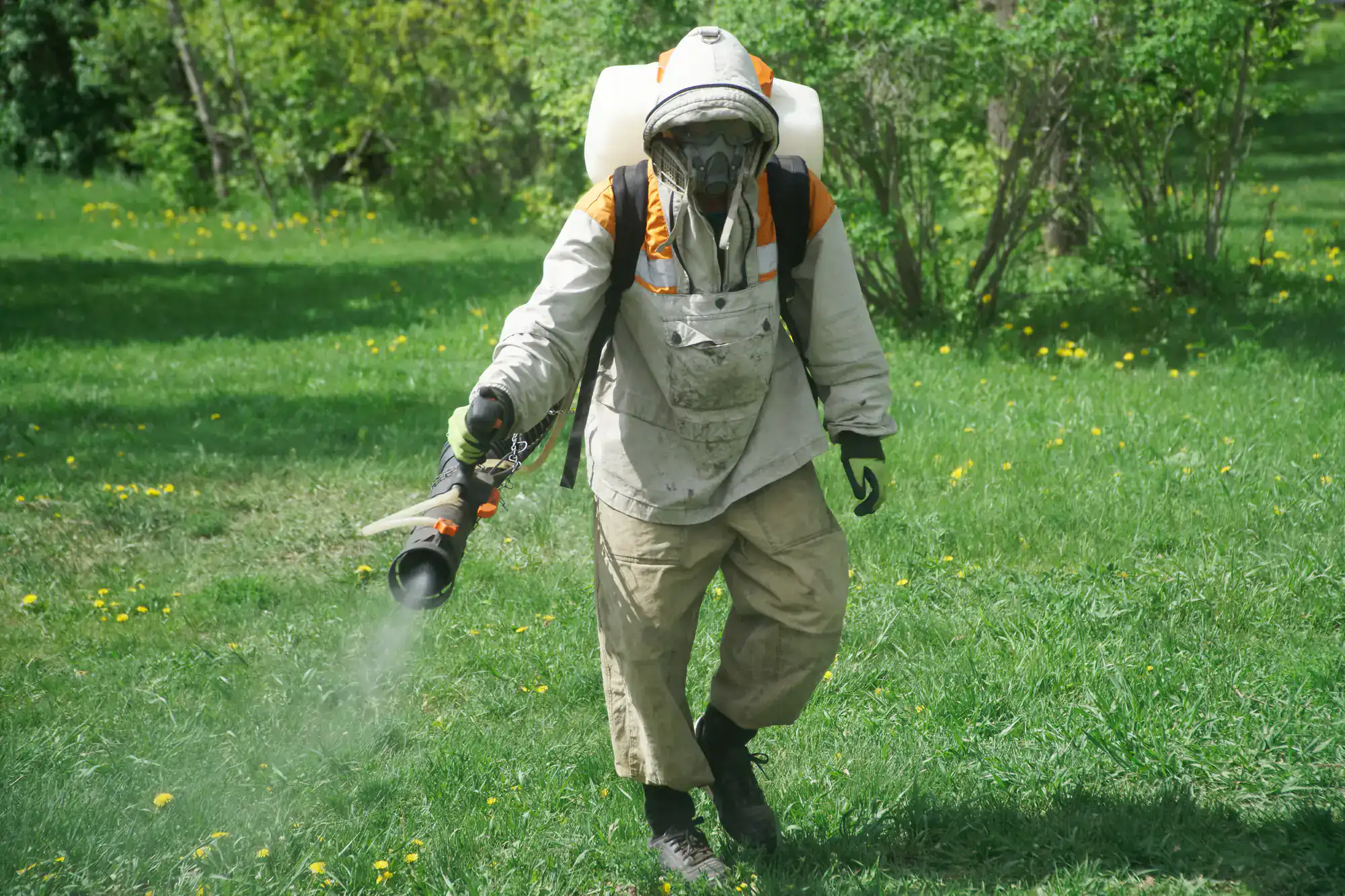
It starts with a property assessment. Shoreham lots aren’t cookie-cutter some back up to wooded bluffs, some have naturalized slopes facing the Sound, some have stone walls and mature ornamental borders that have been there since the home was built in the 1940s or 50s. Before any treatment goes down, we look at where the actual harborage zones are on your specific property. That’s what drives the program.
Treatment targets the areas where ticks live not just the edge of your mowed grass. On a Shoreham property, that means working 20 to 30 yards into wooded borders, treating the leaf litter, understory vegetation, and shaded transition zones where ticks concentrate. A perimeter spray along the lawn edge looks like tick control. It isn’t. Our licensed applicators are trained to treat the full harborage zone, which is the only approach that actually reduces your exposure.
From there, we schedule maintenance applications every three to four weeks through the active season. On Long Island’s North Shore, that season runs from early April when warm spells off the Sound can trigger tick activity before most homeowners are thinking about it through late November, when adult ticks are still aggressively seeking hosts before winter. Suffolk County Chapter 647 governs commercial pesticide applications in this area, and our certified professionals follow all required notification and application protocols. Re-entry is safe within 30 to 60 minutes of drying.

Ready to get started?
Most homeowners think about deer ticks and they should, given that over half of them on Long Island carry Lyme disease. But Shoreham properties also deal with American dog ticks, which are common in the suburban-wooded interface that defines older North Shore neighborhoods, and lone star ticks, which are active from spring through late fall and aggressive about finding a host. A program that only addresses one species isn’t a complete program.
Our flea and tick control services are designed around all three. That means targeting the specific harborage zones each species prefers deer ticks in the wooded leaf litter and shaded borders, dog ticks in the drier grassy margins, lone star ticks in the brushy transition areas between your lawn and naturalized spaces. For Shoreham Village properties with Sound-facing slopes, private beach access, and wooded bluff edges, those zones exist on nearly every lot.
We also treat for fleas as part of the same program particularly relevant if you have dogs that move between the yard, the beach path, and indoors. Fleas don’t just come from other animals; they can be carried in by the same wildlife moving through your property. Our licensed professionals apply targeted treatments to the areas where flea populations establish, not broadcast sprays across the entire yard. The result is a comprehensive, property-specific program not a generic spray schedule that ignores what your Shoreham lot actually looks like.
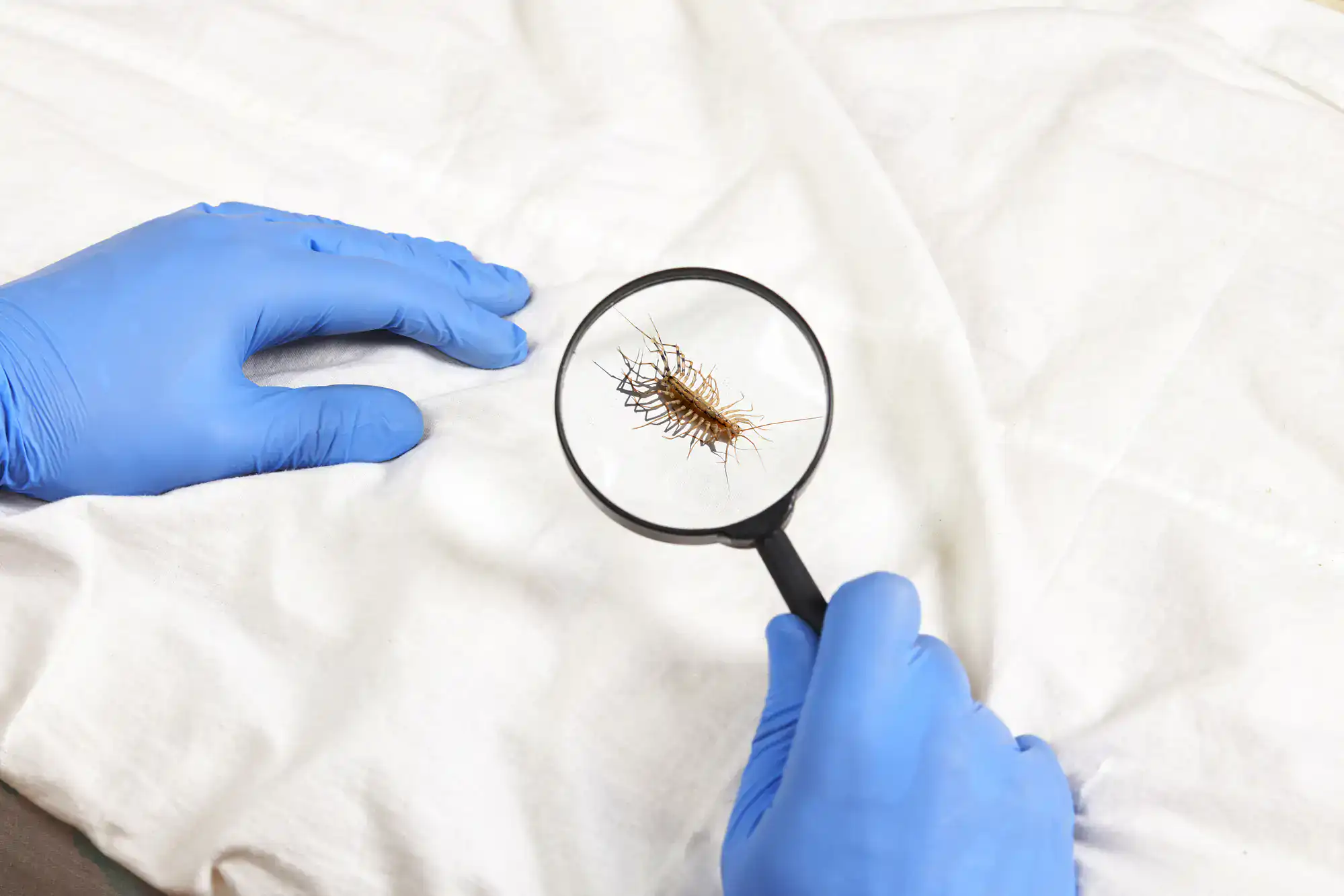
Shoreham sits in one of the higher-risk tick corridors on the North Shore of Long Island. A Columbia University study found that 56% of ticks on Long Island carry Lyme disease, and the Suffolk County Department of Health Services has specifically noted that infection rates may be even higher along the north shore the exact stretch where Shoreham Village is located. New York State reported over 19,000 Lyme disease cases in 2023 alone, a 146% increase in a single year.
The conditions in Shoreham amplify that baseline risk. The wooded bluffs, the deer that cross through residential properties daily, the mature landscaping on older homes, and the humidity that comes with being directly on Long Island Sound all create a consistently hospitable environment for ticks year-round. This isn’t a seasonal nuisance it’s a documented public health issue in your specific geography, and it warrants a professional, structured response rather than a consumer spray from a hardware store.
Earlier than most people think. On Long Island’s North Shore, tick activity can begin during late-winter warm spells sometimes as early as late February or March when temperatures climb above 40°F. Shoreham’s location directly on Long Island Sound creates a microclimate that moderates temperatures, which can push that early-season activity window even further ahead of what inland Suffolk County towns experience.
The most critical window is April through June, when nymphal deer ticks are at peak density. These are the smallest life stage roughly the size of a poppy seed and they’re responsible for the majority of Lyme disease transmissions. They’re nearly impossible to spot before they bite. If you wait until you see a tick problem in your yard, the highest-risk period has already passed. The right move is to have your first treatment down in early April, before the nymph population peaks, and maintain a program through late November when adult ticks are still active.
Yes when it’s applied correctly by a licensed professional, which is the only way we operate. Every technician treating your Shoreham property holds active NYSDEC commercial pesticide applicator certification. That certification requires completing a 30-hour training course and passing a state exam it’s not a formality. Licensed applicators know the right products, the right concentrations, and the right application methods for each treatment zone.
After a professional application, re-entry is safe once the treated areas have dried typically 30 to 60 minutes, depending on conditions. We apply targeted treatments to tick harborage zones: wooded borders, leaf litter, shaded understory areas, and brushy transitions. We’re not broadcasting product across your entire lawn. If you have specific concerns about a play area, a garden bed, or a path your dogs use regularly, those are conversations we have before treatment starts so the program is designed around how your family actually uses the property.
For a Shoreham property with wooded borders, deer pressure, and Sound-adjacent humidity, a maintenance interval of every three to four weeks through the active season is the standard recommendation. That season runs from early April through late November on Long Island’s North Shore longer than many homeowners expect, and longer than what inland Suffolk communities typically need because of the Sound’s moderating effect on fall temperatures.
The reason for regular intervals isn’t that a single treatment wears off immediately it’s that new ticks are continuously moving onto your property through deer, wildlife, and migratory birds throughout the season. A one-time spray in May might reduce your current population, but it does nothing about the ticks that arrive in August or October. A structured seasonal program maintains a treated barrier consistently, which is what actually keeps exposure low across the full outdoor season rather than just for a few weeks after a single application.
The practical difference is that a lawn care company managing your full property fertilization, aeration, soil health can address the conditions that make your yard hospitable to ticks in the first place, not just treat the symptom. Ticks thrive in thatch-heavy, moisture-retaining turf. A properly aerated and maintained lawn is structurally less supportive of tick and flea populations. Standalone pest control companies spray your yard and leave; they have no role in the underlying lawn conditions that influence pest pressure.
For Shoreham specifically, this matters because the properties here tend to have mature, established landscaping on older lots conditions that accumulate thatch and create the kind of microhabitats pests prefer. We’re a licensed pest professional team that’s part of the same crew managing your lawn’s overall health, which means the pest program and the lawn program reinforce each other. No standalone pest control company serving Shoreham can offer that integration.
We treat where ticks actually live which on most Shoreham Village properties means going well beyond the mowed lawn. The wooded transition zones, bluff edges, leaf litter accumulation, and naturalized borders that characterize North Shore properties are precisely where tick populations concentrate. Best practice for wooded properties calls for treating 20 to 30 yards into wooded borders, working back toward the lawn to create a genuine barrier rather than a decorative line along the grass edge.
Many providers spray the perimeter of your lawn and consider the job done. That approach misses the majority of the harborage habitat on a typical Shoreham lot. Our NYSDEC-certified applicators physically enter and treat the wooded areas around your property the bluff slopes, the stone wall borders on older homes, the shaded understory between your lawn and the Sound-facing edge. If your property has any of those features, and most Shoreham Village properties do, that’s where the treatment needs to go.
Useful Links
Other Services we provide in Shoreham