
Hear from Our Customers
Most homeowners in Lake Grove have already spent money on their lawn. A bag of seed here, a fertilizer program there, maybe a basic overseeding that looked decent for a few weeks and then faded by August. The problem was never your effort. It was that none of those things addressed what was actually wrong underneath.
The majority of homes in Lake Grove were built in the late 1960s and early 1970s and most of those lawns have never been fully renovated. Fifty-plus years of foot traffic, mowing, and seasonal stress without a true rebuild means the soil underneath is compacted, depleted, and unable to support healthy turf no matter what you put on top of it. Fertilizer can’t fix compacted ground. Overseeding can’t fix a lawn that’s been invaded by nutgrass or bentgrass for years. Only a complete renovation one that starts at the soil level can actually change the outcome.
What that looks like in practice: a lawn that holds through the summer drought instead of thinning out by July, grass that fills in evenly instead of leaving bare patches where weeds keep coming back, and a property that finally looks the way it should on a street where well-kept yards are the standard. Lake Grove incorporated as a village in 1968 specifically to protect the residential character of its neighborhoods. That standard still matters here and your lawn is part of it.
We’re based in Port Jefferson Station about six miles up Route 347 from Lake Grove. That’s not a detail thrown in to sound local. It means the same Route 347 corridor that runs directly through your village is the corridor we’ve been working in since our founding in 1994. The soils here, the summer drought patterns, the specific weed pressure from nutsedge and bentgrass that shows up in central Suffolk County none of that is new information to our team.
What that experience actually means for you is straightforward. When we assess your lawn, we’re not consulting a general turf manual or guessing at what Long Island soil conditions look like. We’ve seen it firsthand on properties throughout Lake Grove, Nesconset, Stony Brook, and the surrounding communities for three decades. That’s the difference between a company that serves your area and one that actually knows it.
It starts with an honest assessment of what you’re actually dealing with. Bare patches, persistent weeds, thin turf that dies back every summer those are symptoms. The causes are usually compacted soil, poor pH balance, accumulated thatch, or some combination of all three. Long Island soils are naturally sandy and low in organic matter, which means they drain too fast, don’t hold nutrients well, and need to be properly conditioned before seeding has any real chance of taking hold. On a Lake Grove property that hasn’t been renovated in decades, that diagnostic step matters more than anything else.
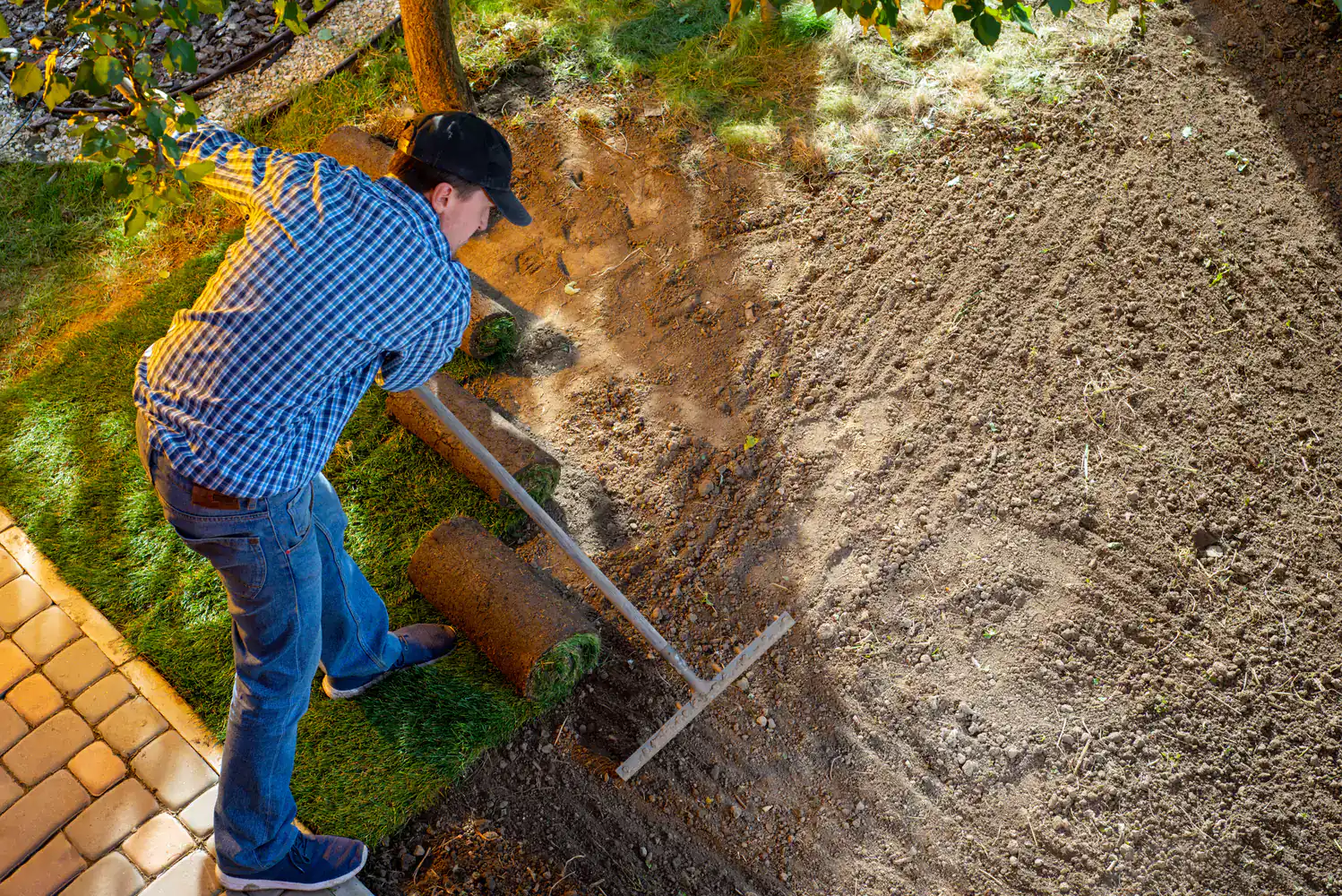
Once the problem is understood, the work begins at the soil level. Deep core aeration breaks up compaction and opens the ground so air, water, and nutrients can actually reach the root zone. Soil conditioning follows where needed, adjusting pH and organic matter to give new seed the environment it needs to establish. Then comes professional-grade power seeding not bag seed scattered on hard ground, but a renovation seeding program using cool-season grass varieties matched to Suffolk County’s climate, driven into prepared soil with the right equipment.
Timing matters significantly here. Late August through October is the optimal window for lawn renovation in Lake Grove. Soil temperatures in that range between 50 and 65 degrees are ideal for cool-season grass germination, weed competition drops off as summer annuals die back, and natural fall rainfall supports establishment. Homeowners who wait until spring face crabgrass pressure and summer heat before new grass can root properly. The fall window is the right window, and it fills up fast in this part of Suffolk County.

Ready to get started?
Our renovation services cover the full range of what a Lake Grove property might need from core aeration and renovation seeding programs to targeted nutgrass and bentgrass control, new lawn installation from bare ground, and annual programs designed to keep a rebuilt lawn healthy long-term. If your lawn has a specific invasion problem, we treat it specifically. If the damage is severe enough to warrant a complete new lawn installation, that’s on the table too. The point is that the approach fits the actual condition of your property, not a one-size package.
Suffolk County has its own regulatory layer that matters here. Commercial pesticide applicators working in New York State are required to hold a valid NYSDEC Commercial Pesticide Applicator certification, and Suffolk County’s Local Law 41-2007 requires applicators to check for pesticide-free zones near public drinking water wells before any application. Given that Long Island draws its entire drinking water supply from the underground aquifer, this isn’t a formality it’s a genuine environmental responsibility. We operate in full compliance with both state and county requirements, which matters for Lake Grove homeowners who care about what goes into their soil and their groundwater.
The result of a properly executed renovation isn’t just a lawn that looks better this fall. It’s a lawn built on a soil foundation that can actually support healthy turf through Suffolk County summers, hold through the dry stretches, and come back strong the following spring without needing to be redone.
Overseeding means spreading seed over an existing lawn usually without addressing what’s underneath. In a lot of cases on Long Island, that means you’re putting new seed on top of compacted, depleted soil that can’t support it properly. It might green up for a season, but it won’t hold.
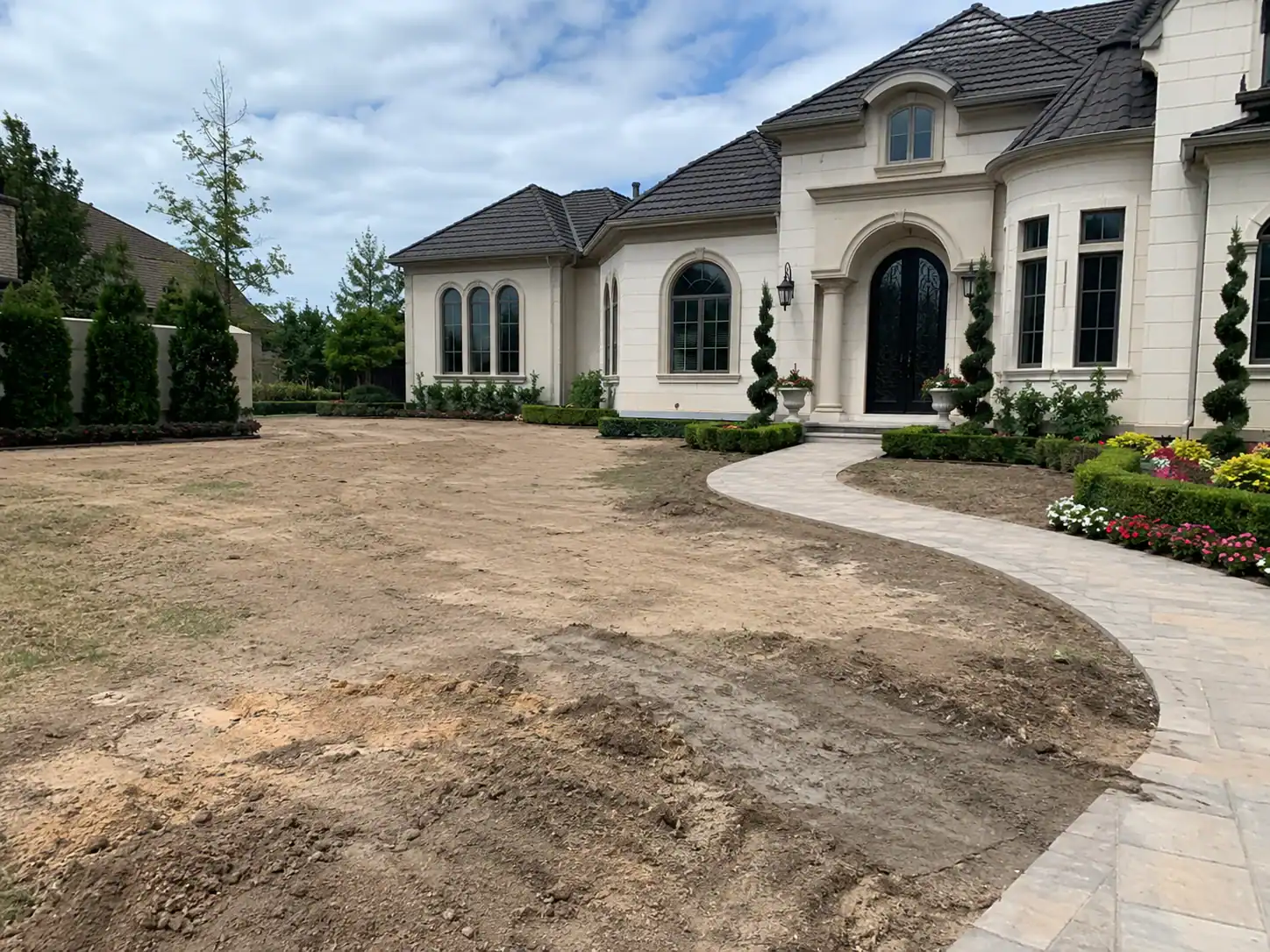
Lawn renovation is a different process entirely. It starts with diagnosing why the lawn is failing compaction, poor pH, thatch buildup, weed invasion and then correcting those conditions before any seed goes down. On a Lake Grove property where the soil hasn’t been properly worked in decades, that distinction is the entire difference between a result that lasts and one that doesn’t. Renovation is the right answer when overseeding has already been tried and hasn’t worked.
The honest range for a complete lawn renovation in Lake Grove runs from roughly $0.75 to $4.00 per square foot depending on the size of the property, the severity of the damage, and what the soil actually needs. For a typical Lake Grove single-family home with 5,000 to 8,000 square feet of lawn, that puts most full renovations somewhere between $3,750 and $32,000 with the majority of straightforward projects landing in the middle of that range.
What drives cost up is usually the level of soil preparation required, whether targeted weed treatments like nutgrass or bentgrass control are needed, and whether any areas need full new lawn installation rather than renovation seeding. The best way to get an accurate number is a property assessment because the cost of another season of failed patches is real too, and it adds up faster than most homeowners expect.
This is one of the most common situations on Long Island, and the answer almost always comes back to soil. Long Island soils are naturally sandy and low in organic matter, which means they drain quickly, don’t retain moisture well, and leave grass roots without the water they need during the dry stretches that hit Suffolk County every July and August. Cool-season grasses the type that grows in Lake Grove are already under heat stress in summer, and sandy soil that dries out fast makes that stress significantly worse.
The other factor is compaction. On properties that have never been fully renovated, the soil underneath is often so compacted that roots can’t penetrate deeply enough to access whatever moisture is available. The result is a lawn that looks fine in spring, thins out badly in summer, and never fully recovers. Aeration and soil conditioning as part of a complete renovation addresses both problems not just for this season, but for the long term.
It’s not a pitch it’s just how cool-season grass works. The varieties we use in Lake Grove lawns, primarily tall fescue, Kentucky bluegrass, and perennial ryegrass blends, germinate best when soil temperatures are between 50 and 65 degrees Fahrenheit. On Long Island, that window falls naturally from late August through October.
In the fall, crabgrass and other summer annual weeds are dying off, which means new seedlings aren’t competing with aggressive weed pressure right out of the gate. Natural rainfall in September and October supports germination without constant irrigation. And newly established grass has time to develop a real root system before winter dormancy sets in, so it comes back strong in spring. Spring renovation is possible, but new seedlings face crabgrass competition and summer heat before they’re established enough to handle it. If your lawn looks rough at the end of summer, fall is genuinely the window to act.
Yes, but it requires targeted treatment not just standard fertilization or overseeding on top of the problem. Nutsedge, commonly called nutgrass, and bentgrass are two of the most persistent turf invaders in Suffolk County. They spread aggressively, they resist general herbicide programs, and they will continue to dominate a lawn even after renovation if they’re not specifically addressed beforehand.
The treatment protocol for each is different, and both require licensed pesticide applicators who understand the specific chemistry and timing involved. This is one of the reasons why choosing a company with NYSDEC Commercial Pesticide Applicator certification matters not every lawn care operator in the Lake Grove area has the licensing or the experience to treat these species correctly. Eliminating the invasion before renovation seeding is what keeps the problem from coming back the following season.
If your renovation is done in the fall which is the right timing for Lake Grove and all of Suffolk County you’ll typically see germination within 10 to 21 days depending on soil temperature and moisture. By the time the lawn goes dormant for winter, you’ll have visible coverage and an established root system working underneath.
The following spring is usually when the full result becomes clear. A properly renovated lawn that went into winter with good establishment comes back noticeably thicker and more uniform than anything a maintenance program alone could produce. That said, the first full summer after renovation is also the real test and a lawn that was renovated correctly, with proper soil preparation and the right seed varieties for Long Island’s climate, will hold through the summer drought in a way that overseeded or patch-treated lawns simply don’t. One season of patience for a lawn that actually lasts is a reasonable trade.
Useful Links
Other Services we provide in Lake Grove