

Hear from Our Customers
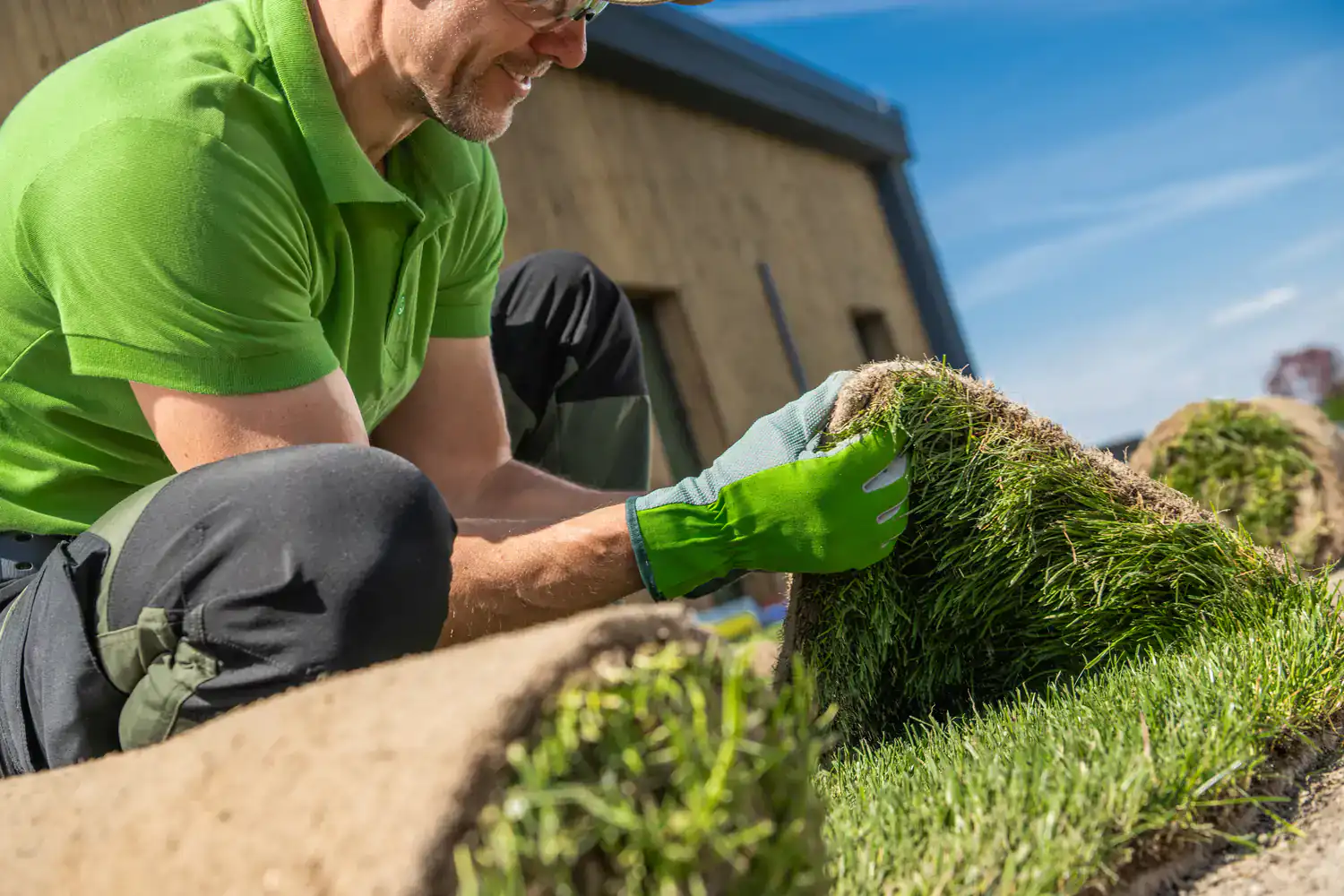
A thick, dense lawn doesn’t happen by accident on the North Shore. Shoreham properties sit on glacial moraine soils that compact over time, run acidic, and warm up later in spring than communities further south all of which affect how and when grass seed germinates. When we account for those variables upfront, the difference shows. You get turf that fills in evenly, holds through summer, and doesn’t thin out again by fall.
For lawns under mature oak or maple canopy which covers a significant portion of Shoreham’s wooded residential lots standard seed blends simply don’t perform. The right shade-tolerant varieties, applied at the right time with the right soil preparation, change what’s possible. Areas that have looked patchy for years can finally hold grass.
The other thing that changes is the trajectory. A lawn seeded correctly doesn’t need to be redone every season. You stop throwing money at a problem that keeps coming back and start seeing consistent improvement year over year. That’s the outcome worth paying for.
We serve Shoreham and Suffolk County with a focus on the specific conditions that define lawns in this community the heavier North Shore soils, the deer pressure along wooded corridors, the humidity that drives fungal issues in summer, and the grub seasons that leave lawns looking like carpet that’s been pulled up from underneath. These aren’t abstract concerns. They’re what we see on properties throughout the Shoreham-Wading River corridor every season.
We’re not a national call center dispatching crews from hours away. When you reach us, you’re talking to a local team that has worked these lawns, knows Route 25A from Rocky Point to Wading River, and is accountable to the neighbors who will see the results. In a village this size, reputation is everything and ours is built on lawns that actually look the way they should.
It starts with an honest look at what you’re working with. Soil condition, pH, sun and shade patterns, existing turf density, and any damage from grubs or drought all of it gets factored in before a single seed goes down. Shoreham’s North Shore soils tend to run acidic, often below the pH 6.0 threshold that cool-season grasses need to access nutrients. If that’s not corrected first, even premium seed struggles. So lime application and soil prep happen before anything else.
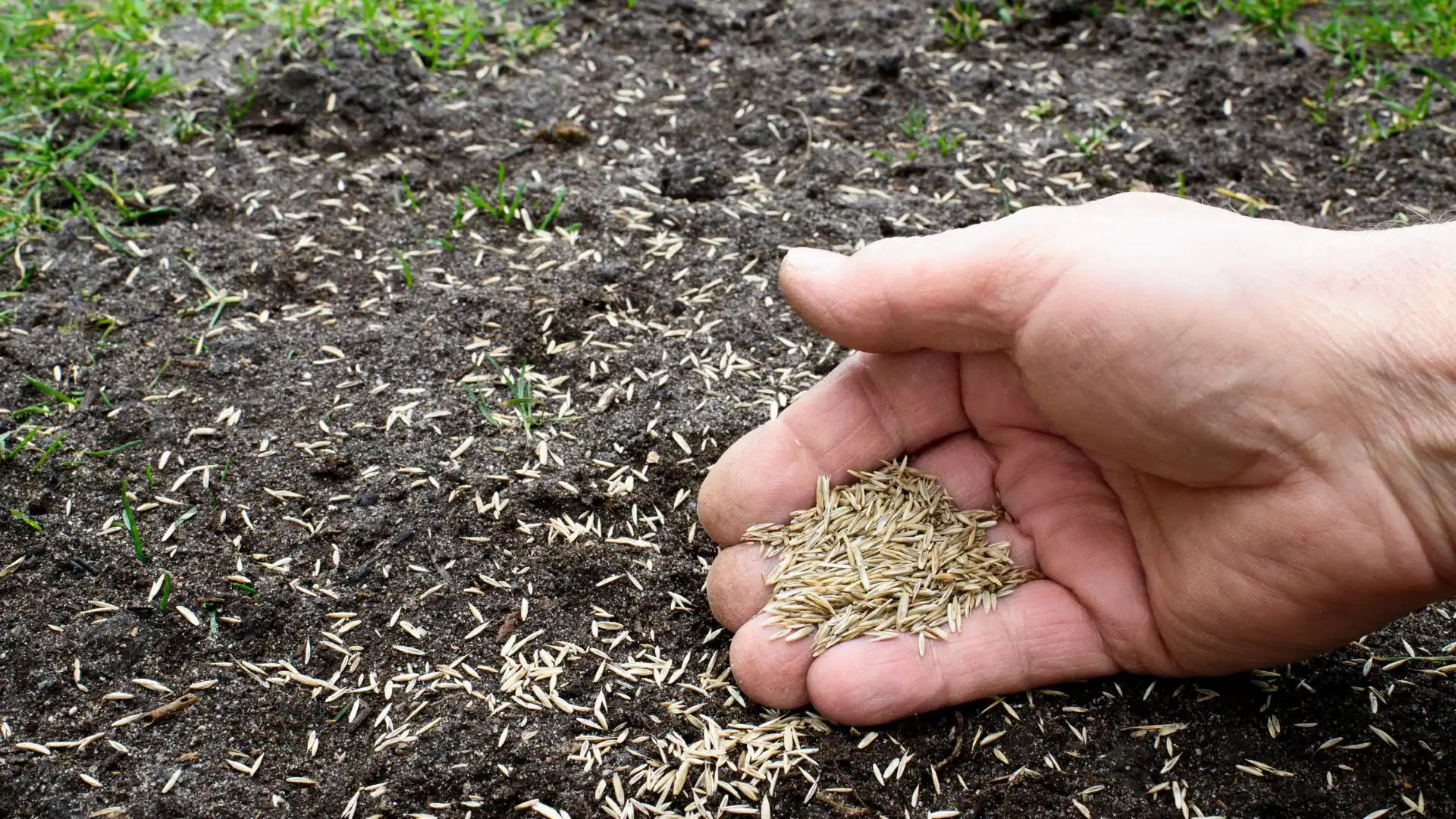
From there, core aeration opens up the soil especially important on Shoreham’s heavier glacial moraine profiles and creates the seed-to-soil contact that drives germination. Then we apply premium turf-type tall fescue, Kentucky bluegrass, and perennial ryegrass blends, selected based on the actual sun and shade conditions of your specific lawn. For sloped or larger bare areas, seeding is available and often more effective on the kind of terrain you find on bluff-side North Shore properties.
After seeding, you’ll get clear guidance on watering schedules and mowing timing during the establishment window. The fall seeding season late August through October is when Suffolk County lawns respond best, and we plan around that window deliberately. You’re not left guessing what comes next.
Ready to get started?
What you get with us isn’t a bag of seed and a handshake. Our program includes soil assessment, pH correction where needed, core aeration, premium seed application, and post-seeding fertilization all sequenced the way a lawn seeding program in Suffolk County should be. The seed itself is professional-grade: named varieties of turf-type tall fescue, Kentucky bluegrass, and perennial ryegrass, not commodity blends from a retail shelf. The difference in germination rates and long-term density is real.
For Shoreham properties specifically, shade mapping matters. Lots in Island Estates, Soundview Acres, and throughout the village’s wooded terrain often have distinct sun and shade zones that require different seed varieties in different areas. A single mix applied uniformly across a Shoreham lawn is one of the most common reasons seeding fails here. We address that by zone.
We also operate in full compliance with New York State pesticide applicator licensing requirements and are knowledgeable about Suffolk County’s nitrogen management guidelines relevant for any homeowner near Long Island Sound who cares about responsible application practices. Whether you’re starting a new lawn from bare ground or restoring an existing one through professional overseeding, our program is structured around your lawn’s actual condition not a one-size-fits-all template.
The best window for lawn seeding in Shoreham is late August through October. That’s when soil temperatures are still warm enough to support germination, air temperatures have cooled down enough to reduce heat stress on new seedlings, and weed competition drops significantly. Cool-season grasses the standard for Long Island lawns establish fastest and most durably during this fall window.
Spring seeding is possible, but it comes with more risk. Weed pressure is higher in spring, and the soil on Shoreham’s North Shore location warms 7 to 14 days later than communities on the South Shore due to the heavier glacial moraine soils. That shorter establishment window before summer heat arrives makes spring seeding harder to execute well. If you’re weighing your options, fall is almost always the stronger choice for a Shoreham lawn.
The most common culprits on North Shore properties are soil acidity, compaction, and the wrong seed variety for the light conditions. Shoreham soils frequently test below pH 6.0, which is the threshold cool-season grasses need to absorb nutrients effectively. You can put down the best seed in the world and still get poor germination if the soil pH is off the nutrients are there, but the grass can’t access them.
Compaction is the second issue. Heavier glacial moraine soils compact over time, preventing seed-to-soil contact and blocking water infiltration. And if your lawn has significant tree canopy which is common on Shoreham’s wooded residential lots standard seed blends won’t survive in deep shade. Shade-tolerant fine fescue or turf-type tall fescue varieties need to be used in those zones. Most DIY seeding failures come down to one or more of these three variables being overlooked.
For most Shoreham homeowners, professional seeding is the stronger long-term investment. Sod gives you an instant result, but the root system takes time to establish regardless, and the grass variety you get with sod is whatever was grown at the farm not necessarily what performs best on your specific lot. With seeding, the variety is chosen to match your soil, your shade conditions, and your lawn’s specific challenges.
Cost is the other factor. Professional seeding runs significantly less than sod installation on a comparable area, and the long-term turf health tends to be better because the grass develops its root system from the ground up rather than being transplanted. For larger Shoreham properties and many lots here are generous that cost difference is meaningful. The main trade-off is time: seeding takes a full growing season to reach full density, while sod looks established immediately. If you’re preparing a home for sale in the next few weeks, sod might make sense. If you’re investing in the long-term health of your lawn, seeding done right is the better call.
Yes but the grub problem needs to be addressed first. Japanese beetle and European chafer grubs are well-documented in Shoreham and across the North Shore. They sever grass roots just below the soil surface, which is why grub-damaged areas lift like loose carpet and don’t respond to fertilizer or water. If you reseed over active grub damage without treating the infestation, you’ll lose the new seedlings the same way you lost the original turf.
Once the grub issue is treated and the soil is stable, overseeding and bare spot seeding can knit the lawn back together effectively. The fall seeding window works well for grub recovery because the timing aligns with when grub treatments take effect and soil conditions are ideal for establishment. If your lawn has spongy, brown sections that pull up easily, that’s a grub situation and a seeding program is the right next step after treatment, not instead of it.
Lawn seeding costs in Suffolk County vary based on lawn size, the extent of soil preparation needed, and whether you’re doing a full new lawn or an overseeding program on an existing one. For a typical overseeding program with core aeration on a mid-sized Shoreham property, you’re generally looking at a range that reflects the preparation work involved not just the seed itself. Soil pH correction, aeration, premium seed, and post-seeding fertilization are all part of a complete program, and each adds value to the outcome.
What’s worth understanding is that the cheapest seeding option rarely produces lasting results. The reason most budget seeding jobs fail isn’t the seed it’s the skipped steps. No aeration, no pH correction, wrong variety for the light conditions. When those steps are done right, the lawn holds. When they’re skipped to hit a lower price point, you’re back to square one in a season. A proper assessment of your lawn will give you a clear, specific number for your property reach out to us for a straightforward estimate.
It’s a real concern. Deer are a recognized presence throughout Shoreham and the broader North Shore corridor the village’s own character as a wooded, semi-rural community means deer move through residential areas regularly, especially along the wooded bluff terrain near Long Island Sound. Newly germinated seedlings are tender and attractive to deer, and heavy grazing during the establishment period can disrupt the seeding before it has a chance to root.
The most practical approach is timing and awareness. Fall seeding the primary window we work in aligns with a period when deer behavior is somewhat more predictable, and newly seeded areas can be monitored during the critical first few weeks of germination. For properties with consistent deer pressure, temporary protective measures during the establishment period can help. It’s not a reason to avoid seeding, but it is a local factor worth discussing when we assess your lawn especially on lots that back up to wooded areas or open corridors where deer traffic is heavier.
Useful Links
Other Services we provide in Shoreham