
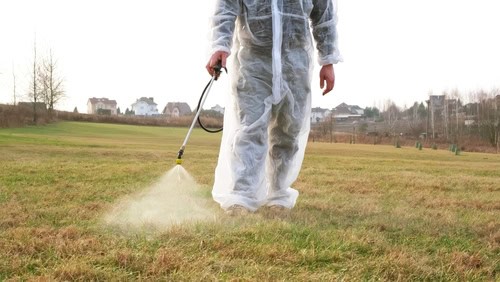
Hear from Our Customers
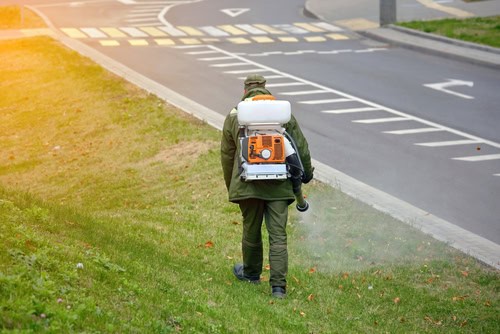
The most frustrating part isn’t watching the damage spread. It’s doing everything you’re supposed to do watering correctly, fertilizing on schedule, reseeding every fall and still ending up in the same place the following summer. That cycle usually has one root cause: an undiagnosed or undertreated fungal disease that never actually got cleared.
Dix Hills properties sit on a mix of sandy and clay soils across rolling terrain, and that combination creates disease pressure in two different ways on the same lawn. Sandy areas dry out quickly and stress the turf, which is exactly where dollar spot takes hold. The lower-lying, clay-heavier zones stay damp longer after rain, and that extended moisture on the grass blades is what brown patch needs to spread. A uniform spray program doesn’t account for either it just treats the whole lawn the same way and hopes for the best.
What changes when the disease is correctly identified and treated with a professional-grade fungicide program is straightforward: the damage stops, the turf recovers, and your fall reseeding actually takes. For a property in Dix Hills where the landscaping represents a real investment and the lawn is part of what makes the estate look the way it should, that outcome is worth getting right the first time.
We are a licensed pesticide applicator registered with the New York State Department of Environmental Conservation. That license isn’t a badge on a website it’s a legal requirement to do this work in New York, and it means every applicator on your property passed state examinations, meets ongoing education requirements, and is accountable to the NYSDEC. It also means access to restricted-use fungicide formulations that aren’t available at any retail store the same professional-grade chemistries used on golf course turf, including right here at the Dix Hills Country Club on Half Hollow Road.
We serve Suffolk County with a focus on accurate disease diagnosis before anything gets applied. That approach matters more in a community like Dix Hills, where large-lot properties, mature tree canopy, and varied soil conditions across a single yard require a site-specific read not a scheduled spray.
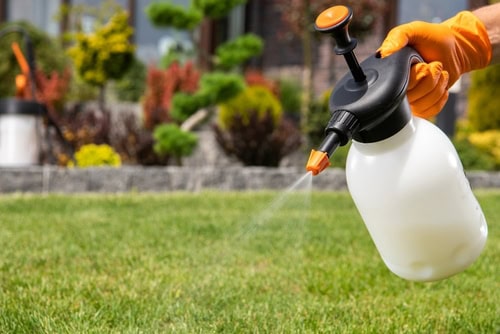
The process starts with a walkthrough of your property. Before any product is selected, our goal is to identify what disease is actually present brown patch, dollar spot, red thread, or something else because each one has a different visual signature, responds to different chemistries, and has a different optimal treatment window. Misidentifying one for another, or confusing fungal damage with drought stress or grub activity, leads to wasted applications and continued spread.
Once the diagnosis is confirmed, we select the appropriate fungicide and apply it at the correct rate for your turf type and the conditions on your property. In Dix Hills, that means accounting for the microclimatic differences across your lawn the shaded areas under mature tree canopy that stay wet longer in the morning, the low-lying zones where air circulation is reduced, and the soil variability that affects how moisture moves through the root zone. These aren’t details a calendar-based program catches.
After treatment, you receive written documentation of exactly what was applied, at what rate, and when a legal requirement under New York State DEC rules and a standard of accountability that unlicensed operators in Suffolk County simply can’t provide. If a preventative program is the right fit going forward, we discuss that based on what was found during the initial visit not pushed as an upsell before anyone’s looked at your lawn.
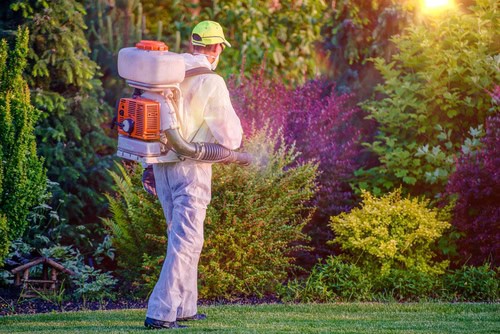
Ready to get started?
The three fungal diseases most common on Long Island lawns brown patch, dollar spot, and red thread are all active in Dix Hills at different points in the season, and each one requires a different approach. Brown patch is the primary summer threat, peaking when nighttime temperatures hold above 70°F through July and August. Dollar spot shows up in the nitrogen-deficient, drought-stressed areas of your lawn often the sandier sections that drain quickly and get overlooked during dry stretches. Red thread arrives in spring and fall when temperatures cool back down to the 60–75°F range, and it spreads quickly: spores can travel up to eight feet from a single infected patch.
What we bring to a Dix Hills property that a store-bought fungicide can’t is access to restricted-use professional formulations and a rotation strategy across modes of action. Using the same chemistry repeatedly builds fungicide resistance in the local fungal population a real and growing problem on Long Island. Our program rotates active ingredients across the treatment season to keep efficacy intact year after year.
Suffolk County and the Town of Huntington also carry specific regulatory requirements for pesticide applications including neighbor notification obligations and restrictions near wells and waterways that are particularly relevant given Long Island’s sole-source aquifer. Every application we perform in Dix Hills is fully compliant with those requirements, and you receive documentation confirming it.
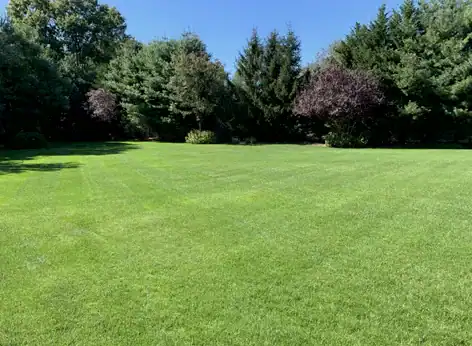
If it’s happening in the same spots every July or August, you’re almost certainly dealing with brown patch a fungal disease caused by Rhizoctonia solani that thrives when nighttime temperatures stay above 70°F and humidity is elevated. Those conditions show up reliably in Dix Hills every summer, and the inland position of the hamlet means there’s less consistent sea breeze to moderate the heat and moisture compared to bayfront communities further south.
The reason it keeps coming back is usually one of two things: the disease was never fully cleared in the first place, or it was treated with an over-the-counter product that didn’t have enough concentration of active ingredient to do the job. Consumer fungicides are formulated at lower concentrations than what licensed applicators can use, and they’re almost never rotated which means resistance builds up in the fungal population in your soil over time. A professional diagnosis followed by a properly timed, professional-grade application breaks that cycle.
They look different if you know what to look for, but all three are easy to confuse with each other or with drought damage. Brown patch shows up as circular tan or brown patches sometimes with a darker “smoke ring” border around the edge and it tends to appear suddenly after a stretch of hot, humid nights. Dollar spot creates small straw-colored spots roughly the size of a silver dollar, scattered across the lawn rather than in one large area, and it’s most active in turf that’s been drought-stressed or is running low on nitrogen. Red thread produces a pinkish or reddish thread-like growth visible on the grass blades, especially in the morning before the dew dries, and it tends to spread in cool, damp conditions in spring and fall.
The reason accurate identification matters is that treating the wrong disease or applying a fungicide at the wrong time in the disease cycle wastes money and lets the actual problem continue to spread. This is the core reason we start with a diagnostic walkthrough before any product is selected.
There are a few reasons this happens, and they’re worth understanding before you spend another season going in circles. First, over-the-counter fungicide products are formulated at significantly lower concentrations of active ingredient than what licensed commercial applicators are legally permitted to use. The same active ingredient say, azoxystrobin exists in both a consumer product and a restricted-use professional formulation, but the professional version is applied at a concentration that simply isn’t available at retail.
Second, timing matters more than most people realize. Consumer products are applied reactively after the disease is already visible but by that point, the fungal mycelium has already spread well beyond the visible damage. Professional programs are timed preventatively, based on soil temperature and historical disease pressure windows, so the fungicide is in the turf before the pathogen gets established. Third, using the same product repeatedly without rotating to a different mode of action builds resistance in the local fungal population. That’s a documented issue in Long Island turf, and it’s one of the primary reasons DIY attempts stop working over time.
This is one of the most common questions from Dix Hills homeowners, and it’s a reasonable one especially on larger properties where kids and pets spend significant time on the lawn. The short answer is yes: when applied correctly by a licensed professional, fungicide treatments are safe to be around once the product has dried, which typically takes a few hours depending on conditions.
As a licensed pesticide applicator registered with the NYSDEC, we follow all label requirements and re-entry intervals for every product applied. You’ll know exactly what was used, at what rate, and what the re-entry interval is that documentation is provided after every application as required by New York State law. Suffolk County also has specific regulations around pesticide applications near wells and waterways, which is particularly relevant on Long Island where drinking water comes entirely from the groundwater aquifer below. Every application we perform in Dix Hills is fully compliant with those requirements, and if there are specific areas of your property a vegetable garden, a play area, a pet run those can be factored into the application plan.
It can, and this is a real concern in communities like Country Pointe, The Estates at Dix Hills, and The Gates, where properties are closer together and community appearance standards apply. Red thread is the most mobile of the common Long Island lawn diseases spores can travel up to eight feet from a single infected area, which means an untreated outbreak near a property line has a reasonable chance of spreading to an adjacent lawn. Brown patch spreads primarily through infected soil, water movement, and foot traffic, so shared areas and common pathways can be vectors as well.
The practical implication for homeowners in Dix Hills’ gated communities is that early treatment isn’t just about your own lawn it’s about not becoming the source of a problem that affects your neighbors. A preventative fungicide program timed to the seasonal disease windows in this area is the most effective way to keep your lawn clean before a visible outbreak develops, which also happens to be the most cost-effective approach compared to treating active disease after the damage is already done.
Timing depends on which disease you’re trying to prevent or treat, and Dix Hills has distinct pressure windows for each of the three most common fungal diseases on Long Island. Red thread is a cool-season disease that peaks in spring typically April through May and again in early fall when temperatures drop back down to the 60–75°F range. If your lawn has had red thread before, a preventative application timed to when soil temperatures reach 55°F in spring gives you the best chance of stopping it before it spreads.
Brown patch is the primary summer concern, and the window in Dix Hills typically runs from late June through August when nighttime temperatures consistently hold above 70°F. Preventative applications before that window opens and curative treatments applied at the first sign of circular tan patches are both significantly more effective than waiting until the damage is widespread. Dollar spot can show up across a longer stretch of the season, particularly in the drier, sandier areas of your lawn that get stressed during summer dry spells. A professional assessment in early spring sets up the right program timing for your specific property, rather than guessing at a calendar date that may or may not match what’s actually happening in your lawn.
Useful Links
Other Services we provide in Dix Hills