Hear from Our Customers
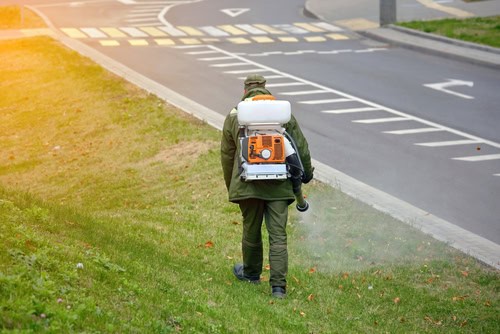
If you’ve been reseeding the same dead spots every September, the problem isn’t your seed it’s what’s still living in the soil underneath it. Active fungal disease will kill new grass just as fast as it killed the old stuff. Until the pathogen is treated, you’re spending money on seed that doesn’t stand a chance.
Lake Grove’s environment creates near-perfect conditions for fungal disease from spring through fall. The sandy, fast-draining soils common across this part of Suffolk County put turf under drought stress and stressed grass is exactly what dollar spot exploits. Add in the moisture that hangs around under the mature tree canopy on Lake Grove’s older streets, and you’ve got a lawn that stays damp long after the rain stops. That’s the window brown patch and red thread need to spread.
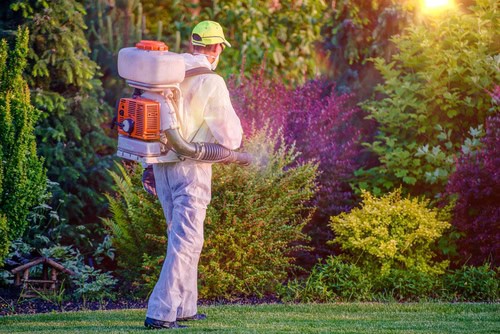
A targeted fungicide program stops the cycle. You get a lawn that actually recovers, holds its color through the summer, and doesn’t require you to start over every fall. That’s what we build not a calendar spray, but a real fix based on what’s happening in your specific yard.
We are a New York State DEC-licensed commercial pesticide applicator serving Lake Grove and the surrounding north-central Suffolk County area. That license isn’t a marketing badge it’s a legal requirement to apply pesticides for hire in New York, and earning it means passing state exams, meeting field experience requirements, and renewing every three years with continuing education. A lot of operators in this area skip that step entirely.
What the license unlocks matters just as much as the credential itself. Licensed applicators are the only ones legally permitted to purchase and use restricted-use fungicides professional-grade formulations that aren’t sold at the Home Depot off NY-347 or anywhere else at retail. These are the same products used on golf courses and athletic fields, and they work at a level that consumer products simply can’t match.
We serve Lake Grove out of Port Jefferson Station, just up the 347 corridor. This is the market we know the soils, the seasonal disease windows, the conditions that come with being this close to Lake Ronkonkoma. You’re not getting a national franchise template. You’re getting someone who actually works in this area and understands what Lake Grove lawns face. Lake Grove homeowners often pair lawn care with flea & tick control in Lake Grove.
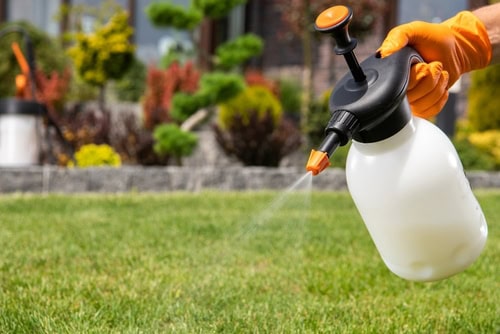
The first thing we do is figure out what you’re actually dealing with. Brown patch, dollar spot, and red thread are the three most common fungal diseases on Long Island lawns, but they look different, behave differently, and require different fungicide chemistries to treat. Applying the wrong product or the right product at the wrong time is one of the main reasons DIY attempts fail. We identify the disease before we touch anything.
Once the diagnosis is confirmed, we match the treatment to the pathogen. That means selecting the right active ingredient, applying it at the correct rate, and timing the application to the actual conditions in your lawn not a generic schedule. In Lake Grove, that timing matters. Brown patch is most aggressive during Suffolk County’s humid July and August nights. Dollar spot peaks when your sandy soil dries out and nitrogen runs low. Red thread hits hardest in the cool, damp conditions of spring and early fall, especially under the shade of the mature trees that line many of Lake Grove’s older residential streets.
After every application, you receive written documentation of what was used, at what rate, and when as required by New York State law. We also rotate fungicide chemistries between applications to prevent resistance from developing, which is something most homeowners never think about and most consumer products can’t account for.
Ready to get started?
The core of what we provide is access to professional-grade chemistry and the expertise to use it correctly. Restricted-use fungicide formulations the ones that actually clear a brown patch outbreak or stop dollar spot from spreading across a nitrogen-depleted lawn are not available to the public. They require a state license to purchase. That’s not a technicality; it reflects a real difference in concentration, systemic action, and effectiveness compared to what’s on the shelf at any retail store in the Smith Haven Mall corridor.
Beyond the product itself, what you’re paying for is the diagnostic process and the program structure. We identify the specific disease present, select the appropriate chemistry, apply it at the correct rate, and rotate to a different mode of action on follow-up applications. That rotation matters using the same fungicide repeatedly builds resistant strains that stop responding to treatment. It’s a detail most homeowners don’t know to think about, and one that separates a professional fungicide program from a one-time spray.
Suffolk County has some of the most stringent pesticide regulations in New York State, and properties near Lake Ronkonkoma fall within areas where setback requirements for water body proximity apply. Our licensed applicators operate in full compliance with both state and county requirements including the neighbor notification that New York law mandates before every commercial application. You’re covered on every level.
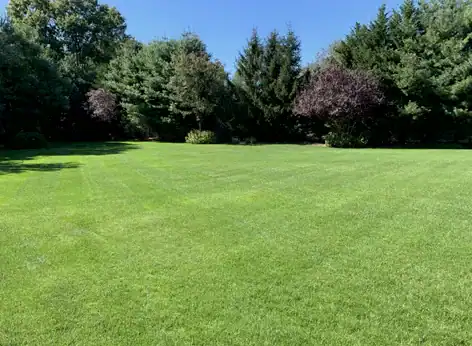
Brown patch is caused by a fungal pathogen called Rhizoctonia solani, and it thrives under very specific conditions nighttime temperatures above 70°F combined with high humidity and moisture sitting on the grass blades for extended periods. Suffolk County’s summers deliver exactly that, typically from late June through August. If your lawn is on an irrigation timer that runs in the evening or overnight, you may be creating the conditions brown patch needs to spread, even without realizing it.
The reason it comes back in the same spots year after year is that the pathogen doesn’t disappear when the weather cools. It goes dormant in the soil and re-activates when conditions are right again. Without a targeted fungicide treatment to disrupt that cycle, the disease will return every season. Our brown patch fungicide program in Lake Grove is timed to the actual local disease window not a generic calendar so treatment happens before the outbreak takes hold, not after you’re already looking at large straw-colored circles in your lawn.
They look similar at a glance but behave very differently, and treating the wrong disease with the wrong product is one of the most common reasons DIY fungicide attempts fail. Brown patch shows up as large circular patches often a foot or more in diameter with a darker, water-soaked ring around the outer edge in the early morning. Dollar spot creates smaller, silver-dollar-sized straw-colored spots scattered across the lawn, often with a white cottony growth visible in the morning dew. Red thread is easier to spot: look for pink or red thread-like strands extending from the grass blades, particularly in shaded or low-nitrogen areas.
In Lake Grove, all three diseases are common, but the conditions that favor each one vary by location on your property. Areas under the mature tree canopy that shades many of the village’s older streets are more prone to red thread and dollar spot. Open, irrigated areas are higher-risk for brown patch during the summer humidity peak. Getting the diagnosis right is the first step which is exactly why we start there before recommending any treatment.
You can try, and most Lake Grove homeowners have the Home Depot accessible from the NY-347 corridor carries several consumer fungicide products. The problem isn’t the effort; it’s the ceiling on what those products can do. Consumer-grade fungicides contain lower concentrations of active ingredients, are often formulated for surface contact rather than systemic action, and frequently don’t match the specific pathogen present in your lawn. Applying the wrong chemistry to the wrong disease produces little to no result, and the disease continues to spread while you wait to see if it worked.
There’s also the resistance issue. Consumer products don’t come with guidance on rotating chemistries, and most homeowners apply the same product repeatedly. Over time, that builds fungicide-resistant strains that become harder to treat. Licensed commercial applicators like us have access to restricted-use professional-grade fungicides that are simply not available at retail higher-concentration, systemic formulations that penetrate the plant and address the pathogen at the root level. If you’ve already tried a store-bought product and the disease is still spreading, that’s the most common reason why.
Yes, and it’s one of the more underappreciated factors in fungal disease pressure on Lake Grove properties specifically. The village is named for the groves of trees near Lake Ronkonkoma, and many of the older residential streets particularly those with converted resort-era homes are lined with mature deciduous trees that create significant canopy coverage. That shade reduces airflow, limits the sun’s ability to dry the grass after rain or irrigation, and keeps the leaf surface damp for longer windows throughout the day. Fungal spores need moisture on the grass blade to germinate and spread, so shaded areas essentially extend that window every time it rains.
If you’re seeing persistent disease in the same shaded areas year after year, the tree canopy is a contributing factor that doesn’t go away which means the fungicide program needs to account for it. We factor site-specific conditions like shade, drainage, and proximity to water into the treatment plan, rather than applying a uniform program across your entire property regardless of what’s happening in each zone.
It depends on what’s happening in your lawn and what time of year it is. A curative application treating an active outbreak is typically followed by at least one or two follow-up applications to make sure the disease is fully suppressed and doesn’t rebound. For lawns with a history of recurring disease, a preventative program that begins before the peak disease window is more effective and usually requires fewer total applications than repeatedly chasing an active outbreak.
In Lake Grove, the relevant disease windows are spring and early fall for red thread and dollar spot, and June through August for brown patch. Sandy soils in this part of Suffolk County deplete nitrogen faster than clay-based soils, which means dollar spot risk extends further into the season than many homeowners expect. The right program structure depends on your lawn’s history, your soil conditions, and which diseases have been active. We’ll walk you through a realistic treatment plan after the initial diagnosis not a one-size-fits-all package designed to maximize visits.
For any business applying pesticides for hire, yes New York State law requires the business to be registered with the NYSDEC and to employ at least one certified commercial applicator. That certification requires passing both a core exam and category-specific exams, meeting experience or education standards, and renewing every three years with continuing education. It’s not a formality; it’s a legal threshold, and businesses operating without it are either applying only consumer-grade products or working outside the law.
For homeowners in Lake Grove, this matters in a few practical ways. First, only licensed applicators can legally purchase and use restricted-use pesticides the professional-grade fungicide formulations that actually work on serious disease outbreaks. Second, licensed applicators are required by New York State law to provide written records of every application and to notify neighboring properties before treatment protections that unlicensed operators don’t provide. Third, given that parts of Lake Grove fall within proximity to Lake Ronkonkoma, Suffolk County’s water body setback regulations apply, and compliance with those rules requires a licensed applicator who understands them. We are fully licensed and compliant and that’s verifiable through the NYSDEC’s public license lookup.
Useful Links
Other Services we provide in Lake Grove