Hear from Our Customers
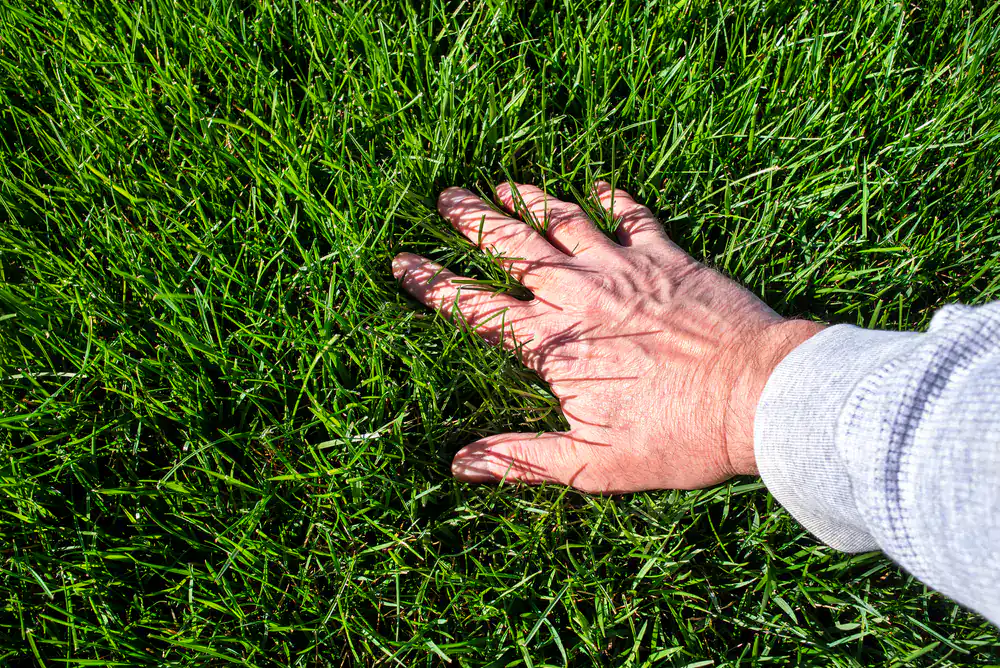
Here’s what most homeowners in Dix Hills don’t realize: fertilizer doesn’t work in acidic soil. When your pH drops below the optimal range and in this part of Long Island, it almost always does without treatment the nitrogen, phosphorus, and potassium you’re applying get chemically locked in the ground. Your grass can’t touch it. So the lawn stays thin, yellow, or weedy no matter how much you spend on it.
Dix Hills has a specific set of conditions that accelerate this problem. The mature tree canopy across the hamlet those oaks and maples that give the neighborhood its wooded, estate-like feel drops leaf litter every fall that decomposes into organic acids and quietly pushes your soil pH lower year after year. Homes built around 1970, which describes most of the housing stock here, have had five decades of rainfall leaching calcium and magnesium from the soil without anyone replacing it. That’s a long time for things to drift in the wrong direction.
Once the pH is corrected, the difference is real. Your grass can actually absorb the nutrients it’s been missing. Weeds and moss which thrive in acidic conditions lose their competitive edge. And every dollar you’ve already spent on lawn care starts doing what it was supposed to do.
Lawn Master is based in Port Jefferson Station and has been serving Dix Hills and the surrounding Suffolk County communities for years. We’re not a national brand running a territory out of a regional office. We’re a local operation that knows this county’s soil the sandy conditions you’ll find near Wolf Hill Road, the more compacted earth closer to Jericho Turnpike, and everything in between across Dix Hills’ rolling terrain.
When you call, you reach Carol, our office manager, who handles scheduling and knows your account. There’s no call center, no anonymous technician who shows up without context. You get a real conversation with someone who can actually help.
We operate on a program model, which means we’re not here for a one-time application and a receipt. We track your lawn’s progress, send seasonal reminders, and treat pH management as part of a longer-term plan because that’s the only way it actually holds.
It starts with a soil test. That’s not a formality it’s the only accurate way to know where your pH stands and how much correction your lawn actually needs. Without it, you’re guessing at lime rates, and guessing wrong in either direction creates its own set of problems. Too little and nothing changes. Too much and you push the soil alkaline, which locks out a different set of nutrients entirely.
Once we have your results, we calculate the right lime application rate for your specific property. Dix Hills lots aren’t uniform soil can vary from one side of a yard to the other on rolling terrain, and a home shaded by mature trees needs a different approach than an open, sun-exposed lawn. We account for that. The lime we apply is ground limestone, a natural mineral amendment not a synthetic chemical so it’s safe around kids, pets, and Long Island’s groundwater.
Timing matters too. Fall is the best window for lime application in this area. The rain and freeze-thaw cycle through winter work the lime into the soil so it’s fully active by the time your grass starts growing in spring. We’ll let you know when the window is right and follow up with a retest every two to three years to keep things dialed in.
Ready to get started?
Every pH treatment we do in Dix Hills starts with professional soil testing not a consumer kit from a hardware store, but a calibrated test that measures your soil’s actual pH and buffering capacity. That data drives the lime rate. It also tells us whether your soil is trending acidic from leaf litter decomposition, rainfall leaching, or decades of untreated drift all of which are common in a community with Dix Hills’ tree coverage, rainfall levels, and older housing stock.
The lime application itself uses agricultural-grade ground limestone, spread at the rate your soil actually needs. We follow New York State’s Neighbor Notification requirements for commercial applications, and because we’re applying a soil amendment rather than a pesticide, the environmental profile is clean. For homeowners near the Vanderbilt Parkway corridor or in areas like Hunting Hollow Farms where lot size and mature landscaping are significant, we adjust our approach to account for the full scope of the property.
After the application, we build your results into your ongoing program. pH correction isn’t a one-and-done service Long Island’s porous soil and annual rainfall mean the drift continues, and a follow-up test every two to three years keeps your lawn in the range where everything else you’re doing for it actually works.
The most common signs are thin or yellowing grass, persistent moss growth, and weeds that keep coming back no matter what you do to treat them. All three of those conditions thrive in acidic soil which is the default state for most untreated lawns in this part of Long Island. Northeast soils commonly test between 4.8 and 5.5 without treatment, and Dix Hills adds specific acidifying factors on top of that baseline: mature deciduous trees dropping leaf litter that decomposes into organic acids, decades of rainfall leaching calcium and magnesium from the soil, and in many cases 50-plus years of accumulated drift on homes built around 1970.
The only way to know for certain is a soil test. Visual symptoms tell you something is wrong they don’t tell you how far off your pH is or how much lime you need to correct it. A professional test gives you actual numbers, which is what drives an accurate lime application rate.
This is the most common frustration we hear from homeowners in Dix Hills who’ve been investing in lawn care for years without seeing results. The answer is almost always soil pH. When your lawn’s pH drops below the 6.3 to 6.5 range that Cornell Cooperative Extension targets for Long Island turf, the nutrients in your fertilizer nitrogen, phosphorus, potassium become chemically unavailable to your grass roots. The fertilizer is in the soil. Your grass just can’t absorb it.
What makes this particularly common in Dix Hills is the combination of naturally acidic Northeast soil, heavy tree canopy accelerating acidification through leaf decomposition, and older properties where pH has never been actively managed. Once you correct the pH, the fertilizer you’ve already been applying starts working the way it should. It’s not that your lawn care program was wrong it was just missing the foundation.
Yes lime is ground limestone, a naturally occurring mineral. It’s not a synthetic chemical or a pesticide, and it doesn’t carry the safety concerns associated with those products. Once it’s watered in or rained on, it’s integrated into the soil and poses no risk to children or pets who use the lawn normally.
From an environmental standpoint, correcting your soil’s pH is actually one of the most responsible things you can do for Long Island’s groundwater. When soil pH is too low, fertilizer nutrients that your grass can’t absorb leach through Long Island’s porous soil directly into the aquifer system that supplies the region’s drinking water. Bringing your pH into the right range means your lawn absorbs what’s being applied which means less of it ends up where it shouldn’t. New York State’s Nutrient Runoff Law exists because this is a real concern for the region, and pH correction directly addresses it.
Fall is the ideal window, and it’s worth planning for rather than waiting until spring. When lime is applied in the fall, the rain and the freeze-thaw cycle that Long Island winters bring work together to integrate it into the soil profile over the winter months. By the time your grass comes out of dormancy in spring, the pH correction is already in place and your lawn can start the growing season in the right conditions.
Spring is a workable secondary window, but you’re already a growing season behind. Your grass has spent another winter and early spring in acidic soil, missing the nutrient absorption it needed. In Dix Hills, where fall overseeding is already a natural point of focus for homeowners thinking about lawn renovation, it makes sense to pair a soil test and lime application with your seed and fertilizer program because the pH correction is what makes the rest of it effective.
Pricing depends on your lot size, current pH levels, and how much correction is needed but for most Dix Hills residential properties, a professional soil test and lime application is a straightforward, reasonable investment relative to what most homeowners here are already spending on fertilizer and lawn care programs annually.
The more useful way to think about the cost is in terms of what it unlocks. If you’ve been running a fertilization program that isn’t producing results because your soil pH is off, you’ve been spending money on nutrients your grass can’t absorb. Correcting the pH doesn’t just fix the soil it makes every other lawn care dollar you’re already spending start working. For a property where the median home value exceeds a million dollars, getting the foundation right is a straightforward call. Reach out to discuss your specific property and we’ll give you a clear number before anything gets scheduled.
After an initial correction, most lawns should be retested every two to three years. Long Island’s annual rainfall of roughly 45 to 50 inches continuously leaches calcium and magnesium from the soil, and Dix Hills’ heavy tree canopy means leaf litter decomposition is adding organic acids back in every fall. The drift is ongoing, even after you’ve corrected it.
What changes after the first treatment is the rate of drift. A lawn that’s been brought to the right pH and maintained with a program-based approach holds its balance longer than one that’s been neglected for decades. The goal isn’t to treat it once and forget it it’s to stay ahead of the drift so your lawn never falls back into the range where nutrients lock out and weeds take over. That’s exactly what our ongoing program is designed to do.
Useful Links
Other Services we provide in Dix Hills