
Hear from Our Customers
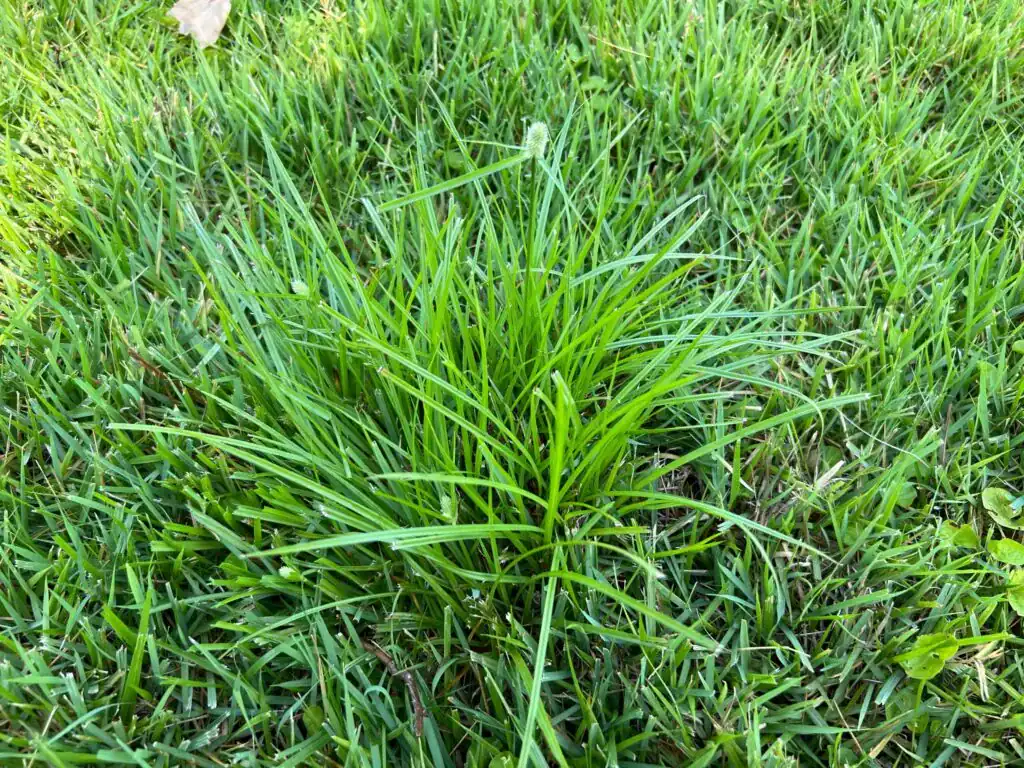
Kyllinga doesn’t just look bad it spreads. Every season you let it go, it claims more of your lawn through an underground root network that survives most treatments and keeps regenerating. On the large, irrigated properties throughout Dix Hills, that spread happens faster than most homeowners expect.
The rolling terrain in this part of western Suffolk County creates natural low points across residential lots hollows and flat areas between the hills that hold moisture after rain or an irrigation cycle. Those wet pockets are exactly where kyllinga gets its footing first. If you’ve noticed the infestation concentrated near a low area or close to an irrigation head, that’s not a coincidence.
What changes after a proper kyllinga control program isn’t just the absence of the weed. It’s a lawn that’s actually healthy enough to resist reinfestation with the bare spots filled in, the soil conditions addressed, and the underlying drainage issues that invited kyllinga in the first place brought under control. That’s what a real fix looks like on a Dix Hills property.
Lawn Master is a locally owned lawn care company based in Suffolk County, built around one thing: fixing lawns that standard programs haven’t been able to fix. Kyllinga control is exactly the kind of problem we were built for it requires the right identification, the right licensed chemistry, and a program structured around how the plant actually grows. Not a single spray and a hope.
We hold a New York State DEC Commercial Pesticide Applicator License (Category 3a), which is the credential required to legally purchase and apply the professional-grade herbicides that work on kyllinga. We’re also fully familiar with Suffolk County’s pesticide buffer zone regulations under Local Law 41-2007 something out-of-area providers often aren’t. For homeowners near protected well zones in the Half Hollow Hills area adjacent to Dix Hills, that compliance isn’t a small detail.
We’ve worked on lawns throughout western Suffolk County, including many in Dix Hills large-lot properties with mature turf, full irrigation systems, and the kind of compaction that builds up over 50 years of use. We know what Dix Hills lawns look like, and we know what it takes to restore them.
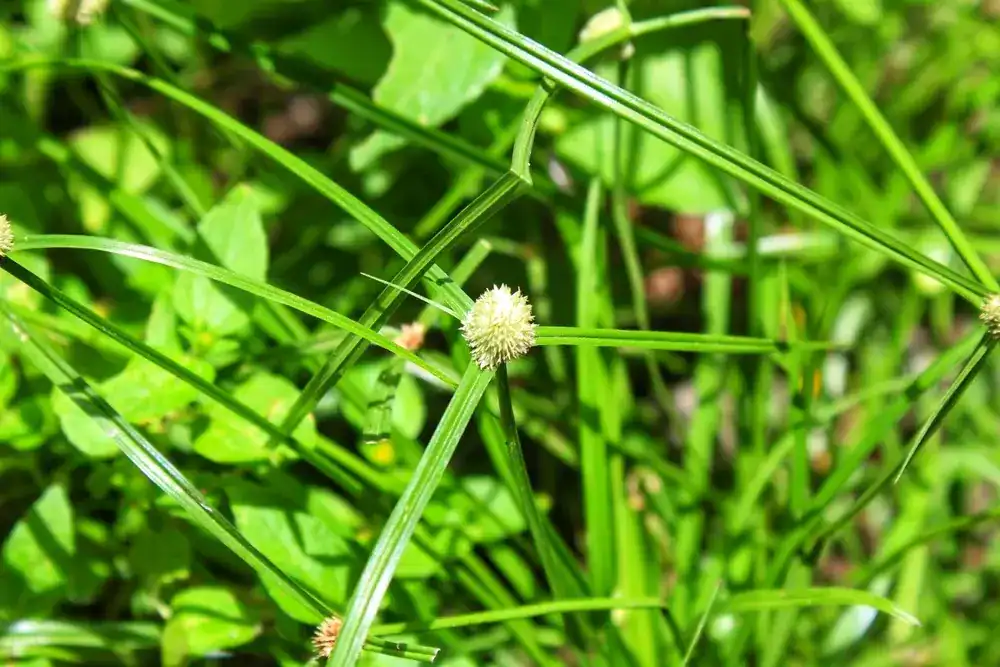
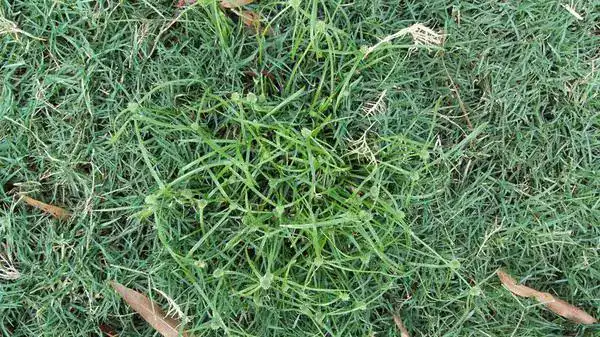
It starts with identification. Kyllinga is a sedge, not a grass or a broadleaf weed, and it’s frequently misidentified even by lawn care companies that should know better. Before anything gets applied to your lawn, we confirm what we’re dealing with. Kyllinga has a triangular stem, a dense mat-forming growth habit, and a round seed head. It stays darker green than the surrounding turf through the summer heat. If that’s what you’re seeing, the program begins.
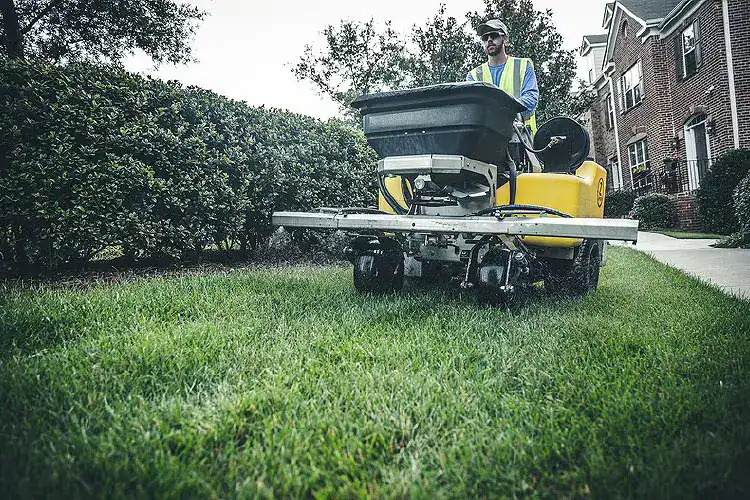
From there, we schedule the first application during kyllinga’s active growing window late May through late August in the Long Island climate. The professional herbicides we use, halosulfuron-methyl and sulfentrazone, are not available at retail. They require a licensed applicator to purchase and apply, and they’re the only chemistry with real efficacy against this plant. One application isn’t enough. The underground rhizome network survives a single treatment and regenerates. A proper program requires a minimum of two to three targeted applications spaced four to six weeks apart.
After the treatment cycle, we don’t just leave bare patches behind. Post-treatment restoration overseeding, soil work, and irrigation adjustments where needed is part of how we close out the job. On a large Dix Hills property where kyllinga may have covered a significant area, that restoration step is what separates a finished result from a half-finished one.
Ready to get started?
The core of what we deliver for kyllinga control in Dix Hills is a licensed, multi-application sedge treatment program not a one-time visit. That means species-level identification before treatment, professionally licensed herbicide applications timed to the plant’s active growth cycle, and follow-up applications that address what the first round doesn’t fully eliminate. The rhizome network is the reason kyllinga keeps coming back, and the program is built around that biological reality.
Because Dix Hills properties tend to be large, mature, and heavily irrigated, the program also includes a cultural assessment looking at drainage patterns, irrigation scheduling, and soil compaction. These are the conditions that created the infestation in the first place. A lawn with chronic moisture retention in its low points, or an irrigation system running on a schedule that’s keeping the soil too wet, will keep producing kyllinga regardless of how many times you treat it. Adjusting those conditions is part of the work.
Every application we make in Suffolk County is done in full compliance with SCDHS pesticide buffer zone regulations. If your Dix Hills property falls near a designated well buffer zone which applies to portions of the Half Hollow Hills area your treatment is documented, legal, and handled by a licensed applicator who knows the county’s requirements. That’s not something every provider can say.
Because kyllinga is a sedge, not a broadleaf weed or a grassy weed and the products sold at retail are formulated for those two categories. Standard broadleaf herbicides like 2,4-D and dicamba have no meaningful activity on sedges. Neither do common grassy weed controls like quinclorac. You’re not applying them wrong. They’re simply the wrong chemistry for this plant.
The herbicides that actually work on kyllinga halosulfuron-methyl (sold as Sedgehammer) and sulfentrazone (sold as Dismiss) require a New York State DEC Commercial Pesticide Applicator License to purchase in professional formulations. They are not available to unlicensed buyers at the concentrations needed for effective control. This is a product access problem, not a user error problem. The reason DIY kyllinga control fails on Dix Hills lawns is that the right tools are simply not on the shelf at your local hardware store.
At minimum, two to three targeted applications spaced four to six weeks apart during the active growing season. Kyllinga spreads through an underground rhizome network, and that network survives a single herbicide application. The visible plant tissue dies, but the root system regenerates new growth within weeks. One treatment produces temporary suppression not elimination. If a provider quotes you a single-visit solution for kyllinga, that’s a sign they either don’t fully understand the plant’s biology or they’re not being straight with you about what it takes.
In the Long Island climate, the effective treatment window runs from late May through late August. That’s when kyllinga is actively growing and most responsive to herbicide applications. For Dix Hills homeowners who discover the problem in late summer which is common, because kyllinga stays dark green while the surrounding cool-season turf slows down in the heat the right move is to start a program as early as possible in that window the following season rather than attempting a late-season application that won’t have enough time to work.
They’re related but different. Both are sedges in the Cyperaceae family, which is why they’re often confused and why a treatment program designed for nutsedge may not fully address a kyllinga infestation. Kyllinga tends to grow lower and denser than nutsedge, forms a tighter mat across the turf surface, and produces a small round seed head rather than the taller, more branched seed structure of yellow or purple nutsedge. The growth habit difference is visible once you know what to look for.
The reason this distinction matters for your lawn in Dix Hills is that misidentification leads to mismatched treatment. Some providers see a sedge, assume nutsedge, and apply a protocol that produces incomplete results. Kyllinga can have a slightly different response profile depending on the herbicide program used, and the timing and application rate matter. Correct identification before treatment is the first step in any kyllinga control program we run it’s not a formality, it’s the foundation of getting the result right.
Because those spots have the conditions kyllinga needs to thrive and until those conditions change, the weed will keep returning even after treatment. Kyllinga is strongly associated with excess soil moisture. It establishes and spreads fastest in areas that stay wet longer than the surrounding lawn: low points in the terrain, spots near irrigation heads that receive more water than they need, or areas where compacted soil prevents proper drainage.
In Dix Hills, this pattern is especially common. The hamlet’s rolling terrain creates natural drainage variability across large residential lots slopes dry out quickly, but the hollows and flat areas between them retain moisture. Homes built in the 1970s, which make up most of the housing stock here, also tend to have mature lawns with significant soil compaction that restricts drainage further. If you’re seeing kyllinga return in the same areas year after year, the answer isn’t more herbicide it’s addressing the drainage and irrigation conditions driving it. That’s part of what a proper program looks at.
Both. Kyllinga spreads through two mechanisms simultaneously: underground rhizomes that push outward from an established plant, and seeds that disperse across the lawn through mowing, foot traffic, water movement, and wind. A single kyllinga plant can produce up to 5,000 seeds per year. On a large Dix Hills property half an acre, an acre, or more that seed production adds up fast, and every mowing pass over an established patch can scatter seeds into new areas of the lawn.
The rhizome network is the more persistent problem. It’s underground, it survives most herbicide applications that only address the above-ground plant tissue, and it can regenerate new growth within weeks of a treatment. That’s why the multi-application program structure matters. The goal is to keep hitting the plant as it regenerates from the rhizome system, depleting the root network over successive applications until it can no longer recover. On a larger property where the infestation has had time to spread, this process takes a full season of correctly timed treatments to complete.
It affects both, and in a community like Dix Hills, the two are directly connected. Homes here regularly sell above $1 million, and curb appeal is a real factor in how a property is perceived by neighbors, by buyers, and by appraisers. A lawn visibly overtaken by a spreading weed that the current service hasn’t been able to control sends a signal that something has been neglected, even if the rest of the property is immaculate.
Beyond aesthetics, an uncontrolled kyllinga infestation is an actively worsening problem. The longer it spreads, the more of your desirable turf it displaces, and the more work and cost is required to restore the lawn after treatment. A moderate infestation treated in its second season is a very different job than one that has been spreading unchecked for four or five years across a large irrigated property. For homeowners in Dix Hills who are maintaining a significant real estate investment, early professional intervention is genuinely the more cost-effective path not just the more aesthetically satisfying one.
Useful Links
Other Services we provide in Dix Hills