
Hear from Our Customers
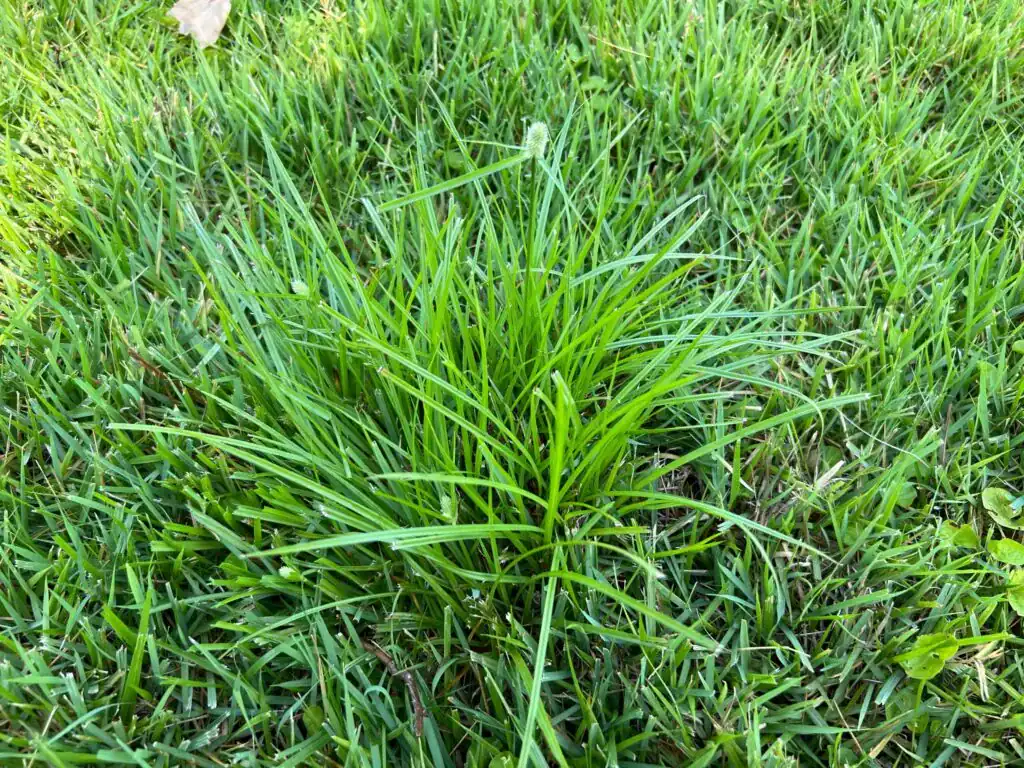
If you’ve already tried something from the hardware store and watched that dark green patch come right back, you’re not doing it wrong. The products available without a license simply don’t work on kyllinga. It’s a sedge, not a broadleaf weed, and it doesn’t respond to the standard stuff. What changes the outcome is professional-grade chemistry specifically halosulfuron or sulfentrazone applied at the right time, in the right sequence, by someone who actually knows what they’re looking at.
For homeowners near Conscience Bay or along the wooded residential streets off Route 25A in East Setauket, this matters more than it does in drier, inland parts of Suffolk County. The moisture-retentive soils that come with the North Shore geography are exactly what kyllinga is built to exploit. Shaded lots with mature tree canopy hold even more moisture, which keeps the weed actively growing long after your turf has slowed down in the summer heat.
Once we eliminate the kyllinga, you’re left with a lawn that can actually be restored dense, healthy turf that closes off the bare spots and gives the weed nowhere to re-establish. That’s the full result. Not just elimination, but recovery.
We’re based in Port Jefferson Station right up Route 25A from East Setauket. That’s not a detail we throw in to sound local. It means our technicians drive through the Three Village area regularly. We know the neighborhoods. We know what North Shore lawns deal with. And when you call, you’re reaching someone who can actually answer a question about your East Setauket lawn, not route you through a regional queue.
Suffolk County’s groundwater regulations aren’t an afterthought here either. Every application we make is in full compliance with SCDHS buffer zone requirements under Local Law 41-2007 because this county sits above a sole-source aquifer, and that matters. We hold the NYSDEC Commercial Pesticide Applicator License required to purchase and apply the professional-grade herbicides that actually control kyllinga. That credential is the difference between a program that works and one that doesn’t.
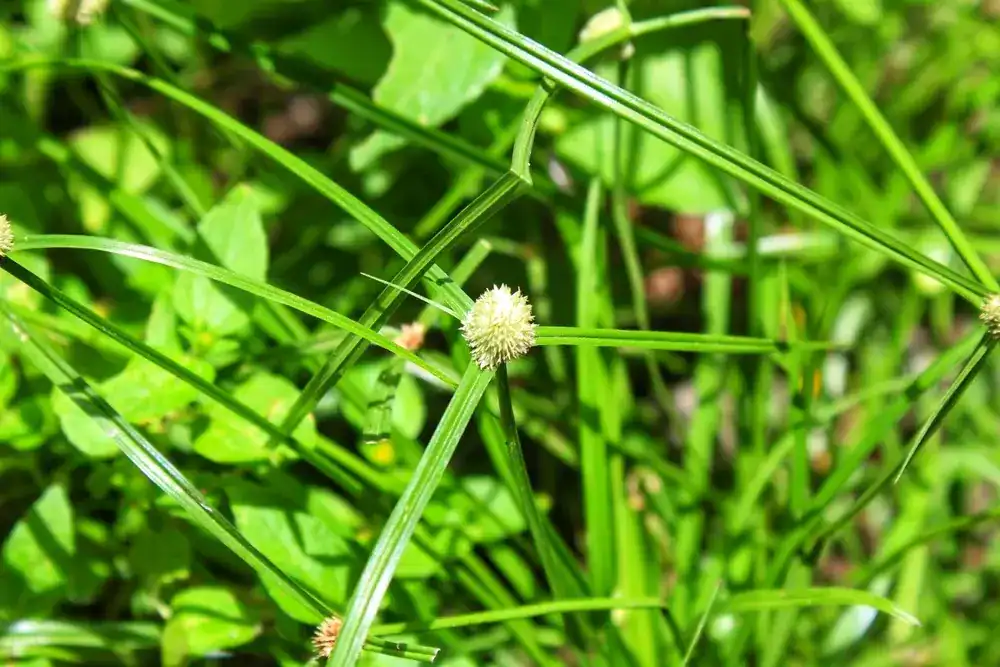
It starts with correct identification. Kyllinga is frequently mistaken for nutsedge both are sedges, both have triangular stems, and both look like grass until you know what to look for. Kyllinga produces a compact, round seed head above three leaf bracts. Nutsedge branches out into a more open, star-shaped structure. Treating one as if it’s the other leads to incomplete results. Before anything gets applied, we confirm the specific sedge species in your lawn.
From there, our treatment program is timed to the plant’s active growing season late May through late August in East Setauket’s North Shore climate. That window matters because kyllinga is most metabolically active during that stretch, which is exactly when herbicide uptake is most effective. A minimum of two to three applications, spaced four to six weeks apart, are needed to work through both the visible plant tissue and the rhizome network underground. One application will damage what’s above the surface. It won’t eliminate what’s below it.
After treatment, the focus shifts to restoration. The areas where kyllinga was crowding out your turf will need overseeding and soil recovery to close back up otherwise, those open spots become re-entry points. The job isn’t done until the lawn is actually growing back in.
Ready to get started?
A properly structured kyllinga control program in East Setauket isn’t a single visit with a generic weed spray. It’s a sequenced treatment plan built around the biology of the plant and the specific conditions of your property. We use professional-grade halosulfuron-methyl or sulfentrazone herbicide chemistries that require a NYSDEC Category 3a Commercial Pesticide Applicator License to purchase and use. These are not available at retail. They work differently, and the results reflect that.
Every property in East Setauket is evaluated before treatment begins. Lots near Conscience Bay or Strongs Neck tend to carry higher soil moisture, which affects both the severity of the infestation and the cultural recommendations that go alongside the chemical program. Irrigation schedules, drainage patterns, and shading from mature trees all get factored in because eliminating the weed without addressing what invited it in the first place is a short-term fix.
All applications we make are documented and fully compliant with Suffolk County Local Law 41-2007, which governs pesticide use near public drinking water supply wells. For East Setauket residents, that’s not a technicality it’s a real local concern given what the Suffolk County Water Authority has documented about groundwater quality across the county. You get effective treatment and a program you can feel good about.
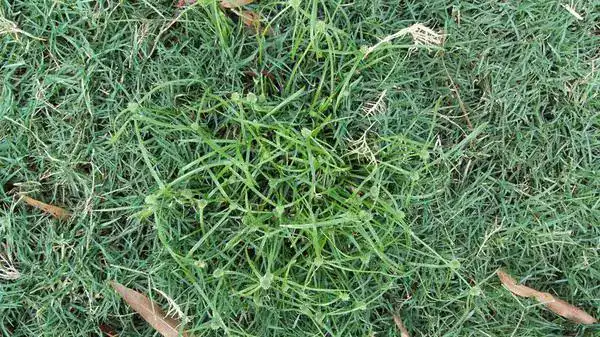
Kyllinga spreads two ways through seeds and through rhizomes, which are underground root stems that run horizontally beneath the soil surface. When you apply a retail weed killer, you may damage the visible plant tissue, but the rhizome network underneath survives. The following season, or even a few weeks later, new growth emerges from those same roots and the patch returns.
The other issue is product access. The herbicides that reliably control kyllinga halosulfuron-methyl and sulfentrazone require a New York State DEC Commercial Pesticide Applicator License to purchase in professional-grade formulations. The products available at hardware stores are not the same chemistry, and they don’t perform the same way on sedge. If you’ve treated kyllinga and watched it come back, that’s almost certainly why. It’s not a technique problem. It’s a product access problem that only a licensed applicator can solve.
For an established kyllinga infestation, a minimum of two to three applications is the realistic expectation spaced four to six weeks apart during the active growing season. In East Setauket, that window runs from late May through late August. Applications made outside of that range, when the plant is not actively growing, are significantly less effective because the herbicide relies on the plant’s metabolic activity to move through the tissue and into the root system.
A single application will visibly damage the plant above the surface. It will not eliminate the rhizome network below it. The second and third applications work progressively deeper into that underground system, reducing the plant’s ability to regenerate. Skipping treatments or spacing them too far apart gives the plant time to recover between applications, which extends the program and reduces overall effectiveness. The goal is consistent pressure across the full growing season.
It’s a fair question, and it’s one that gets answered wrong fairly often even by lawn care companies that should know better. Both kyllinga and nutsedge are sedges with triangular stems and a grass-like appearance, but they’re different plants with different growth habits. The easiest way to distinguish them is by the seed head. Kyllinga produces a compact, round or oval seed head that sits above three leaf bracts. Nutsedge produces a more open, branched, star-shaped seed head.
In East Setauket and across the broader North Shore, both species can be present in the same lawn, particularly on properties near tidal water bodies like Conscience Bay or on lots with moisture-retentive soils. False green kyllinga Kyllinga gracillima has been specifically identified by Rutgers as an expanding problem in the Northeast, and Long Island sits directly in that expansion corridor. Correct identification before treatment matters because it affects which herbicide program is most appropriate and what results you should expect.
When applied correctly by a licensed applicator at the right rate and timing, professional kyllinga herbicides halosulfuron-methyl and sulfentrazone are selective. That means they target sedge species without causing significant damage to established cool-season turf grasses like tall fescue, Kentucky bluegrass, and perennial ryegrass, which are the most common lawn grasses in East Setauket and across Long Island’s North Shore.
The word “correctly” is doing a lot of work in that sentence. Application rate, timing, and turf type all affect how the treatment interacts with your existing lawn. This is one of the reasons product access matters professional-grade formulations are applied at calibrated rates by someone trained to account for those variables. Misapplication of any herbicide, even a selective one, can cause temporary stress to surrounding turf. After a proper treatment program, the areas where kyllinga was eliminated will need overseeding to restore density and prevent opportunistic weeds from moving into the open space.
The optimal window is late May through early June, when kyllinga has fully broken dormancy and is actively growing but hasn’t yet reached its peak density. Treating the plant early in its active growth phase when it’s young and metabolically vulnerable gives the herbicide the best opportunity to move through the plant tissue effectively and begin working on the rhizome network below.
East Setauket’s North Shore climate, moderated by Long Island Sound, means the active growing season runs reliably through late August before the plant begins slowing toward dormancy in September. Many homeowners notice kyllinga most visibly in July and August, when it stays dark green and continues growing while surrounding cool-season turf slows down in the heat. That’s a natural trigger to start researching, but it’s worth knowing that the earlier in the season you start a properly structured program, the more treatment cycles you can fit into the active window and the more complete the control will be by fall.
Yes and it’s not a coincidence. Kyllinga is a moisture-loving sedge that thrives in poorly drained, consistently wet, or overwatered soils. East Setauket’s proximity to Conscience Bay, Setauket Harbor, and the tidal wetland edges along Strongs Neck means that a significant portion of residential lots in this area sit on soils with elevated moisture retention. Those are exactly the conditions kyllinga is built to exploit.
Properties with mature tree canopy common on the historic, wooded residential streets throughout the Three Village area compound the issue. Shade reduces evaporation and keeps soil moisture elevated even during dry stretches, which gives kyllinga a persistent advantage over turf grasses that prefer better drainage. Lots with irrigation systems that aren’t calibrated to account for the area’s naturally higher soil moisture can inadvertently accelerate the problem. A complete kyllinga program in East Setauket addresses the cultural conditions alongside the chemical treatment irrigation adjustments, drainage assessment, and overseeding because eliminating the weed without reducing the moisture advantage that invited it in is only half the solution.
Useful Links
Other Services we provide in East Setauket