
Hear from Our Customers
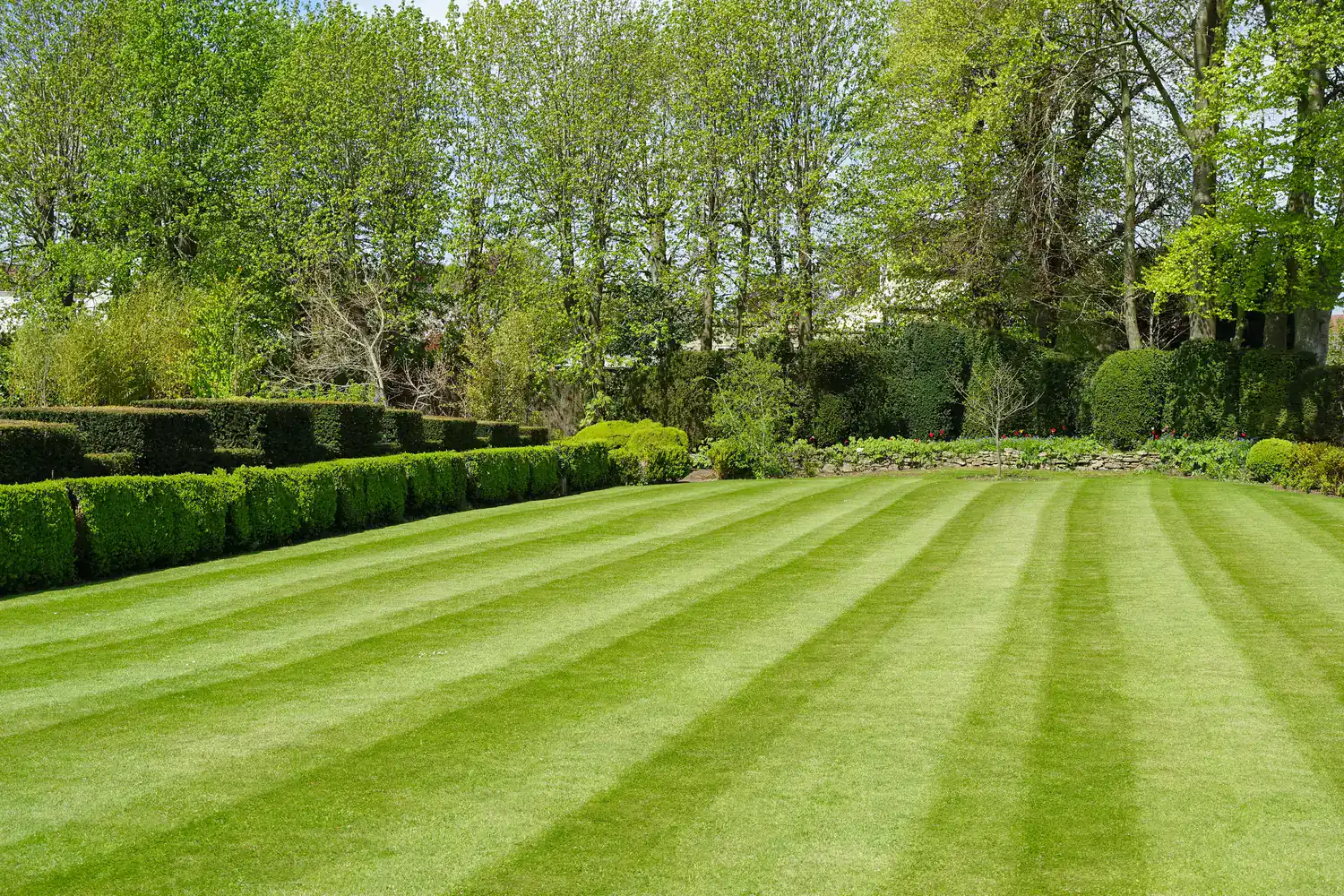
When kyllinga is properly identified and treated with the right herbicide at the right time, you stop watching that dark green mat spread and start seeing your actual lawn come back. No more patchy, uneven turf that looks worse every summer. Just grass that’s dense, consistent, and growing the way it should.
Shoreham’s terrain makes this weed harder to manage than most homeowners expect. The village’s hilly, glacially deposited soil creates low spots and moisture pockets especially near drainage channels, downspout runoff areas, and the base of slopes where kyllinga gets its foothold first. Even on a property with generally well-draining sandy soil, those wet zones are enough. Knowing where to look, and treating those areas specifically, is what separates a program that works from one that just delays the problem.
The mature tree canopy throughout Shoreham adds another layer. Shade and root competition thin out cool-season grasses over time, and thinned turf is exactly what kyllinga moves into. A real kyllinga control program doesn’t just kill the weed it addresses the bare areas left behind so your lawn can actually defend itself going forward.
We operate out of Port Jefferson Station, about 10 to 12 miles west of Shoreham along Route 25A the same road that runs directly through the village, past the Tesla Science Center at Wardenclyffe and through the heart of the Shoreham community. This isn’t a distant franchise routing calls through a regional office. We’re a locally owned lawn care company that travels this corridor regularly and understands the specific soil conditions, coastal moisture dynamics, and drainage patterns that define North Shore lawns in this part of Suffolk County.
We’re a lawn specialist not a tree service, not a generalist landscaper who also mows. Our focus is entirely on turf, which means the knowledge runs deeper than what you get from a company that treats lawn care as a side offering. Every applicator working in Shoreham holds a New York State DEC Commercial Pesticide Applicator License (Category 3a), which is the credential required to purchase and apply the professional-grade herbicides that actually control kyllinga. That’s not a marketing claim it’s a regulatory requirement, and it matters for your lawn.
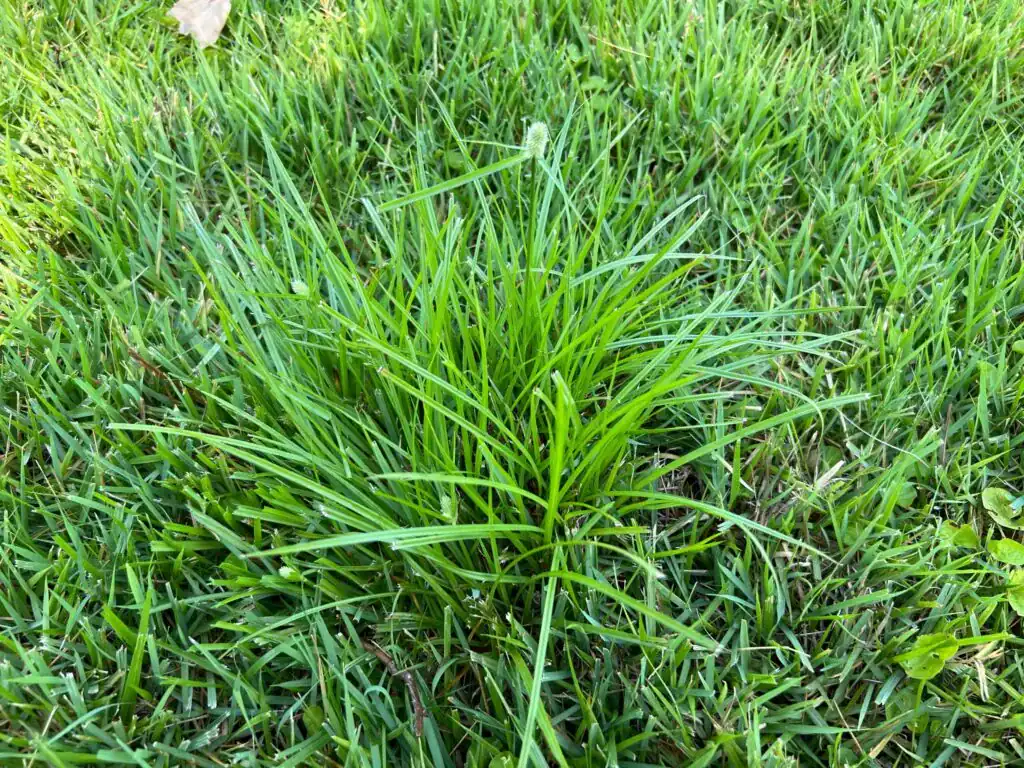
It starts with identification. Kyllinga is a sedge not a grass, not a broadleaf weed and it needs to be confirmed before any treatment is selected. On a Shoreham property, that means looking at the specific species present (false green kyllinga is the most common in Northeast turf), noting where the infestation is concentrated, and assessing the site conditions that allowed it to establish. Low spots, irrigation patterns, shaded areas under the mature trees common to Shoreham’s wooded residential lots all of it factors into the program.
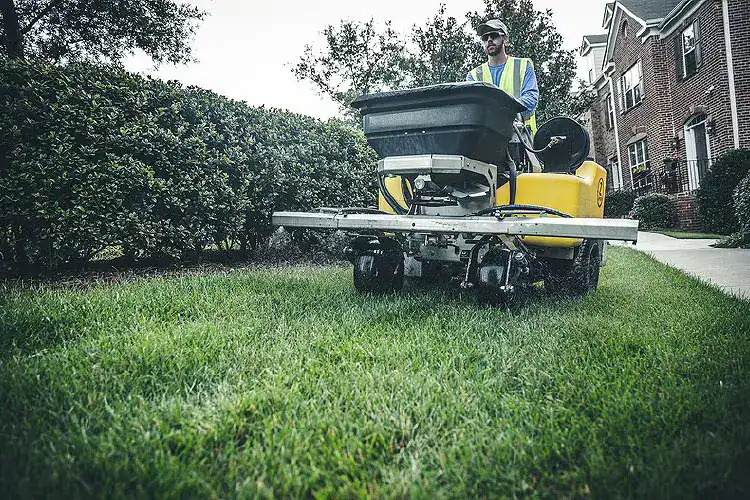
From there, the first herbicide application goes down during the active growing window, which in Shoreham’s coastal North Shore climate typically runs from late May through late August. The professional-grade formulations we use primarily halosulfuron-methyl or sulfentrazone are not available over the counter. They require a licensed applicator, and they work differently than anything you’ll find at a hardware store. The first application stresses the plant and begins breaking down the root system, but it doesn’t end there.
Kyllinga spreads through underground rhizomes, and those rhizomes survive a single application. A complete program requires two to three targeted treatments spaced four to six weeks apart. After the final application, the bare and thinned areas left behind are addressed overseeding and soil restoration recommendations are part of the process, not an afterthought so your lawn has the density it needs to resist reinfestation on its own.
Ready to get started?
Every kyllinga control program we offer starts with a property assessment not a generic walk-around, but a targeted look at the conditions specific to your Shoreham lawn. That means identifying the sedge species present, mapping where the infestation is concentrated, and flagging the site conditions that are feeding it: poor drainage, over-irrigation from in-ground systems common in this market, soil compaction, or turf thinned by the shade and root competition that comes with Shoreham’s older, wooded properties.
The treatment itself uses licensed professional-grade herbicide formulations that are not accessible without a NYSDEC Category 3a Commercial Pesticide Applicator License. Every application in Shoreham is made in full compliance with Suffolk County Local Law 41-2007 and the SCDHS pesticide buffer zone requirements which matters specifically here, given the village’s position on the Long Island Sound and the sensitivity of the surrounding coastal environment. You won’t get that level of regulatory attention from a generalist provider or a national chain.
The program runs across multiple applications timed to kyllinga’s active growth cycle typically two to three treatments between late May and late August. When the treatment is complete, you’ll also receive specific recommendations for overseeding bare areas and adjusting any cultural practices irrigation schedules, drainage improvements that contributed to the infestation in the first place. The goal is a lawn that doesn’t just look better for one season, but one that’s actually built to stay that way.
Kyllinga is a sedge, which puts it in an entirely different plant family than grasses and broadleaf weeds. The herbicides formulated for broadleaf weeds the products in most standard lawn programs and virtually everything available at retail have no meaningful activity against sedges. They’re targeting the wrong biology. So when you spray and the kyllinga comes back, it’s not because you applied it wrong. It’s because the product was never designed to work on this plant.
The herbicides that actually control kyllinga primarily halosulfuron-methyl and sulfentrazone are professional-grade formulations that require a New York State DEC Commercial Pesticide Applicator License to purchase and apply. They’re not sold at hardware stores in the concentrations needed for effective treatment. This is the single most common reason kyllinga persists in Shoreham lawns year after year: homeowners and even some lawn companies are reaching for the wrong chemistry, and no amount of repeat applications will change that outcome.
For an established infestation which is what most Shoreham homeowners are dealing with by the time they call us plan on two to three targeted applications spaced four to six weeks apart during the active growing season. That window runs from approximately late May through late August in Shoreham’s coastal North Shore climate, which tends to have a slightly later spring green-up than inland Suffolk County communities due to the moderating influence of the Long Island Sound.
The reason multiple applications are necessary comes down to how kyllinga grows. The plant spreads through underground rhizomes, and those root structures survive a single herbicide treatment even when the visible top growth dies back. The follow-up applications are what break down the root network over time. Skipping them or stopping after one treatment because the lawn looks better is exactly why so many kyllinga programs produce incomplete results.
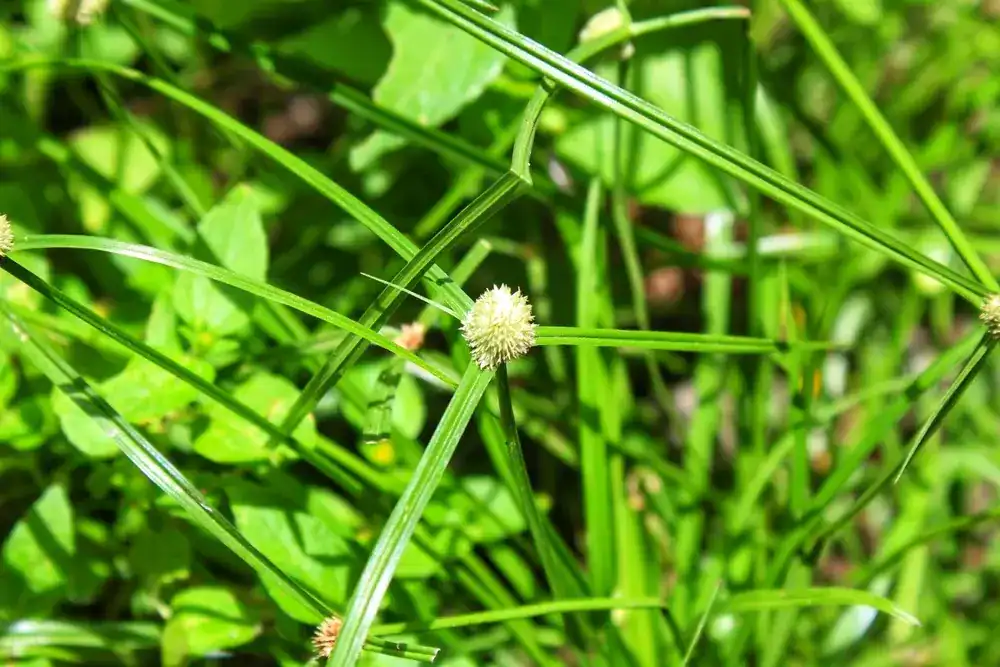
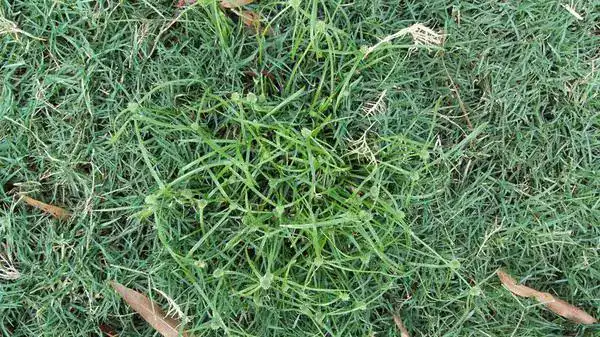
They’re related both are sedges in the family Cyperaceae but they’re not the same plant, and the differences do matter. Kyllinga, particularly false green kyllinga, grows lower to the ground than nutsedge and forms a denser, more mat-like growth pattern. Its seed head is round or globular, while nutsedge has a more elongated, branching seed head. Kyllinga also tends to spread more aggressively through rhizomes in moist, shaded areas the kind of low spots and tree-shaded zones that are common throughout Shoreham’s wooded residential properties.
Both respond to similar herbicide chemistry, but the identification still matters for program design specifically for application timing, treatment rates, and how aggressively the follow-up schedule needs to be structured. A provider who calls everything “nutsedge” without actually looking at what’s in your lawn is starting from a less precise diagnosis, and that can affect results. Correct identification is the first step in a program that actually holds.
Kyllinga is a perennial. It doesn’t die over winter the underground rhizome network goes dormant and then regenerates new growth each spring from the same root system. If those spots in your Shoreham lawn look clean in October and then come back in June, that’s exactly what’s happening. The plant never left; it just went quiet.
The other reason it returns to the same spots is that those areas still have the conditions kyllinga prefers: moisture, reduced turf density, or both. Shoreham’s glacial soil topography means low spots and drainage collection points are common even on properties that look level. If a downspout, a slope, or a shaded area under one of the older trees on your property is keeping that zone consistently moist, kyllinga will keep finding its way back there unless the underlying condition is addressed alongside the herbicide treatment.
Yes, and it’s more common than most homeowners realize. In-ground irrigation systems are standard on higher-value properties throughout Shoreham, and systems that aren’t calibrated to the actual water needs of the turf or that have zones running longer than necessary can create chronically moist soil conditions that favor kyllinga establishment even in areas that would otherwise drain adequately. Kyllinga thrives in moist, poorly drained soil. If your irrigation is delivering more water than your lawn needs, you’re essentially maintaining the environment kyllinga prefers.
This is one of the reasons a proper kyllinga control program includes a cultural assessment, not just herbicide applications. We’ll help you adjust irrigation run times, fix coverage overlap in low-lying zones, or improve drainage in problem areas. These changes significantly reduce the likelihood of reinfestation after treatment. The herbicide addresses what’s already there. The cultural changes address why it was able to get there in the first place.
It can, and in a village as compact as Shoreham fewer than 600 residents in roughly 0.4 square miles the proximity of neighboring properties makes this a legitimate concern. Kyllinga spreads in two ways: through underground rhizomes that extend outward from the original infestation, and through seeds, with a single plant capable of producing thousands per season. If an untreated infestation is allowed to mature and go to seed near a property line, neighboring turf is at real risk, particularly if those adjacent areas share similar moisture conditions.
This is part of why timing matters. A moderate infestation caught in its first or second season is significantly more manageable and less expensive to address than one that has been spreading unchecked for three or four years. In Shoreham, where neighbors notice each other’s lawns, addressing kyllinga early protects your property and reduces the pressure on the properties around you.
Useful Links
Other Services we provide in Shoreham