
Hear from Our Customers
Most Dix Hills homeowners who call us have already spent real money on lawn care. Fertilization programs, overseeding, irrigation upgrades and the lawn still doesn’t respond the way it should. That’s not a product problem. That’s a soil problem. When the ground beneath your grass is compacted, nothing you put on top of it can get through. Water runs off. Nutrients sit on the surface. Roots stay shallow. The lawn looks okay at best, and thin or patchy at worst.
Core aeration physically removes small plugs of soil across your lawn, opening up the ground so water, oxygen, and fertilizer can actually reach the root zone. Research consistently shows fertilizer uptake efficiency can increase by 30 to 40 percent after proper aeration. That means the program you’ve already been paying for starts working the way it was supposed to.
Dix Hills properties add another layer to this. The rolling terrain, the mature tree canopy, and the mix of sandy and clay soils throughout the hamlet create compaction patterns that vary from one part of your yard to another. Low spots accumulate moisture and develop heavier clay-influenced compaction. Slopes shed water fast and crust over at the surface. Shaded areas under the oaks and maples that line these streets hold moisture differently than open lawn. One-size-fits-all aeration doesn’t cut it here and equipment that only scratches the surface makes it worse.
Lawn Master is a Suffolk County lawn care company, and Long Island is the only market we serve. That means we understand the specific soil conditions in Dix Hills the clay-heavy spots near Deer Park Avenue that hold water and compact hard, the sandier areas that drain fast but crust over just as easily, and the variability that comes with larger lots on rolling ground. This isn’t generic lawn care knowledge. It’s what we learn from working these properties season after season.
Our applicators are licensed through the New York State DEC a legal requirement for commercial pesticide and fertilizer application in New York that a surprising number of operators in this market can’t meet. When you hire Lawn Master, you’re working with a company that’s accountable to state standards, not just its own word.
We serve homeowners across Dix Hills, Melville, Commack, Huntington Station, and throughout the Town of Huntington. If your lawn is in our territory, we know the ground under it.
The process starts with a free estimate. We look at your property, assess the soil conditions, and give you a clear picture of what aeration will do for your specific lawn not a generic pitch. For Dix Hills properties, that often means noting the terrain variation, identifying shaded areas under mature trees, and understanding whether you’re dealing with clay-heavy compaction, surface crusting, or both.
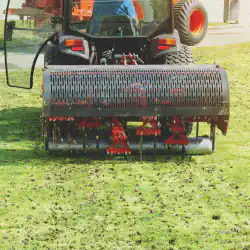
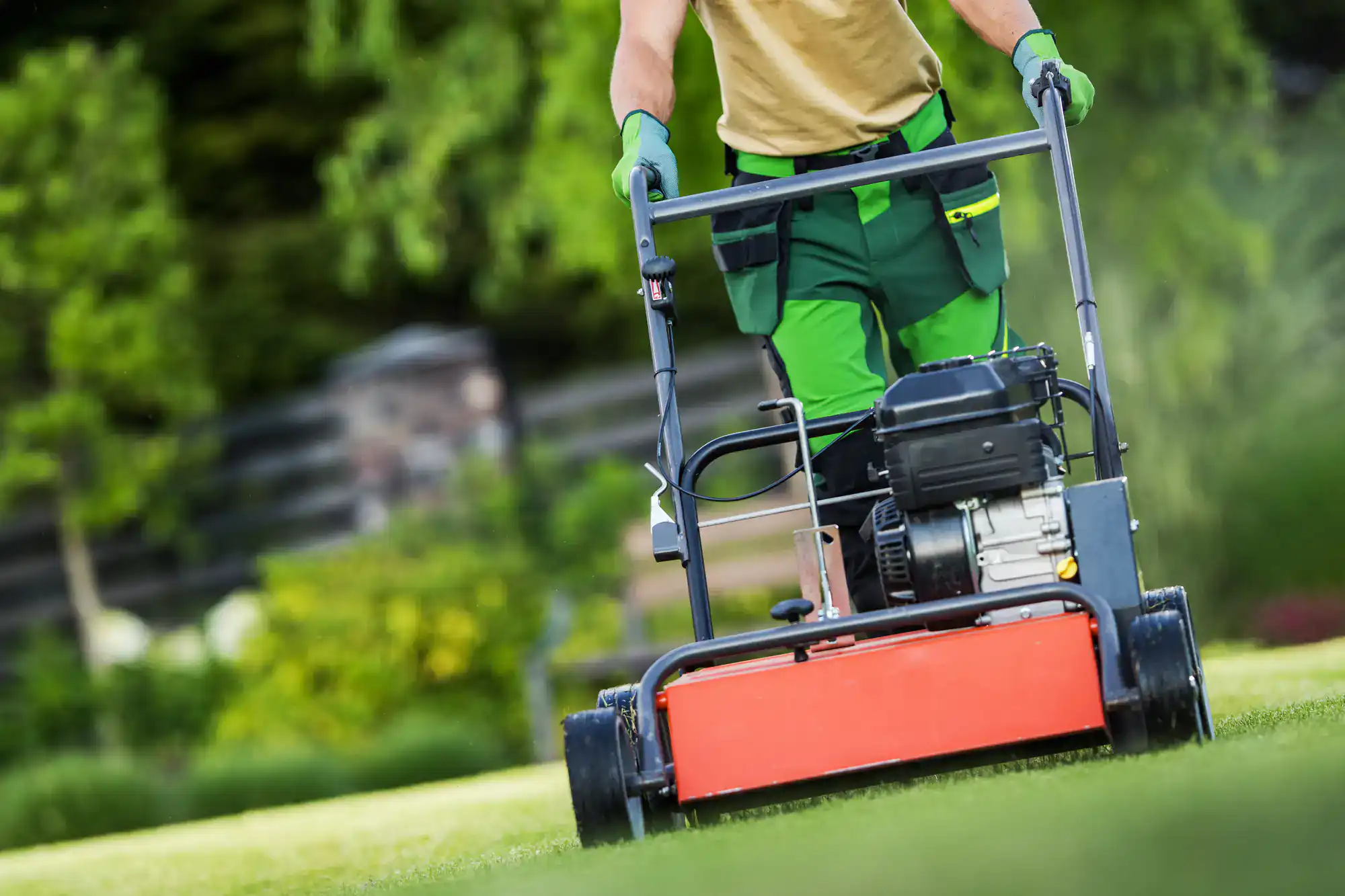
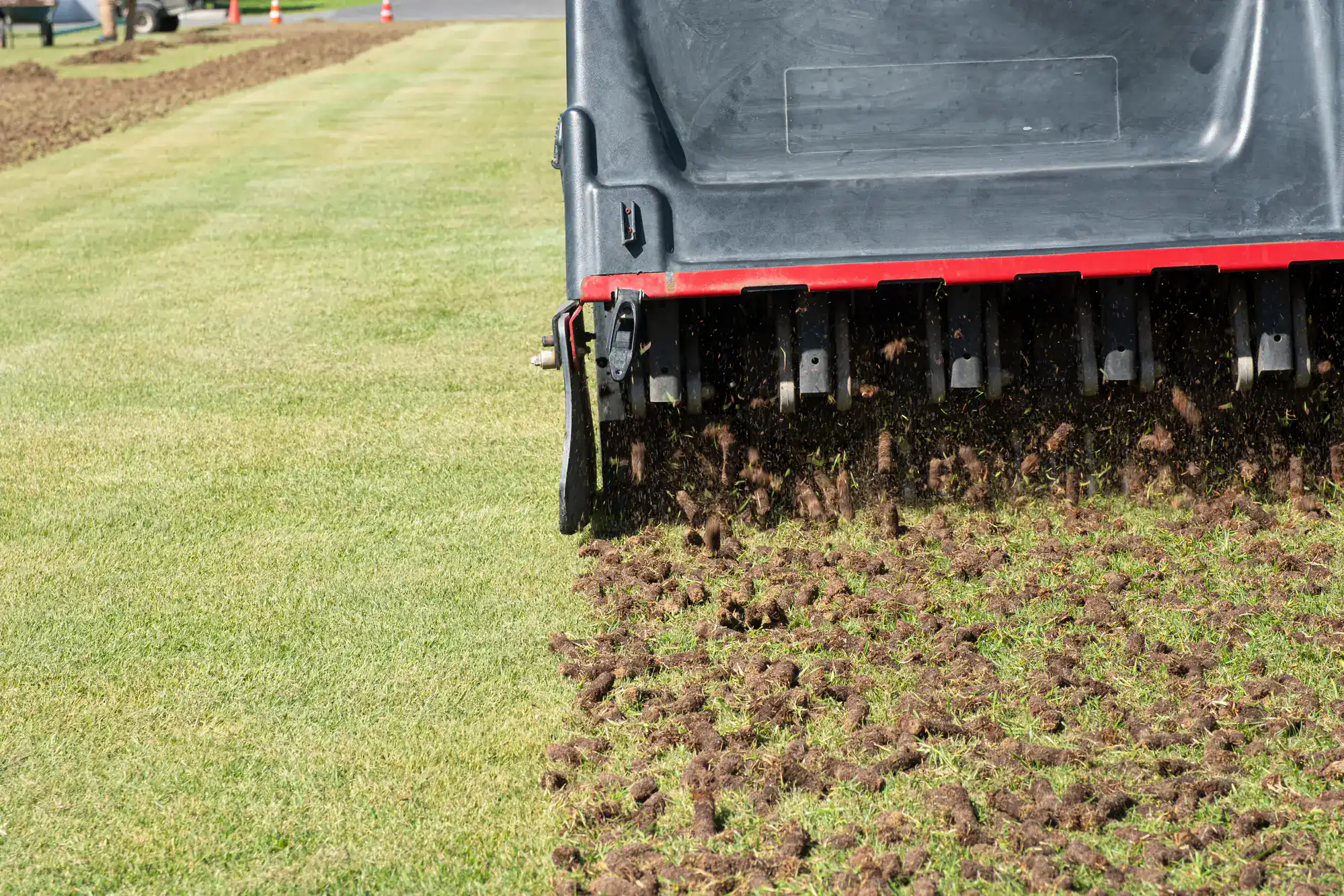
On service day, we use a hydraulic aerator not the drum-style machines you’d rent from a hardware store. That distinction matters more than it sounds. A standard rental aerator penetrates about one and a half to two inches on compacted soil. Our hydraulic aerator drives tines three to four inches deep, reaching the actual compaction layer rather than just disturbing the surface. On the clay-influenced soils common throughout Dix Hills, shallow penetration doesn’t solve the problem. It just looks like it does.
The machine pulls cores small plugs of soil and leaves them on the surface. Those plugs break down over the next few weeks, returning organic matter and beneficial microbes back into your lawn. The holes left behind close gradually as roots expand into the newly decompressed space. If overseeding is part of your program, this is the moment to do it seed dropped into aeration holes has direct soil contact, which is why germination rates run 30 to 50 percent higher on aerated ground. Fall is the right window for all of this on Long Island, typically late August through October, when soil temperatures still support germination but the heat stress on new growth has eased.
Ready to get started?
Dix Hills isn’t a neighborhood of quarter-acre lots. Most properties here run an acre or more, and that changes what good aeration actually requires. A machine that works fine on a small suburban yard in Holbrook or Medford isn’t the right tool for a sprawling property off Vanderbilt Parkway. Our hydraulic aerator is commercial-grade equipment, sized and powered for exactly this kind of work consistent core extraction across large surface areas, with the depth and spacing that delivers real results instead of surface-level treatment.
Core aeration pairs directly with the other services in your lawn program. If you’re already on a fertilization schedule, aeration is what makes that investment pay off nutrients that were washing off the surface now have a clear path to the root zone. If you’re planning to overseed thin or bare areas, aeration first means the seed actually establishes instead of sitting on top of compacted thatch. These aren’t add-ons. They’re the logical sequence that determines whether your lawn program works or doesn’t.
Our applicators hold New York State DEC Pesticide Applicator licenses and follow state fertilizer regulations, including phosphorus restrictions that apply throughout Suffolk County. For Dix Hills homeowners near sensitive areas within the broader Long Island watershed, that compliance isn’t a footnote it’s the difference between a responsible operator and one cutting corners you can’t see.
This is the most common frustration we hear from homeowners in Dix Hills, and the answer is almost always the same: the soil is too compacted for fertilizer to reach the root zone. When the ground beneath your grass is dense and hard which happens naturally over decades of mowing, foot traffic, and freeze-thaw cycles on established Long Island properties nutrients applied to the surface have nowhere to go. They sit on top, get washed away with the next rain, and never make it down to where the grass actually feeds.
Core aeration solves this by physically opening the soil. The holes we create during the process give fertilizer, water, and oxygen a direct path to the roots. If you’ve been on a fertilization program for a year or more without seeing the results you expected, a single professional aeration treatment often produces more visible improvement than another full season of fertilizing on compacted ground.
It matters a lot, especially on the heavier soils found throughout Dix Hills. Spike aeration works by pushing a solid tine into the ground, which sounds like it creates openings but what it actually does is compress the soil around each hole, making compaction worse in the surrounding area. On clay-influenced soils, which are common in lower-lying parts of Dix Hills and along the Deer Park Avenue corridor, spike aeration can actively worsen the problem you’re trying to fix.
Core aeration is different because it removes material. A hollow tine pulls a plug of soil out of the ground, leaving a genuine opening that doesn’t close under pressure. That’s what creates real decompression space for roots to expand, water to move, and nutrients to penetrate. If you’ve tried spike aeration before and didn’t see improvement, that’s likely why. The tool wasn’t removing anything. It was just rearranging the problem.
For the cool-season grasses that make up most Dix Hills lawns tall fescue, Kentucky bluegrass, perennial ryegrass the fall window from late August through October is the right time. Soil temperatures are still warm enough to support root development and seed germination, but air temperatures have dropped enough to reduce heat stress on new growth. That combination is what makes fall aeration and overseeding so effective on Long Island.
Spring aeration is possible, but it comes with tradeoffs. You’re aerating right before the summer heat sets in, which limits how much recovery the lawn can do before it’s under stress again. Fall gives the grass the entire cool season to fill in, establish, and build a stronger root system before the following summer. Dix Hills sits inland, away from the moderating influence of the ocean and bays, so the temperature swings here are more pronounced than in coastal communities which makes hitting the fall window correctly even more important. We book up fast in September, so reaching out in late summer is the right move.
Standard drum-style aerators the kind available at equipment rental counters typically penetrate one and a half to two inches on compacted soil. That sounds like enough, but on the clay-heavy soils found in parts of Dix Hills, the actual compaction layer often sits deeper than that. A machine that only reaches two inches is disturbing the surface without addressing the problem underneath.
We use a hydraulic aerator, which drives tines three to four inches into the ground. That extra depth is what separates a treatment that produces real results from one that just looks like it does. The hydraulic mechanism also adjusts pressure dynamically, which means consistent penetration across varying soil conditions sandy areas, clay-heavy spots, and the compacted zones that develop under decades of mowing equipment on large Dix Hills properties. If you’ve had aeration done before and didn’t see much change, equipment depth is the first question worth asking.
Always aerate first, then overseed. The reason is simple: seed needs direct contact with soil to germinate, and a compacted, thatch-covered surface doesn’t provide that. When you drop seed onto un-aerated ground, most of it sits on top of the thatch layer, dries out, and never establishes. Germination rates on un-aerated ground are significantly lower research puts the improvement at 30 to 50 percent higher germination on aerated lawns versus those that weren’t aerated before seeding.
When you aerate first, the holes left by the machine become natural seed beds. Seed falls in, makes contact with the soil, and has a protected environment to germinate in. For Dix Hills homeowners with large properties and bare or thin patches that have been resistant to overseeding in the past, this sequencing is often the missing piece. The seed wasn’t the problem. The surface it was landing on was.
For a typical Dix Hills residential property which often runs an acre or more professional core aeration generally falls in the range of $200 to $400, depending on lot size, terrain, and whether overseeding or fertilization is being added to the visit. Larger estate-sized properties will be toward the higher end of that range, and the cost scales with square footage rather than a flat rate.
The more useful way to think about the cost is against what you’re already spending. If you’re on an annual fertilization program running $400 to $600 per year and the results have been disappointing, the underlying problem is almost certainly compaction blocking the fertilizer from working. One aeration treatment with the right equipment can unlock the effectiveness of the program you’ve already been paying for. For most Dix Hills homeowners, that math is straightforward aeration isn’t an added expense, it’s what makes the existing investment actually perform. The best way to get an accurate number for your specific property is to request a free estimate, which gives us a chance to look at the lot, assess the soil conditions, and give you a real figure instead of a guess.
Useful Links
Other Services we provide in Dix Hills