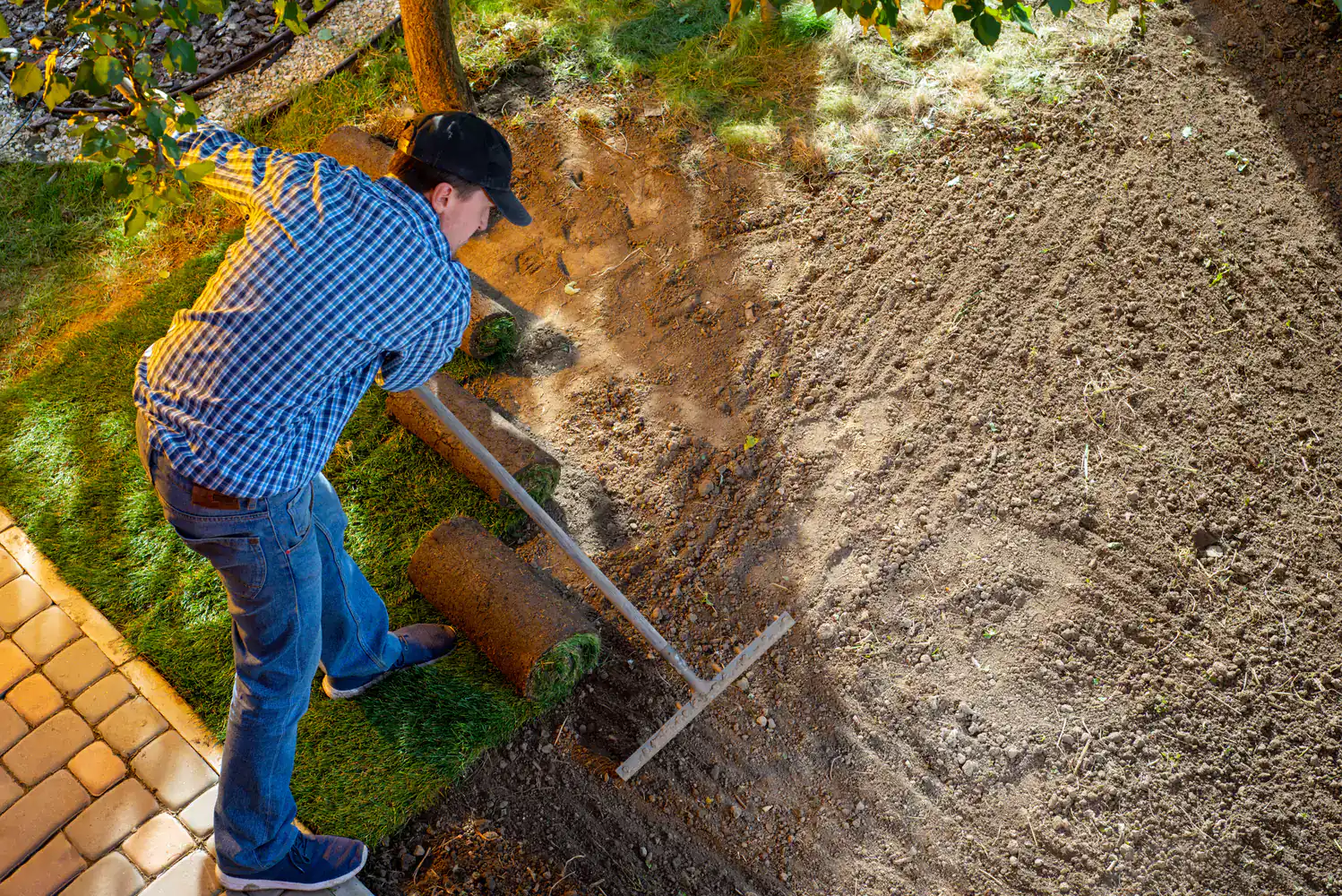
Suffolk County's fertilizer rules are stricter than most homeowners realize. Here's what you need to know to keep your lawn healthy and stay on the right side of the law.

If you’ve ever wondered why your lawn still looks rough heading into May, or why a neighbor’s grass is thick and green while yours is patchy and thin, the answer is almost always timing and program quality. Fertilizing a lawn in Suffolk County comes with rules most homeowners don’t fully know — and consequences for getting it wrong. Between a strict seasonal ban, sandy soil that leaches nutrients fast, and a sole-source aquifer that sits directly below every yard on Long Island, there’s real reason to take this seriously. Here’s what you actually need to know.
Suffolk County Local Law No. 41-2007 prohibits the application of lawn fertilizer between November 1 and April 1. No exceptions, no grace period. Violations carry fines of up to $1,000 per occurrence — and if you hire an unlicensed crew that applies fertilizer during the ban window, you may share in that liability as the property owner.
The ban exists for a straightforward reason. Long Island depends entirely on groundwater for drinking water. Fertilizer applied to dormant grass doesn’t get absorbed — it leaches straight through the soil into the aquifer that supplies your tap. Fertilizers already contribute approximately 50% of the nitrogen load to the Peconic Estuary. The ban is one of the most direct tools Suffolk County has to slow that contamination.
So from November through March, the answer is simple: nothing goes on the lawn. The work that pays off in spring gets done in fall, before the blackout starts.
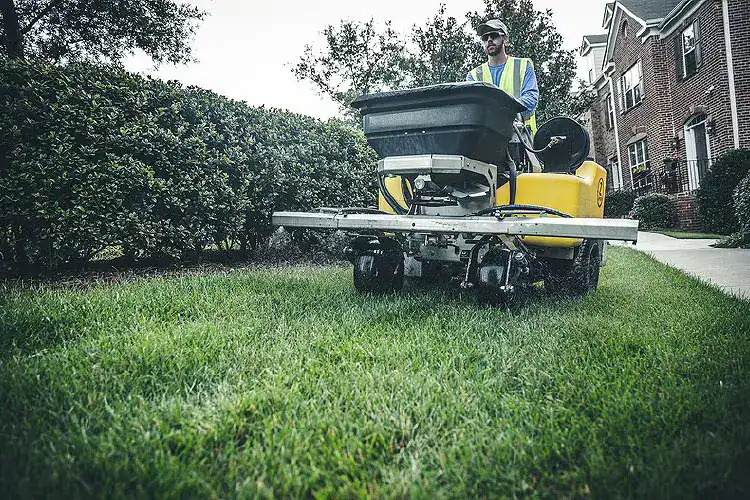
A lot of homeowners ask about weed-and-feed products during the colder months, thinking they can get a jump on weeds before spring. In Suffolk County, this isn’t an option. Weed-and-feed products contain fertilizer as a base ingredient, which means using them at any point between November 1 and April 1 is a direct violation of the fertilizer ban — regardless of how the product is marketed or what the bag says.
This is one of the more common compliance mistakes we see. A homeowner picks up a bag at a hardware store in February, reads the label, figures it’s mostly for weeds so it must be fine, and applies it. It isn’t fine. The law doesn’t distinguish between a dedicated fertilizer product and a combination product. If it contains nitrogen, it can’t go down during the ban period.
The more productive approach is to plan pre-emergent crabgrass applications for early spring — timed to soil temperature, not the calendar — and handle broadleaf weed pressure through properly timed spring and fall applications when the grass is actively growing and can actually benefit from the treatment. Trying to shortcut the process in winter doesn’t save time. It creates problems and potential fines that cost far more than a proper program would have.
If you’re unsure what’s legal and what isn’t, that’s exactly the kind of question we can answer before you make an expensive mistake.
Here’s a misconception worth clearing up: the ban lifting on April 1 doesn’t mean your lawn is ready for fertilizer on April 1. Grass responds to soil temperature, not the calendar. Cool-season grasses — tall fescue, Kentucky bluegrass, and perennial ryegrass, which make up most lawns in Suffolk County — don’t begin meaningful uptake until soil temperatures reach 55°F. On Long Island, that typically happens around mid-April, sometimes later depending on the year.
Applying fertilizer to grass that’s still dormant or barely waking up is largely wasted product. Worse, it creates runoff risk at exactly the time of year when the ground is still saturated from snowmelt and early spring rain. The nitrogen goes somewhere — just not into your grass.
The right fertilizer timing follows a simple sequence. Wait until you’ve mowed twice, which is a reliable signal that the grass is actively growing and the soil has warmed enough to support uptake. From there, a well-structured program spaces applications through the growing season — from mid-April through October — at rates the soil can actually hold. Long Island’s Haven Loam, the dominant soil type across much of Suffolk County, drains quickly. That means nutrients don’t linger the way they do in heavier clay soils further inland. Regular, correctly timed applications with slow-release nitrogen formulations are what keep a Long Island lawn consistently fed without spiking runoff or burning the turf.
Want live answers?
Connect with a Lawn Master of Suffolk expert for fast, friendly support.
Spring is when most homeowners feel the urgency. The ban lifts, the lawn looks rough from winter, and the instinct is to do something immediately. That urgency is understandable, but the first spring application is also one of the easiest to get wrong.
Early spring fertilizer should be light and targeted. The goal isn’t to push aggressive top growth — it’s to support root development and help the turf transition out of dormancy without stressing it. A high-nitrogen quick-release product applied too early can force excessive blade growth at the expense of the root system, leaving the lawn more vulnerable to summer heat stress later in the season.
For most Suffolk County lawns, a balanced, slow-release formula applied once the soil has warmed — paired with a pre-emergent for crabgrass if the timing aligns — is the right starting point for spring.

The question we hear most in April is some version of: “What fertilizer should I use in spring, and how much?” The honest answer is that it depends on what your soil actually needs — which is why a soil test before the first application is worth doing, at least every few years.
That said, there are general guidelines that apply well across most Suffolk County lawns. Cool-season grasses in this area typically need 2 to 3 pounds of nitrogen per 1,000 square feet per year, spread across multiple applications. Each individual application should deliver no more than 0.5 to 1 pound of actual nitrogen per 1,000 square feet. More than that in a single pass increases burn risk and pushes more nitrogen past the root zone and into the groundwater — which, on Long Island’s sandy soil, happens faster than most people expect.
For spring specifically, a formulation with 50 to 70% slow-release nitrogen is appropriate. It feeds the lawn gradually over six to eight weeks rather than delivering a spike that the grass can’t fully use. Phosphorus is worth paying attention to as well — most established Long Island lawns don’t need added phosphorus, and excess phosphorus contributes to water quality problems in local bays and harbors. A zero-phosphorus or low-phosphorus formula is the right call for most properties unless a soil test shows a genuine deficiency.
A well-designed spring lawn care schedule doesn’t treat fertilization as a single event — it treats it as the first step in an eight-application annual program that runs from mid-April through October. Each application has a specific purpose, and the timing of each one is based on what the grass is doing, not just what month it is.
The spring phase typically covers two to three applications: an early spring feeding once soil temperatures stabilize around 55°F, a mid-spring application timed to support active growth and address any weed pressure that’s emerging, and a late spring application that helps the lawn build density before summer heat arrives. For Suffolk County lawns dealing with crabgrass — which is nearly all of them — pre-emergent timing is coordinated with the first spring application to create a barrier before the crabgrass seeds germinate.
Grass treatment for spring also includes assessing what winter left behind. Some lawns come out of February looking fine. Others have thin spots, bare patches, or signs of snow mold that need attention before a fertilization program can do its full job. Overseeding thin areas in early fall is actually more effective than trying to patch them in spring, but spring assessment helps identify what the fall program needs to address.
The broader point is that professional lawn service isn’t just about applying product on a schedule. It’s about reading the lawn at each visit — adjusting for what the weather has done, what problems are developing, and what the turf actually needs at that moment. A generic four-step program applied to every lawn the same way regardless of condition is what national chains sell. It’s not what a properly managed Suffolk County lawn requires.
Brown dead spots in lawn appear for different reasons, and the fix depends on what’s actually causing them. Winter damage, compacted soil, disease, insect pressure, and improper fertilization timing can all leave you with patches that won’t green up when the rest of the lawn does.
The most common cause we see in Suffolk County is snow mold — a fungal issue that develops under heavy snow cover when the ground hasn’t fully frozen. These spots typically appear in late winter or early spring and often recover on their own once the lawn dries out and temperatures warm. Other brown spots on lawn after winter might indicate winter burn from salt exposure, ice damage, or simply dormancy that’s taking longer to break than it should.
Thin or bare patches that persist into May usually point to a different problem: poor soil contact, compaction, or disease that developed the previous season. These spots won’t fill in on their own. They need overseeding in fall — ideally in September when soil temperatures are still warm enough for germination but air temperatures are cooling down. Spring overseeding is possible but less reliable because the new seedlings have to compete with established grass and summer heat arrives quickly.
If your lawn has brown spots you can’t explain, a site visit helps identify what’s actually happening and what the right fix is. Sometimes it’s a fertilization adjustment. Sometimes it’s aeration and overseeding. Sometimes it’s addressing a disease or insect issue that fertilizer alone won’t solve.
Summary:
Article details:
Share: