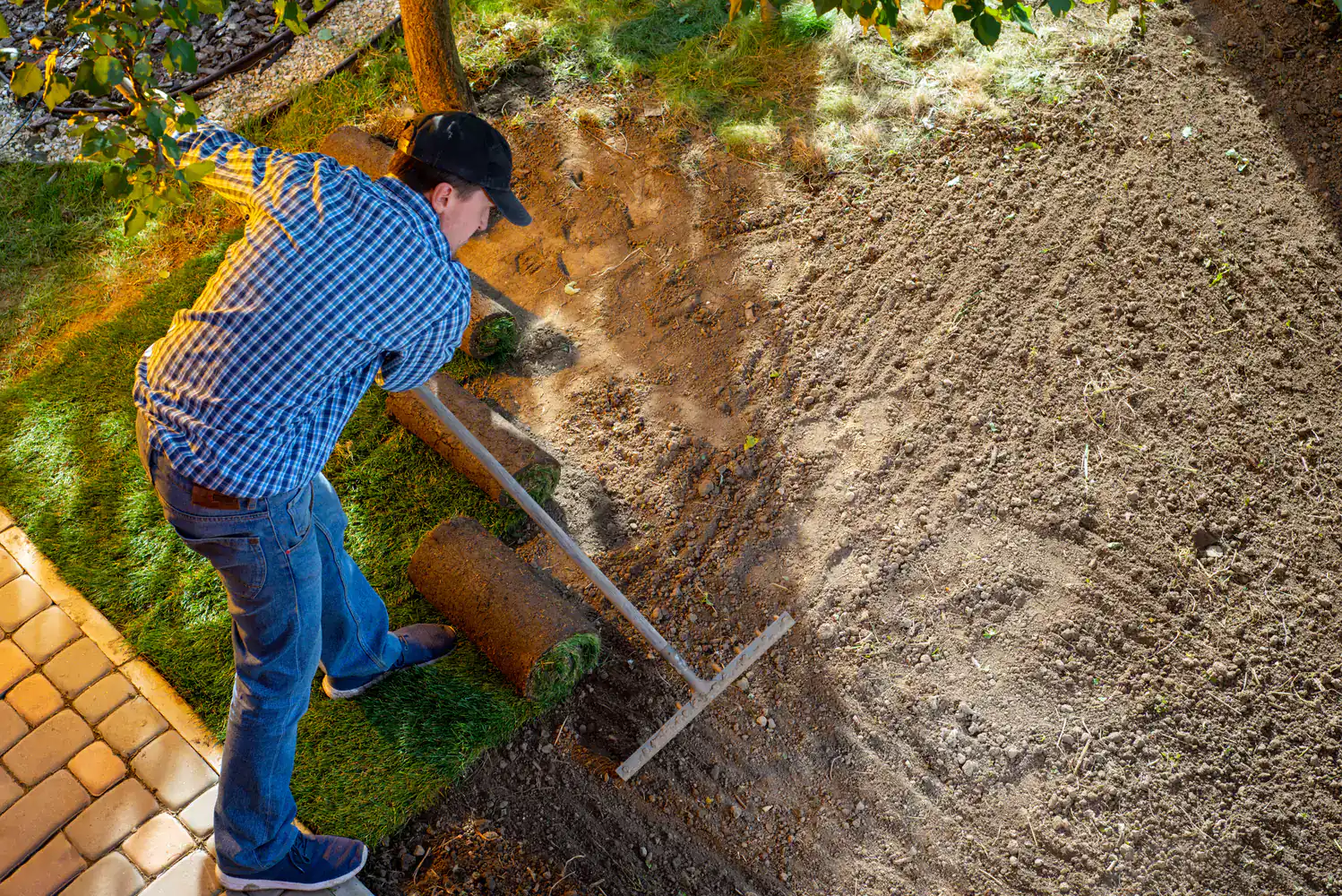
Confused by lawn care quotes in Suffolk County? Here's what yard service actually costs in 2026 — and what separates a good program from an expensive disappointment.
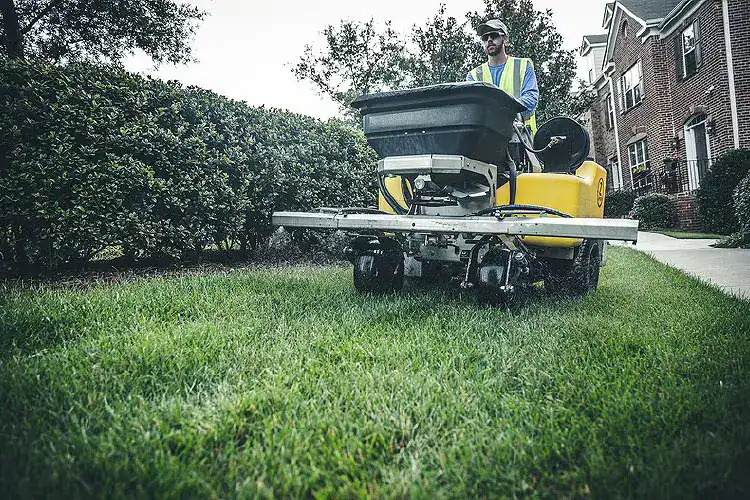
If you’ve ever gotten three lawn care quotes and had no idea why they were all different, you’re not alone. Pricing in this industry is notoriously vague — some companies won’t even give you a number until you’ve sat through a sales call. That’s frustrating when all you want to know is whether you’re being charged a fair price for a healthy lawn.
This guide is built for Suffolk County homeowners specifically. The numbers here reflect what programs actually cost on Long Island, why local conditions affect pricing, and what you should expect from a professional lawn care program in 2026.
Yard service cost in Suffolk County is shaped by factors that simply don’t apply in most other markets. The soil here is sandy glacial outwash — it drains fast, which means nutrients leach through before grass can fully absorb them. That’s not a sales pitch for more applications; it’s soil science. A program designed for clay-heavy soils in the midwest will underperform on a Long Island lawn, regardless of how well it’s applied.
Then there’s the regulatory layer. Suffolk County’s fertilizer ban runs from November 1 through April 1 every year, with fines up to $1,000 for violations. Any legitimate lawn care company has to design their program around that window. If a quote looks unusually cheap, it’s worth asking how they handle the ban period — and whether they’re actually licensed to apply pesticides at all.
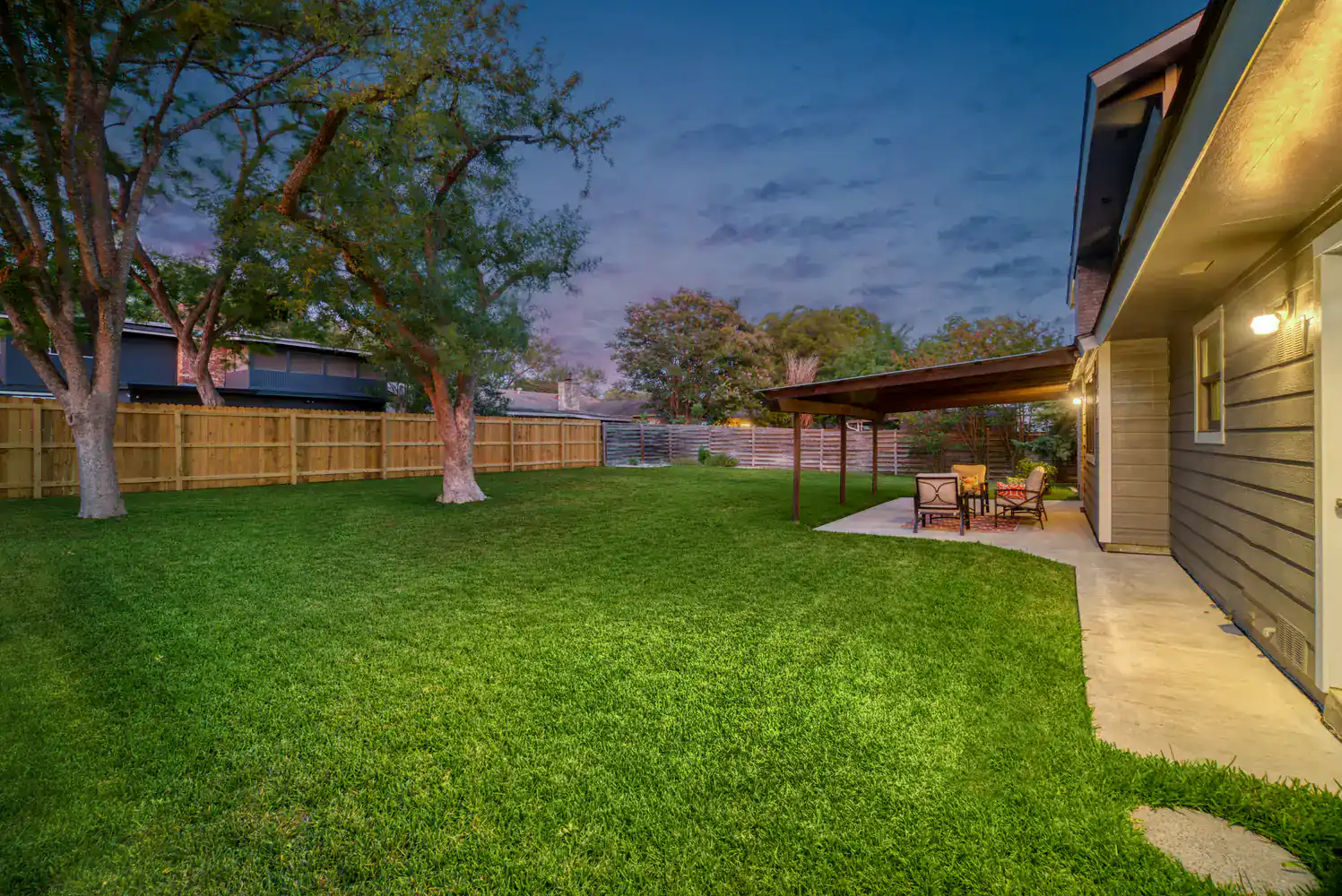
Per-acre pricing is one of the most common ways lawn care companies structure their quotes, and the ranges are wide. Nationally, a single fertilization treatment for a one-acre property runs roughly $220 to $440. Full-service lawn care — meaning weekly mowing, fertilization, aeration, weed control, and overseeding — can run $800 to $1,600 per acre per month when everything is bundled together. Most Suffolk County homeowners aren’t working with a full acre, though. The typical residential lot here is closer to a quarter to a half acre, which changes the math considerably.
For a standard quarter-acre property in Suffolk County, a professional fertilization program typically runs $260 to $510 per year for a basic multi-application schedule. A more comprehensive program that includes weed control, soil treatments, and seasonal applications will sit higher — generally in the $500 to $900 range annually for a property that size. Full-service programs covering mowing plus treatments can push toward $900 to $2,000 per year depending on what’s included and how frequently the crew visits.
One thing worth understanding: per-acre rates tend to decrease as lot size increases. A larger property doesn’t cost proportionally more because setup time, travel, and equipment deployment are fixed costs regardless of square footage. So if you have a larger lot in Brookhaven or Riverhead, you’re often getting a better per-square-foot rate than a neighbor on a smaller parcel in a denser part of Huntington or Babylon.
What drives cost up isn’t usually lot size — it’s the complexity of what the lawn actually needs. A lawn that’s been neglected for several seasons, has grub damage, or has significant weed pressure requires more product, more applications, and more expertise to turn around than a lawn that’s been on a consistent program for years. That’s true whether you’re in Smithtown or Southampton.
The November 1 through April 1 fertilizer ban isn’t just a compliance checkbox — it fundamentally changes how a responsible lawn care program is structured on Long Island. We design our programs to front-load critical fall applications before the ban takes effect, then resume in April when soil temperatures are actually warm enough for cool-season grasses to use the nutrients being applied.
That timing matters more than most homeowners realize. Cool-season grasses — the Kentucky bluegrass, tall fescue, and perennial ryegrass that make up most Suffolk County lawns — do the bulk of their root development in fall. A well-timed September or October application drives that root growth and sets up how the lawn performs the following spring. Miss that window, and no amount of spring fertilizer fully compensates for it.
This is also why an 8-application program isn’t an upsell — it’s a direct response to how Long Island soils behave. Sandy outwash soils leach nutrients quickly. Spacing applications throughout the growing season, rather than applying a heavy dose a few times a year, keeps nutrients available to the grass when it can actually use them. Fewer, larger applications on this soil type largely wash through before they do much good.
The cost implication is real: programs built around Suffolk County’s specific soil conditions and ban periods require more planning, more precision, and more product management than a generic schedule. That expertise has a price. But it’s also why a well-designed local program tends to outperform a cheaper national chain’s generic treatment plan — the program is built for your lawn’s actual environment, not a statistical average.
One more thing worth noting: if a company is applying fertilizer in December or February, they’re either violating county law or not applying fertilizer at all and billing you anyway. Neither is acceptable. Knowing the ban exists and asking about it is one of the simplest ways to filter out companies that aren’t operating legitimately in this market.
Want live answers?
Connect with a Lawn Master of Suffolk expert for fast, friendly support.
Monthly pricing is how most homeowners end up thinking about lawn care costs, and in Suffolk County the range runs roughly $100 to $500 per month for professional service. That’s a wide window, and what sits at each end is very different.
At the lower end, you’re typically looking at mowing, edging, and cleanup — crews that show up weekly during the growing season and keep things tidy, but aren’t doing anything to improve the lawn’s health. At the higher end, you’re getting a full treatment program: fertilization timed to soil conditions, pre-emergent and post-emergent weed control, aeration, overseeding, and seasonal applications that address what the lawn actually needs at that point in the year.
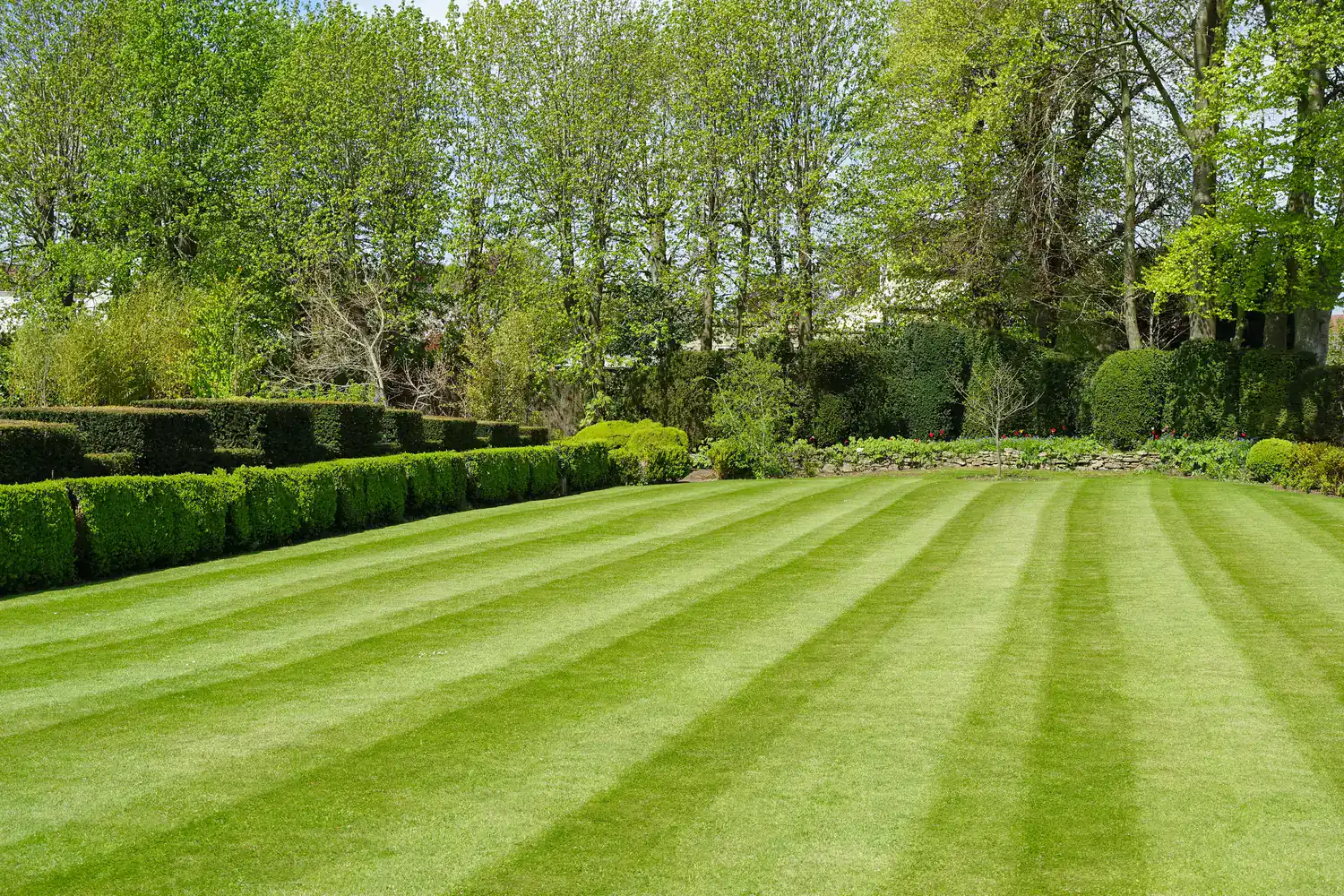
Fertilization is where the biggest quality differences show up, and it’s also where pricing confusion tends to run deepest. A single fertilizer application for a standard residential lot — up to about 10,000 square feet — typically runs $65 to $100. For a larger property closer to an acre, that per-treatment cost rises to $220 to $440. Across a full season of four to six applications, you’re looking at $260 to $600 for a basic program on a standard lot.
What separates a $65 application from a $100 application isn’t usually the labor — it’s the product. Generic, off-the-shelf fertilizer is formulated for a national average. It’s not designed for Long Island’s sandy soils, it’s not calibrated for cool-season grass varieties, and it doesn’t account for how quickly nutrients leach through the glacial outwash that sits beneath most Suffolk County properties. A custom-blended fertilizer made specifically for local conditions will hold nutrients longer, release them at a rate the grass can actually absorb, and reduce the amount of excess nitrogen that ends up migrating toward the aquifer.
Our fertilizer isn’t something you can buy at a hardware store. It’s a proprietary blend formulated specifically for the programs we run in Suffolk County — the nutrient ratios, the release rates, and the formulation are designed for the conditions we actually work in. That’s a meaningful difference from what most companies are applying, and it’s reflected in the results homeowners see over time.
There’s also the question of who is doing the applying. In New York State, commercial pesticide application — which includes many herbicides and combination fertilizer-pesticide products — requires licensure through the NYSDEC. Some companies technically comply by having one licensed supervisor oversee unlicensed workers who do the actual application. Our team is made up of licensed pesticide professionals who do the work themselves. That’s not a technicality; it’s the difference between someone who has passed state licensing requirements and understands what they’re applying versus someone following a route sheet.
One of the clearest patterns in lawn care pricing is that one-time services consistently cost more than the same work done as part of an annual program — sometimes 50 to 100 percent more per visit. That’s not arbitrary. Annual programs allow us to plan routes, manage product inventory, and schedule applications at the right agronomic moments rather than responding reactively to a single call. The efficiency gets passed along in the pricing.
For Suffolk County homeowners, the annual program structure also aligns better with how lawns actually work. A lawn doesn’t need the same thing in April that it needs in September. A spring application focused on green-up and pre-emergent weed control is a completely different product and timing decision than a fall application aimed at root development before dormancy. A company that only shows up when you call them can’t sequence those applications correctly — they show up, apply something, and leave. Whether the timing was right is secondary.
The other advantage of an annual program is accountability. When a company is committed to your lawn across a full season, they have skin in the game. If something isn’t working — if the crabgrass came in despite a pre-emergent application, or if a dry August left the lawn looking thin — we’ll come back and address it. That kind of follow-through is far more common with established annual relationships than with one-time service providers.
We’ve been running annual programs in Suffolk County since 1987. That’s not a number we throw around casually — it means we’ve applied fertilizer to Long Island lawns through every drought, every regulatory change, and every market shift over nearly four decades. The programs we run today are built on that accumulated knowledge of what actually works in this soil, in this climate, under these regulations. A homeowner in Islip or Riverhead isn’t getting a generic national template — they’re getting a program designed for exactly where they live.
Yard service cost in Suffolk County comes down to one question: what are you actually paying for? A low quote from a company using generic product, unlicensed applicators, and a calendar-based schedule might look appealing until the lawn doesn’t improve — or gets worse. A well-designed program from a company that understands Long Island’s soils, respects the fertilizer ban, and employs licensed professionals who do the actual work is a different investment entirely.
The price ranges in this guide are real. What you pay should reflect what you get — a program built for your property, applied by people who are qualified to apply it, timed around the conditions that actually govern how your lawn grows.
If you’re ready to stop guessing at quotes and start with a program that’s been working in Suffolk County since 1987, reach out to us at Lawn Master. We’ll give you a straight answer on pricing and a clear picture of what your lawn actually needs.
Summary:
Article details:
Share: