If your lawn isn't responding to fertilizer, the problem is probably underground. Here's what a soil test reveals — and why it changes everything.

Every spring, homeowners across Suffolk County buy bags of fertilizer, apply them carefully, and wait. Some lawns respond. A lot of them don’t — at least not the way they should. If that sounds familiar, the instinct is usually to try a different product, apply more, or assume the grass just isn’t going to cooperate. But the real answer is almost always in the soil itself. A lawn soil test tells you exactly what’s going on beneath the surface — the pH, the nutrient levels, what’s missing, what’s already there — so that whatever goes on top of it actually works.
A soil test is exactly what it sounds like: a lab analysis of your lawn’s soil that measures pH and nutrient levels so you know what you’re working with before you spend a dollar on fertilizer or amendments. The results tell you whether your soil is too acidic or too alkaline, whether key nutrients like potassium and calcium are where they need to be, and whether there are deficiencies that explain why your grass has been struggling.
The process starts with pulling soil samples — not just one plug from one corner of the yard, but a series of cores pulled from across the entire lawn and combined into a single composite sample. That composite goes to a certified lab, which returns a full report covering pH, phosphorus, potassium, calcium, magnesium, and several micronutrients. From there, the report tells you what to add, how much, and when.

Suffolk County sits on sandy glacial outwash soils. That’s not a minor detail — it fundamentally changes how your lawn behaves. Sandy soil drains fast, which is great for avoiding waterlogged roots, but it also means nutrients leach through quickly. Nitrogen, potassium, and other water-soluble nutrients don’t linger in sandy soil the way they do in clay-based soils found elsewhere in New York. They move through and, in many cases, end up in the groundwater below.
This is a bigger deal in Suffolk County than it might be somewhere else, because Long Island relies entirely on its underground aquifer for drinking water. There’s no surface reservoir feeding the taps in Port Jefferson, Huntington, or Smithtown — it all comes from the ground. When you apply fertilizer your lawn can’t use, it doesn’t just disappear. It goes somewhere, and in Suffolk County, that somewhere is the water supply.
Beyond the environmental angle, sandy soils also tend to run acidic over time. And soil pH is the single biggest factor in whether your fertilizer actually works. The ideal range for cool-season grasses like tall fescue and Kentucky bluegrass — the most common lawn types across Suffolk County — is roughly 6.0 to 7.0. Outside that range, nutrients get chemically locked up in the soil. The fertilizer is there, but the grass can’t access it. A lawn with a pH of 5.2 could be sitting on a full nutrient profile and still look thin and pale, because the chemistry simply doesn’t work below a certain threshold.
That’s why a soil test isn’t just a nice-to-have here. Given the soil type, the groundwater sensitivity, and the strict fertilizer regulations that come with living in Suffolk County, it’s the only way to fertilize responsibly and effectively.
The $15 pH kit from a hardware store checks one thing: pH. That’s it. And while pH matters enormously, it’s only part of the picture. A professional soil test from a certified lab covers pH alongside phosphorus, potassium, calcium, magnesium, copper, manganese, zinc, and in many cases organic matter content. It also gives you specific amendment recommendations based on your grass type and the actual numbers — not just a color-coded chart that tells you your soil is “slightly acidic.”
Acting on pH alone is like getting your blood pressure checked and calling it a full physical. You might learn something useful, but you’re missing most of the information that would actually change what you do next.
There’s also the sampling methodology to consider. A representative soil test requires pulling 15 to 20 cores from different areas of the lawn at a depth of about 3 inches, then combining them into a single composite. If you pull one plug from one spot, you might get a reading that reflects a small patch of the yard rather than the whole thing. Different areas of a Suffolk County property can have meaningfully different soil conditions — especially on larger lots where some areas drain faster, receive more foot traffic, or sit in shade for most of the day. Getting an accurate picture means sampling the whole lawn, not just the nearest corner.
We’ve been pulling soil samples and reading Suffolk County soils since 1987. In that time, we’ve seen enough variation — between neighborhoods, between soil types, between properties on the same street — to know that no two lawns are the same, and no single fertilizer program should be either. A professional test is the starting point that makes everything else make sense.
Want live answers?
Connect with a Lawn Master of Suffolk expert for fast, friendly support.
Organic fertilizer has real advantages. It feeds soil biology, releases nutrients gradually, and reduces the risk of runoff — which matters a great deal in a county with Suffolk County’s groundwater sensitivity. But “organic” isn’t a magic word, and it doesn’t mean you can skip the soil test. You can over-apply organic fertilizer just as easily as synthetic, and the wrong organic product applied to soil that doesn’t need it is still wasted product.
The soil test is what makes organic fertilizer selection meaningful. Once you know your pH, your nutrient levels, and what’s actually deficient, you can choose an organic formulation that targets the right gaps — rather than applying a generic blend and hoping something sticks.
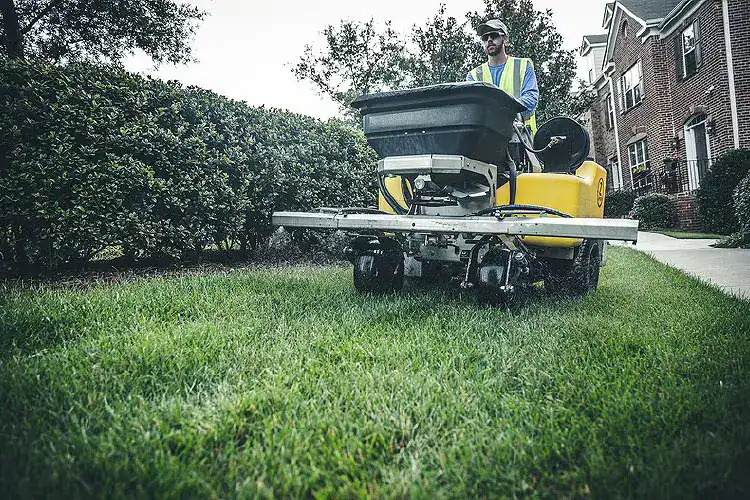
Once you have your soil test results, fertilizing becomes a straightforward exercise in matching the product to the problem. If your pH is low, you address that first — usually with lime — because no fertilizer program works well in acidic soil. If phosphorus is adequate, you skip it. If potassium is low, you prioritize it. The test tells you what to add, in what amounts, and in what order.
Timing matters too, and in Suffolk County it’s also a legal question. The county prohibits fertilizer application between November 1st and April 1st. Violations carry fines of up to $1,000. That blackout period exists because cool-season grasses go dormant when soil temperatures drop below 55°F — typically by late October in this area — and fertilizer applied to dormant grass doesn’t get absorbed. It leaches. So the application window here is roughly seven months, and every treatment within that window needs to count.
There’s also a state-level regulation worth knowing: New York law prohibits the application of phosphorus fertilizer on established lawns unless a soil test confirms a deficiency. This has been on the books since 2012. It means that any lawn care company applying a “complete fertilizer” — one that includes all three primary nutrients — without first testing the soil may be operating outside the law. It’s not a technicality. It’s a meaningful protection against the kind of over-application that has measurable consequences for Long Island’s water quality.
This is part of why we use licensed pesticide professionals on every job — not unlicensed labor working under a single certified supervisor who may never see your property. The people treating your lawn hold their own NYS DEC certifications and understand the regulatory environment they’re working in. That matters when the rules are as specific as they are in Suffolk County.
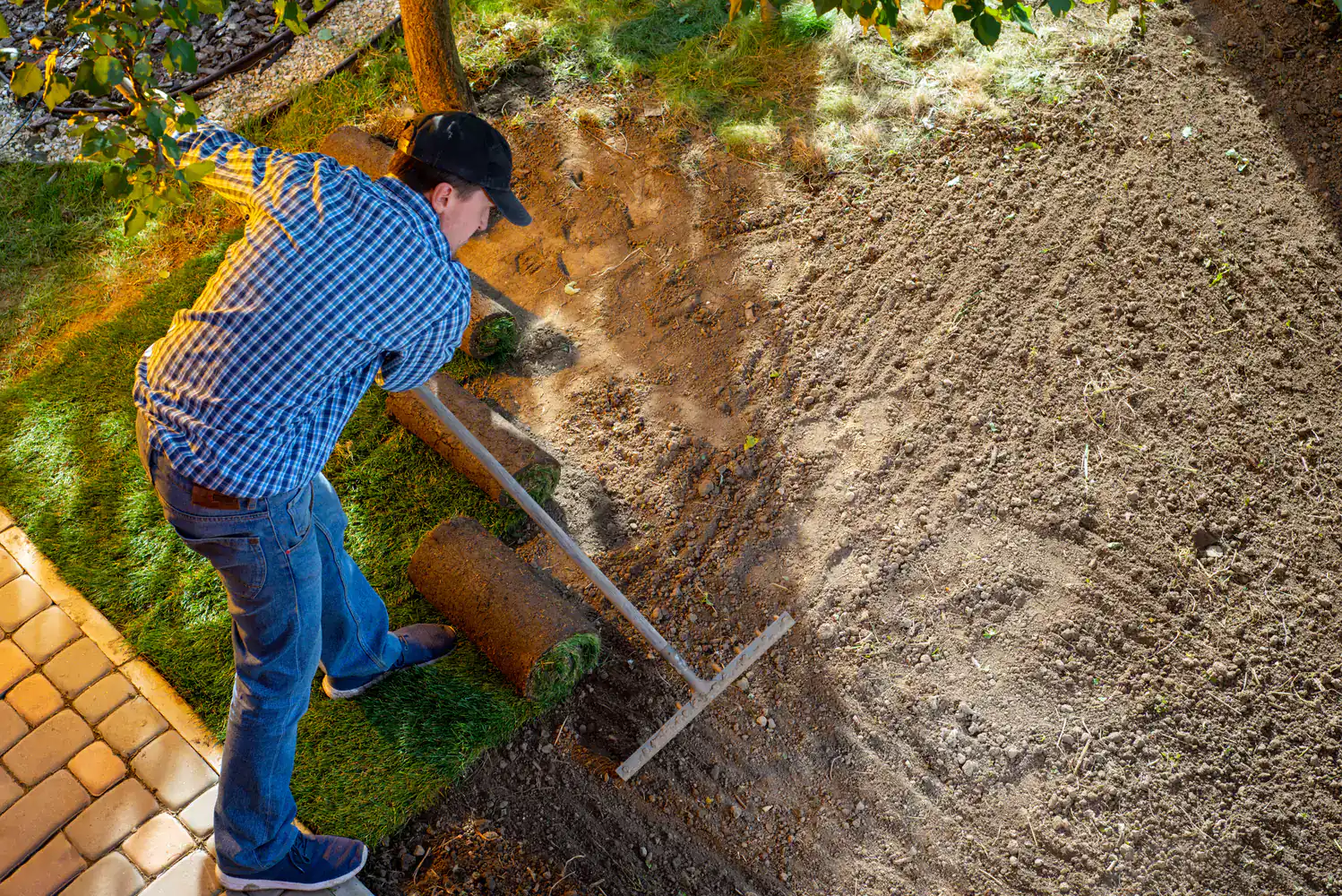
If you’ve tried to fix a patchy, thin, or struggling lawn and it didn’t hold, there’s a good chance the soil was never addressed. Overseeding into acidic, compacted, or nutrient-deficient soil produces weak results at best. The new grass establishes poorly, thins out over the first summer, and you’re back where you started the following spring — having spent money on seed and labor without solving the actual problem.
Effective lawn repair begins with understanding what the soil is doing. A soil test before any renovation tells you whether pH needs to be corrected before seed goes down, whether compaction is limiting root development, and whether the nutrient profile can support new growth. It’s the difference between treating the symptom and treating the cause.
This is especially true in Suffolk County, where sandy soils and naturally acidic conditions create a specific set of challenges. A lawn in Smithtown or Setauket that keeps thinning out in the same spots year after year is usually dealing with a soil issue that no amount of seed or fertilizer will fix on its own. Core aeration, pH correction, and targeted amendment — based on actual test results — need to come first. Then the seed has a real environment to establish in.
We handle full lawn renovations and new lawn installations from seed, and we use hydraulic aerators and seeders that produce better soil contact and more even coverage than standard equipment. But the work that happens before any of that — the soil assessment, the pH correction, the program design — is what determines whether the renovation actually lasts. Skipping that step is the most common reason lawn repair fails, and it’s the step most homeowners never knew they were missing.
**How often should I test my lawn’s soil?** For an established lawn, every three to five years is the general recommendation. Fall is the preferred time, because any amendments you apply — lime, sulfur, organic matter — have the winter months to work into the soil before spring growth begins. In Suffolk County, a fall test gives you time to correct pH issues before the spring application window opens on April 1st.
**Can I use a home soil test kit instead of a professional test?** You can, but you’ll only get pH. A certified lab test gives you a full nutrient panel — phosphorus, potassium, calcium, magnesium, and several micronutrients — along with specific amendment recommendations. For a lawn in Suffolk County, where sandy soils and tight application windows make precision important, the full picture is worth having.
**Why isn’t my fertilizer working even though I’ve been applying it every year?** In most cases, the answer is pH. Suffolk County soils tend to run acidic, and when pH falls below 6.0, nutrients get locked up in the soil and grass roots can’t absorb them — even when the nutrients are present. A soil test will confirm this quickly, and a lime application to correct the pH often makes an immediate difference in how the lawn responds to fertilizer.
**Is soil testing required before fertilizing in New York?** It’s required for phosphorus. New York State law prohibits applying phosphorus fertilizer on established lawns unless a soil test confirms a deficiency. That regulation has been in place since 2012 and applies to professional applicators and homeowners alike. In Suffolk County, where groundwater protection is a priority, compliance with this rule is taken seriously.
If your lawn hasn’t been responding the way it should, or you’ve been fertilizing for years without seeing the results you expected, a soil test is almost always the right first step. It costs far less than another season of fertilizer that doesn’t work. We’ve been doing this work in Suffolk County since 1987 — if you’re ready to stop guessing and start with real information, give us a call.
Summary:
Article details:
Share: