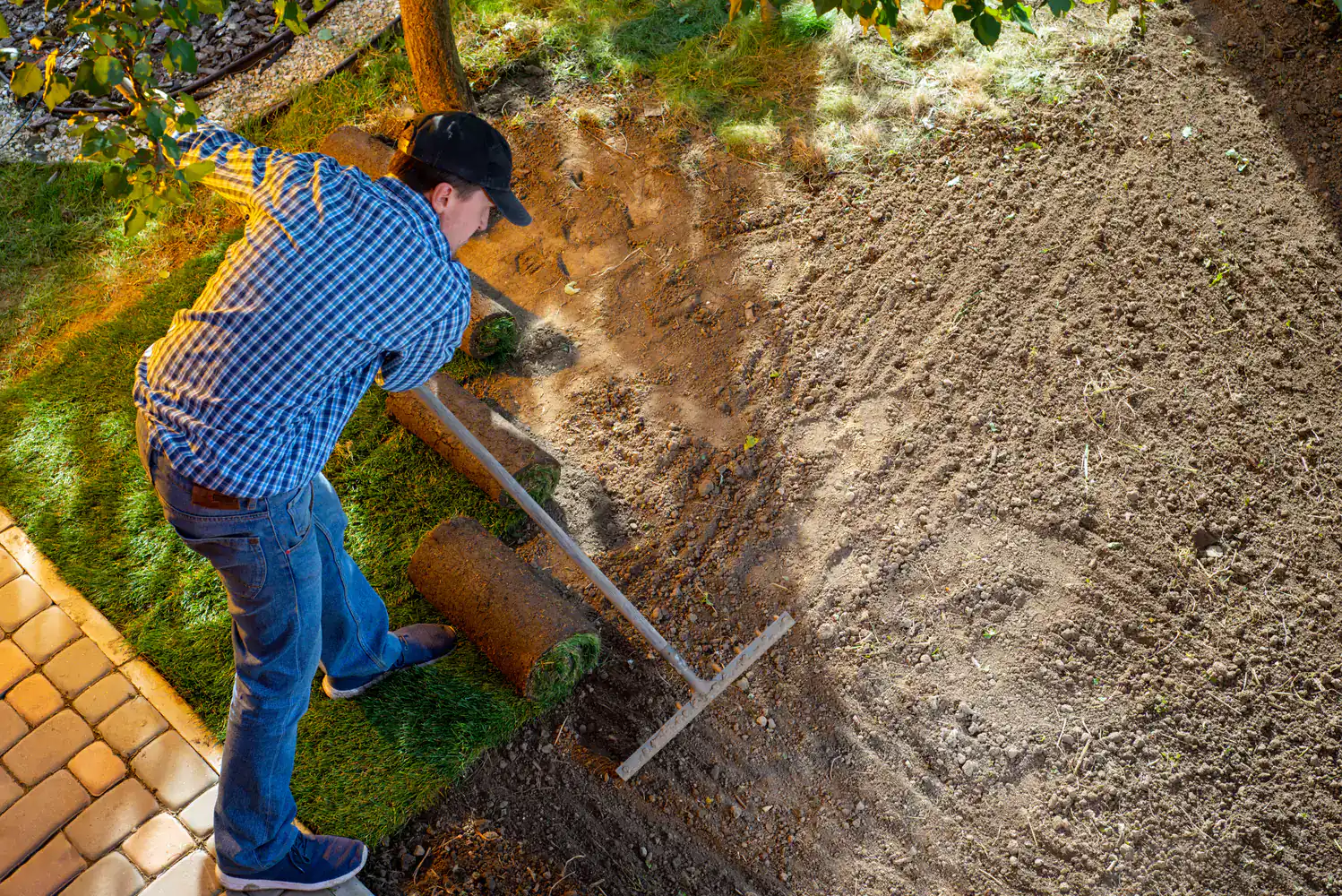
Suffolk County's fertilizer ban leaves you a 7-month window. Here's how to make every application count — and what happens when you miss the timing.
We’re working with a shorter window than most people realize. Suffolk County’s fertilizer ban runs from November 1 through April 1 — stricter than Nassau County, stricter than New York State — which means your entire fertilization program has to fit inside seven months. And within those seven months, there are really only two windows where cool-season grass is actively growing enough to absorb what you’re putting down. Miss one, and you’re playing catch-up all season. Apply at the wrong time, and you’re risking runoff into the sole-source aquifer that supplies every drop of drinking water on Long Island. Here’s how a proper schedule actually works.
The ban lifts on April 1, but that doesn’t mean April 1 is the right day to fertilize. Cool-season grass — the kind growing in virtually every Suffolk County lawn — can only absorb nutrients when it’s actively growing, and that only happens once soil temperatures reach 55°F. Based on 30-year climate data from the Islip weather station, Long Island soil typically doesn’t hit that threshold until around April 15 to 21.
Applying fertilizer to dormant or barely-waking grass doesn’t green it up faster. It sits on the surface, gets carried off by rain, and ends up in the groundwater — which is exactly what Local Law 41-2007 was written to prevent. Waiting those extra two weeks costs you nothing and saves your lawn from a wasted application.
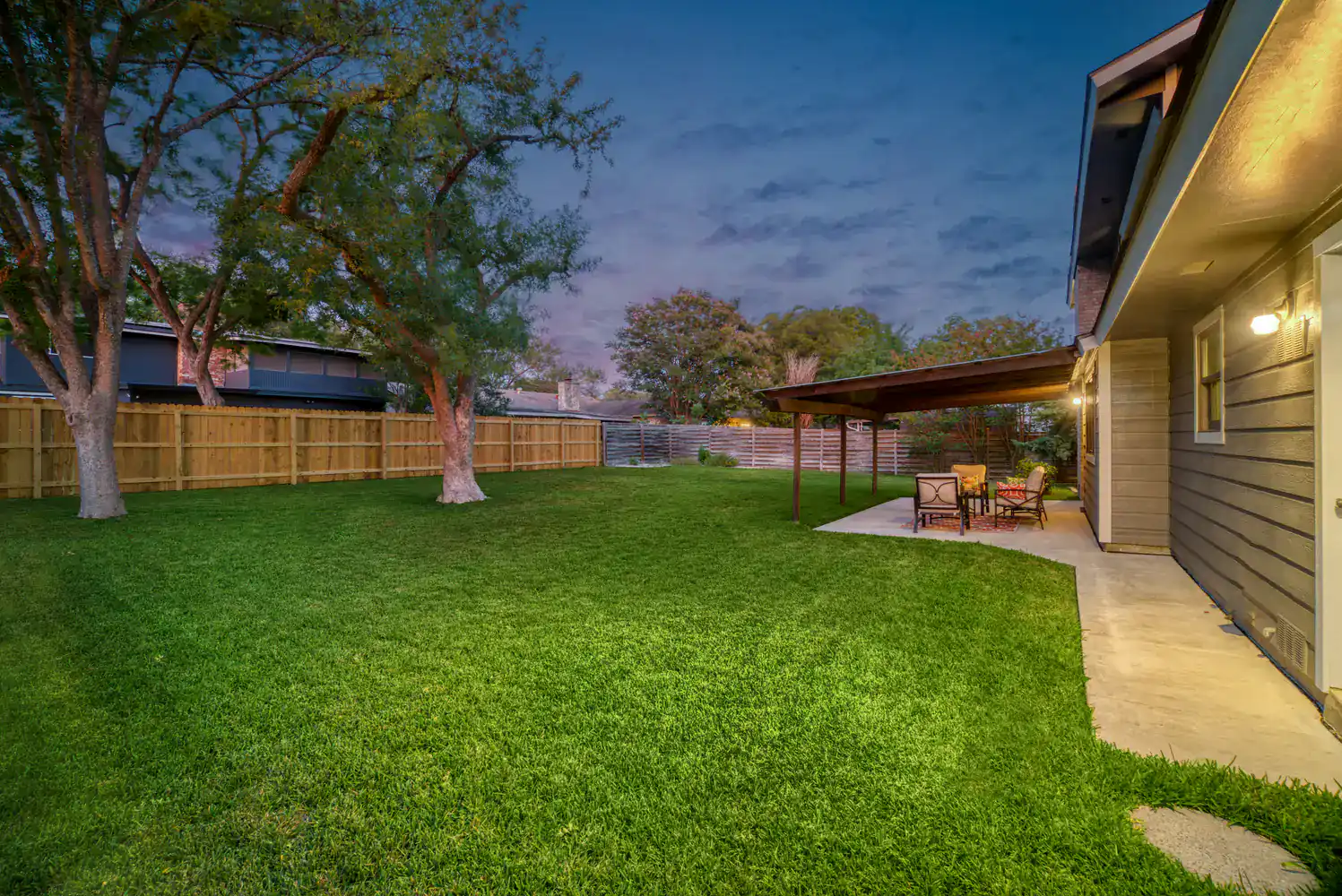
The first spring application isn’t just about color. It’s about setting the lawn up for the entire season — and that means pairing fertilizer with pre-emergent weed control to stop crabgrass before it germinates. On Long Island, crabgrass germinates when soil temperatures consistently reach 55°F, which is the same threshold that signals the grass is ready for fertilizer. The timing lines up almost perfectly, which is why we handle both in the same visit.
The product matters here too. Long Island’s dominant soils — Haven Loam, Carver, Plymouth, Riverhead — are sandy and drain fast. They have a low cation exchange capacity, which is a technical way of saying nutrients don’t stick around. A slow-release formulation, with 50 to 70 percent of its nitrogen in slow-release form, feeds the lawn gradually over six to eight weeks instead of spiking growth all at once and then dropping off. Quick-release nitrogen on Long Island’s sandy soil is a short-lived green-up followed by a crash — and a direct path to the groundwater.
For the first application, you’re targeting roughly half a pound of actual nitrogen per 1,000 square feet. That’s not a lot. It’s intentional. You want steady, manageable growth as the lawn wakes up, not a surge that stresses the grass going into the warmer months. Cornell Cooperative Extension of Suffolk County recommends two to three pounds of total nitrogen per 1,000 square feet across the entire year — so the spring applications are just one piece of that annual budget.
A well-timed early spring application produces visible results within two to three weeks: thicker color, stronger lateral growth, and a lawn that starts crowding out weeds before they get established. That’s the goal — not just green, but dense enough that there’s no room for problems to take hold.
The second peak growth window for cool-season grass runs roughly from late April through the end of May. This is when your lawn is doing the most work — root development, lateral spread, thickening — and it’s the best time to build the density that carries the lawn through summer stress. A second application in mid-to-late May, timed before soil temperatures start climbing toward 70°F, takes full advantage of this window.
Once soil temperatures exceed 70°F — typically sometime in late June in Zone 7B — cool-season grasses shift into a semi-dormant state. They slow down, stop pushing new growth, and focus on survival. Any nitrogen you apply during that period forces growth the grass can’t sustain, which weakens it and opens the door to disease. So the window between mid-April and the end of May is genuinely valuable, and a program that fits two applications into it is doing something most four-application programs can’t.
This is also the point in the season where what you’re applying matters as much as when. A custom-blended fertilizer formulated for Long Island’s specific soil conditions — not a generic bag product designed for a national market — delivers the right nutrient ratios for sandy outwash soils that leach nutrients faster than most other soil types in the country. The difference shows up in how the lawn holds its color and density heading into summer.
Want live answers?
Connect with a Lawn Master of Suffolk expert for fast, friendly support.
Summer is the most misunderstood part of the lawn fertilizer schedule. Most homeowners either skip it entirely or apply the same product they used in spring, expecting the same results. Neither approach is quite right.
Cool-season grass goes semi-dormant when soil temperatures climb past 70°F, which happens in Suffolk County lawns every summer. During that period, the lawn isn’t actively growing, which means it can’t use nitrogen the way it does in spring or fall. Applying a standard fertilizer during peak summer heat doesn’t feed the grass — it stresses it. The goal in summer isn’t growth. It’s maintenance.
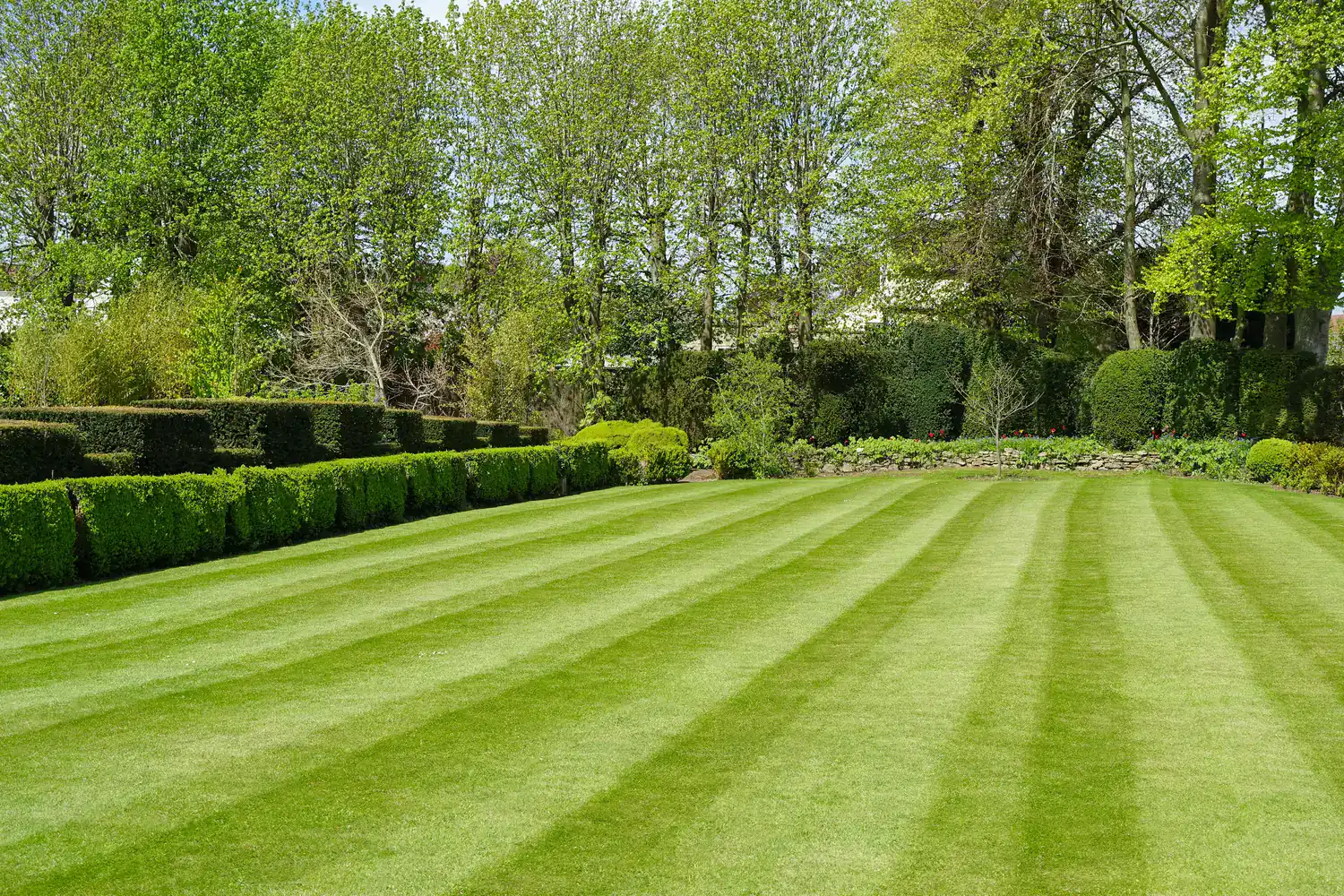
Our summer program focuses on keeping the lawn stable rather than pushing it. If any nitrogen is applied between late June and late August, it should be a minimal rate using only slow-release or organic-based products — the kind that break down gradually and don’t force a growth response the grass can’t support in the heat.
This is where the distinction between a licensed pesticide professional and a labor crew following a script becomes real. Knowing when not to apply something — or knowing to adjust the rate based on current soil temperature and moisture conditions — requires judgment, not just a schedule. An unlicensed crew working off a fixed calendar will apply the same product on the same day regardless of what the lawn actually needs. We read the conditions and adjust.
Summer is also when weed pressure, grub activity, and disease risk are all elevated. A program that’s only focused on fertilizer misses the full picture. Grubs are actively feeding on grass roots through July and August, and if they’re not addressed, no amount of fertilizer will fix the damage they leave behind. Our complete summer program monitors for these issues and responds to them — not just checks a box and moves on.
For Suffolk County lawns specifically, summer care also means being mindful of the 20-foot buffer zone requirement near any water body. With so many properties bordering Long Island Sound, the Great South Bay, or the Peconic Bay system, this isn’t an abstract rule — it’s a practical reality that we account for on every visit.
If you only get one part of the lawn fertilizer schedule right, make it fall. This is not conventional wisdom — it’s agronomy. Cool-season grasses build their root systems in fall, not spring. The carbohydrate reserves that fuel spring green-up are stored in fall. The density and root depth that determine how well a lawn survives winter and bounces back in April are established between September and October. Spring fertilization gets the attention because the results are visible, but fall fertilization is doing the heavier work.
Suffolk County’s November 1 ban deadline makes fall timing genuinely urgent. You have roughly two months — September and October — to deliver the most critical applications of the year before the window closes. Miss it, and you’re starting next spring already behind. The lawn that looked thin and slow to green up in April wasn’t struggling because of what happened in spring — it was struggling because fall was missed or rushed.
The ideal fall program on Long Island starts in early September, when soil temperatures are still warm enough for strong root activity but the heat stress of summer has broken. A second fall application in October, timed to finish well before November 1, winterizes the lawn — building the nitrogen reserves in the root zone that feed the grass through dormancy and fuel the first flush of spring growth.
This is also the best time of year for aeration and overseeding, and the two work together with fall fertilization in a way that compounds the results. Hydraulic aeration breaks up compaction in Long Island’s dense surface soils, creates channels for fertilizer to reach the root zone, and opens space for new seed to establish. Overseeding thickens the turf, which is the single most effective weed-prevention strategy there is. A lawn that goes into winter dense, well-fed, and aerated comes out of it in a completely different condition than one that didn’t get this attention.
The challenge with fertilizing a lawn in Suffolk County isn’t finding a product — it’s knowing when to apply it, what rate to use, and how to fit a complete program into a window that runs from April 1 to November 1 while working around two narrow peak growth periods and a soil type that drains nutrients faster than most of the country. That’s a lot of variables, and getting any one of them wrong shows up in the lawn.
An 8-application program, timed around Suffolk County’s specific climate and regulatory requirements, outperforms the standard 4-to-5-application approach because it delivers consistent, lower-rate feedings that match how Long Island’s sandy soil actually holds nutrients. It’s not more applications for the sake of it — it’s more applications because the soil requires it.
If you’ve been doing the work and still not seeing the results, the schedule is probably the issue. We’ve been building fertilization programs for Suffolk County lawns since 1987 — reach out to find out what a program built around your specific lawn would look like.
—
**FAQs**
**What is the complete fertilizer schedule for Long Island lawns?**
A complete schedule for Long Island follows two peak growth windows within Suffolk County’s April 1 to November 1 window. Spring applications run from mid-April through late May, timed to soil temperature rather than calendar date. Summer applications, if any, use only slow-release products at reduced rates. Fall applications begin in early September and finish before the November 1 ban — this is the most critical period of the year for cool-season grass. A well-structured program includes 8 applications total, spread across these windows to match how Long Island’s sandy soil absorbs and drains nutrients.
**When does the Suffolk County fertilizer ban start and end?**
Suffolk County’s fertilizer ban runs from November 1 through April 1 under Local Law 41-2007. This is stricter than both Nassau County, where the ban starts November 15, and New York State, where it begins December 1. Violations carry a $1,000 fine, and the ban applies to homeowners and professionals alike. The ban exists because Long Island sits over a sole-source aquifer — the only drinking water source for the entire island — and fertilizer applied to dormant or frozen ground runs directly into the groundwater rather than being absorbed by the grass.
**How many fertilizer applications does a lawn need per year in Suffolk County?**
Cornell Cooperative Extension recommends 2 to 3 pounds of actual nitrogen per 1,000 square feet per year for Suffolk County lawns. Because Long Island’s sandy soils drain quickly and have low nutrient retention, more frequent applications at lower rates produce better results than fewer applications at higher rates. A standard 4-to-5-application program can work, but an 8-application program delivers more consistent feeding and reduces the leaching risk that comes with large, infrequent applications on sandy soil.
**What happens if I fertilize before April 1 in Suffolk County?**
Applying fertilizer before April 1 violates Suffolk County Local Law 41-2007 and carries a $1,000 fine. Beyond the legal risk, it doesn’t work — cool-season grass isn’t actively growing until soil temperatures reach 55°F, which typically doesn’t happen on Long Island until mid-April. Fertilizer applied to dormant grass doesn’t get absorbed. It sits on the surface and washes into the groundwater with the next rain, contributing to the nitrogen pollution that has already pushed 15 community water supply wells past safe nitrate levels in Suffolk County.
**Is fall or spring fertilization more important for Long Island lawns?**
Fall is more important. Cool-season grasses build their root systems and store the carbohydrate reserves that fuel spring green-up during the fall growing window, not spring. A lawn in Suffolk County that gets strong fall applications in September and October — before the November 1 deadline — will green up faster in spring, recover from winter more completely, and carry more density through the following summer. Spring fertilization is visible and satisfying, but fall is where the real work happens.
Summary:
Article details:
Share: